
👰 How To Plan A Wedding In 4 Months

Wedding Planning
No fluff, no drama. Just easy weekly advice, planning shortcuts, and gentle reminders to help you actually enjoy your engagement.
Planning a wedding in a short timeframe might seem daunting. I once helped my best friend pull off her dream day in just three months, proving that focus and strategy make anything possible. This guide shares the exact blueprint we used, ensuring your celebration is beautiful and stress-free, even with a tight schedule.
You absolutely can create a memorable wedding without sacrificing your vision. With the right approach, you’ll navigate decisions swiftly and confidently. Let’s get started on making your four-month wedding a reality.

Quick Overview
This guide will empower you to plan a complete wedding in four months. You’ll learn how to prioritize essential tasks, delegate effectively, and make timely decisions. By following these steps, you’ll create a beautiful and personal celebration.
- Time needed: 4 months (approximately 16 weeks of focused planning)
- Difficulty: Intermediate (requires quick decision-making and organization)
- What you’ll need: A dedicated planning notebook or digital tool, a detailed budget spreadsheet, reliable internet access, and a supportive partner and/or small team.
Step-by-Step Instructions
Step 1: Embrace the Fast Track & Define Your Vision
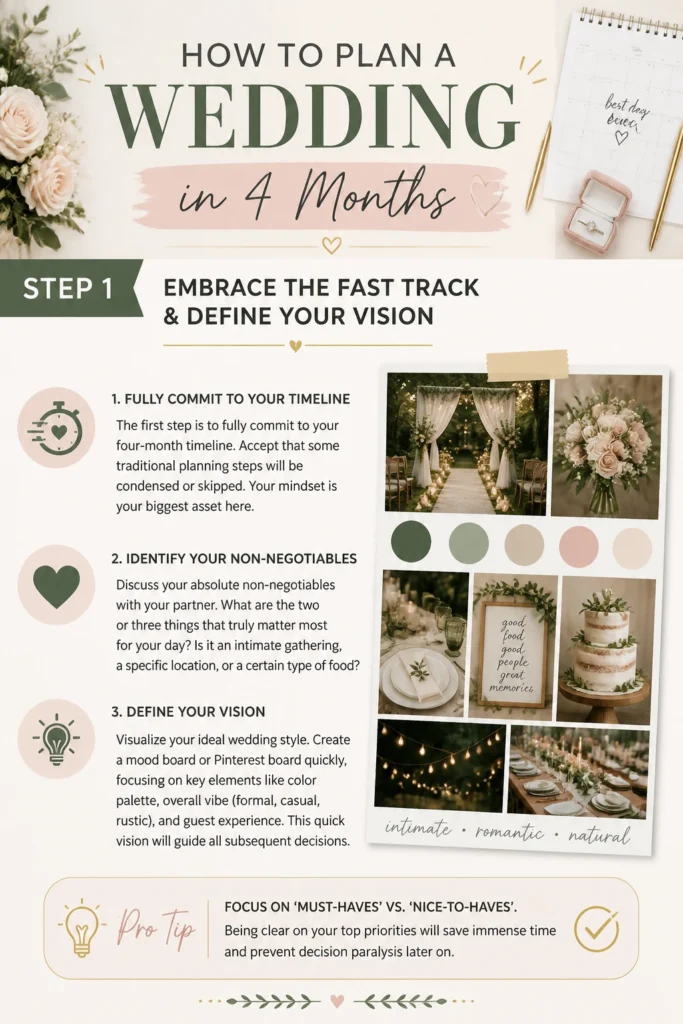
The first step is to fully commit to your four-month timeline. Accept that some traditional planning steps will be condensed or skipped. Your mindset is your biggest asset here.
Next, discuss your absolute non-negotiables with your partner. What are the two or three things that truly matter most for your day? Is it an intimate gathering, a specific location, or a certain type of food?
Visualize your ideal wedding style. Create a mood board or Pinterest board quickly, focusing on key elements like color palette, overall vibe (formal, casual, rustic), and guest experience. This quick vision will guide all subsequent decisions.
Pro Tip: Focus on ‘must-haves’ versus ‘nice-to-haves’. Being clear on your top priorities will save immense time and prevent decision paralysis later on.
Step 2: Set Your Budget & Guest List (Immediately!)
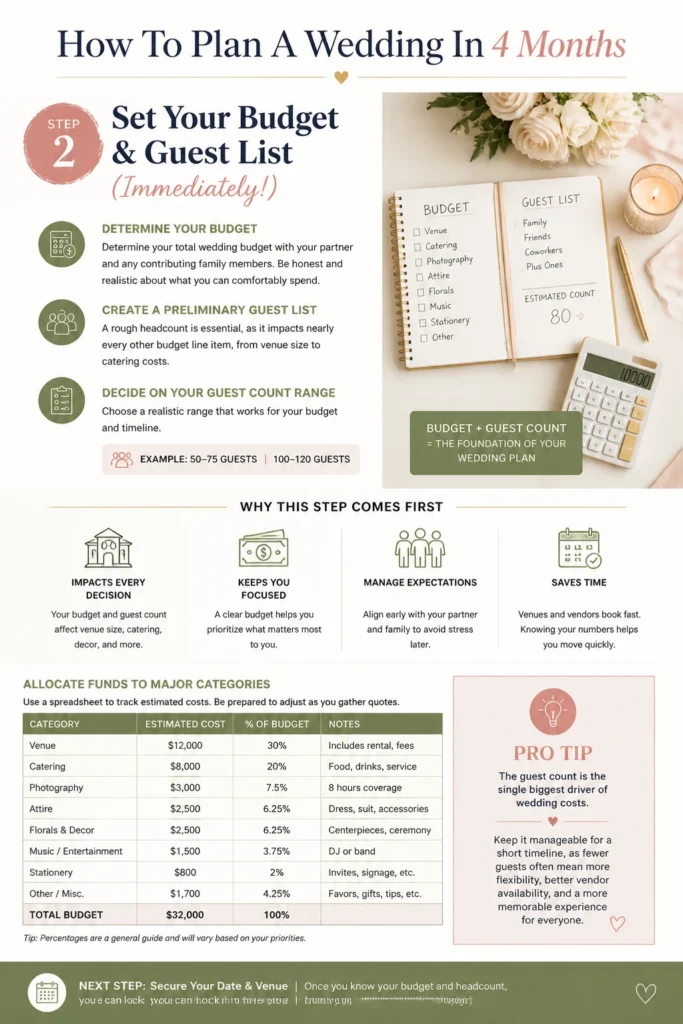
This is arguably the most critical step to tackle first. Determine your total wedding budget with your partner and any contributing family members. Be honest and realistic about what you can comfortably spend.
Next, create a preliminary guest list. A rough headcount is essential, as it impacts nearly every other budget line item, from venue size to catering costs. Decide on your guest count range (e.g., 50-75 guests, 100-120 guests).
Once you have a budget and headcount, allocate funds to major categories. Use a spreadsheet to track estimated costs for venue, catering, photography, and attire. Be prepared to adjust as you gather quotes.
Pro Tip: The guest count is the single biggest driver of wedding costs. Keep it manageable for a short timeline, as fewer guests often mean more flexibility and quicker arrangements.
Step 3: Secure Key Vendors (The Big Three)
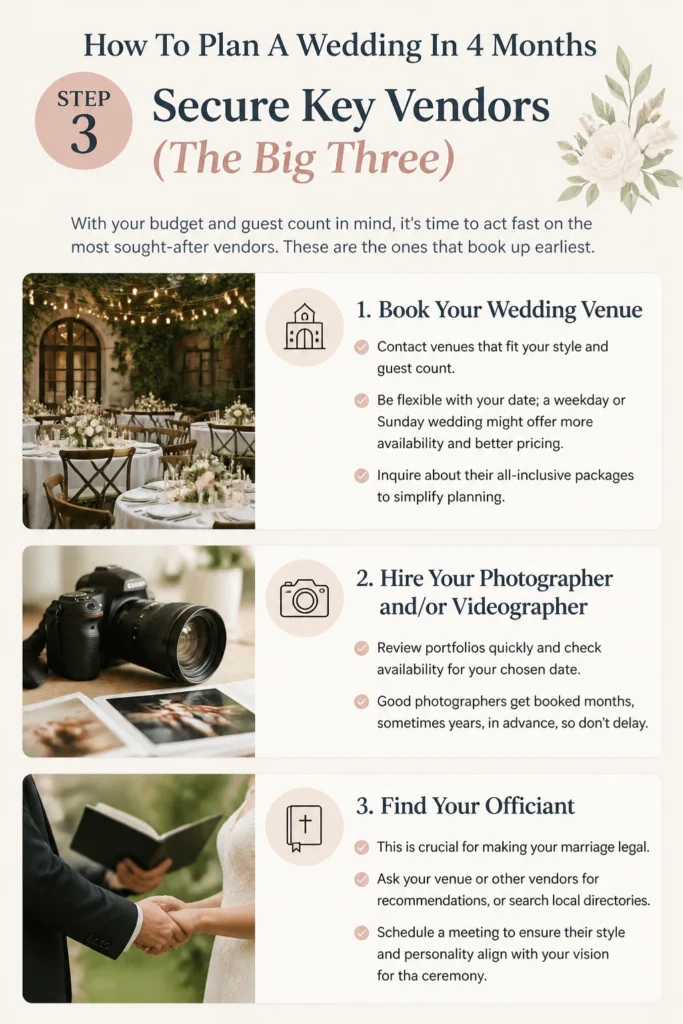
With your budget and guest count in mind, it’s time to act fast on the most sought-after vendors. These are the ones that book up earliest.
First, book your wedding venue. Contact venues that fit your style and guest count. Be flexible with your date; a weekday or Sunday wedding might offer more availability and better pricing. Inquire about their all-inclusive packages to simplify planning.
Next, hire your photographer and/or videographer. Review portfolios quickly and check availability for your chosen date. Good photographers get booked months, sometimes years, in advance, so don’t delay.
Finally, find your officiant. This is crucial for making your marriage legal. Ask your venue or other vendors for recommendations, or search local directories. Schedule a meeting to ensure their style aligns with your vision.
Pro Tip: When contacting venues and vendors, explicitly state your four-month timeline. This helps them understand your urgency and suggest suitable options or packages.
Step 4: The Dress & Attire Dilemma
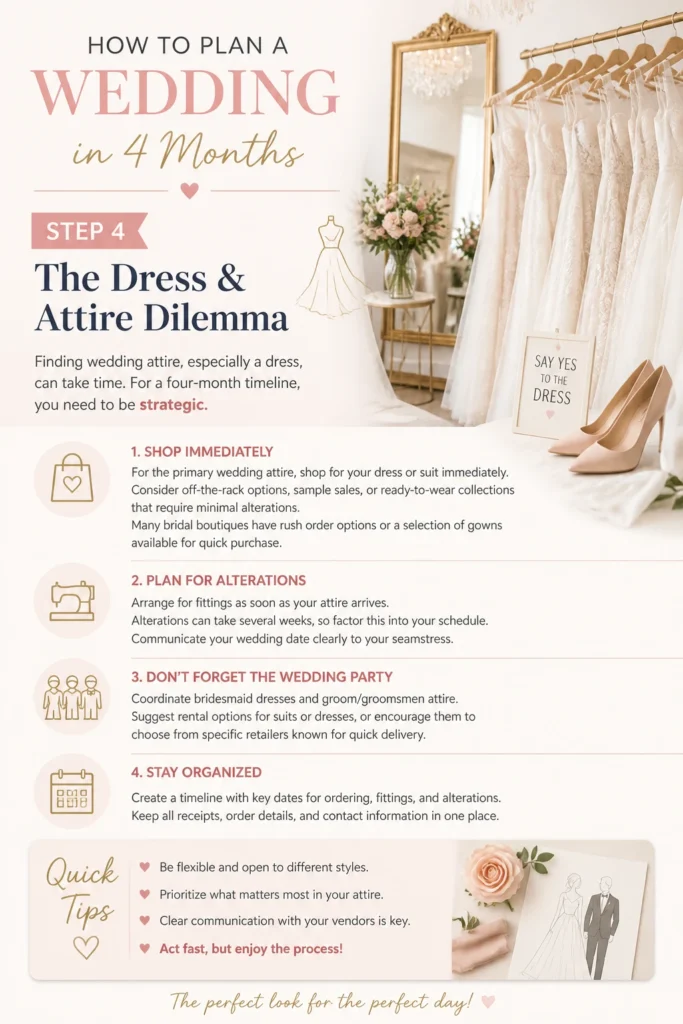
Finding wedding attire, especially a dress, can take time. For a four-month timeline, you need to be strategic.
For the primary wedding attire, shop for your dress or suit immediately. Consider off-the-rack options, sample sales, or ready-to-wear collections that require minimal alterations. Many bridal boutiques have “rush order” options or a selection of gowns available for quick purchase.
Arrange for fittings as soon as your attire arrives. Alterations can take several weeks, so factor this into your schedule. Communicate your wedding date clearly to your seamstress.
Don’t forget the rest of the wedding party. Coordinate bridesmaid dresses and groom/groomsmen attire. Suggest rental options for suits or dresses, or encourage them to choose from specific retailers known for quick delivery.
Pro Tip: Explore online retailers and local boutiques with a focus on immediate availability. A simple, elegant dress can be personalized with accessories, saving time and stress.
Step 5: Assemble Your Dream Team (Vendors Part 2)
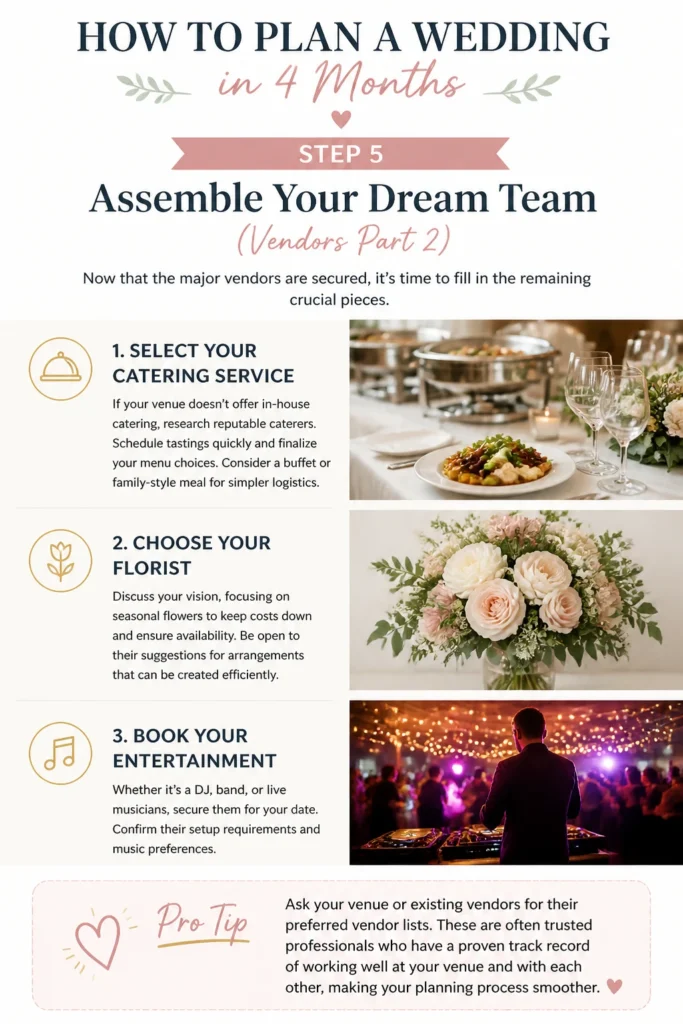
Now that the major vendors are secured, it’s time to fill in the remaining crucial pieces.
Select your catering service. If your venue doesn’t offer in-house catering, research reputable caterers. Schedule tastings quickly and finalize your menu choices. Consider a buffet or family-style meal for simpler logistics.
Next, choose your florist. Discuss your vision, focusing on seasonal flowers to keep costs down and ensure availability. Be open to their suggestions for arrangements that can be created efficiently.
Finally, book your entertainment. Whether it’s a DJ, band, or live musicians, secure them for your date. Confirm their setup requirements and music preferences.
Pro Tip: Ask your venue or existing vendors for their preferred vendor lists. These are often trusted professionals who have worked together before, which can streamline communication and planning.
Step 6: Invitations & Wedding Website Logistics
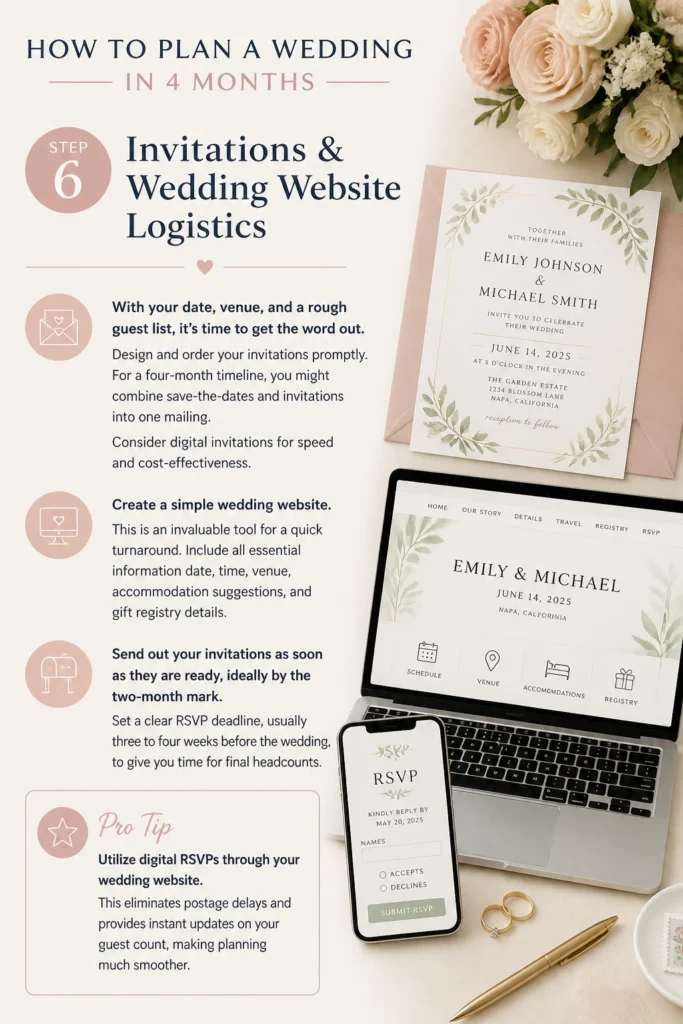
With your date, venue, and a rough guest list, it’s time to get the word out.
Design and order your invitations promptly. For a four-month timeline, you might combine save-the-dates and invitations into one mailing. Consider digital invitations for speed and cost-effectiveness.
Create a simple wedding website. This is an invaluable tool for a quick turnaround. Include all essential information: date, time, venue, accommodation suggestions, and gift registry details.
Send out your invitations as soon as they are ready, ideally by the two-month mark. Set a clear RSVP deadline, usually three to four weeks before the wedding, to give you time for final headcounts.
Pro Tip: Utilize digital RSVPs through your wedding website. This eliminates postage delays and provides instant updates on your guest list, making headcount management much smoother.
Step 7: Finalize Details & Personal Touches
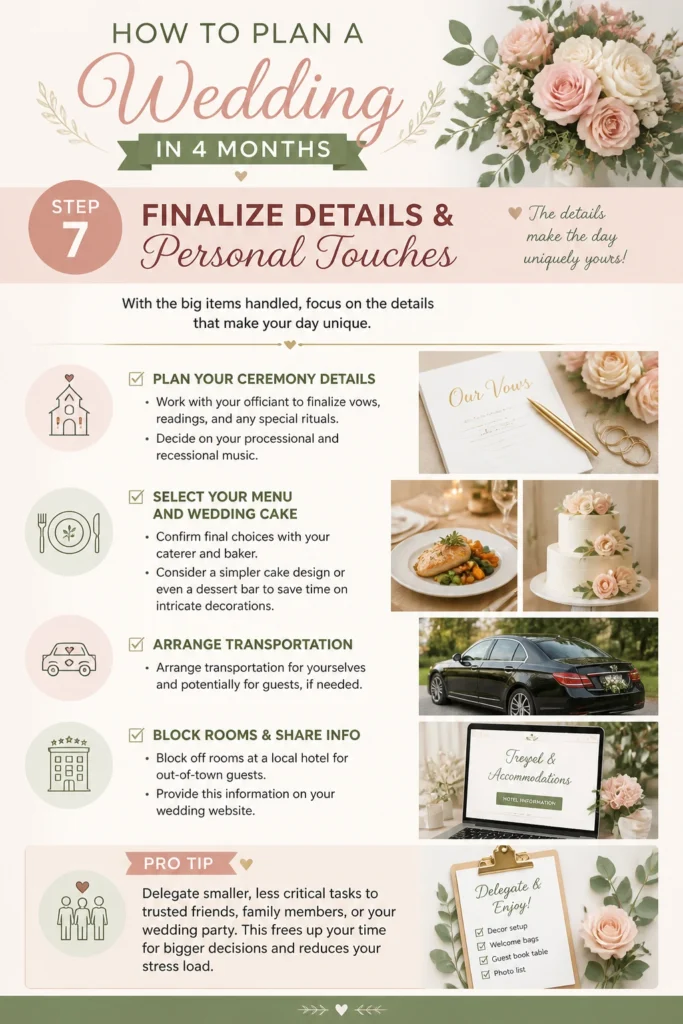
With the big items handled, focus on the details that make your day unique.
Plan your ceremony details. Work with your officiant to finalize vows, readings, and any special rituals. Decide on your processional and recessional music.
Select your menu and wedding cake. Confirm final choices with your caterer and baker. Consider a simpler cake design or even a dessert bar to save time on intricate decorations.
Arrange transportation for yourselves and potentially for guests, if needed. Also, block off rooms at a local hotel for out-of-town guests. Provide this information on your wedding website.
Pro Tip: Delegate smaller, less critical tasks to trusted friends, family members, or your wedding party. This frees up your time for bigger decisions and reduces your stress load.
Step 8: The Home Stretch: One Month Out
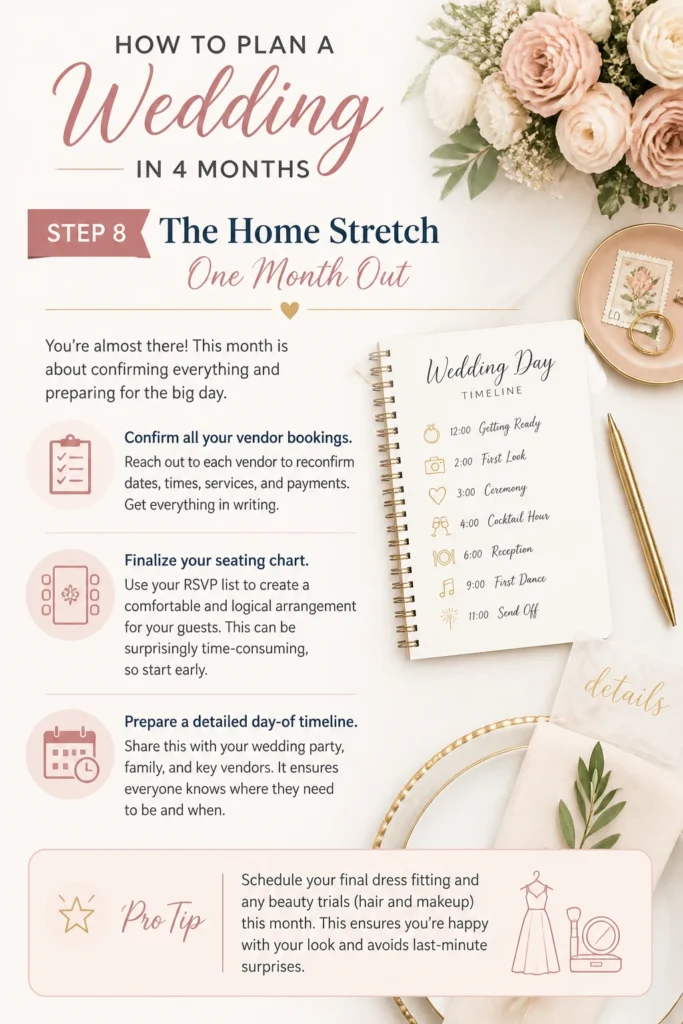
You’re almost there! This month is about confirming everything and preparing for the big day.
Confirm all your vendor bookings. Reach out to each vendor to reconfirm dates, times, services, and payments. Get everything in writing.
Finalize your seating chart. Use your RSVP list to create a comfortable and logical arrangement for your guests. This can be surprisingly time-consuming, so start early.
Prepare a detailed day-of timeline. Share this with your wedding party, family, and key vendors. It ensures everyone knows where they need to be and when.
Pro Tip: Schedule your final dress fitting and any beauty trials (hair and makeup) this month. This ensures you’re happy with your look and avoids last-minute surprises.
Step 9: The Week Of: Delegate & De-Stress
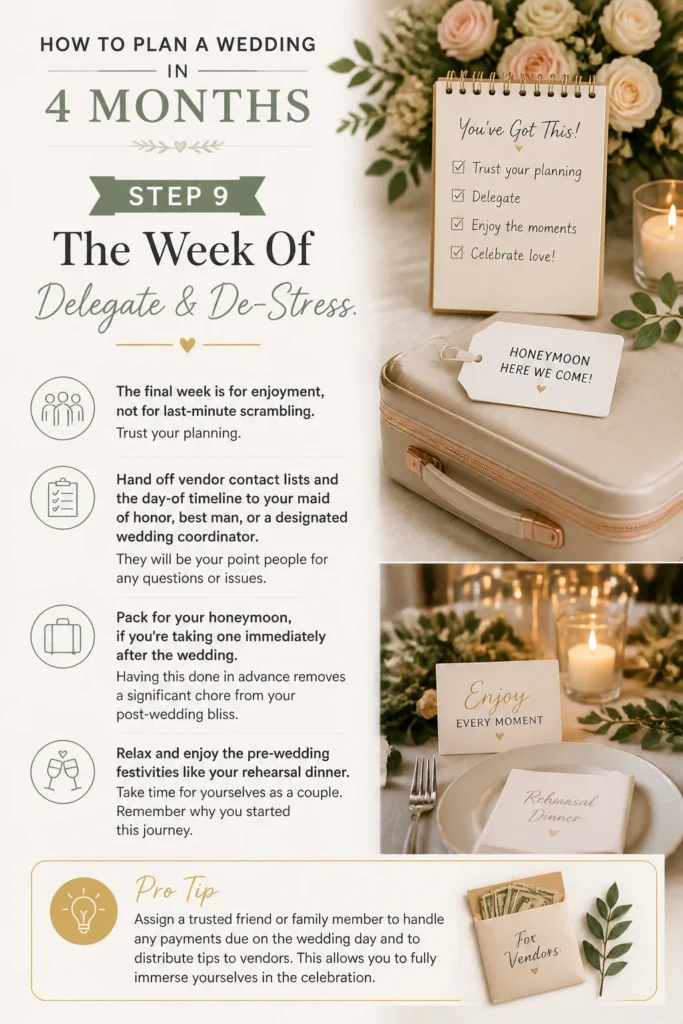
The final week is for enjoyment, not for last-minute scrambling. Trust your planning.
Hand off vendor contact lists and the day-of timeline to your maid of honor, best man, or a designated wedding coordinator. They will be your point people for any questions or issues.
Pack for your honeymoon, if you’re taking one immediately after the wedding. Having this done in advance removes a significant chore from your post-wedding bliss.
Relax and enjoy the pre-wedding festivities like your rehearsal dinner. Take time for yourselves as a couple. Remember why you started this journey.
Pro Tip: Assign a trusted friend or family member to handle any payments due on the wedding day and to distribute tips to vendors. This allows you to fully immerse yourselves in the celebration.
Common Mistakes to Avoid
Over-Complicating Your Vision
Many couples try to incorporate too many intricate details or elaborate themes, especially on a tight timeline. This leads to decision fatigue and increased stress. Instead, focus on a few key elements that truly reflect your personality and relationship. Simplicity can be incredibly elegant and is much more achievable in four months.
Ignoring the Budget
Failing to set a firm budget early on, or not sticking to it, is a common pitfall. This can lead to overspending, financial strain, and last-minute cuts that feel disappointing. Establish your budget in Step 2 and continually track your expenses to stay on course. Be prepared to make compromises if costs exceed your limits.
Procrastinating Vendor Bookings
The most sought-after venues, photographers, and caterers book up quickly. Delaying these key bookings can leave you with limited choices or force you to settle for less ideal options. Act decisively and secure these critical vendors as soon as your date and vision are clear. Flexibility with your wedding date can also open up more options.
Trying to Do Everything Yourself
With a short timeline, the temptation to control every single detail can be strong. However, attempting to manage everything alone will lead to burnout and stress. Learn to delegate tasks to your partner, wedding party, family, and trusted friends. They are there to support you, so let them help.
Troubleshooting
Can’t find an available venue or key vendor on your desired date.
This is a common challenge with a short planning window. First, be flexible with your wedding date. Consider a weekday, a Sunday, or even a less popular month. Many venues and vendors have more availability outside of peak Saturdays.
Next, expand your search radius. Look at venues slightly further afield than your initial preference. Also, inquire if vendors have a cancellation list you can be added to. Sometimes, last-minute openings occur.
Feeling overwhelmed and stressed by the rapid pace of decisions.
It’s natural to feel overwhelmed. Take a short break from planning, even just for an hour. Go for a walk, listen to music, or do something completely unrelated to weddings.
Then, break down large tasks into smaller, manageable chunks. Instead of “plan the reception,” focus on “choose three catering options.” Communicate openly with your partner about your feelings and lean on your support system for help.
Budget creeping up despite careful planning.
This happens easily, especially with quick decisions. Revisit your priorities from Step 1. Identify which items are truly essential and which are ‘nice-to-haves’ that can be cut or scaled back.
Look for DIY alternatives where appropriate, but be realistic about the time investment. Consider negotiating with vendors for slightly simpler packages or asking about off-peak pricing.
Key Takeaways
- Prioritize your top 2-3 wedding elements ruthlessly from day one.
- Act decisively and book your venue, photographer, and officiant immediately.
- Delegate tasks to your partner, wedding party, and family to lighten your load.
- Be flexible with dates, times, and specific vendor choices to increase availability.
- Focus on the joy of getting married, not just the intricate planning details.
- Utilize digital tools like wedding websites and online RSVPs for efficiency.
Frequently Asked Questions
Can I really plan a wedding in 4 months without a professional wedding planner?
Yes, absolutely. While a planner can be incredibly helpful, it is entirely possible to plan a beautiful wedding in four months without one. Success relies on strong organization, efficient decision-making, and effective delegation to your partner and support system.
What’s the absolute first thing I should do if I only have 4 months?
The very first thing you should do is sit down with your partner and determine your total budget and create a preliminary guest list. These two factors will dictate the size and scope of your wedding and inform all subsequent decisions, especially venue and vendor choices.
Is it okay to send digital invitations or skip save-the-dates on a short timeline?
Yes, it is perfectly acceptable and often recommended on a short timeline. Digital invitations save significant time on design, printing, and postage, and allow for quicker RSVPs. Combining your save-the-date and invitation into one mailing is also a smart, time-saving strategy.
How do I manage stress with such a short wedding planning timeline?
Managing stress is key. Break down tasks into small, actionable steps. Communicate openly with your partner and delegate responsibilities. Schedule regular breaks from planning and make time for self-care. Remember that the goal is to celebrate your love, not to achieve perfection.
Our Top Recommended Finds
- Wedding Planning Notebook & Organizer: Essential for keeping all your contracts, notes, and ideas in one place.
- Digital Budget Spreadsheet Template: A pre-made template helps you track every expense and stay within your financial limits.
- Wedding Website Builder (e.g., The Knot, Zola, Minted): Streamlines communication with guests, handles RSVPs, and shares all necessary event details efficiently.
Your Beautiful Day, On Your Timeline
Planning a wedding in four months is an exciting adventure, not a compromise. You have the power to create a truly meaningful and beautiful celebration. By prioritizing, making quick decisions, and leaning on your loved ones, your dream day will unfold perfectly.
Embrace the journey, stay focused on what truly matters, and remember the love that started it all. Now that you have your roadmap, consider exploring honeymoon destinations or looking into pre-marital counseling. Your incredible day awaits. Start making those plans today!
Wedding Planning
No fluff, no drama. Just easy weekly advice, planning shortcuts, and gentle reminders to help you actually enjoy your engagement.