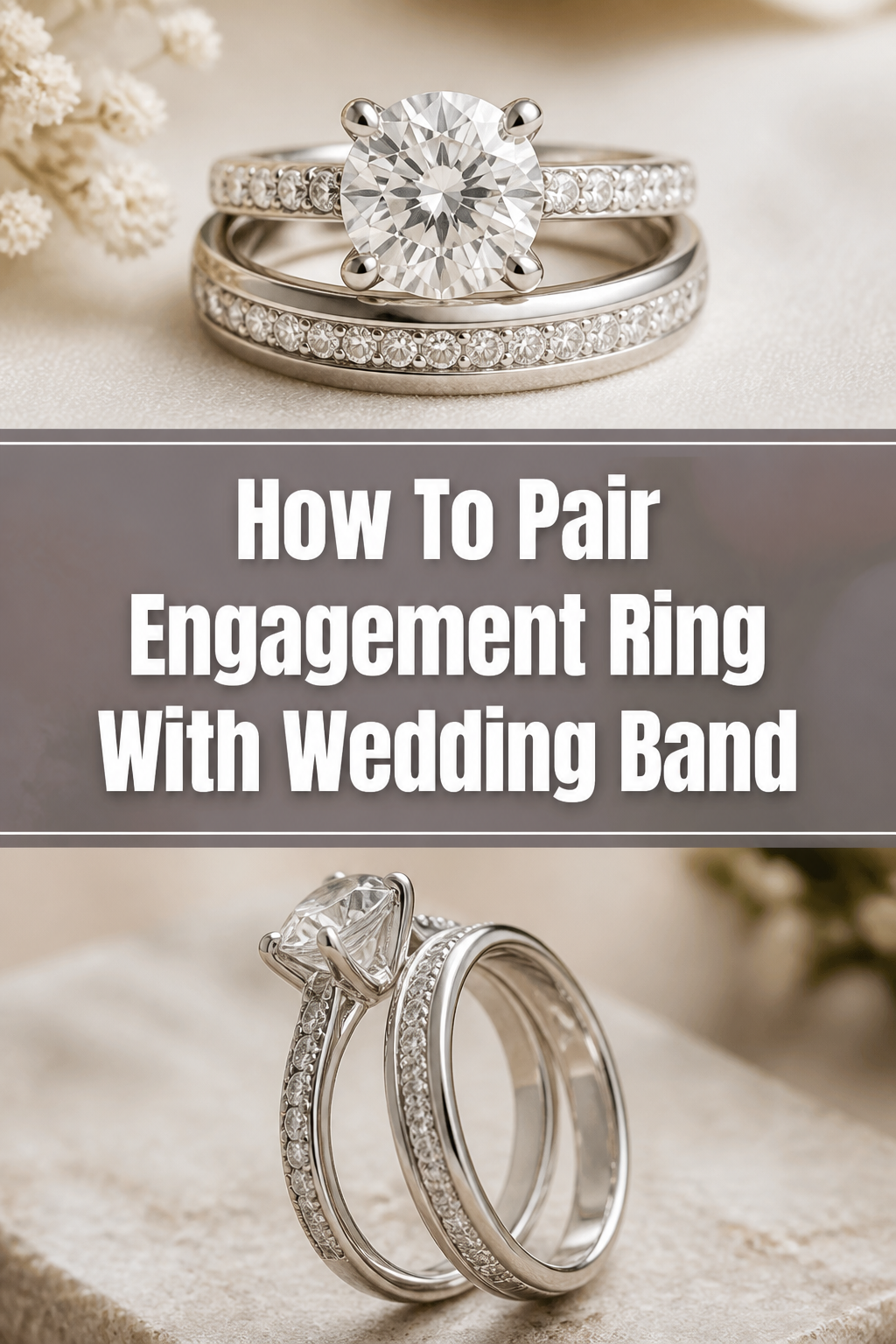
💍 How To Pair Engagement Ring With Wedding Band
Wedding Planning
No fluff, no drama. Just easy weekly advice, planning shortcuts, and gentle reminders to help you actually enjoy your engagement.
Finding the perfect wedding band to complement your engagement ring can feel like a significant quest. I remember the overwhelming choices when my partner and I were searching for my band, wanting it to feel just right. This guide distills years of experience and expert advice, aiming to simplify the process and help you create a harmonious set.
Quick Overview
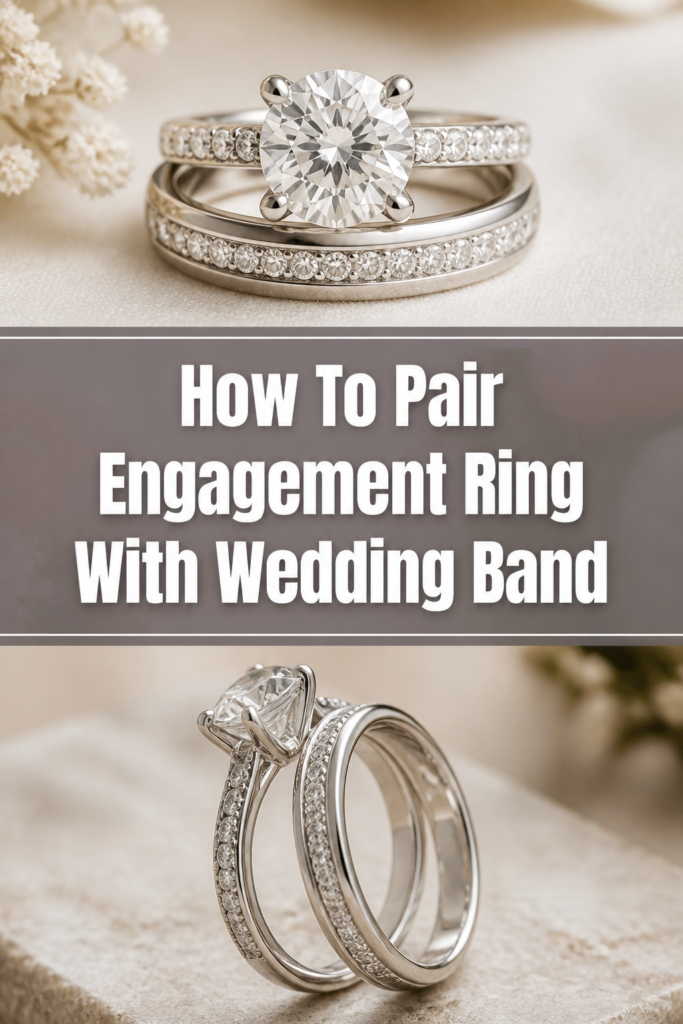
This guide will walk you through the essential considerations and practical steps to successfully pair your engagement ring with a wedding band. You’ll learn how to assess styles, metals, and comfort, ensuring your rings look beautiful together and feel wonderful to wear every day.
- Time needed: 2-4 hours for initial research and trying on rings, plus additional time for custom orders.
- Difficulty: Beginner
- What you’ll need: Your engagement ring, an open mind, a comfortable setting, and reputable jewelers.
Step-by-Step Instructions
Step 1: Understand Your Engagement Ring’s Style
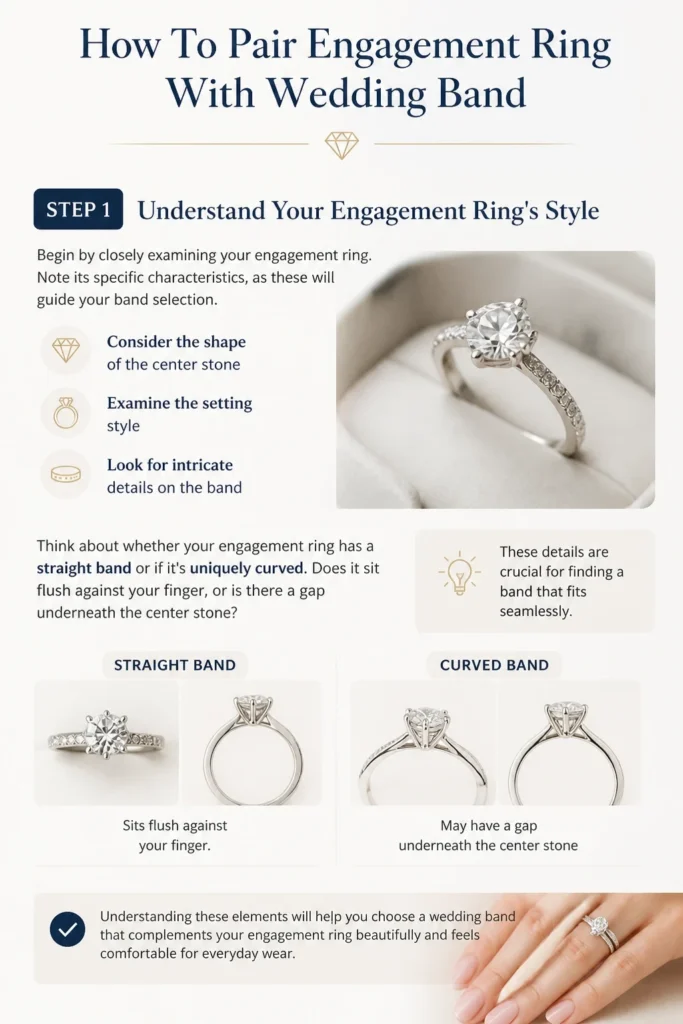
Begin by closely examining your engagement ring. Note its specific characteristics, as these will guide your band selection. Consider the shape of the center stone, the setting style, and any intricate details on the band itself.
Think about whether your engagement ring has a straight band or if it’s uniquely curved. Does it sit flush against your finger, or is there a gap underneath the center stone? These details are crucial for finding a band that fits seamlessly.
Step 2: Consider Metal Match and Contrast
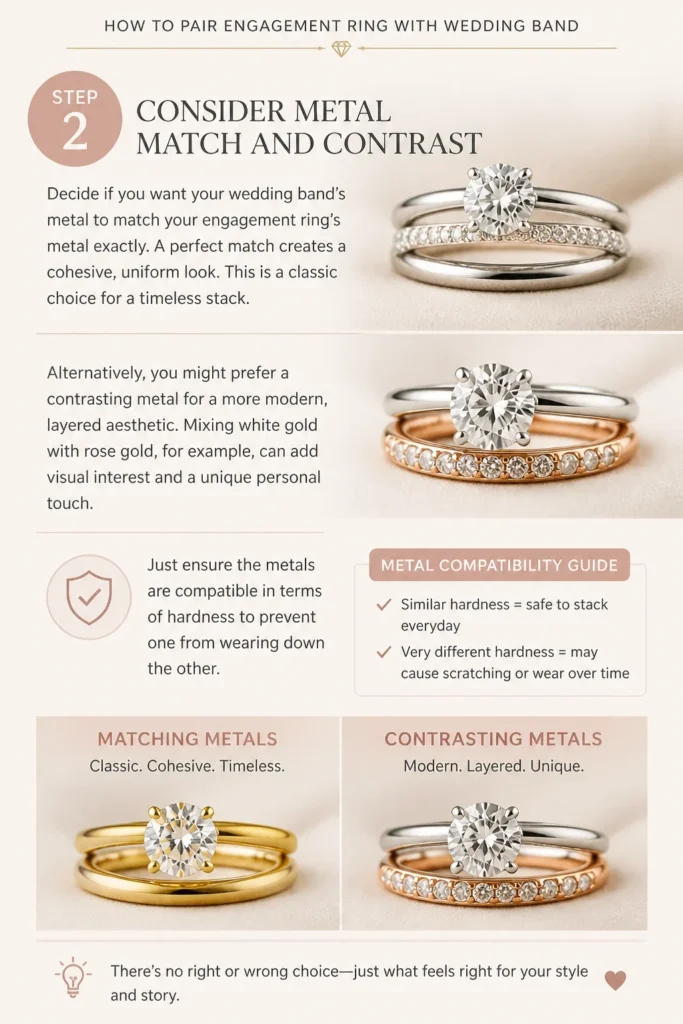
Decide if you want your wedding band’s metal to match your engagement ring’s metal exactly. A perfect match creates a cohesive, uniform look. This is a classic choice for a timeless stack.
Alternatively, you might prefer a contrasting metal for a more modern, layered aesthetic. Mixing white gold with rose gold, for example, can add visual interest and a unique personal touch. Just ensure the metals are compatible in terms of hardness to prevent one from wearing down the other.
Step 3: Explore Different Band Styles
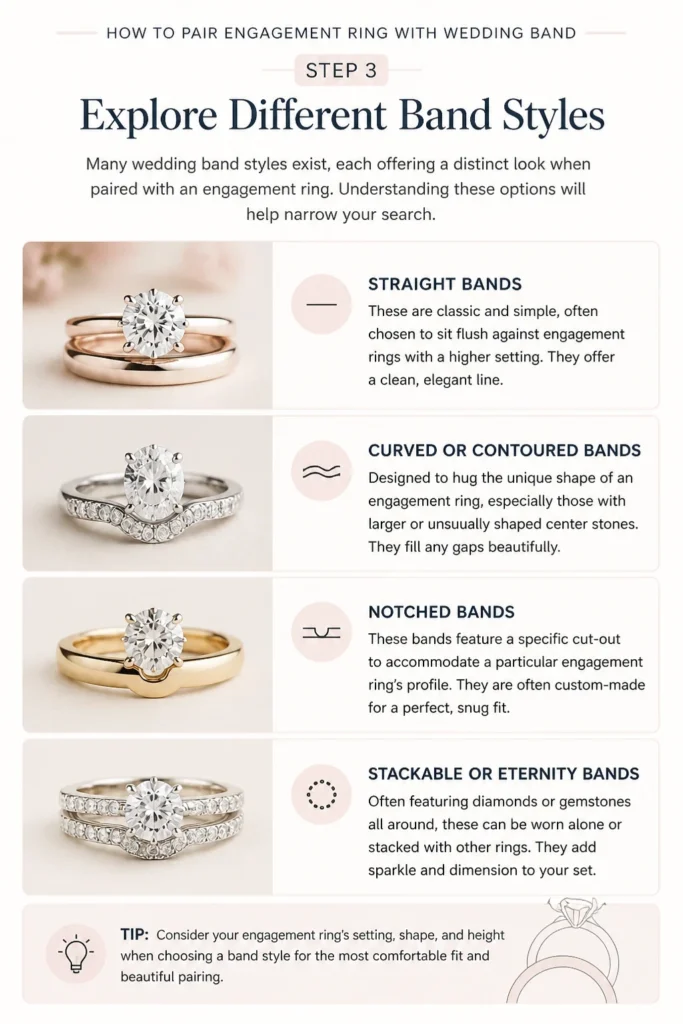
Many wedding band styles exist, each offering a distinct look when paired with an engagement ring. Understanding these options will help narrow your search.
- Straight Bands: These are classic and simple, often chosen to sit flush against engagement rings with a higher setting. They offer a clean, elegant line.
- Curved or Contoured Bands: Designed to hug the unique shape of an engagement ring, especially those with larger or unusually shaped center stones. They fill any gaps beautifully.
- Notched Bands: These bands feature a specific cut-out to accommodate a particular engagement ring’s profile. They are often custom-made for a perfect, snug fit.
- Stackable or Eternity Bands: Often featuring diamonds or gemstones all around, these can be worn alone or stacked with other rings. They add sparkle and can be a fantastic choice for building a unique stack over time.
Pro Tip: Don’t limit yourself to traditional options. Sometimes a delicate, thin band can perfectly complement a substantial engagement ring, creating balance.
Step 4: Prioritize Comfort and Fit
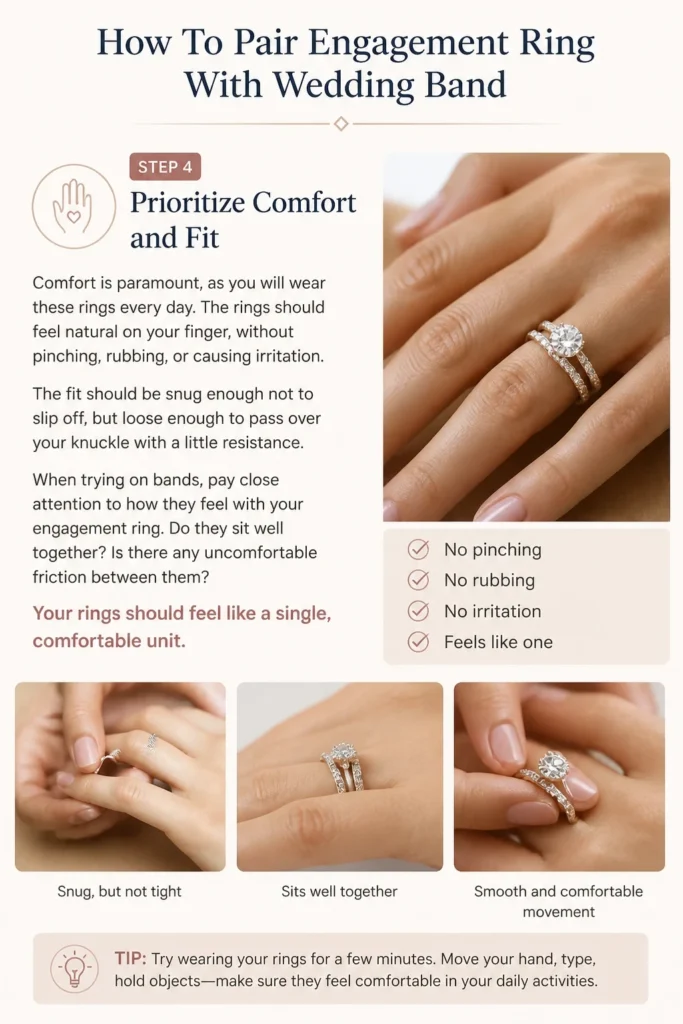
Comfort is paramount, as you will wear these rings every day. The rings should feel natural on your finger, without pinching, rubbing, or causing irritation. The fit should be snug enough not to slip off, but loose enough to pass over your knuckle with a little resistance.
When trying on bands, pay close attention to how they feel with your engagement ring. Do they sit well together? Is there any uncomfortable friction between them? Your rings should feel like a single, comfortable unit.
Step 5: Think About Lifestyle and Durability
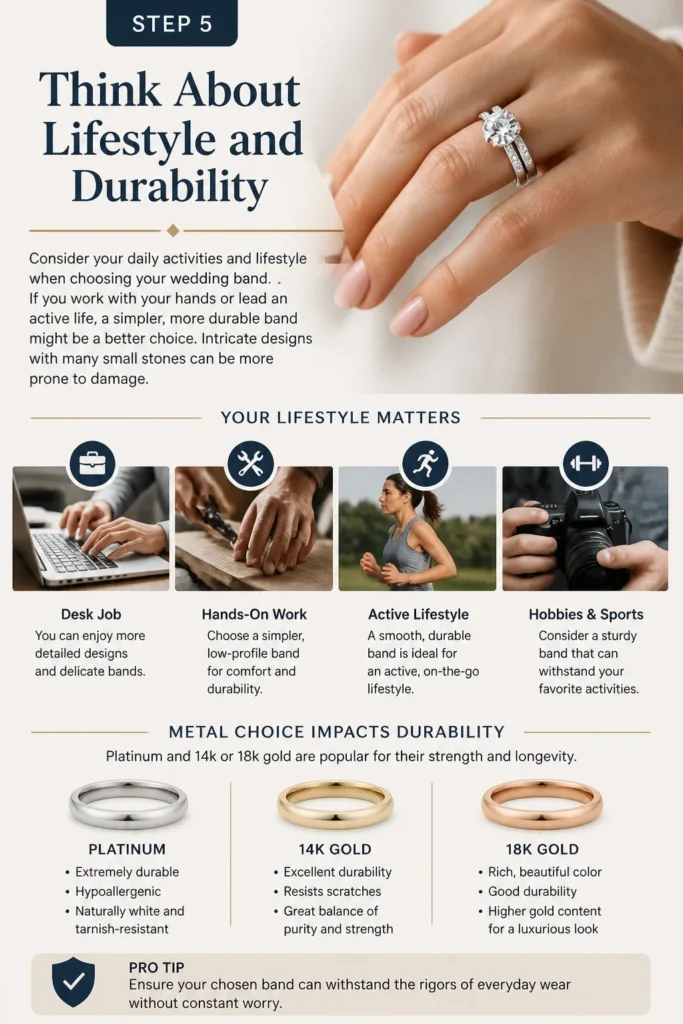
Consider your daily activities and lifestyle when choosing your wedding band. If you work with your hands or lead an active life, a simpler, more durable band might be a better choice. Intricate designs with many small stones can be more prone to damage.
The metal choice also impacts durability. Platinum and 14k or 18k gold are popular for their strength and longevity. Ensure your chosen band can withstand the rigors of everyday wear without constant worry.
Step 6: Try Rings On Together
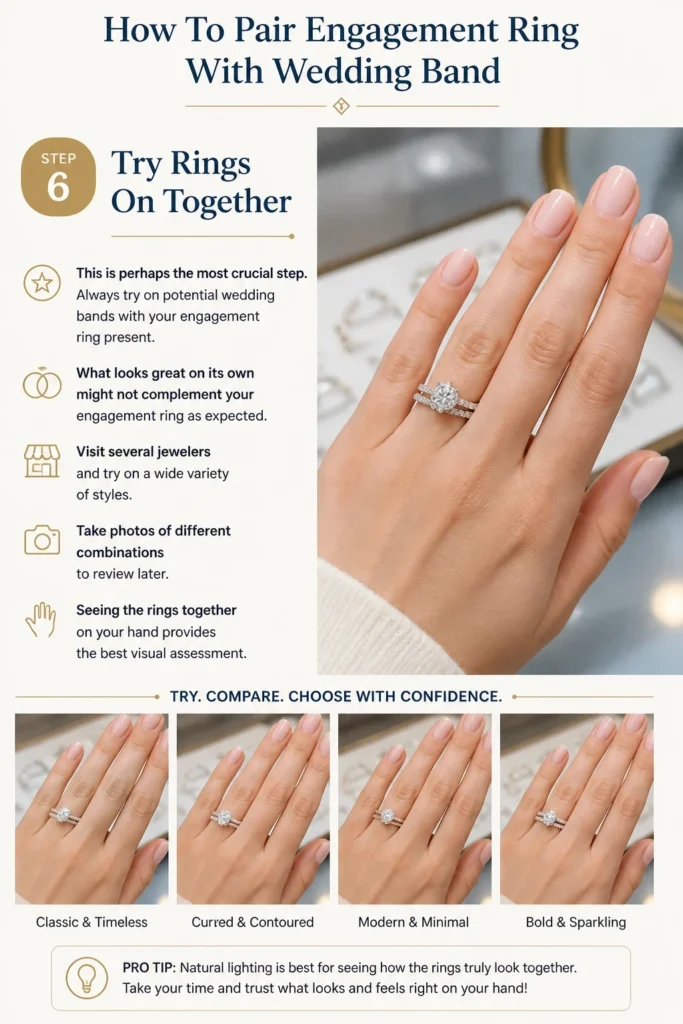
This is perhaps the most crucial step. Always try on potential wedding bands with your engagement ring present. What looks great on its own might not complement your engagement ring as expected.
Visit several jewelers and try on a wide variety of styles. Take photos of different combinations to review later. Seeing the rings together on your hand provides the best visual assessment.
Step 7: Ask About Customization Options
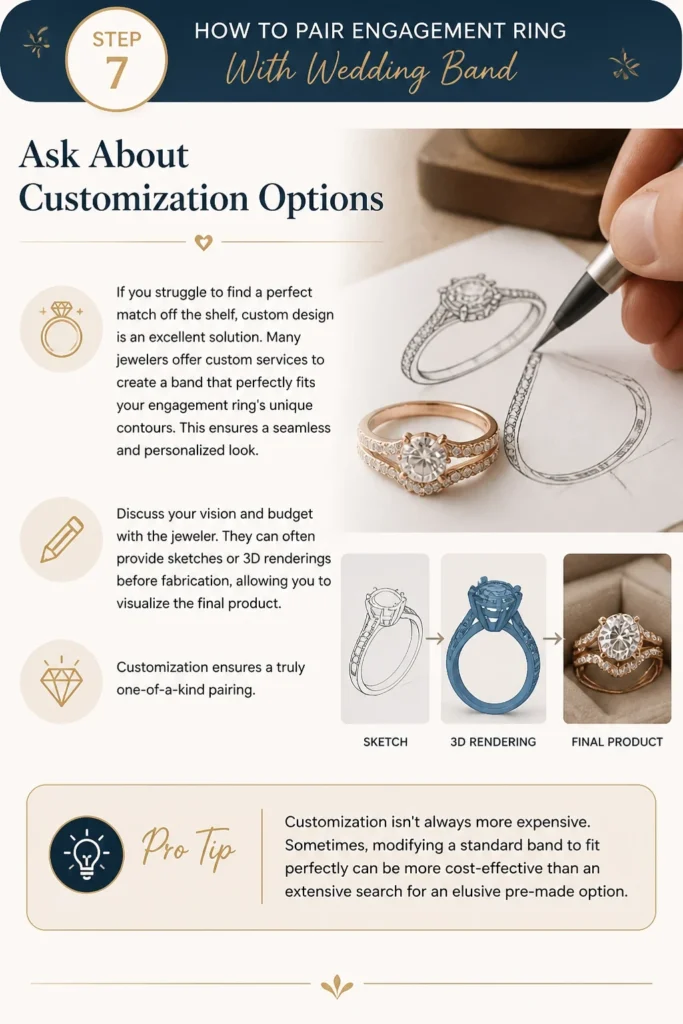
If you struggle to find a perfect match off the shelf, custom design is an excellent solution. Many jewelers offer custom services to create a band that perfectly fits your engagement ring’s unique contours. This ensures a seamless and personalized look.
Discuss your vision and budget with the jeweler. They can often provide sketches or 3D renderings before fabrication, allowing you to visualize the final product. Customization ensures a truly one-of-a-kind pairing.
Pro Tip: Customization isn’t always more expensive. Sometimes, modifying a standard band to fit perfectly can be more cost-effective than an extensive search for an elusive pre-made option.
Step 8: Set a Budget
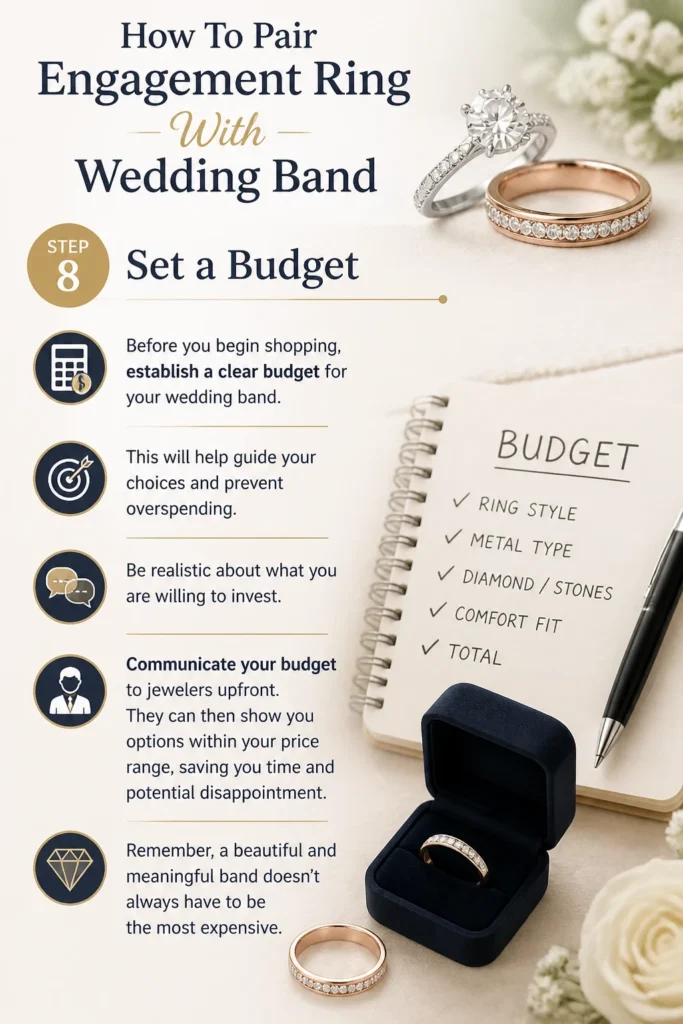
Before you begin shopping, establish a clear budget for your wedding band. This will help guide your choices and prevent overspending. Be realistic about what you are willing to invest.
Communicate your budget to jewelers upfront. They can then show you options within your price range, saving you time and potential disappointment. Remember, a beautiful and meaningful band doesn’t always have to be the most expensive.
Step 9: Make Your Decision
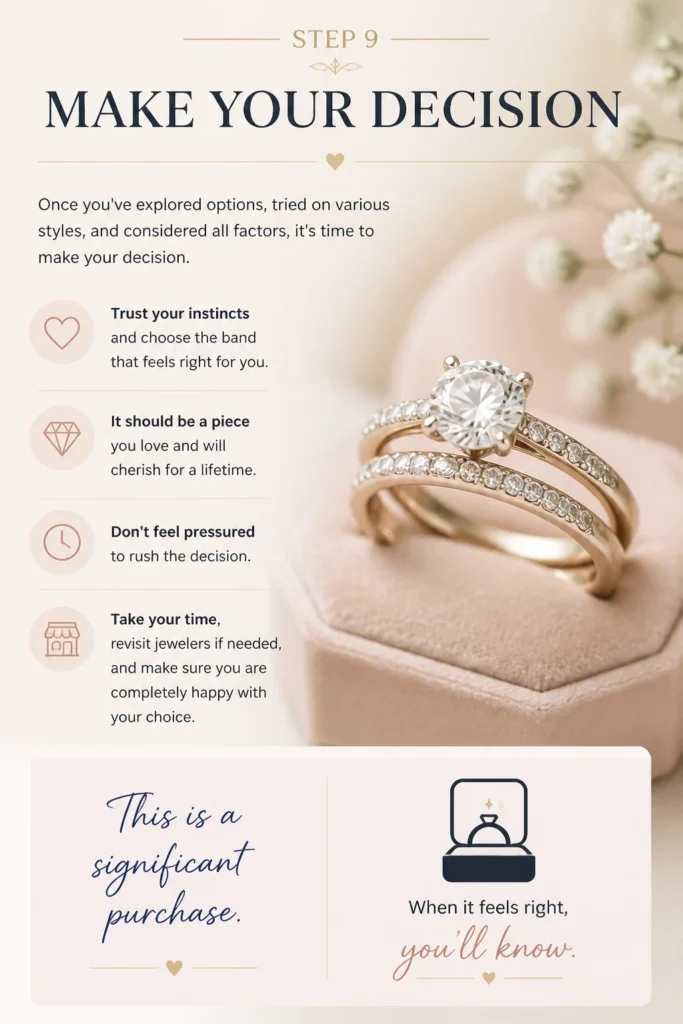
Once you’ve explored options, tried on various styles, and considered all factors, it’s time to make your decision. Trust your instincts and choose the band that feels right for you. It should be a piece you love and will cherish for a lifetime.
Don’t feel pressured to rush the decision. Take your time, revisit jewelers if needed, and make sure you are completely happy with your choice. This is a significant purchase.
Step 10: Plan for Maintenance
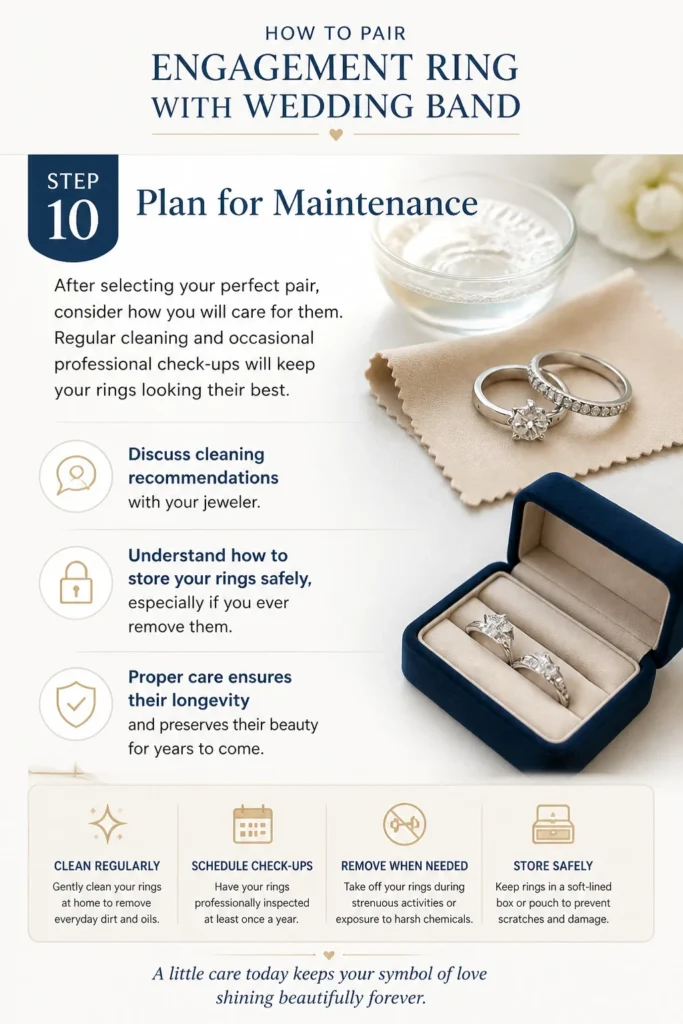
After selecting your perfect pair, consider how you will care for them. Regular cleaning and occasional professional check-ups will keep your rings looking their best. Discuss cleaning recommendations with your jeweler.
Understand how to store your rings safely, especially if you ever remove them. Proper care ensures their longevity and preserves their beauty for years to come.
Common Mistakes to Avoid
Ignoring Comfort
One of the biggest mistakes is choosing a band purely for aesthetics without considering how it feels. Rings that pinch, rub, or are too tight will be uncomfortable to wear daily. Always prioritize how the rings feel when worn together.
Not Trying Rings On Together
It’s tempting to pick a wedding band that looks beautiful on its own. However, an engagement ring and wedding band are meant to be worn as a set. Always try them on together to ensure they complement each other visually and physically.
Rushing the Decision
Choosing your wedding band is an important part of your journey. Don’t feel pressured to make a quick decision. Take your time, explore all options, and revisit jewelers if necessary. Rushing can lead to regret later on.
Forgetting About Future Stacking
While you might only be thinking about two rings now, some people enjoy adding anniversary bands or other rings in the future. Consider if your chosen wedding band allows for easy stacking or if it will create an awkward look with additional rings.
Troubleshooting
Gap Between Rings
If your engagement ring has a prominent setting or a unique shape, you might find a gap between it and a straight wedding band. This is a common issue. Consider a curved, contoured, or notched wedding band designed to fit snugly around your engagement ring. Customization is also an excellent solution here.
Rings Rubbing Together
Sometimes, rings with different heights or profiles can rub against each other, potentially causing wear and tear over time. Ensure the rings sit flush or have compatible designs. A jeweler can sometimes add a small spacer or custom-fit the rings to prevent friction. Choosing metals of similar hardness also helps.
Difficulty Finding a Match for Unique Rings
If your engagement ring has a very unusual shape, an antique design, or an asymmetrical setting, finding a pre-made wedding band can be challenging. Don’t get discouraged. This is where custom design services truly shine. A skilled jeweler can create a band that perfectly mirrors or complements your ring’s unique features.
Key Takeaways
- Carefully assess your engagement ring’s style and setting to guide your wedding band choice.
- Consider both matching and contrasting metal options, ensuring durability compatibility.
- Explore various band styles like straight, curved, notched, and eternity bands to find the best fit.
- Always prioritize comfort and try rings on together to ensure a harmonious feel and look.
- Don’t hesitate to explore custom design options if an off-the-shelf solution isn’t perfect.
- Set a budget early to streamline your search and manage expectations effectively.
Frequently Asked Questions
Should my wedding band match my engagement ring exactly?
No, it’s not a strict rule. While many people prefer a perfectly matching set for a cohesive look, others enjoy mixing metals, textures, or styles for a more personalized and modern aesthetic. The choice is entirely up to your personal preference and what feels right to you.
Can I wear my wedding band alone?
Absolutely. Many individuals choose to wear their wedding band alone, especially for activities where the engagement ring might be impractical or at risk of damage. Wedding bands are designed to be beautiful and complete on their own, offering flexibility in how you wear your rings.
What if my engagement ring is a unique shape?
For uniquely shaped engagement rings, finding a standard wedding band can be difficult. Your best options are often custom-designed bands that are contoured or notched to fit perfectly around your specific ring. Many jewelers specialize in creating bespoke wedding bands for these situations.
How do I know if the rings will rub?
When trying on rings, pay close attention to how they sit against each other. If there’s any movement, friction, or if one ring’s edge feels sharp against the other, they might rub. A jeweler can assess the profiles and suggest solutions like custom fitting, adding a small spacer, or choosing rings with compatible heights and edges to minimize rubbing.
Our Top Recommended Finds
- Ring Sizer Set: Essential for accurately determining ring sizes at home, especially helpful if ordering custom or online.
- Jewelry Polishing Cloth: Keeps your rings sparkling between professional cleanings, removing oils and light tarnish.
- Gentle Jewelry Cleaning Solution: A safe and effective way to clean your diamond and gold rings at home, maintaining their brilliance.
Crafting Your Perfect Pair
Finding the ideal wedding band to sit alongside your engagement ring is a deeply personal and exciting journey. It’s about more than just two pieces of jewelry; it’s about creating a symbol of your unique love story, worn every day. By following these practical steps, you can navigate the choices with confidence and clarity.
You are now equipped with the knowledge to make an informed decision, ensuring your rings not only look stunning together but also feel like a natural extension of you. Take the time to explore, try on, and truly connect with your choices. Your perfect pair awaits.
Wedding Planning
No fluff, no drama. Just easy weekly advice, planning shortcuts, and gentle reminders to help you actually enjoy your engagement.