💍 How To Plan A Wedding In 8 Months

Wedding Planning
No fluff, no drama. Just easy weekly advice, planning shortcuts, and gentle reminders to help you actually enjoy your engagement.
Planning a wedding in eight months is a fast-paced experience that requires focus and organization.
I helped my sister coordinate her 150-guest wedding in exactly thirty-two weeks, so I know how to navigate this specific timeline.
This guide provides a structured roadmap to ensure you reach the altar with your sanity and your vision intact.
Quick Overview
Planning on this timeline means you will be making decisions quickly and checking off tasks with efficiency.
- Time needed: 8 Months
- Difficulty: Intermediate
- What you’ll need: A budget spreadsheet, a dedicated wedding email address, and a digital or physical planner.
Step-by-Step Instructions
Step 1: Establish Your Budget and Vision
Determine the total amount you are willing to spend before you look at a single venue or dress.
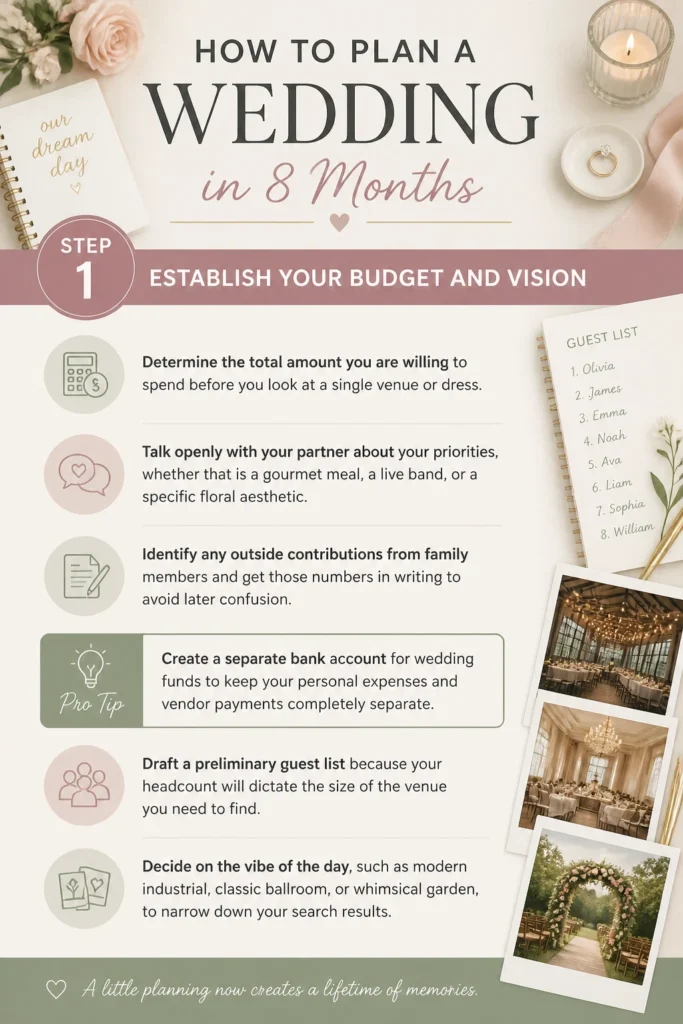
Talk openly with your partner about your priorities, whether that is a gourmet meal, a live band, or a specific floral aesthetic.
Identify any outside contributions from family members and get those numbers in writing to avoid later confusion.
Pro Tip: Create a separate bank account for wedding funds to keep your personal expenses and vendor payments completely separate.
Draft a preliminary guest list because your headcount will dictate the size of the venue you need to find.
Decide on the “vibe” of the day, such as modern industrial, classic ballroom, or whimsical garden, to narrow down your search results.
Step 2: Secure Your Venue and Date
Search for venues that have availability within your eight-month window, which may require some flexibility on your part.
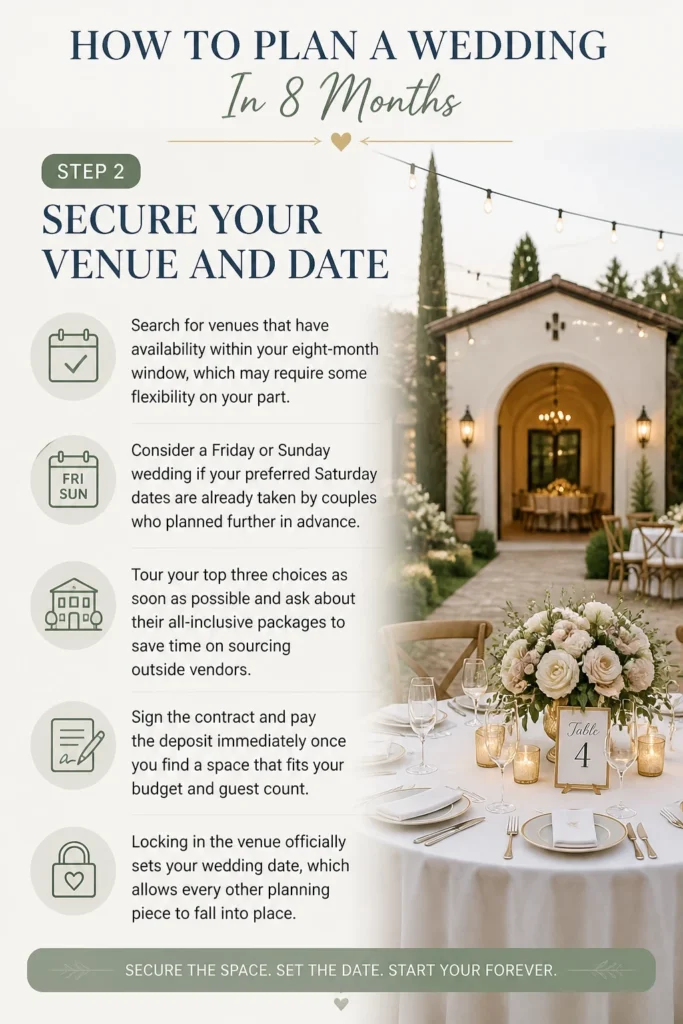
Consider a Friday or Sunday wedding if your preferred Saturday dates are already taken by couples who planned further in advance.
Tour your top three choices as soon as possible and ask about their “all-inclusive” packages to save time on sourcing outside vendors.
Sign the contract and pay the deposit immediately once you find a space that fits your budget and guest count.
Locking in the venue officially sets your wedding date, which allows every other planning piece to fall into place.
Step 3: Hire High-Priority Vendors
Research photographers and videographers whose style matches your vision and check their availability for your specific date.
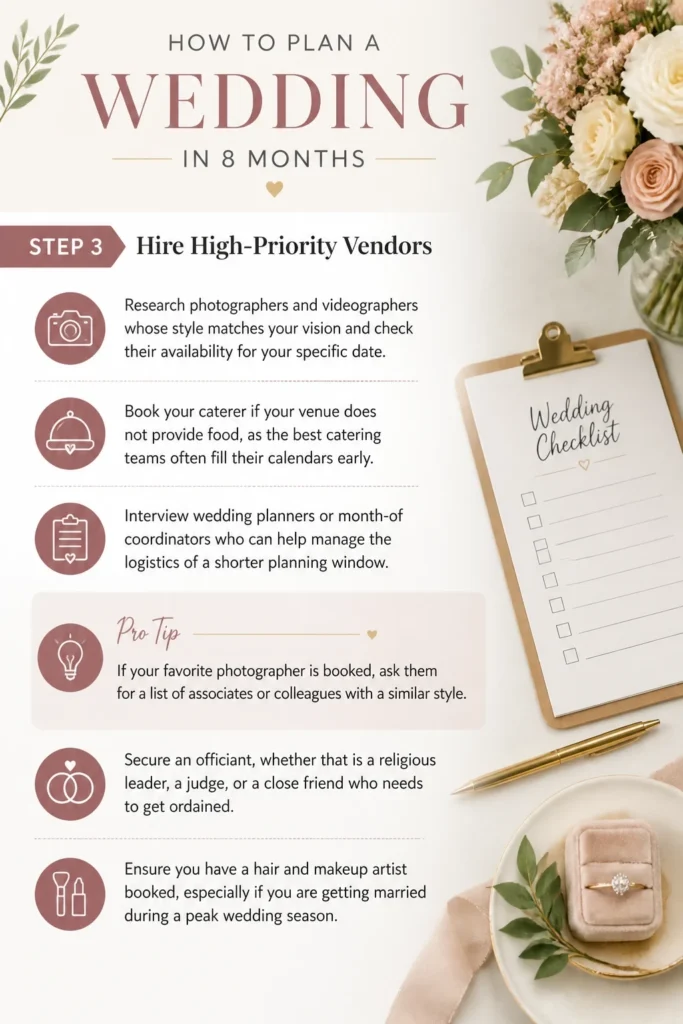
Book your caterer if your venue does not provide food, as the best catering teams often fill their calendars early.
Interview wedding planners or month-of coordinators who can help manage the logistics of a shorter planning window.
Pro Tip: If your favorite photographer is booked, ask them for a list of associates or colleagues with a similar style.
Secure an officiant, whether that is a religious leader, a judge, or a close friend who needs to get ordained.
Ensure you have a hair and makeup artist booked, especially if you are getting married during a peak wedding season.
Step 4: Shop for Wedding Attire
Visit bridal boutiques immediately because many designer gowns take six to nine months to order and ship.
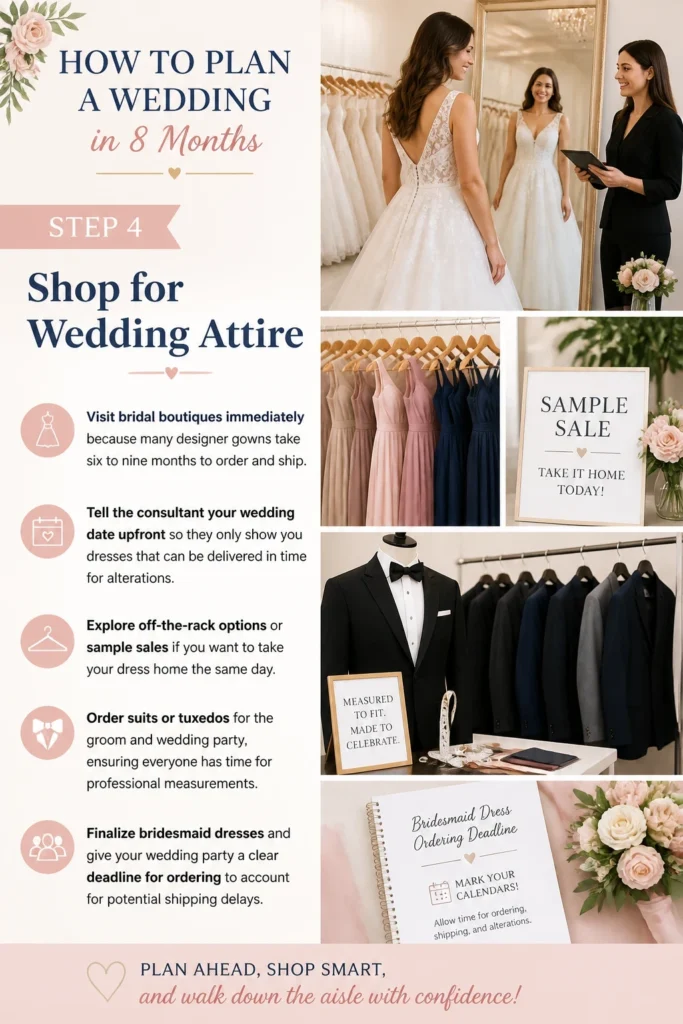
Tell the consultant your wedding date upfront so they only show you dresses that can be delivered in time for alterations.
Explore “off-the-rack” options or sample sales if you want to take your dress home the same day.
Order suits or tuxedos for the groom and wedding party, ensuring everyone has time for professional measurements.
Finalize bridesmaid dresses and give your wedding party a clear deadline for ordering to account for potential shipping delays.
Step 5: Launch Your Wedding Website and Registry
Build a simple wedding website to serve as a central hub for all guest information and travel details.
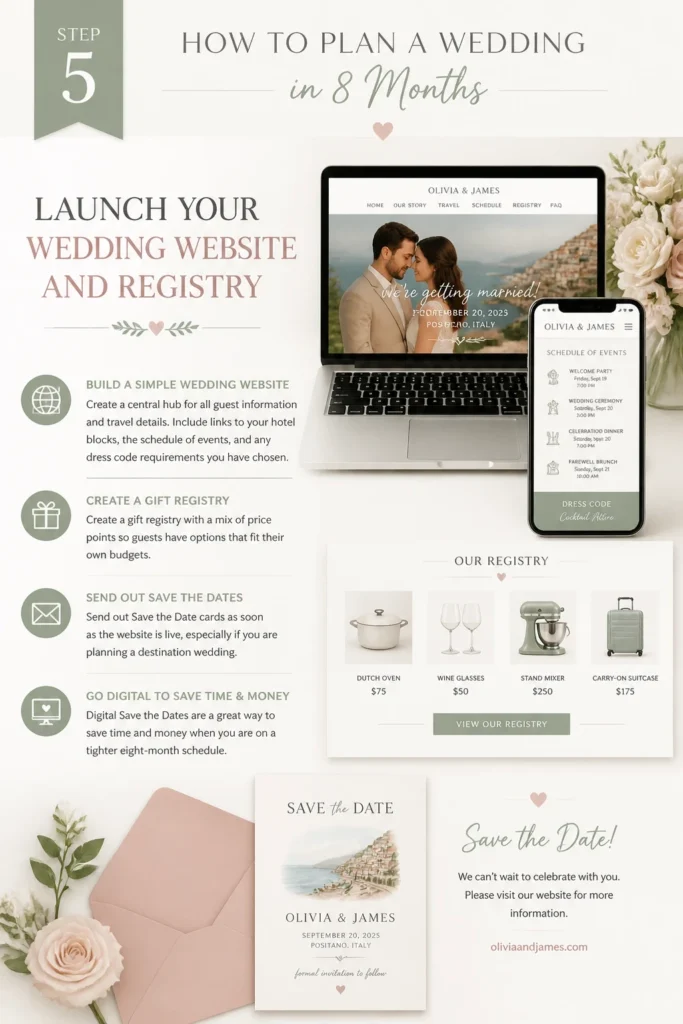
Include links to your hotel blocks, the schedule of events, and any dress code requirements you have chosen.
Create a gift registry with a mix of price points so guests have options that fit their own budgets.
Send out Save the Date cards as soon as the website is live, especially if you are planning a destination wedding.
Digital Save the Dates are a great way to save time and money when you are on a tighter eight-month schedule.
Step 6: Design Florals and Decor
Meet with florists to discuss seasonal blooms that will be available during your wedding month.
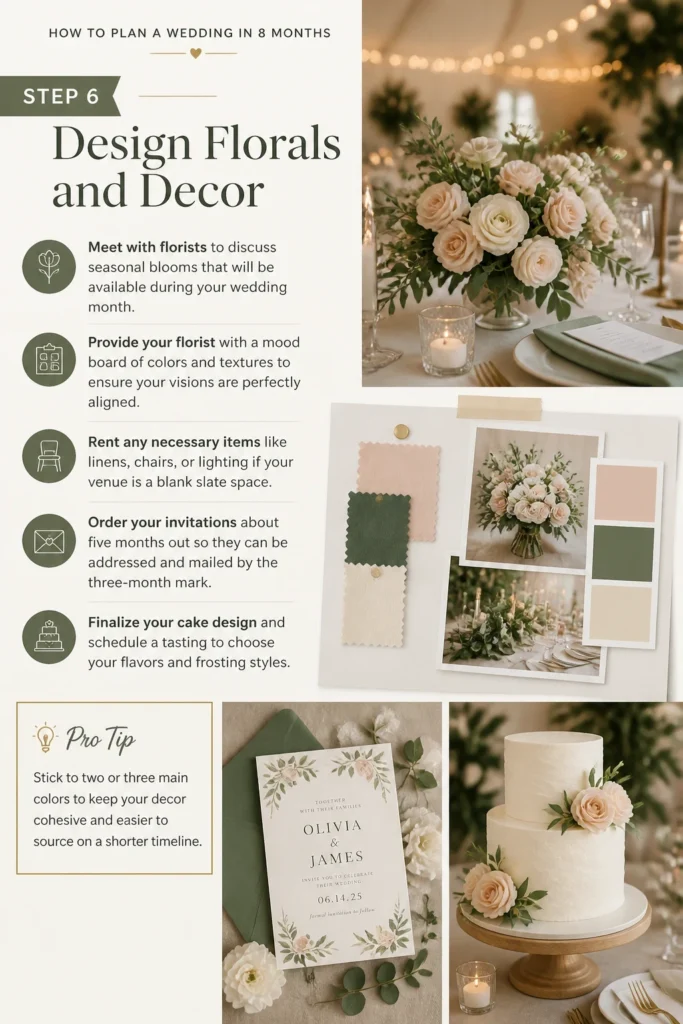
Provide your florist with a mood board of colors and textures to ensure your visions are perfectly aligned.
Rent any necessary items like linens, chairs, or lighting if your venue is a “blank slate” space.
Pro Tip: Stick to two or three main colors to keep your decor cohesive and easier to source on a shorter timeline.
Order your invitations about five months out so they can be addressed and mailed by the three-month mark.
Finalize your cake design and schedule a tasting to choose your flavors and frosting styles.
Step 7: Finalize Logistics and Legalities
Apply for your marriage license within the timeframe required by your local government, as some licenses have expiration dates.
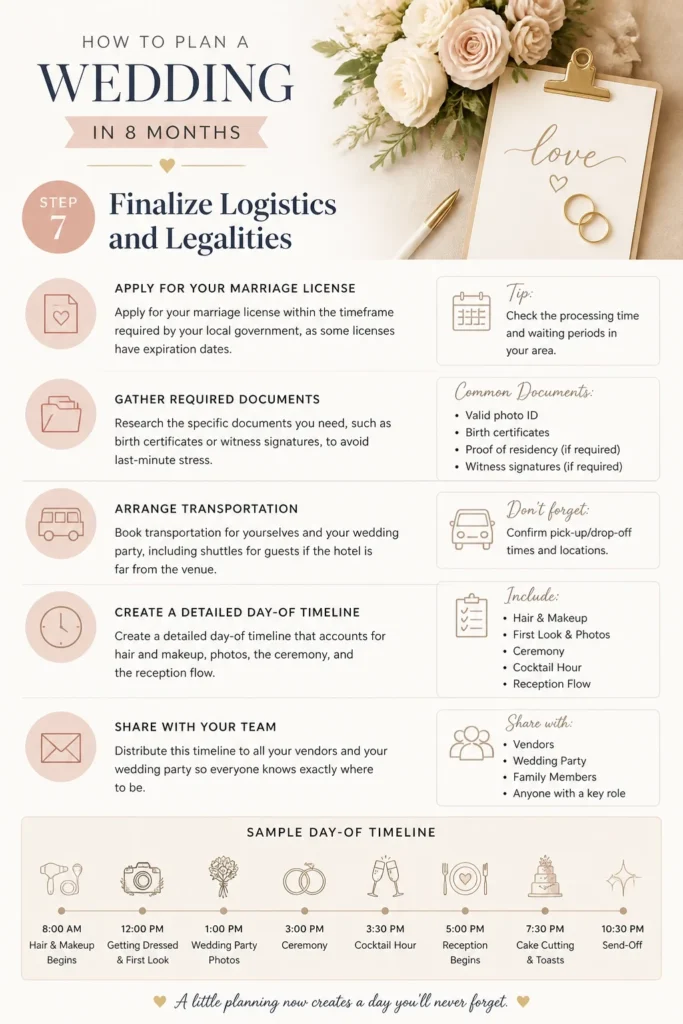
Research the specific documents you need, such as birth certificates or witness signatures, to avoid last-minute stress.
Book transportation for yourselves and your wedding party, including shuttles for guests if the hotel is far from the venue.
Create a detailed day-of timeline that accounts for hair and makeup, photos, the ceremony, and the reception flow.
Distribute this timeline to all your vendors and your wedding party so everyone knows exactly where to be.
Step 8: The Final Countdown
Collect all RSVPs and follow up with guests who have not responded by your deadline.
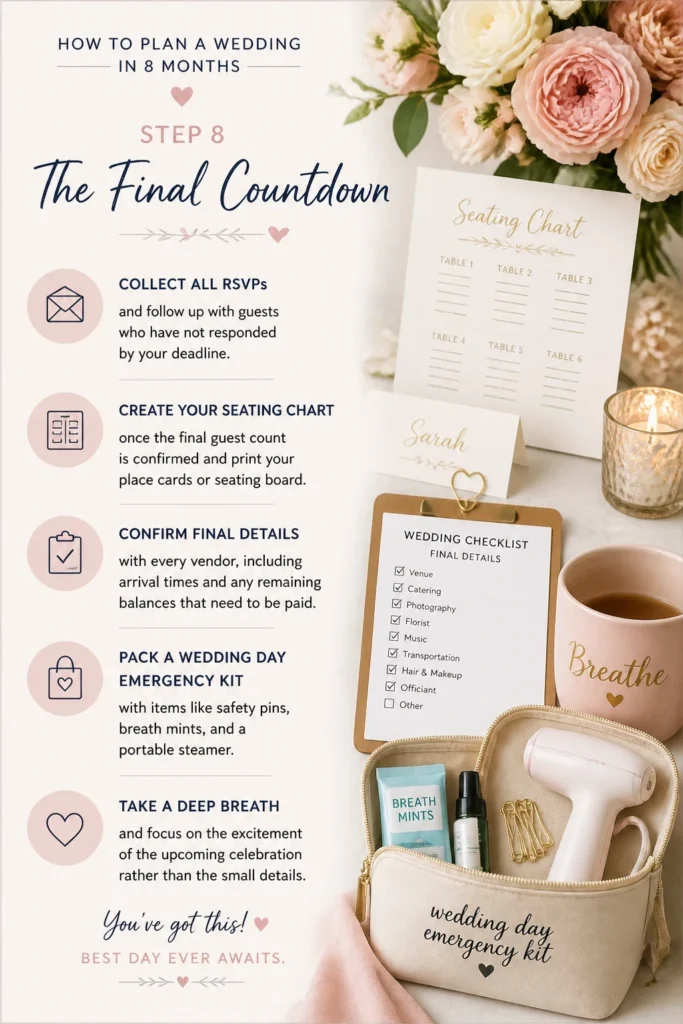
Create your seating chart once the final guest count is confirmed and print your place cards or seating board.
Confirm final details with every vendor, including arrival times and any remaining balances that need to be paid.
Pack a wedding day emergency kit with items like safety pins, breath mints, and a portable steamer.
Take a deep breath and focus on the excitement of the upcoming celebration rather than the small details.
Common Mistakes to Avoid
Ignoring the “Hidden” Costs
Many couples forget to account for service fees, taxes, and gratuities when they first set their budget.
These extra costs can easily add 20% to 30% to your total bill, which can be a shock if you haven’t planned for it.
Always ask vendors for the “all-in” price before you sign any contracts to keep your finances on track.
Over-Complicating the DIY Projects
With only eight months to plan, taking on too many “Do It Yourself” tasks can lead to burnout and unfinished projects.
Choose one or two small items to personalize, such as the favors or the guest book, and leave the rest to the pros.
Your time is valuable, and sometimes paying for a service is better than spending every weekend for months crafting.
Waiting Too Long to Book Accommodations
If your wedding is in a popular area or during a holiday weekend, hotels will fill up very quickly.
Failing to secure a room block early can leave your guests searching for expensive or distant lodging options.
Set up your hotel blocks as soon as your venue is booked to provide the best experience for your travelers.
Troubleshooting
A Key Vendor Becomes Unavailable
If a vendor cancels or is no longer available, do not panic or settle for someone you don’t like.
Ask the original vendor for recommendations, as they often have a network of trusted peers with similar styles.
Check local social media wedding groups for last-minute availability from reputable professionals in your area.
The Guest List Exceeds the Venue Capacity
If your “must-invite” list grows larger than your venue can hold, you have to make some tough cuts.
Start by removing “plus ones” for guests who are not in long-term relationships or eliminating children from the list.
Be consistent with your rules to avoid hurt feelings among your friends and family members.
Budget Overruns Early in the Process
If you spend more than expected on the venue or the dress, you must adjust your spending in other categories.
Look for areas where you can scale back, such as choosing a buffet over a plated dinner or using more greenery than flowers.
Re-evaluating your priorities mid-way through the eight months will help you stay within your total financial limit.
Key Takeaways
- Decide quickly: An eight-month timeline requires you to trust your gut and make firm choices without second-guessing.
- Prioritize the big three: Focus on the venue, the food, and the photography first, as these are the core elements of the day.
- Stay organized: Use a central planning tool to keep track of contracts, deadlines, and guest responses.
- Be flexible: You might not get your first choice of date or specific flower, but having an open mind leads to creative solutions.
- Delegate tasks: Don’t be afraid to ask your partner or wedding party to help with research or errands.
Frequently Asked Questions
Is 8 months enough time to plan a large wedding?
Yes, eight months is plenty of time if you are willing to be decisive and work efficiently.
You may have fewer options for venues or vendors that are booked years in advance, but you will still find high-quality professionals.
The key is to start the big tasks immediately and not linger on small decisions for too long.
Do I need a wedding planner for a shorter timeline?
A professional planner can be extremely helpful when you are on a compressed schedule because they already have vendor connections.
If a full planner is not in your budget, consider a “month-of” coordinator to handle the logistics in the final weeks.
Having an expert in your corner can significantly reduce the pressure of managing multiple vendors at once.
How do I handle dress shopping with only 8 months left?
Be very clear with the bridal salon about your wedding date the moment you walk through the door.
Ask to see gowns that are in stock or available for quick-ship programs to ensure they arrive in time for fittings.
Focus on styles that don’t require extensive custom beadwork or embroidery, as these usually take the longest to produce.
Our Top Recommended Finds
- The Erin Condren Wedding Planner: This physical planner is excellent for keeping all your checklists and vendor contact info in one place.
- Zola Wedding Website: This platform is user-friendly and integrates your registry, website, and guest list management for free.
- Rowenta Portable Handheld Steamer: A reliable steamer is essential for keeping your attire and linens wrinkle-free on the big day.
Time To Make It Official
Now that you have a clear eight-month roadmap, it is time to take the first step and define your budget.
The most successful weddings are those where the couple focuses on the joy of the occasion rather than chasing perfection.
Start your venue search today and enjoy the excitement of watching your vision come to life in the coming months.
You might also want to look into local marriage license requirements or start browsing photographer portfolios to get the ball rolling.
Wedding Planning
No fluff, no drama. Just easy weekly advice, planning shortcuts, and gentle reminders to help you actually enjoy your engagement.