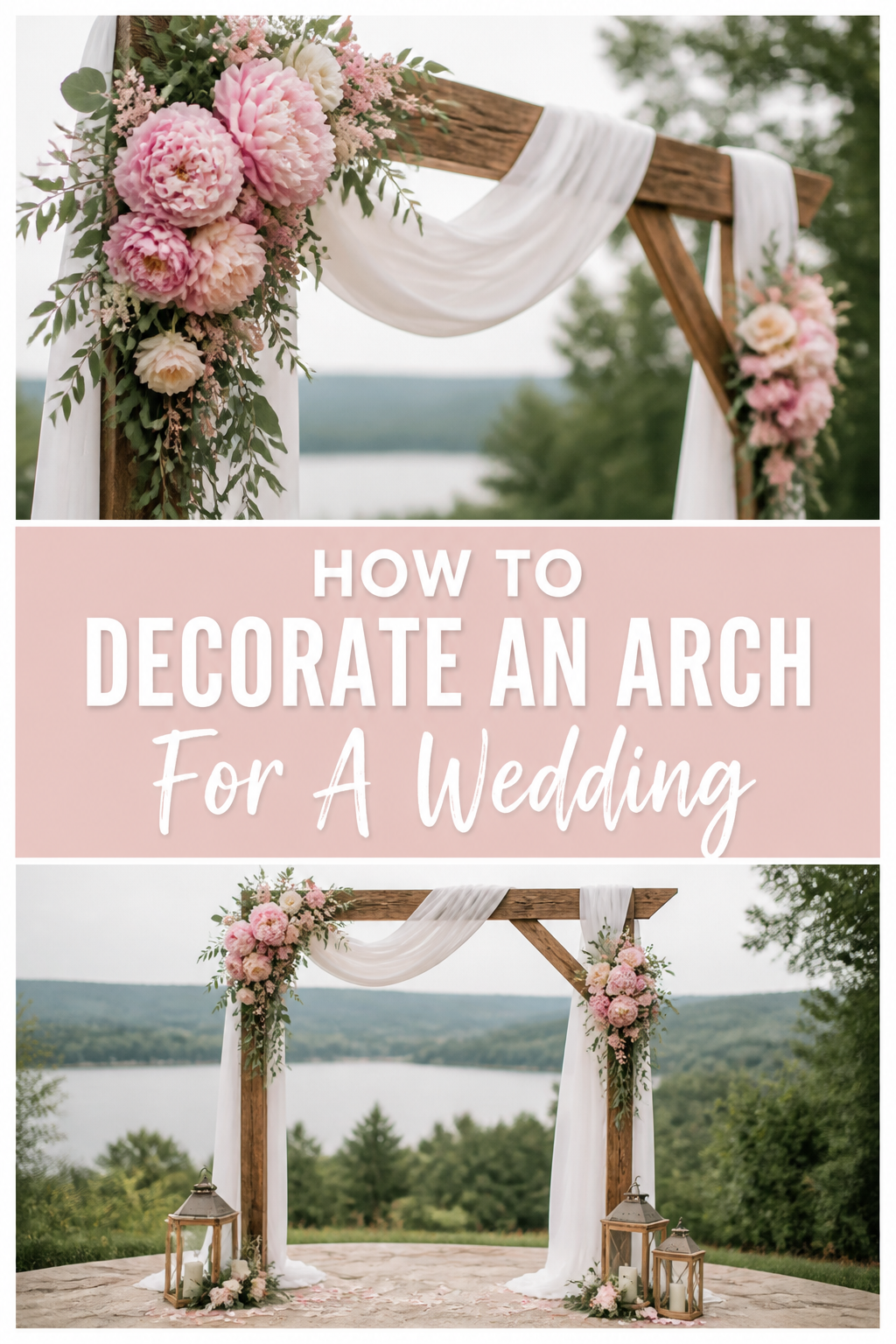
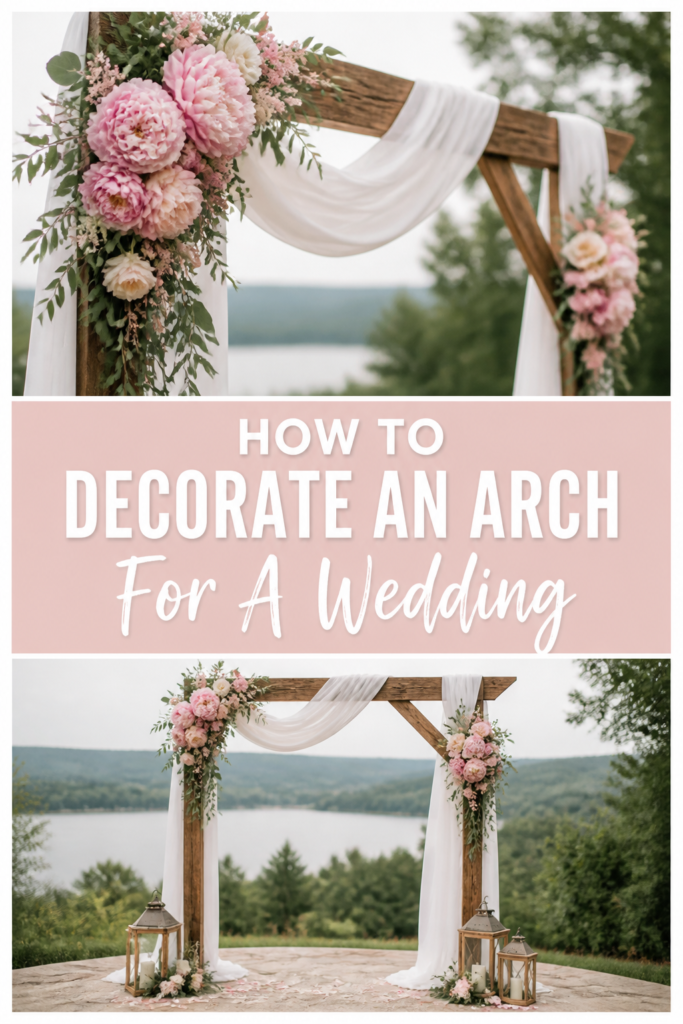
🌿 How To Decorate An Arch For A Wedding
Wedding Planning
No fluff, no drama. Just easy weekly advice, planning shortcuts, and gentle reminders to help you actually enjoy your engagement.
Your wedding arch serves as the focal point for one of the most significant moments of your life.
It is the frame for your first kiss and the backdrop for the photographs you will cherish for decades.
I have spent years helping couples design these structures, and I know that a professional-looking arch is all about the hidden mechanics and the right layering techniques.
Quick Overview
Decorating a wedding arch is a rewarding project that allows you to infuse your personal style into the ceremony space.
- Time needed: 3 to 5 hours (depending on complexity)
- Difficulty: Intermediate
- What you’ll need: Arch frame, floral foam or cages, heavy-duty zip ties, floral wire, fabric (chiffon or tulle), greenery, focal flowers, and filler blooms.
Step-by-Step Instructions
Step 1: Choose and Secure Your Frame
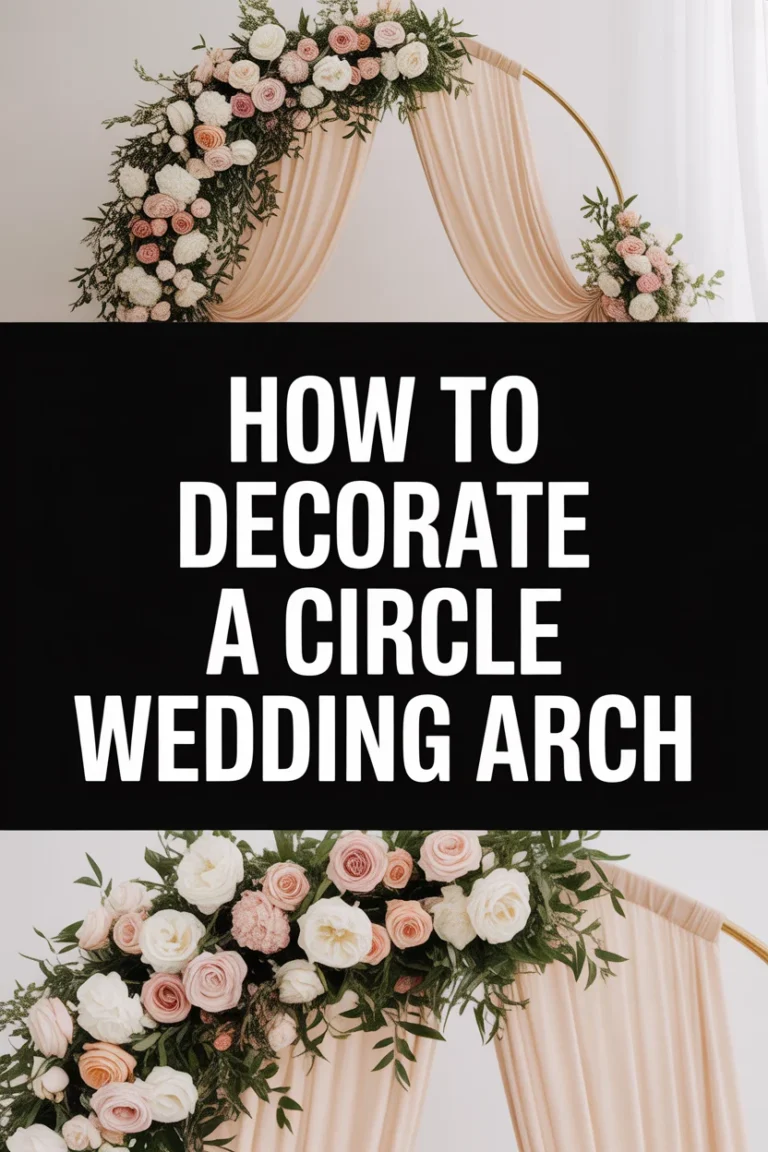
Select a frame that complements your wedding theme, whether it is a classic rounded metal arch, a rustic wooden hexagon, or a minimalist copper rectangle.
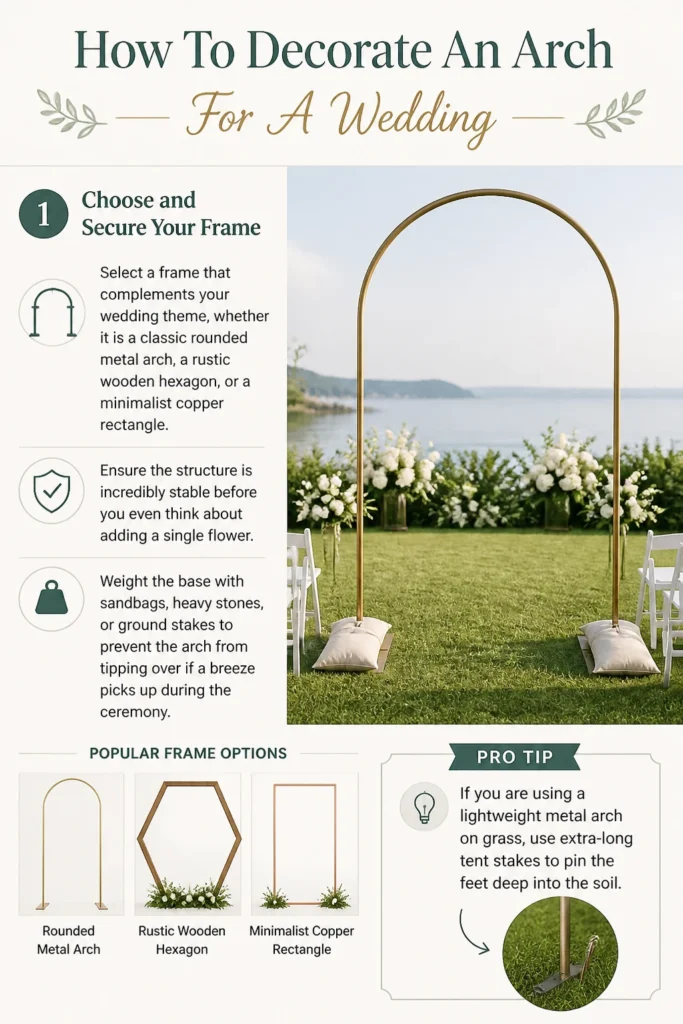
Ensure the structure is incredibly stable before you even think about adding a single flower.
Weight the base with sandbags, heavy stones, or ground stakes to prevent the arch from tipping over if a breeze picks up during the ceremony.
Pro Tip: If you are using a lightweight metal arch on grass, use extra-long tent stakes to pin the feet deep into the soil.
Step 2: Drape Your Fabric Foundation
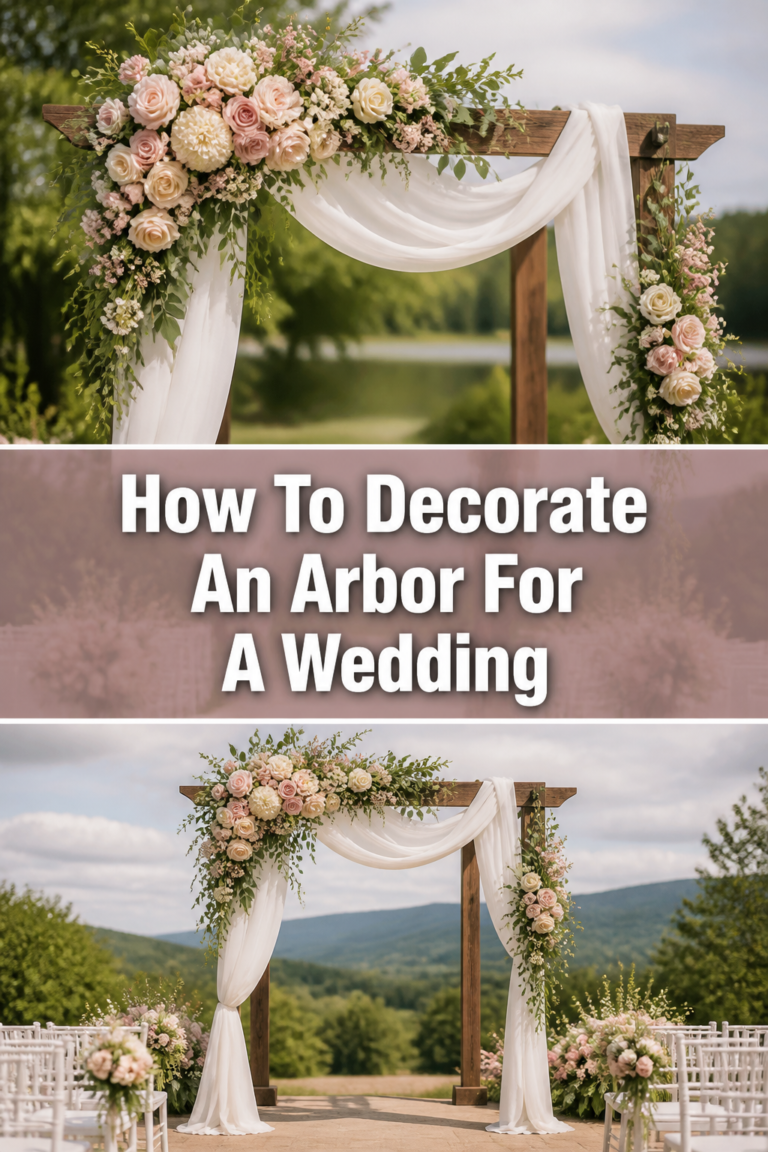
Begin by draping your fabric over the frame to create a soft, romantic base for your floral arrangements.
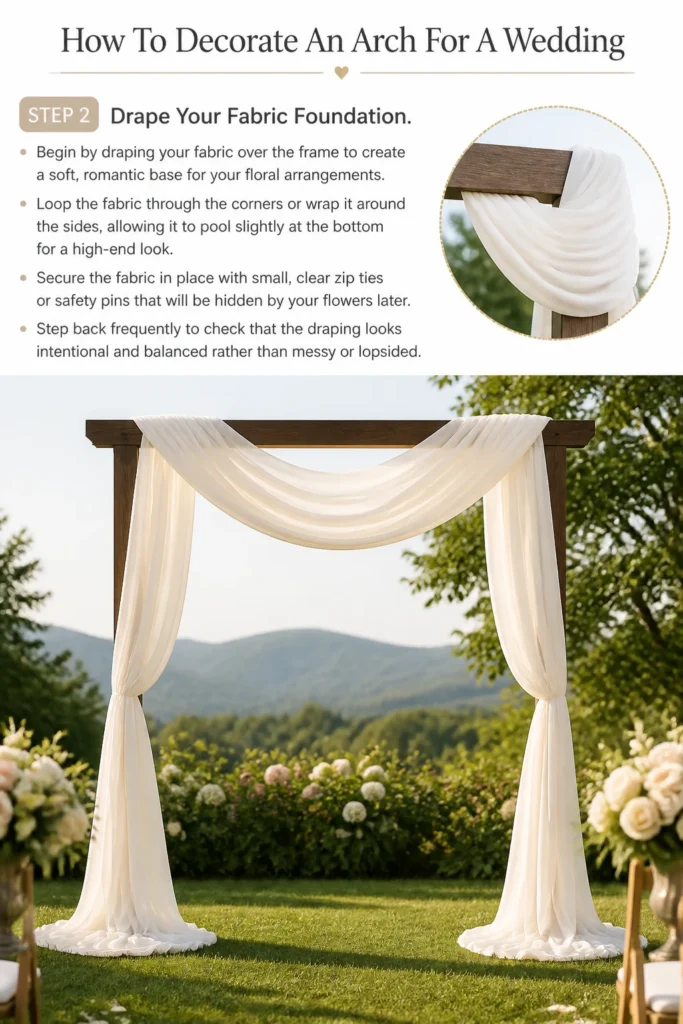
Loop the fabric through the corners or wrap it around the sides, allowing it to pool slightly at the bottom for a high-end look.
Secure the fabric in place with small, clear zip ties or safety pins that will be hidden by your flowers later.
Step back frequently to check that the draping looks intentional and balanced rather than messy or lopsided.
Step 3: Install the Floral Mechanics
Attach floral foam cages or plastic saddles to the points on the arch where you want your largest flower clusters to live.
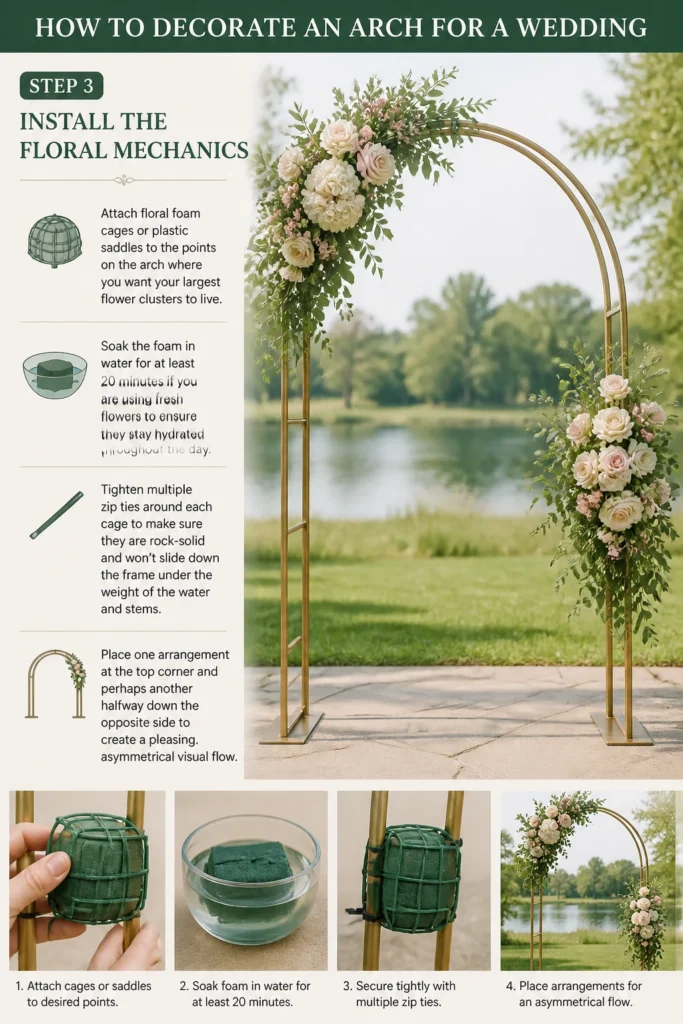
Soak the foam in water for at least 20 minutes if you are using fresh flowers to ensure they stay hydrated throughout the day.
Tighten multiple zip ties around each cage to make sure they are rock-solid and won’t slide down the frame under the weight of the water and stems.
Place one arrangement at the top corner and perhaps another halfway down the opposite side to create a pleasing, asymmetrical visual flow.
Step 4: Establish the Greenery Base
Insert your largest pieces of greenery first to define the overall shape and size of your floral installations.
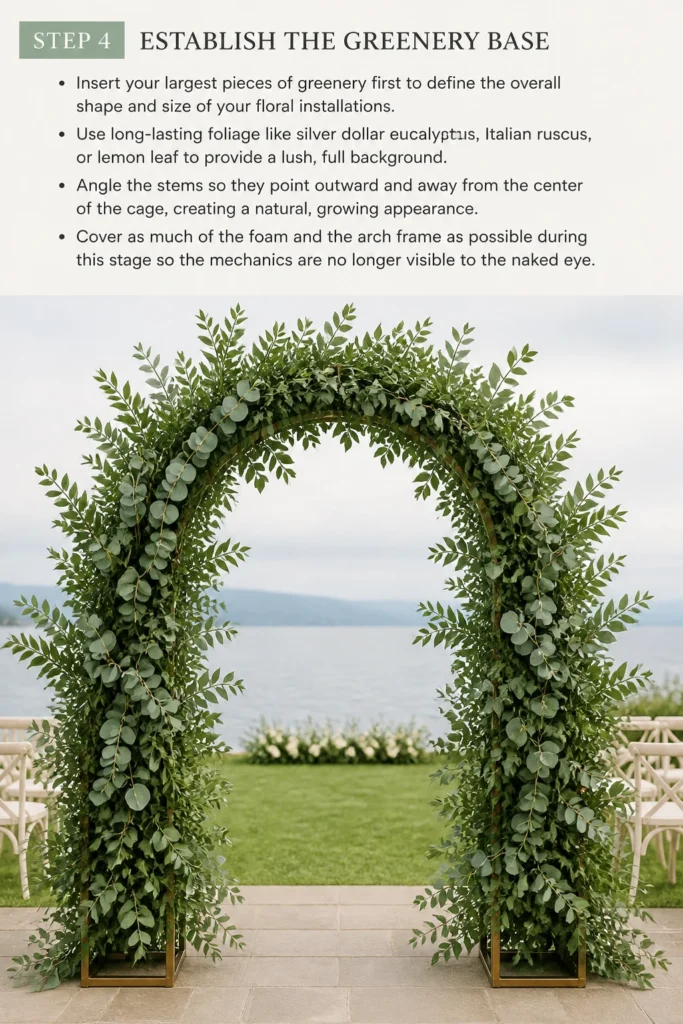
Use long-lasting foliage like silver dollar eucalyptus, Italian ruscus, or lemon leaf to provide a lush, full background.
Angle the stems so they point outward and away from the center of the cage, creating a natural, “growing” appearance.
Cover as much of the foam and the arch frame as possible during this stage so the mechanics are no longer visible to the naked eye.
Step 5: Place Your Focal Flowers
Select your largest and most beautiful blooms, such as roses, peonies, or dahlias, to act as the stars of the show.
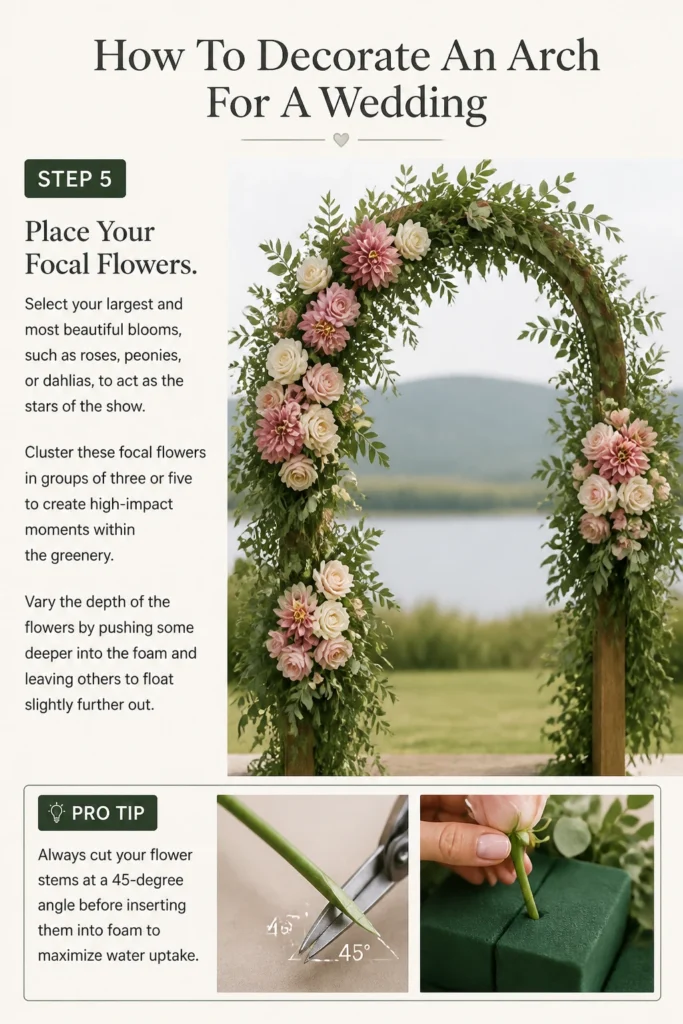
Cluster these focal flowers in groups of three or five to create high-impact “moments” within the greenery.
Vary the depth of the flowers by pushing some deeper into the foam and leaving others to “float” slightly further out.
Pro Tip: Always cut your flower stems at a 45-degree angle before inserting them into foam to maximize water uptake.
Step 6: Add Filler and Accent Blooms
Tuck smaller flowers like spray roses, ranunculus, or waxflower into the gaps between your focal blooms.
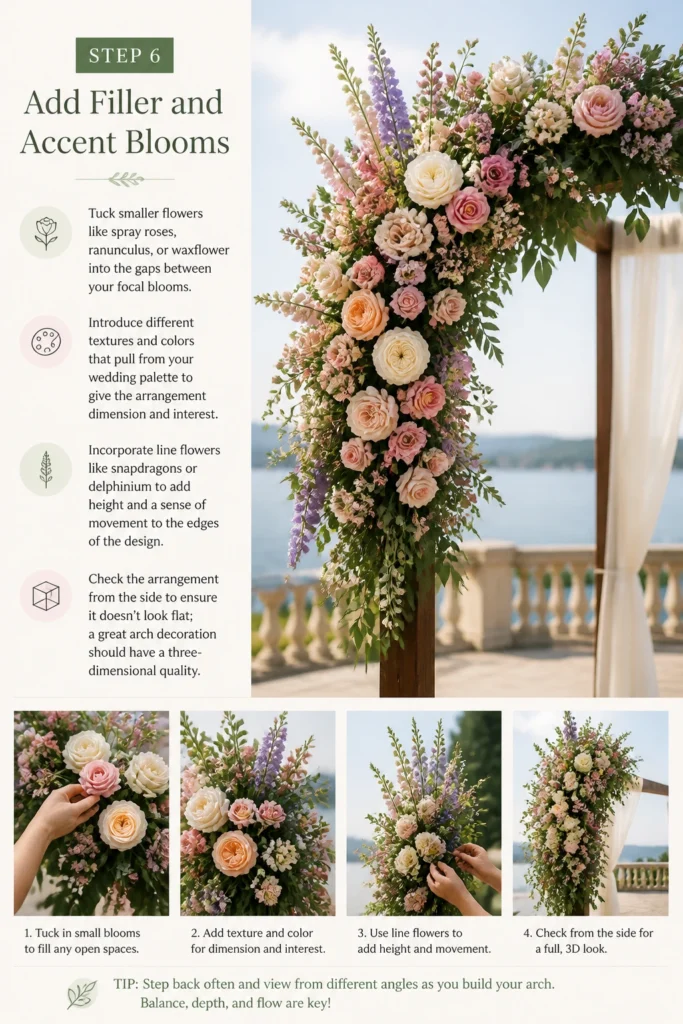
Introduce different textures and colors that pull from your wedding palette to give the arrangement dimension and interest.
Incorporate “line” flowers like snapdragons or delphinium to add height and a sense of movement to the edges of the design.
Check the arrangement from the side to ensure it doesn’t look flat; a great arch decoration should have a three-dimensional quality.
Step 7: Refine and Secure Loose Ends
Use thin floral wire to secure any stray branches or heavy flower heads that look like they might move.
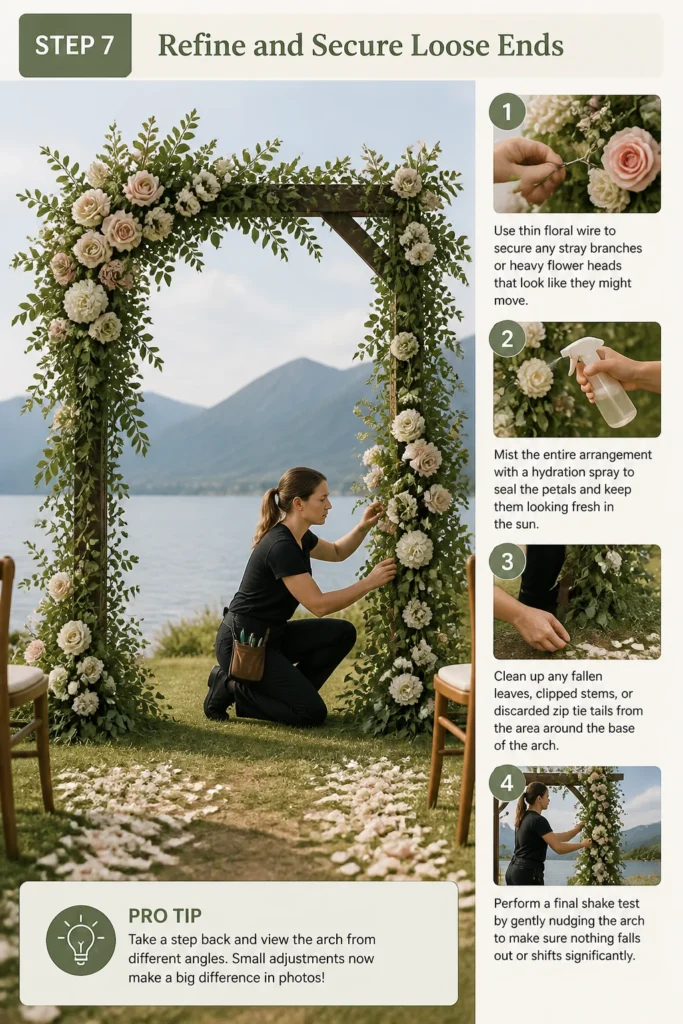
Mist the entire arrangement with a hydration spray to seal the petals and keep them looking fresh in the sun.
Clean up any fallen leaves, clipped stems, or discarded zip tie tails from the area around the base of the arch.
Perform a final “shake test” by gently nudging the arch to make sure nothing falls out or shifts significantly.
Common Mistakes to Avoid
The Invisible Backside
Many people forget that guests might see the arch from multiple angles, or the wind might blow the fabric around.
If you only decorate the front, the back will look unfinished and messy with visible wires and foam.
Make sure to tuck a few leaves and filler flowers into the back of the arrangement to create a polished look from every perspective.
Ignoring the Center of Gravity
Adding too much weight to the very top of a tall arch can make it extremely unstable.
A top-heavy arch is a safety hazard that could blow over onto the couple or the officiant during the ceremony.
Distribute the weight by placing a larger floral cluster on one side and a smaller, lower one on the opposite side to keep the center of gravity manageable.
Using Fragile Flowers in Direct Sun
Hydrangeas and certain types of lilies wilt almost instantly once they are cut and placed in the heat.
Choosing these “diva” flowers for an outdoor arch often results in brown, drooping petals before the bride even walks down the aisle.
Stick to hardy varieties like roses, carnations, and orchids, or use high-quality silk flowers for the most exposed parts of the structure.
Troubleshooting
The Arch is Leaning to One Side
This usually happens when the ground is uneven or the floral weight is poorly distributed.
Try shimming the base with small pieces of wood or cardboard to level it out on the grass.
If the lean is caused by the flowers, add a heavy weight or a decorative planter to the base of the opposite side to act as a counterweight.
The Fabric Keeps Slipping Off
Smooth metal or wooden poles offer very little grip for slippery fabrics like chiffon.
Wrap a small piece of double-sided tape or a rubber band around the pole before draping the fabric over it.
This creates enough friction to hold the fabric in place without needing bulky clips that ruin the aesthetic.
Flowers Are Drooping in the Heat
If you notice wilting an hour before the ceremony, use a spray bottle to heavily mist the blooms with cool water.
You can also try “rescuing” a specific flower by pulling it out, re-cutting the stem, and placing it in a water-filled floral tube before re-inserting it.
For future reference, keeping the arch in the shade until the last possible moment is the best way to prevent this issue.
Key Takeaways
- Safety first: Always prioritize the structural integrity and weight of the arch base before decorating.
- Layer your elements: Start with fabric, move to greenery, and finish with focal and filler flowers.
- Use proper mechanics: Floral foam cages and zip ties are essential for keeping heavy arrangements secure.
- Design for all angles: Ensure the back and sides of the arch look as finished as the front.
- Hydration is key: Use water-soaked foam and hardy flower varieties for outdoor ceremonies.
- Scale matters: Ensure the size of your floral clusters is proportionate to the size of the arch frame.
Frequently Asked Questions
Can I decorate the arch the day before the wedding?
It is generally better to decorate the arch on the morning of the wedding to ensure the flowers stay fresh.
If you must do it the day before, use high-quality artificial flowers or very hardy greenery and keep the structure in a cool, shaded area.
Fresh flowers in foam will usually only look their absolute best for about 6 to 12 hours depending on the temperature.
How much fabric do I need for a standard wedding arch?
For a standard 7-foot arch, you will typically need between 8 and 12 yards of fabric if you want a draped look.
This allows enough length to go up one side, across the top, and down the other side with plenty of extra for pooling at the base.
If you want a more gathered or “swagged” look, you may need to increase that amount to 15 yards.
Is it cheaper to use real or fake flowers for an arch?
High-quality silk flowers can actually be more expensive than real flowers, but they offer the benefit of being reusable and weather-resistant.
Many couples choose a “high-low” mix, using real greenery and filler flowers with high-end silk focal blooms to save money and stress.
Real flowers often provide a better scent and a more natural movement, which many people prefer for such a close-up focal point.
Our Top Recommended Finds
- Floral Foam Cages: These provide a sturdy plastic frame and a water source for your stems, making it easy to attach large arrangements to poles.
- Heavy-Duty UV-Resistant Zip Ties: Standard zip ties can snap in extreme heat; look for industrial versions to ensure your flowers stay put.
- Chiffon Fabric Bolts: Buying fabric by the bolt is much more cost-effective than buying individual drapes and ensures color consistency.
Finalizing Your Ceremony Masterpiece
Once your arch is complete, take a moment to view it through a camera lens.
Photos often reveal small gaps or balance issues that the naked eye might miss during the busy setup process.
If you enjoyed this project, you might also want to look into creating matching aisle markers or a coordinating sweetheart table arrangement.
Start gathering your supplies today so you have plenty of time to practice your draping technique before the big day arrives.
Wedding Planning
No fluff, no drama. Just easy weekly advice, planning shortcuts, and gentle reminders to help you actually enjoy your engagement.