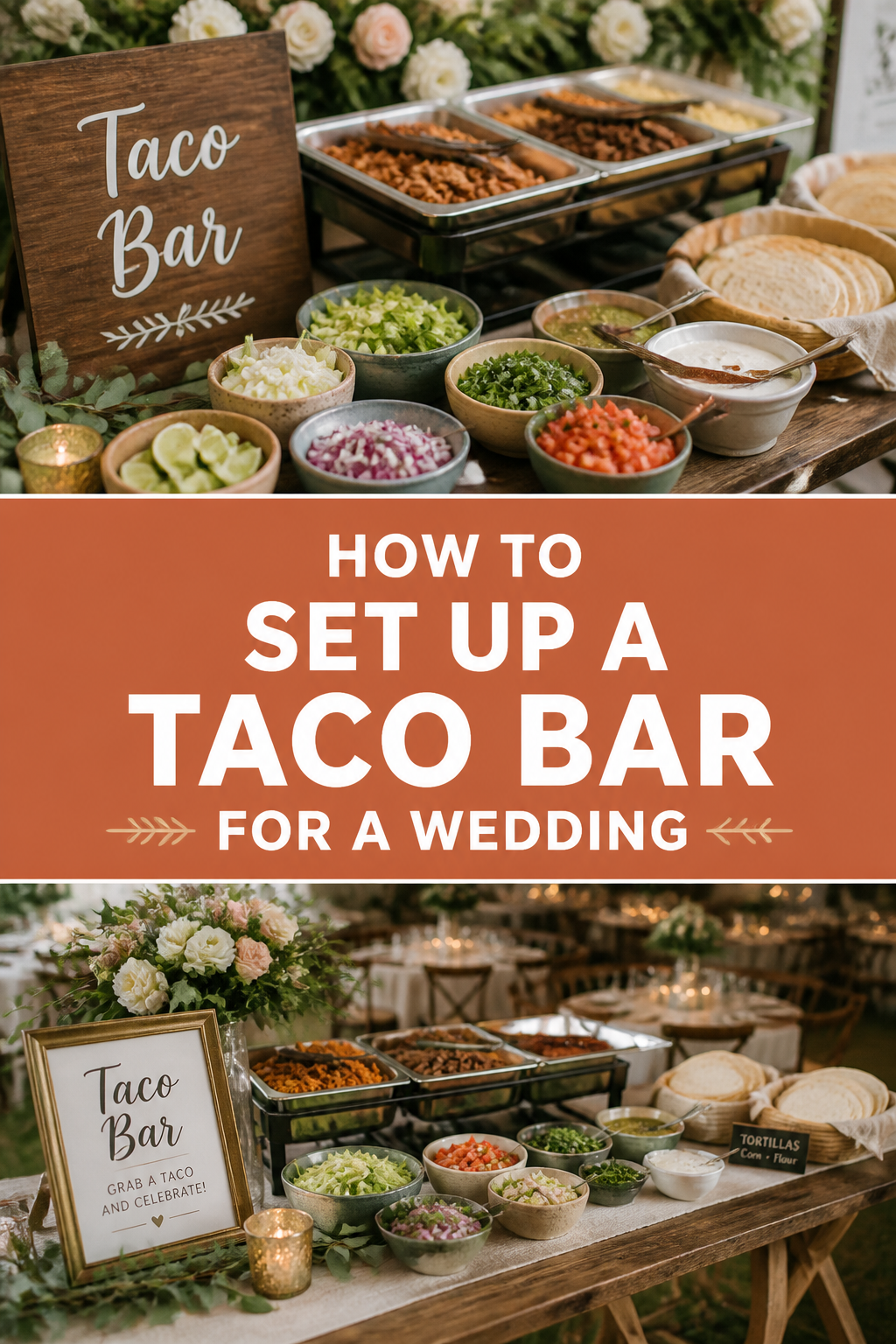
🌮 How To Set Up A Taco Bar For A Wedding

Wedding Planning
No fluff, no drama. Just easy weekly advice, planning shortcuts, and gentle reminders to help you actually enjoy your engagement.
I remember helping my best friend coordinate her backyard wedding where we served over 150 guests with a DIY taco station.
It was the highlight of the night, but only because we spent weeks obsessing over the logistics of keeping the carnitas hot and the salsa cold.
This guide comes from that hands-on experience to help you create a seamless, delicious experience for your big day.
Quick Overview
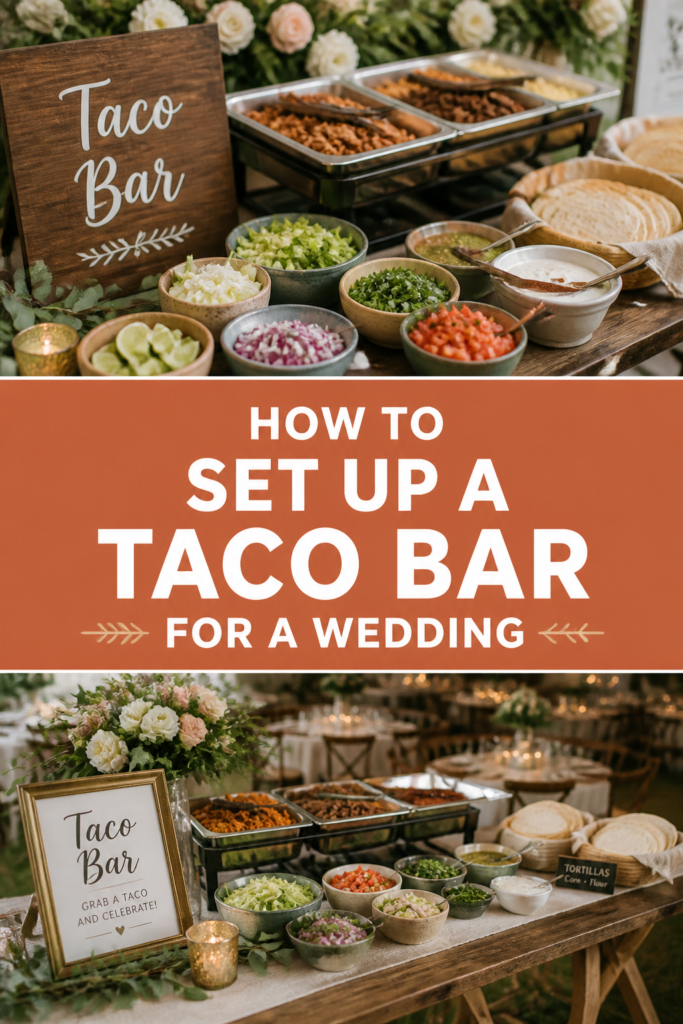
A taco bar is one of the most versatile and budget-friendly ways to feed a large group while accommodating various dietary needs.
- Time needed: 2-3 days of prep and 2 hours for final setup
- Difficulty: Intermediate
- What you’ll need: Chafing dishes, variety of proteins, tortillas, assorted toppings, signage, and serving utensils
Step-by-Step Instructions
Step 1: Choose Your Taco Theme and Proteins
Select a cohesive flavor profile so the ingredients work well together rather than clashing.
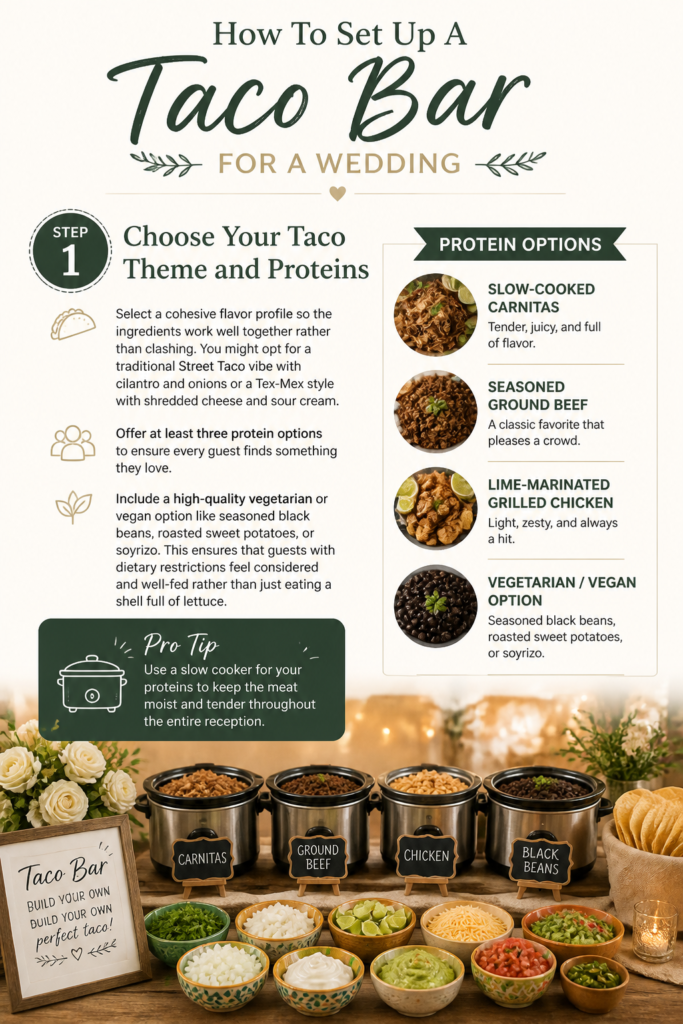
You might opt for a traditional “Street Taco” vibe with cilantro and onions or a “Tex-Mex” style with shredded cheese and sour cream.
Offer at least three protein options to ensure every guest finds something they love.
Slow-cooked carnitas, seasoned ground beef, and lime-marinated grilled chicken are the most popular choices for large crowds.
Include a high-quality vegetarian or vegan option like seasoned black beans, roasted sweet potatoes, or soyrizo.
This ensures that guests with dietary restrictions feel considered and well-fed rather than just eating a shell full of lettuce.
Pro Tip: Use a slow cooker for your proteins to keep the meat moist and tender throughout the entire reception.
Step 2: Calculate Your Quantities Carefully
Estimate about three tacos per adult guest, though some will eat two and others will eat five.
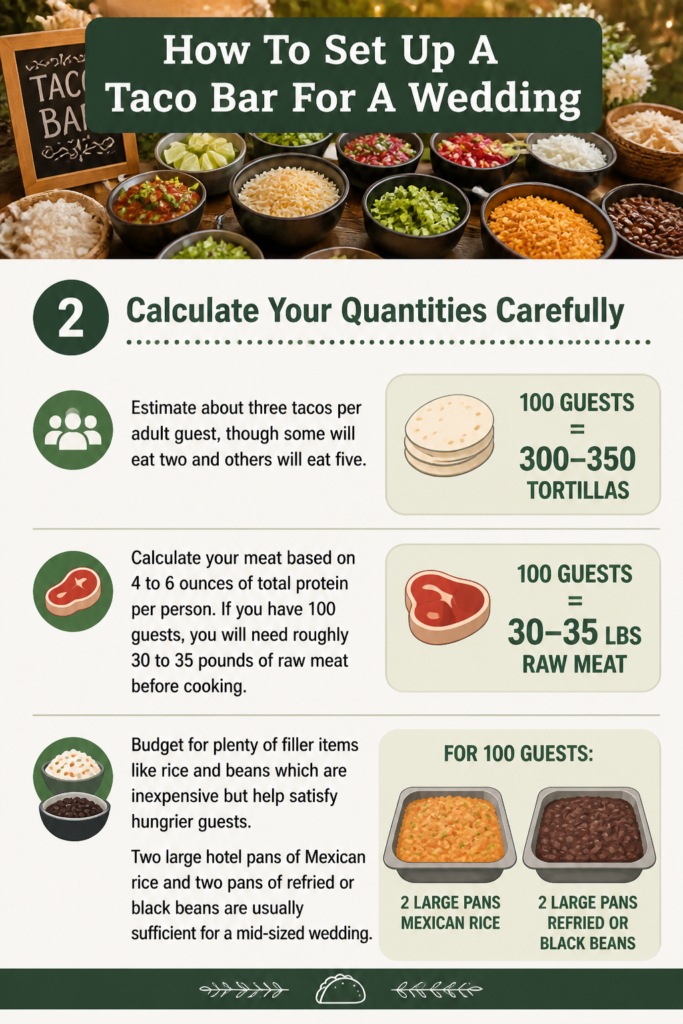
For 100 guests, you should plan for approximately 300 to 350 tortillas to be safe.
Calculate your meat based on 4 to 6 ounces of total protein per person.
If you have 100 guests, you will need roughly 30 to 35 pounds of raw meat before cooking.
Budget for plenty of “filler” items like rice and beans which are inexpensive but help satisfy hungrier guests.
Two large hotel pans of Mexican rice and two pans of refried or black beans are usually sufficient for a mid-sized wedding.
Step 3: Source Your Tortillas and Shells
Provide a mix of corn and flour tortillas to cater to different preferences and gluten sensitivities.
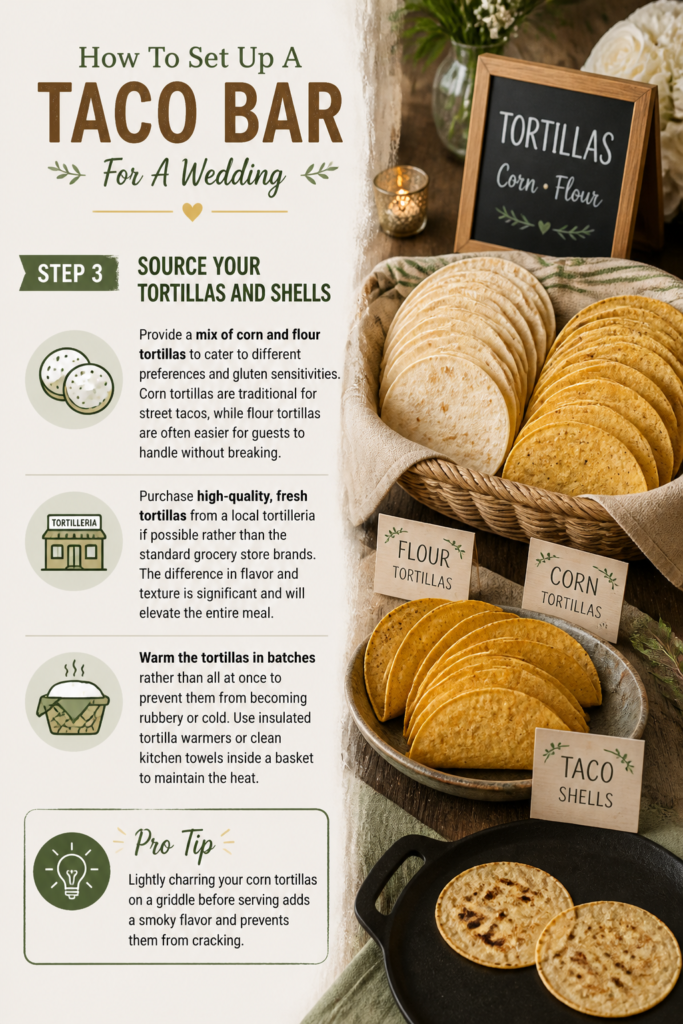
Corn tortillas are traditional for street tacos, while flour tortillas are often easier for guests to handle without breaking.
Purchase high-quality, fresh tortillas from a local tortilleria if possible rather than the standard grocery store brands.
The difference in flavor and texture is significant and will elevate the entire meal.
Warm the tortillas in batches rather than all at once to prevent them from becoming rubbery or cold.
Use insulated tortilla warmers or clean kitchen towels inside a basket to maintain the heat.
Pro Tip: Lightly charring your corn tortillas on a griddle before serving adds a smoky flavor and prevents them from cracking.
Step 4: Curate a Diverse Topping Station
Organize your toppings into categories: fresh crunch, creamy elements, and acids.
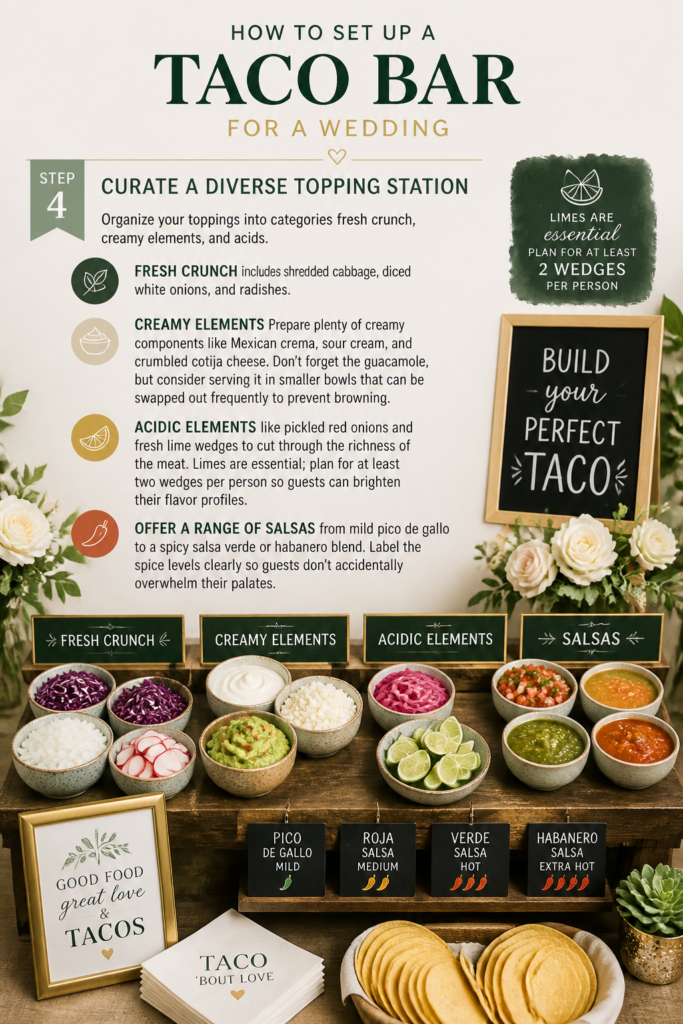
Fresh crunch includes shredded cabbage, diced white onions, and radishes.
Prepare plenty of creamy components like Mexican crema, sour cream, and crumbled cotija cheese.
Don’t forget the guacamole, but consider serving it in smaller bowls that can be swapped out frequently to prevent browning.
Incorporate acidic elements like pickled red onions and fresh lime wedges to cut through the richness of the meat.
Limes are essential; plan for at least two wedges per person so guests can brighten their flavor profiles.
Offer a range of salsas from mild pico de gallo to a spicy salsa verde or habanero blend.
Label the spice levels clearly so guests don’t accidentally overwhelm their palates.
Step 5: Arrange the Buffet for Maximum Flow
Position the plates at the very beginning of the line to get the process started.
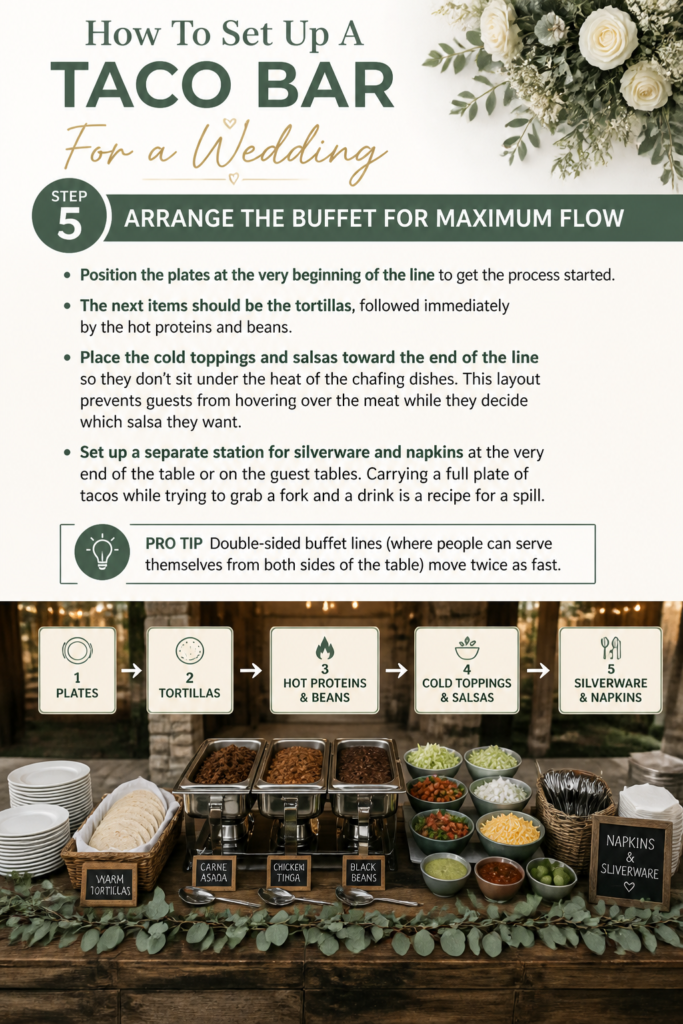
The next items should be the tortillas, followed immediately by the hot proteins and beans.
Place the cold toppings and salsas toward the end of the line so they don’t sit under the heat of the chafing dishes.
This layout prevents guests from hovering over the meat while they decide which salsa they want.
Set up a separate station for silverware and napkins at the very end of the table or on the guest tables.
Carrying a full plate of tacos while trying to grab a fork and a drink is a recipe for a spill.
Pro Tip: Double-sided buffet lines (where people can serve themselves from both sides of the table) move twice as fast.
Step 6: Manage Food Safety and Temperatures
Use professional-grade chafing dishes with water pans and sterno fuel to keep the meat and beans above 140°F.
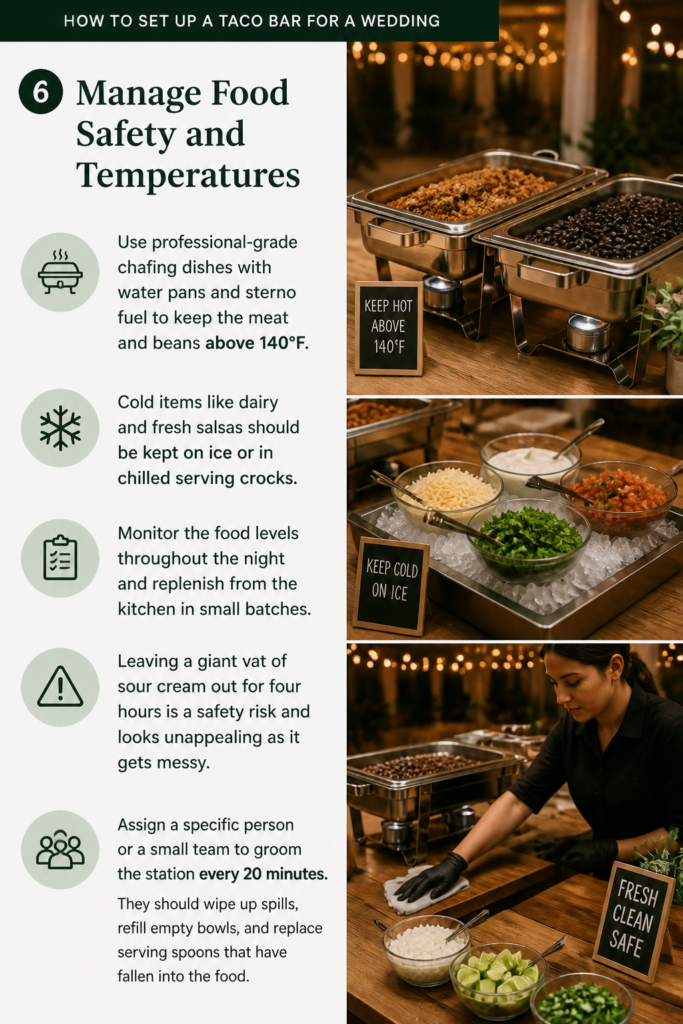
Cold items like dairy and fresh salsas should be kept on ice or in chilled serving crocks.
Monitor the food levels throughout the night and replenish from the kitchen in small batches.
Leaving a giant vat of sour cream out for four hours is a safety risk and looks unappealing as it gets messy.
Assign a specific person or a small team to “groom” the station every 20 minutes.
They should wipe up spills, refill empty bowls, and replace serving spoons that have fallen into the food.
Step 7: Design Clear and Beautiful Signage
Label every single item on the bar, especially the proteins and salsas.
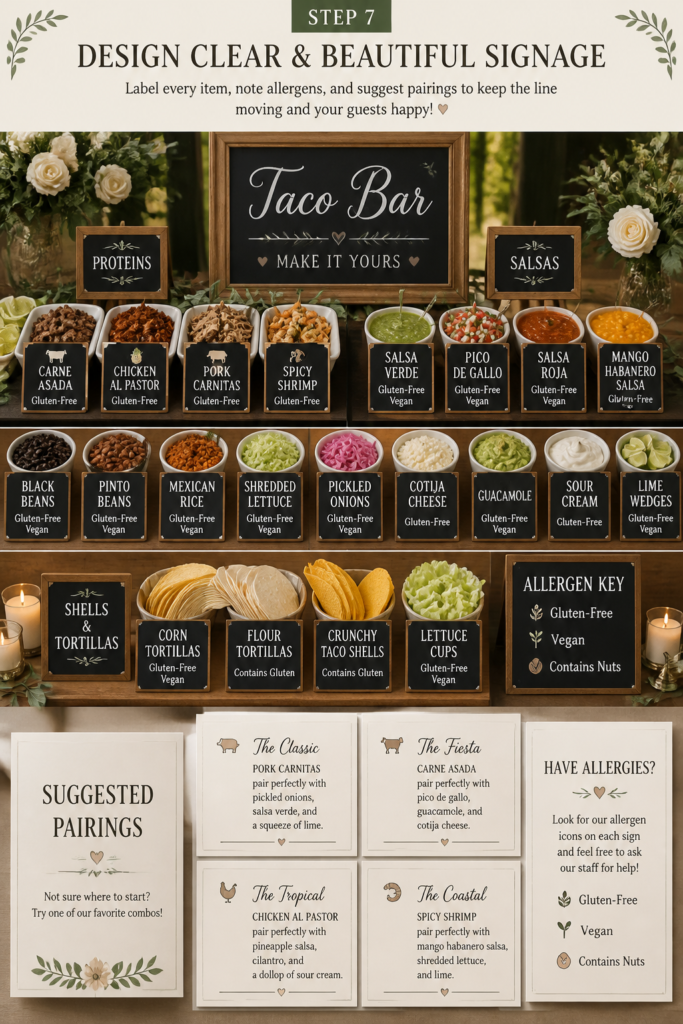
Include notes for “Gluten-Free,” “Vegan,” or “Contains Nuts” to help guests with allergies navigate the line safely.
Use a consistent aesthetic for your signs that matches your wedding theme, such as small chalkboards or elegant cardstock.
Clear labeling reduces the time guests spend asking questions, which keeps the line moving quickly.
Provide “Suggested Pairing” cards to help guests who might be overwhelmed by the choices.
For example, a card might suggest: “The Pork Carnitas pair perfectly with pickled onions and salsa verde.”
Step 8: Prepare for the Cleanup Phase
Stock the station with plenty of high-quality napkins or even wet naps.
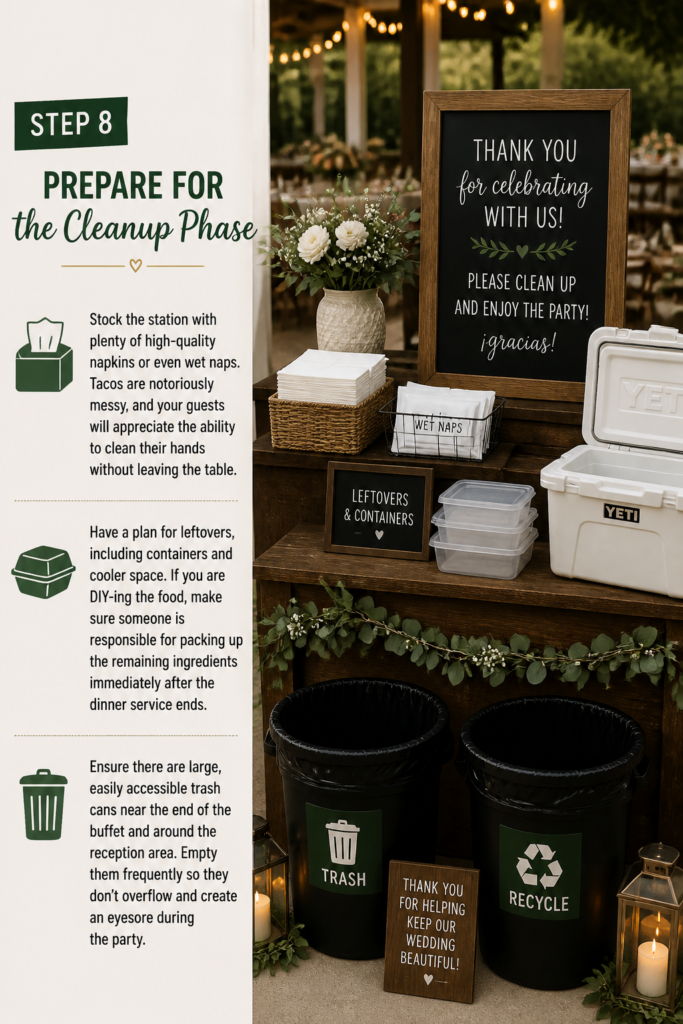
Tacos are notoriously messy, and your guests will appreciate the ability to clean their hands without leaving the table.
Have a plan for leftovers, including containers and cooler space.
If you are DIY-ing the food, make sure someone is responsible for packing up the remaining ingredients immediately after the dinner service ends.
Ensure there are large, easily accessible trash cans near the end of the buffet and around the reception area.
Empty them frequently so they don’t overflow and create an eyesore during the party.
Common Mistakes to Avoid
The “Cold Tortilla” Catastrophe
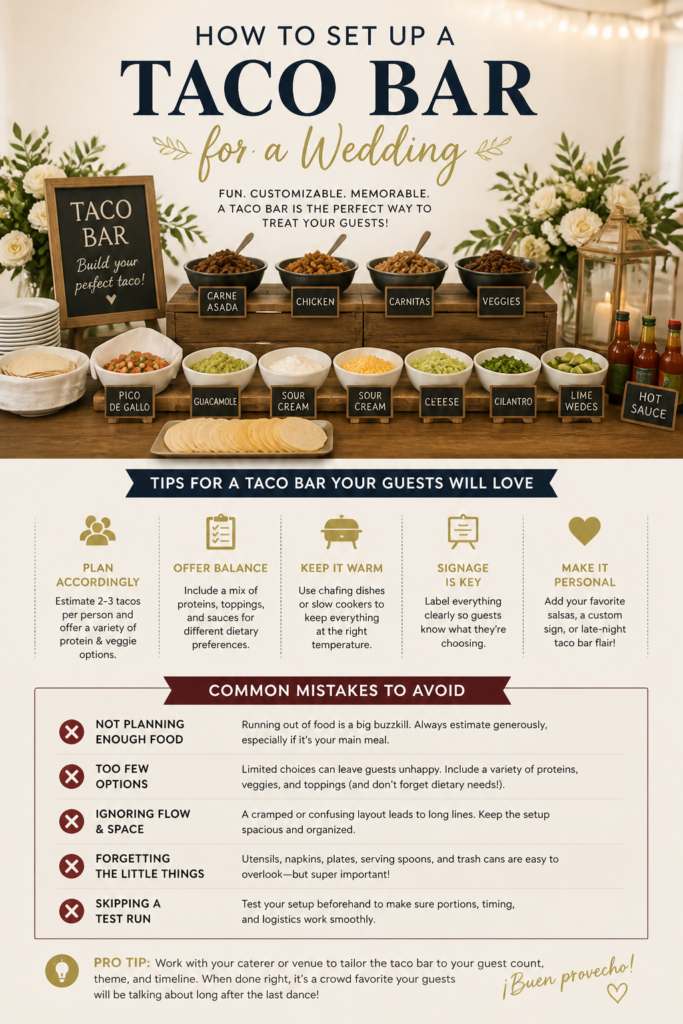
Serving cold or room-temperature tortillas is the quickest way to make a taco bar feel cheap.
Cold tortillas are stiff, break easily, and fail to hold the heat of the meat.
Invest in several insulated warmers or use a slow cooker on the “warm” setting with a damp cloth to keep them pliable.
The Salsa Bottleneck
Putting all the salsas and small toppings in tiny jars with tiny spoons creates a massive traffic jam.
Guests spend too much time hovering over the salsa station trying to scoop out enough pico de gallo.
Use wide-mouthed bowls and larger serving spoons for the most popular toppings to keep the line flowing.
Ignoring the “Drip” Factor
Many people forget that taco fillings can be juicy and salsas can be watery.
If you don’t provide sturdy plates, the juice will soak through and end up on your guests’ formal wear.
Opt for heavy-duty disposable plates or real ceramic plates that can handle the weight and moisture of a fully loaded taco.
Troubleshooting
The Line Is Moving Too Slowly
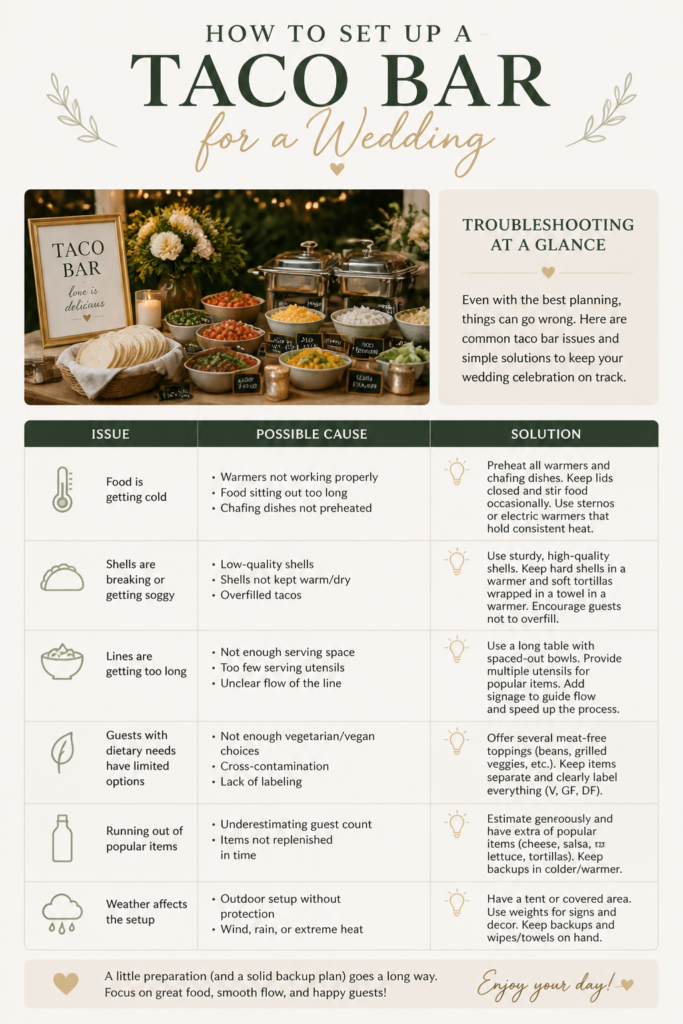
If you notice a long queue forming, it is usually because the “assembly” part of the bar is too complex.
To fix this, pull the most popular items (like cheese and lettuce) into two separate bowls so two people can grab them at once.
You can also have a staff member or bridesmaid help plate the proteins so guests only have to worry about the toppings.
The Meat Is Drying Out
Meat sitting in a chafing dish for hours will eventually lose its moisture and become tough.
Keep a small container of warm broth or juice (like pineapple juice for al pastor or beef broth for barbacoa) behind the scenes.
Every 30 minutes, stir a splash of the liquid into the meat to revive the texture and flavor.
Running Out of a Key Ingredient
It is almost inevitable that one topping—usually guacamole or the most popular meat—will disappear faster than the others.
Always have a “backup” stash of the most popular items hidden in the kitchen or a cooler.
If you truly run out, move the remaining items around to fill the gap so the table doesn’t look empty or neglected.
Key Takeaways
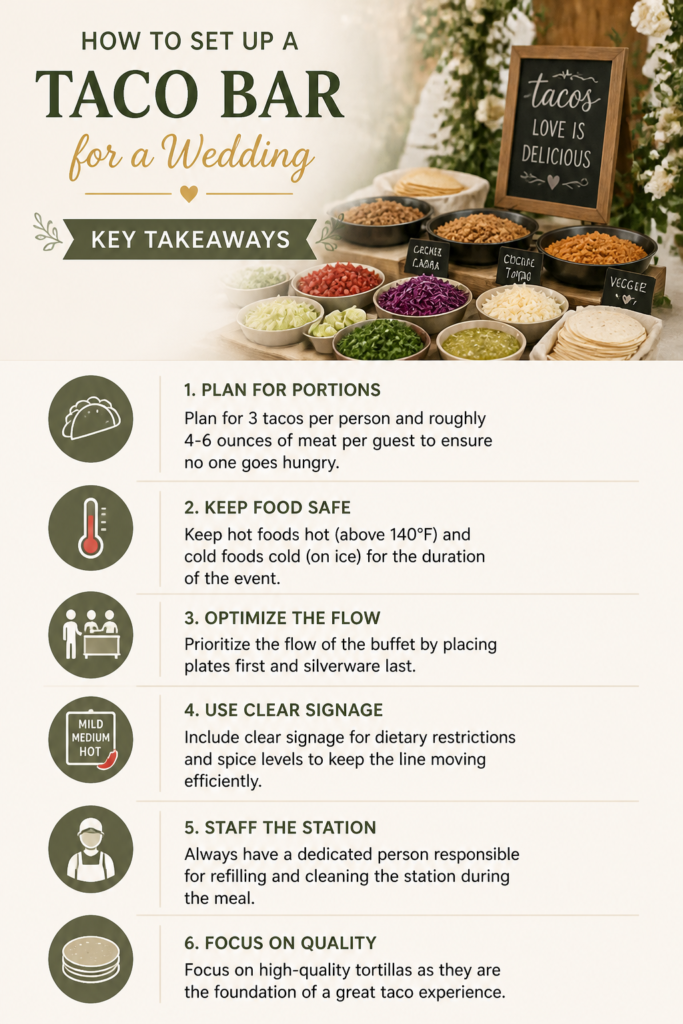
- Plan for 3 tacos per person and roughly 4-6 ounces of meat per guest to ensure no one goes hungry.
- Keep hot foods hot (above 140°F) and cold foods cold (on ice) for the duration of the event.
- Prioritize the flow of the buffet by placing plates first and silverware last.
- Include clear signage for dietary restrictions and spice levels to keep the line moving efficiently.
- Always have a dedicated person responsible for refilling and cleaning the station during the meal.
- Focus on high-quality tortillas as they are the foundation of a great taco experience.
Frequently Asked Questions
How do I keep tortillas warm for a long period?
The best method is to wrap stacks of 10 to 12 tortillas in aluminum foil and keep them in a low oven (200°F) until needed.
When it is time to serve, transfer them to an insulated tortilla warmer or a decorative basket lined with a thick, clean towel.
Avoid microwaving them in large stacks, as they will stick together and become gummy as they cool.
What are the best side dishes for a wedding taco bar?
Mexican street corn (elote) is always a crowd-pleaser and can be served off the cob in small cups for easier eating.
Cilantro lime rice and seasoned black beans are essential staples that provide bulk and satisfy different dietary needs.
A simple green salad with a honey-lime vinaigrette can also provide a refreshing contrast to the heavier taco ingredients.
How much does a DIY taco bar typically cost per person?
Depending on your meat choices and the complexity of your toppings, a DIY taco bar usually costs between $8 and $15 per person.
This is significantly cheaper than a traditional plated meal, which often starts at $30 to $50 per person.
You can save money by buying bulk proteins and making your own salsas, but don’t skimp on the quality of the cheese and avocados.
Our Top Recommended Finds
- Stainless Steel Chafing Dishes: These are essential for keeping your proteins at a safe and appetizing temperature for several hours.
- Insulated Tortilla Warmers: Look for heavy-duty plastic or ceramic versions that can hold heat for at least 30 to 45 minutes at a time.
- Tiered Serving Stands: These help create visual interest on your buffet table and allow you to fit more toppings in a smaller footprint.
Ready To Build Your Dream Menu
Now that you have the logistics down, you can focus on the fun part: picking the flavors that represent you as a couple.
Start by making a list of your favorite taco spots and seeing which of their signature ingredients you can replicate at scale.
Once you have your menu drafted, consider doing a “test run” dinner party for a few friends to see how the flavors work together.
With a little bit of preparation and the right equipment, your wedding taco bar will be the talk of the night for all the right reasons.
Wedding Planning
No fluff, no drama. Just easy weekly advice, planning shortcuts, and gentle reminders to help you actually enjoy your engagement.