🕊️ How To Incorporate Passed Loved Ones Into Wedding
Wedding Planning
No fluff, no drama. Just easy weekly advice, planning shortcuts, and gentle reminders to help you actually enjoy your engagement.
Planning a wedding is a beautiful journey, but it often highlights the absence of those we wish could be there.
I remember seeing a bride carry her father’s pocket watch wrapped around her bouquet, and the quiet strength it gave her was palpable.
This guide draws from years of observing how couples navigate these tender moments with grace and intention.
Quick Overview
Deciding how to honor a deceased family member or friend requires a balance between celebration and remembrance. You will learn how to weave their spirit into your day without letting sadness overshadow the joy of your union.
- Time needed: 2-4 months of planning
- Difficulty: Intermediate
- What you’ll need: Photographs, heirlooms, favorite recipes, or specific floral choices
Step-by-Step Instructions
Step 1: Reflect on your emotional comfort levels
Evaluate your current stage of the grieving process before making any firm decisions. Weddings are inherently emotional, and adding a memorial element can sometimes feel overwhelming if the loss is very recent.
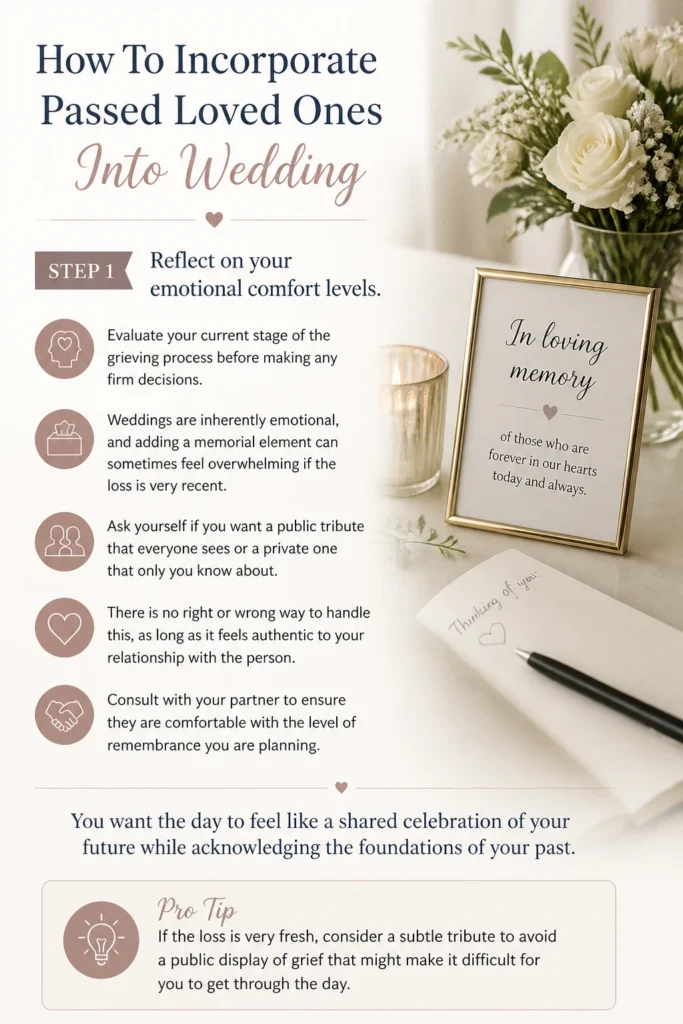
Ask yourself if you want a public tribute that everyone sees or a private one that only you know about. There is no right or wrong way to handle this, as long as it feels authentic to your relationship with the person.
Consult with your partner to ensure they are comfortable with the level of remembrance you are planning. You want the day to feel like a shared celebration of your future while acknowledging the foundations of your past.
Pro Tip: If the loss is very fresh, consider a subtle tribute to avoid a public display of grief that might make it difficult for you to get through your vows.
Step 2: Designate a physical space for remembrance
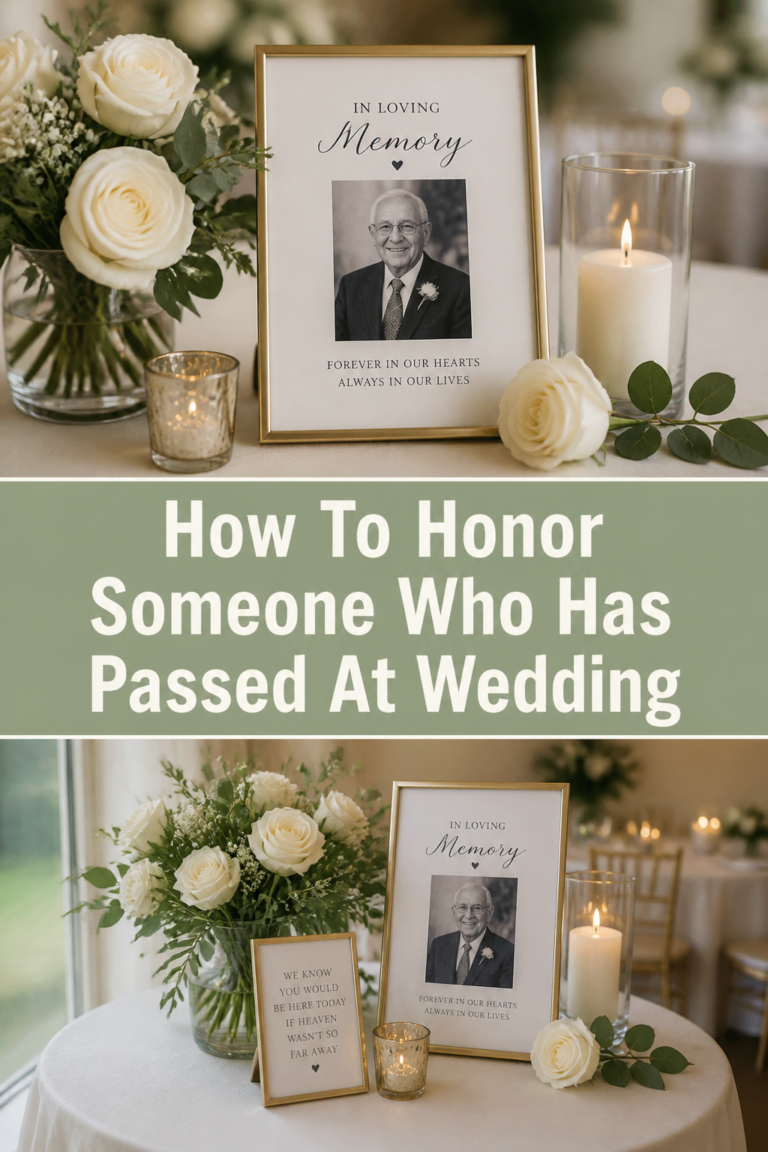
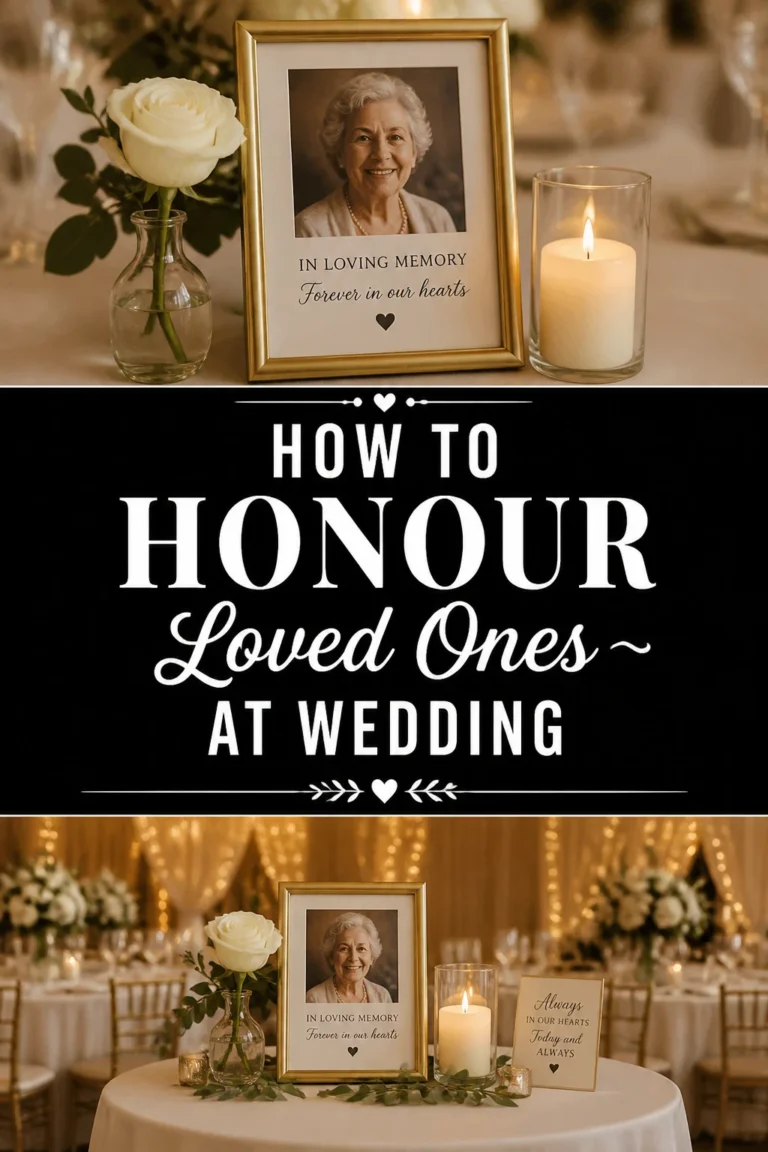
Choose a specific location at your ceremony or reception venue for a memorial display. A small table near the entrance or a quiet corner of the reception hall works well for this purpose.
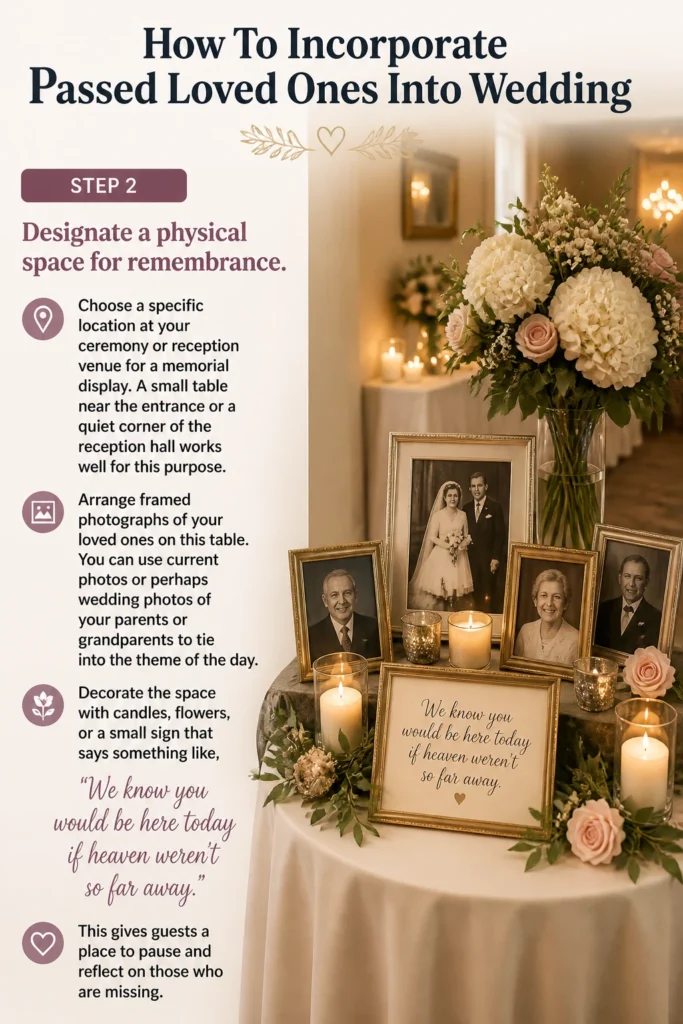
Arrange framed photographs of your loved ones on this table. You can use current photos or perhaps wedding photos of your parents or grandparents to tie into the theme of the day.
Decorate the space with candles, flowers, or a small sign that says something like, “We know you would be here today if heaven weren’t so far away.” This gives guests a place to pause and reflect on those who are missing.
Step 3: Integrate heirlooms into your attire
Search for items that belonged to your loved one that can be incorporated into what you wear. This is one of the most intimate ways to keep them close to you throughout the entire day.
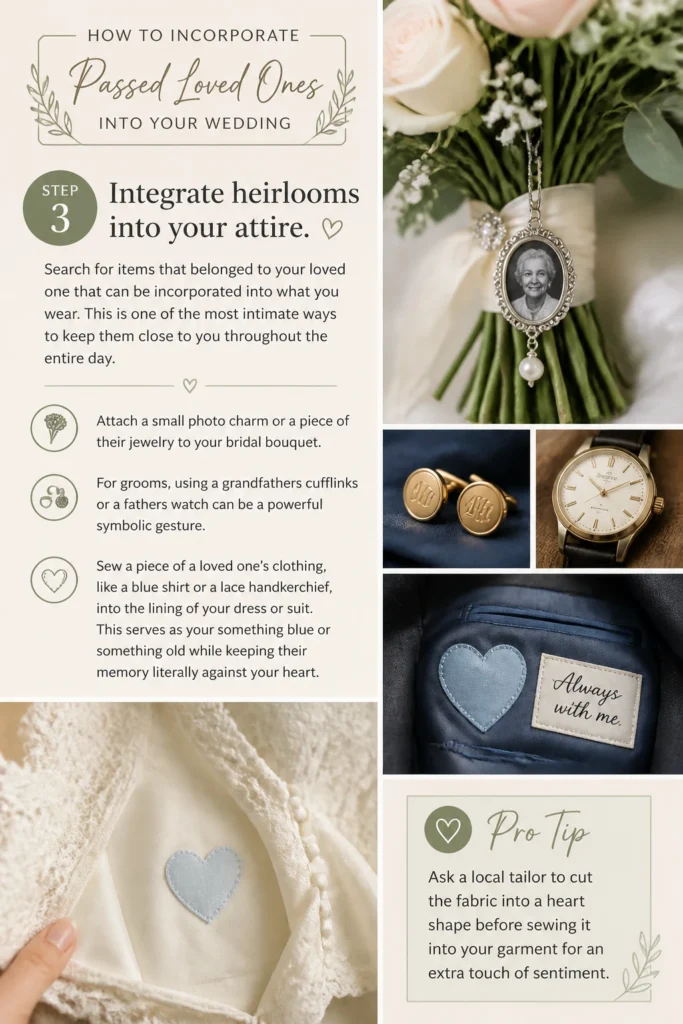
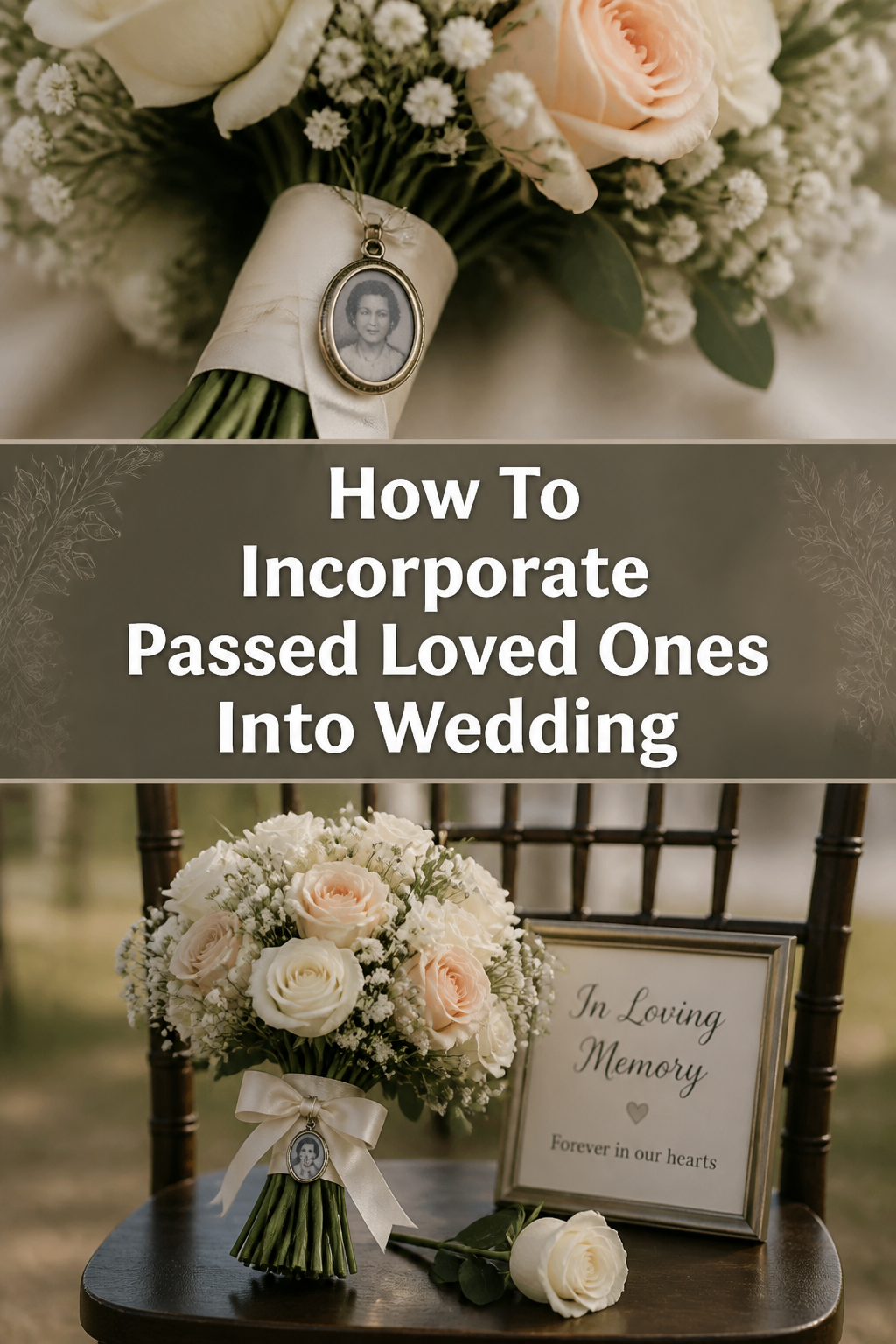
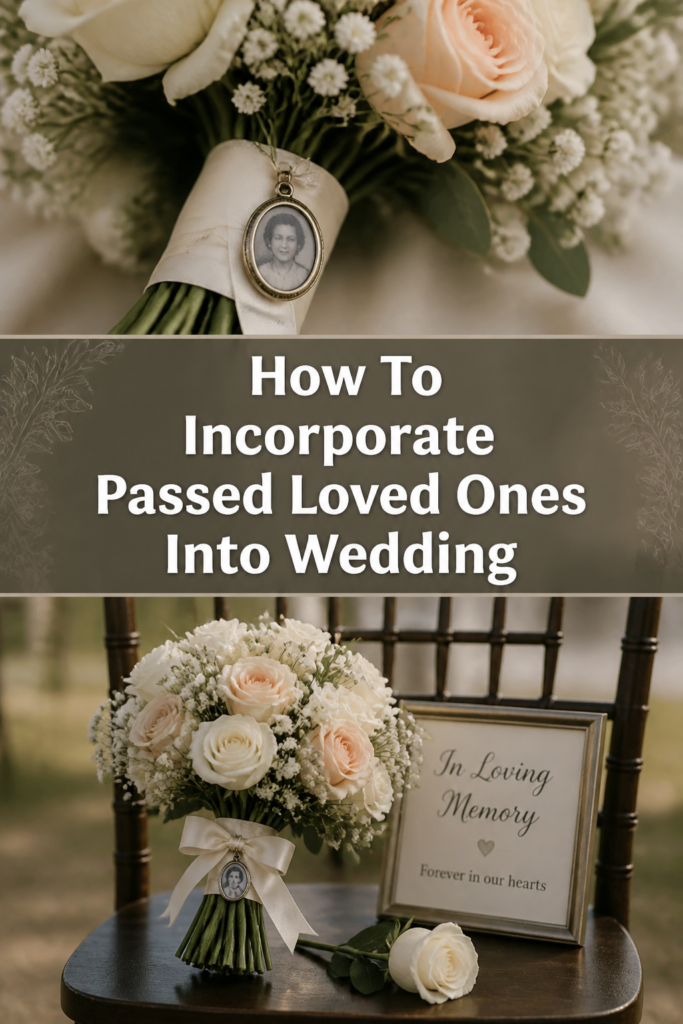
Attach a small photo charm or a piece of their jewelry to your bridal bouquet. For grooms, using a grandfather’s cufflinks or a father’s watch can be a powerful symbolic gesture.
Sew a piece of a loved one’s clothing, like a blue shirt or a lace handkerchief, into the lining of your dress or suit. This serves as your “something blue” or “something old” while keeping their memory literally against your heart.
Pro Tip: Ask a local tailor to cut the fabric into a heart shape before sewing it into your garment for an extra touch of sentiment.
Step 4: Save a seat during the ceremony
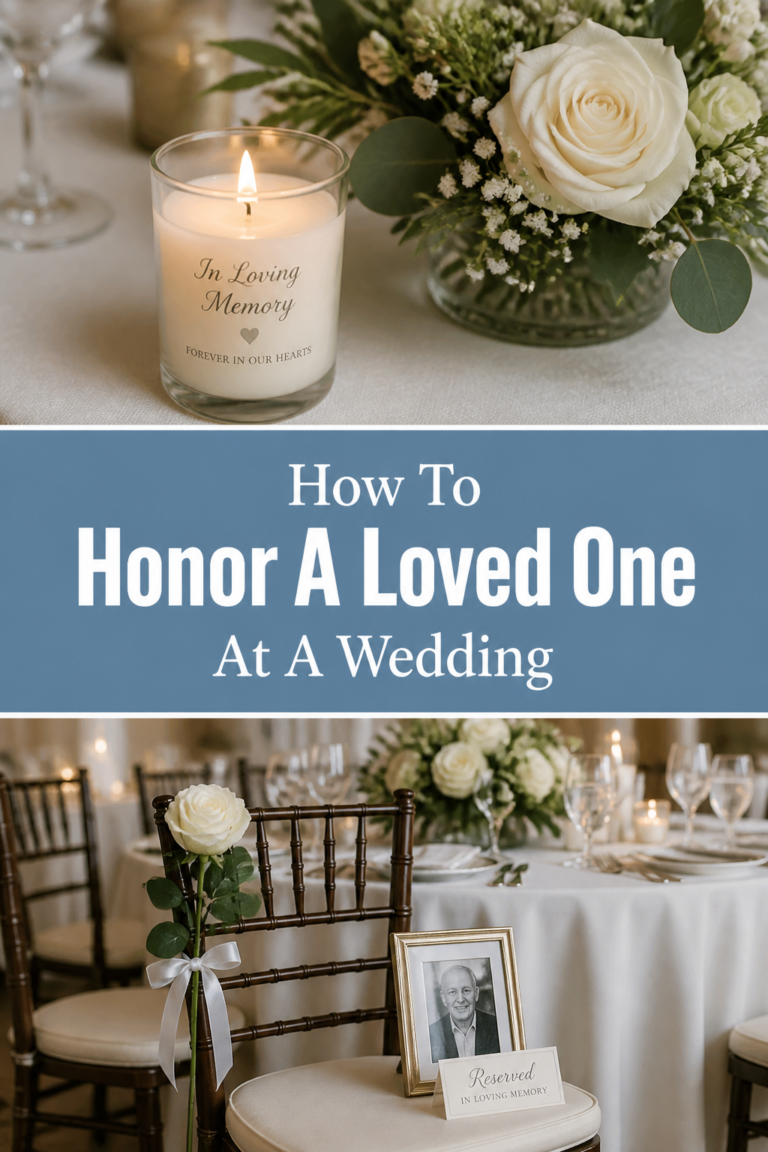
Reserve a chair in the front row where your loved one would have sat. This visual representation of their presence is deeply moving for both the couple and the guests.
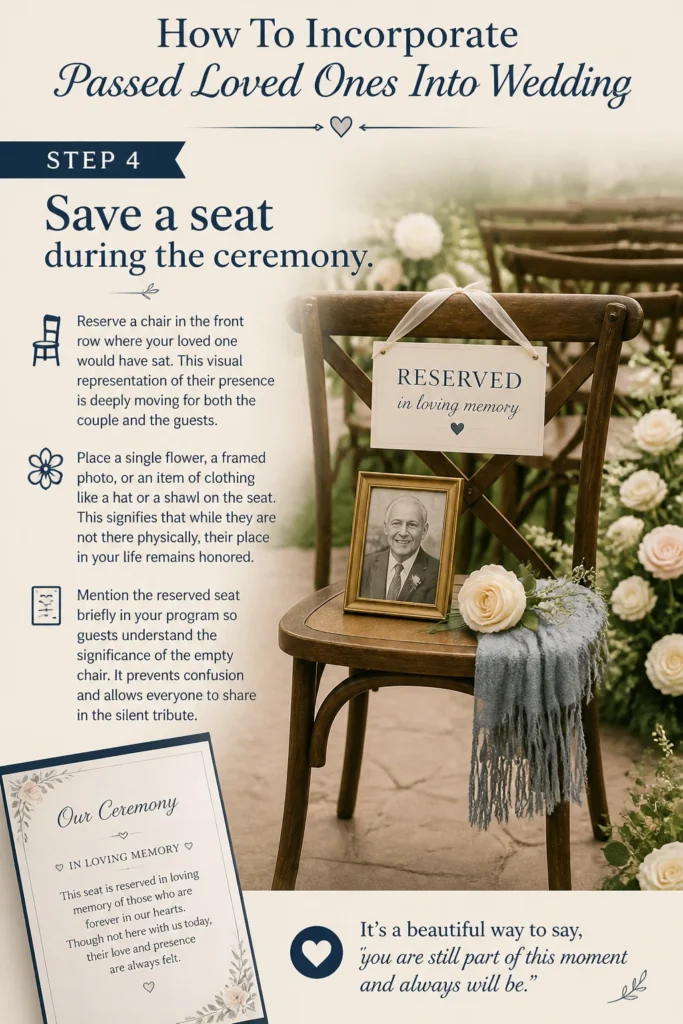
Place a single flower, a framed photo, or an item of clothing like a hat or a shawl on the seat. This signifies that while they are not there physically, their place in your life remains honored.
Mention the reserved seat briefly in your program so guests understand the significance of the empty chair. It prevents confusion and allows everyone to share in the silent tribute.
Step 5: Include a moment of silence or a reading
Incorporate a specific mention of your loved ones into the ceremony script. Your officiant can lead a moment of silence or offer a prayer in their honor at the beginning of the service.
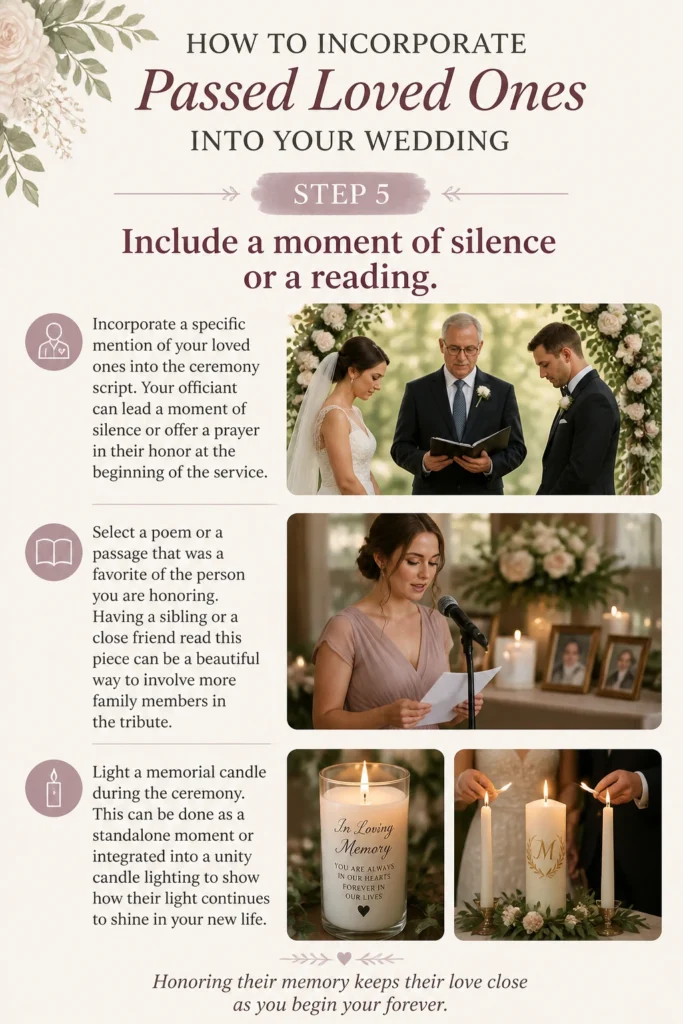
Select a poem or a passage that was a favorite of the person you are honoring. Having a sibling or a close friend read this piece can be a beautiful way to involve more family members in the tribute.
Light a memorial candle during the ceremony. This can be done as a standalone moment or integrated into a unity candle lighting to show how their light continues to shine in your new life.
Step 6: Feature their favorite flavors
Incorporate a favorite dish or drink of your loved one into your reception menu. This is a sensory way to celebrate their life and share a part of them with all your guests.
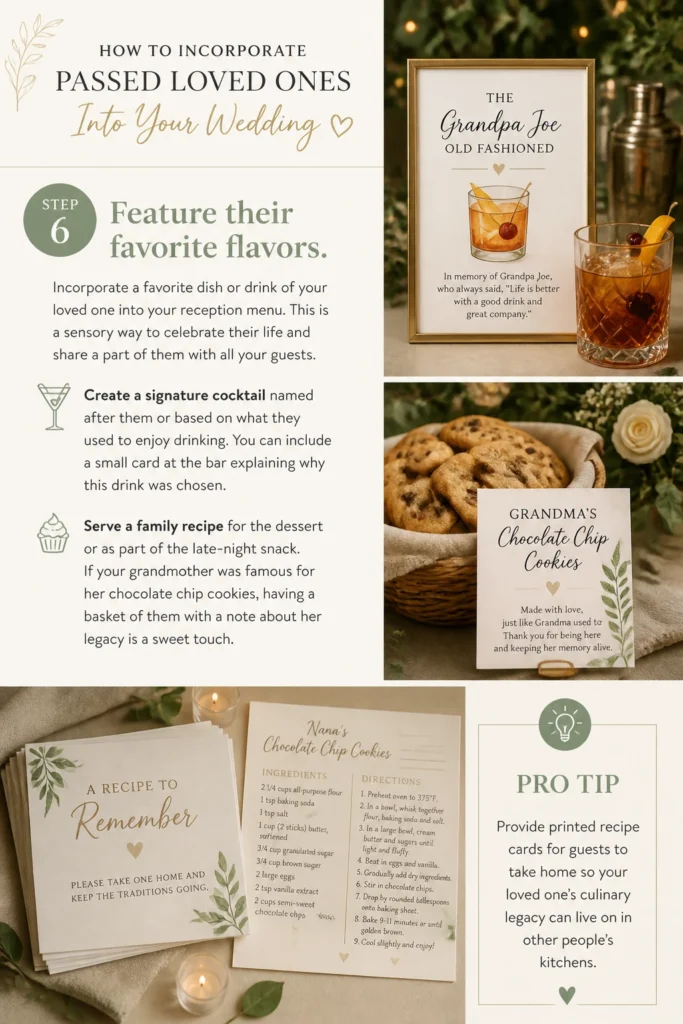
Create a “signature cocktail” named after them or based on what they used to enjoy drinking. You can include a small card at the bar explaining why this drink was chosen.
Serve a family recipe for the dessert or as part of the late-night snack. If your grandmother was famous for her chocolate chip cookies, having a basket of them with a note about her legacy is a sweet touch.
Pro Tip: Provide printed recipe cards for guests to take home so your loved one’s culinary legacy can live on in other people’s kitchens.
Step 7: Use music and flowers as symbolic gestures
Request a specific song that reminds you of them to be played during the cocktail hour or dinner. It doesn’t have to be a somber song; it could be something upbeat that they loved to dance to.
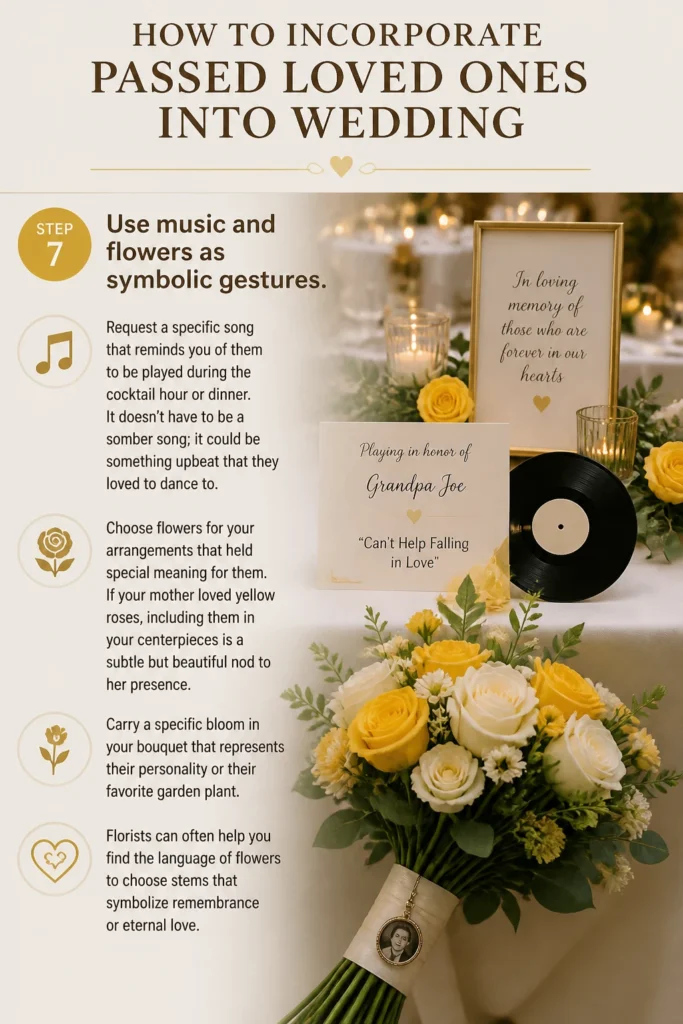
Choose flowers for your arrangements that held special meaning for them. If your mother loved yellow roses, including them in your centerpieces is a subtle but beautiful nod to her presence.
Carry a specific bloom in your bouquet that represents their personality or their favorite garden plant. Florists can often help you find the “language of flowers” to choose stems that symbolize remembrance or eternal love.
Common Mistakes to Avoid
Making the tribute too heavy
It is easy to let the weight of loss take over the atmosphere of the wedding. While it is important to honor those who have passed, remember that a wedding is primarily a celebration of life and a new beginning. Keep memorial elements focused on love and legacy rather than the tragedy of the loss itself.
Try to balance a somber moment, like a moment of silence, with an uplifting tribute later in the evening. This ensures the emotional arc of the day remains positive and hopeful for you and your guests.
Forgetting to check with other grieving family members
Your way of grieving might be different from that of your mother, father, or siblings. A large photo display might be healing for you but deeply triggering for someone else who is still in the early stages of mourning. Always have a conversation with immediate family members before finalizing a public tribute.
Sharing your plans ahead of time prevents them from being blindsided by emotions during the ceremony. It also allows them to feel included in the process of honoring their loved one.
Neglecting to inform your photographer
Photographers focus on the action and the couple, so they might miss a small, subtle tribute if you don’t point it out. If you have sewn a patch into your dress or set up a memorial table, make sure it is on their shot list. These photos will become some of your most cherished memories from the day.
Give your photographer a quick heads-up during your final pre-wedding meeting. This ensures they capture the details you worked so hard to include.
Troubleshooting
Family members disagree on how to honor someone
If different branches of the family have conflicting ideas on how to memorialize a loved one, it can create unnecessary stress. The best solution is to keep public tributes simple and neutral while encouraging family members to have their own private moments of reflection.
You can also offer a “tribute page” in the wedding program where different people can submit a short sentence or memory. This gives everyone a voice without cluttering the physical space of the wedding venue.
The tribute feels too emotional for the bride or groom
If you find yourself becoming too upset while planning a specific tribute, it is okay to scale it back. You should not feel pressured to perform a public act of remembrance if it is going to make you feel unstable on your wedding day. Transitioning a public tribute to a private one, like a locket inside a suit jacket, can provide the connection you need without the public pressure.
Listen to your gut and prioritize your mental well-being. Your loved one would want you to be happy and present on your wedding day more than they would want a specific flower on a table.
Key Takeaways
- Balance public and private tributes based on your personal comfort level.
- Communicate with living family members to ensure everyone feels respected.
- Use physical items like jewelry or fabric to keep loved ones close to you.
- Engage the senses by incorporating favorite foods, scents, or music.
- Inform your vendors, especially the photographer and officiant, about your plans.
- Prioritize the joy of the occasion while holding space for remembrance.
Frequently Asked Questions
Is it okay to have a “memorial dance” during the reception?
Yes, but consider the mood you want to set. Some couples choose to play a favorite song of the deceased and invite everyone to the dance floor to celebrate their life. Others prefer a more private moment. Just ensure the transition back to party music is handled smoothly by your DJ so the energy doesn’t drop for too long.
How many people can I include in a memorial display?
There is no hard limit, but if you have many loved ones to honor, a “family tree” style photo display is often better than individual chairs or candles. This allows you to celebrate your entire heritage and all those who came before you in a cohesive way. It also prevents the ceremony space from feeling crowded with memorial items.
Should I mention the deceased in my wedding speech?
Mentioning a loved one during a toast is a very common and touching gesture. A simple “I know [Name] is watching over us today” is often enough to acknowledge their presence. Keep the mention brief and follow it with a positive sentiment about the future to maintain the celebratory tone of the speeches.
What if I start crying during a memorial moment?
It is perfectly natural to cry, and your guests will understand. Have a handkerchief ready and give yourself a moment to breathe. If you are worried about being unable to continue, you can ask your officiant or a bridesmaid to step in and finish a reading for you. Most people find that the tears are a beautiful expression of love that adds to the depth of the day.
Our Top Recommended Finds
- Custom Bouquet Charms: These small frames allow you to carry a photo of your loved one right on your flower stems. They are subtle, elegant, and provide a constant physical connection during the walk down the aisle.
- Memorial Lanterns: A beautiful alternative to a traditional candle, a lantern can be engraved with a name or a quote. They are safer for indoor venues and can be kept as a keepsake in your home after the wedding.
- Embroidered Suit Patches: You can order custom patches with a loved one’s handwriting or a special message. These are easily sewn into the inside of a jacket or the back of a tie for a hidden, heartfelt tribute.
Crafting a Legacy of Love on Your Big Day
Incorporating those who have passed into your wedding is a deeply personal process that adds layers of meaning to your celebration. By choosing tributes that resonate with your heart, you ensure that your loved ones are part of your story as you begin this new chapter.
Take some time today to look through old photographs or talk to family members about their favorite memories of the person you want to honor. This reflection will help you choose the most authentic way to bring their spirit into your ceremony.
Once you have a few ideas, reach out to your florist or wedding planner to see how these elements can be seamlessly integrated into your design. Your wedding is a celebration of love in all its forms, including the love that continues even after someone is gone.
Wedding Planning
No fluff, no drama. Just easy weekly advice, planning shortcuts, and gentle reminders to help you actually enjoy your engagement.