🕊️ How To Honor Someone Who Has Passed At Wedding

Wedding Planning
No fluff, no drama. Just easy weekly advice, planning shortcuts, and gentle reminders to help you actually enjoy your engagement.
Planning a wedding is a season of immense joy, yet it often highlights the painful absence of those we love most.
When I planned my own wedding, the empty chair where my father should have sat felt like a heavy weight in the room.
This guide draws from professional wedding planning expertise and personal experience to help you find the perfect balance between celebration and remembrance.
Quick Overview
Honoring a deceased loved one requires a delicate touch to ensure the tribute feels authentic to your relationship without overwhelming the celebratory spirit of the day.
- Time needed: 2-4 weeks of planning and coordination
- Difficulty: Intermediate (requires emotional navigation and logistical planning)
- What you’ll need: Photos, sentimental items, communication with family, and a clear vision of the tribute style
Step-by-Step Instructions
Step 1: Reflect on Your Emotional Boundaries
Start by having an honest conversation with your partner about how much “space” you want the tribute to occupy during the day.
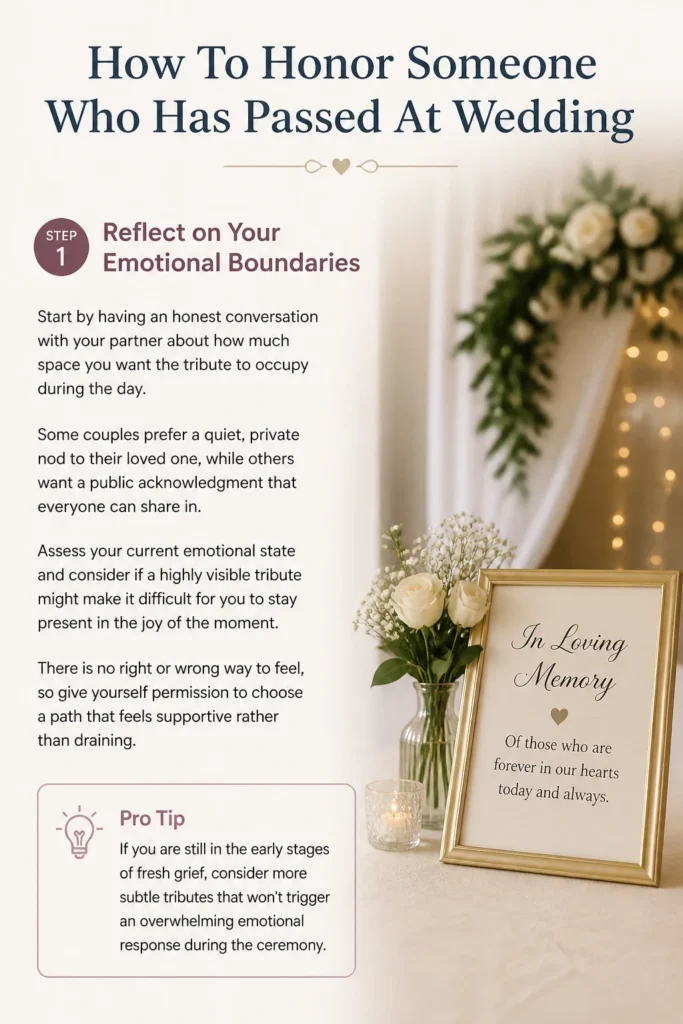
Some couples prefer a quiet, private nod to their loved one, while others want a public acknowledgment that everyone can share in.
Assess your current emotional state and consider if a highly visible tribute might make it difficult for you to stay present in the joy of the moment.
There is no right or wrong way to feel, so give yourself permission to choose a path that feels supportive rather than draining.
Pro Tip: If you are still in the early stages of fresh grief, consider more subtle tributes that won’t trigger an overwhelming emotional response during the ceremony.
Step 2: Choose Your Tribute Style
Decide whether you want a physical memorial, a symbolic gesture, or a spoken tribute during the festivities.
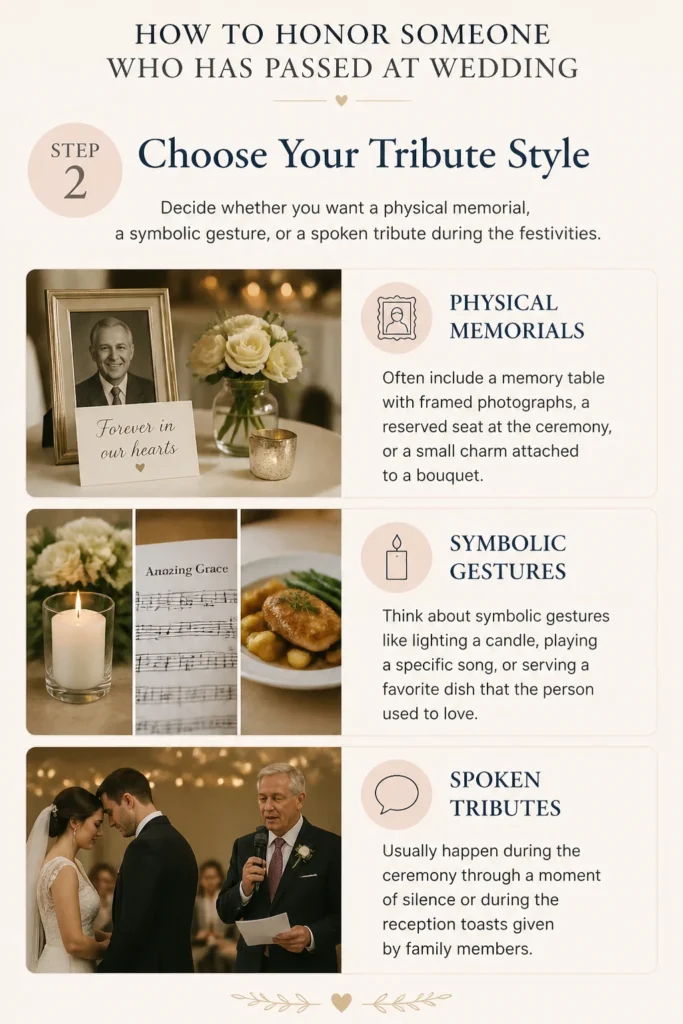
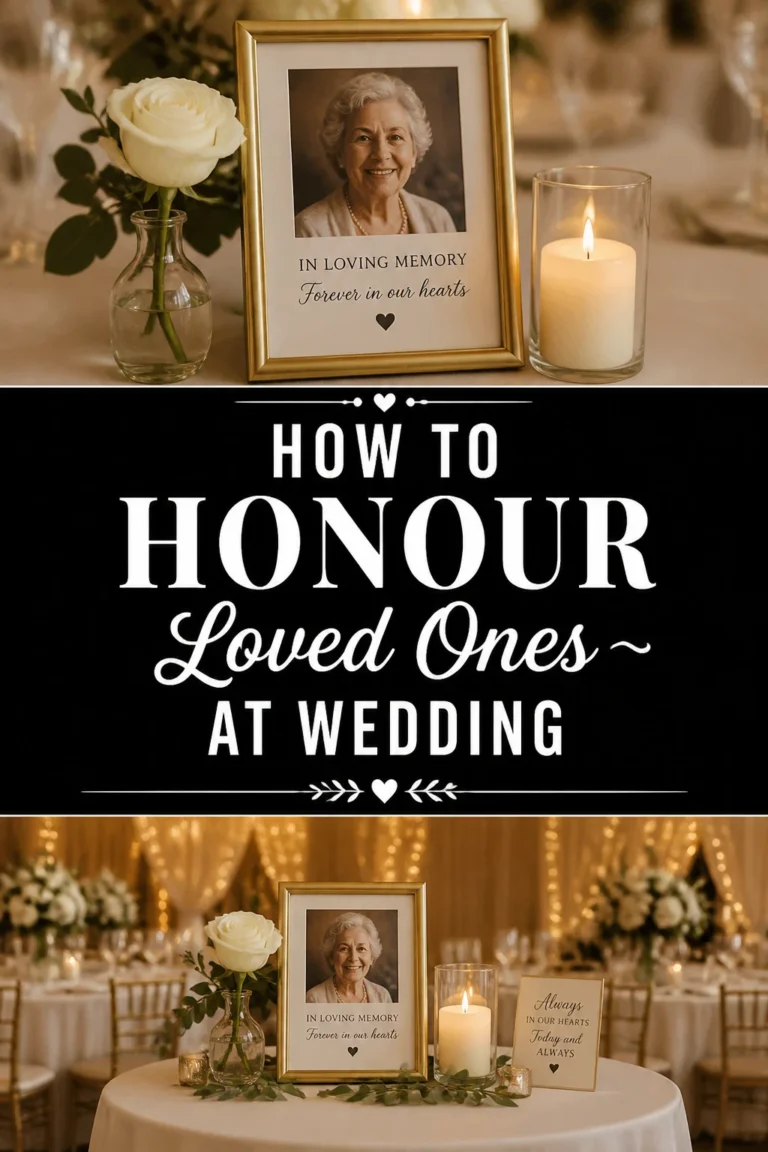
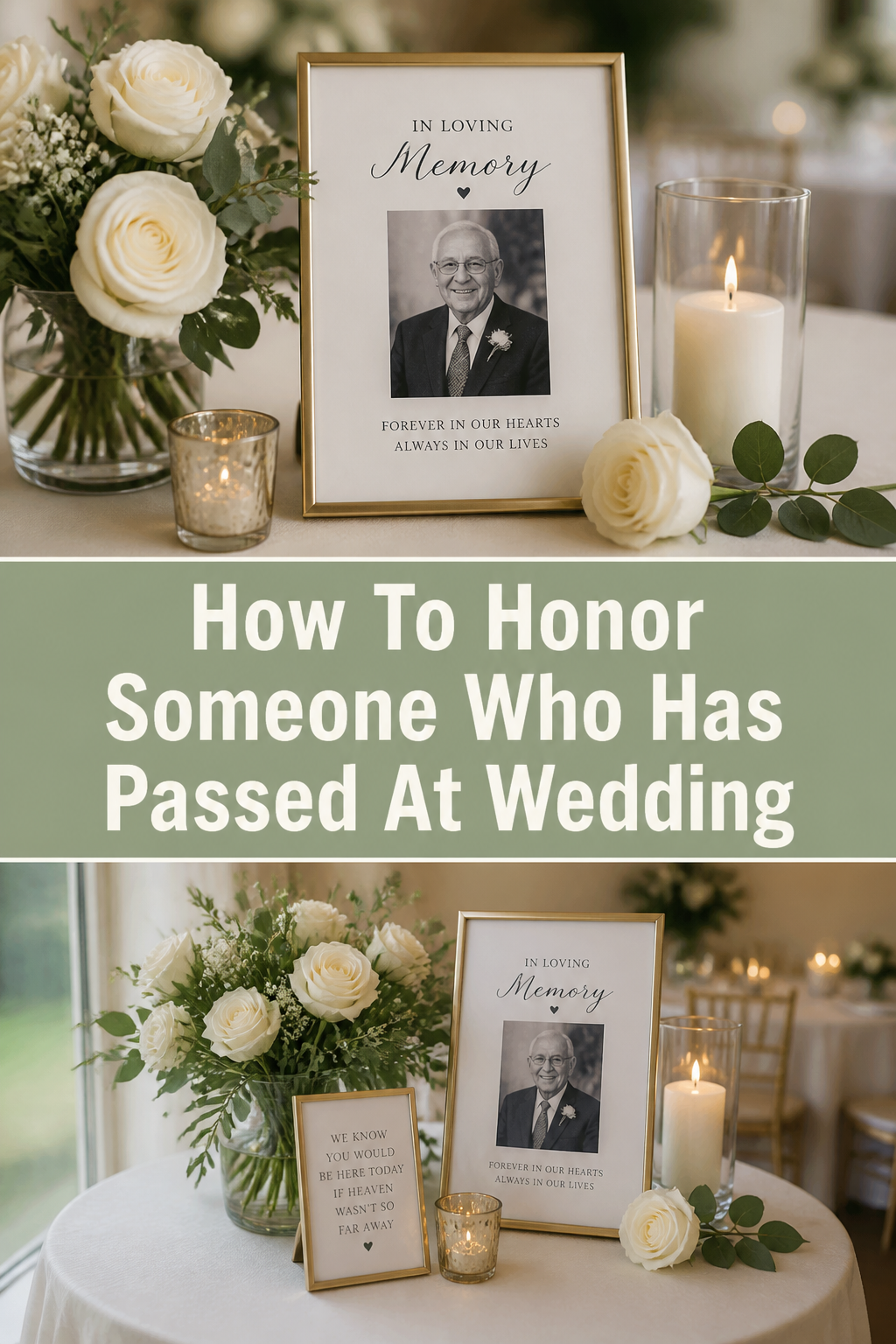
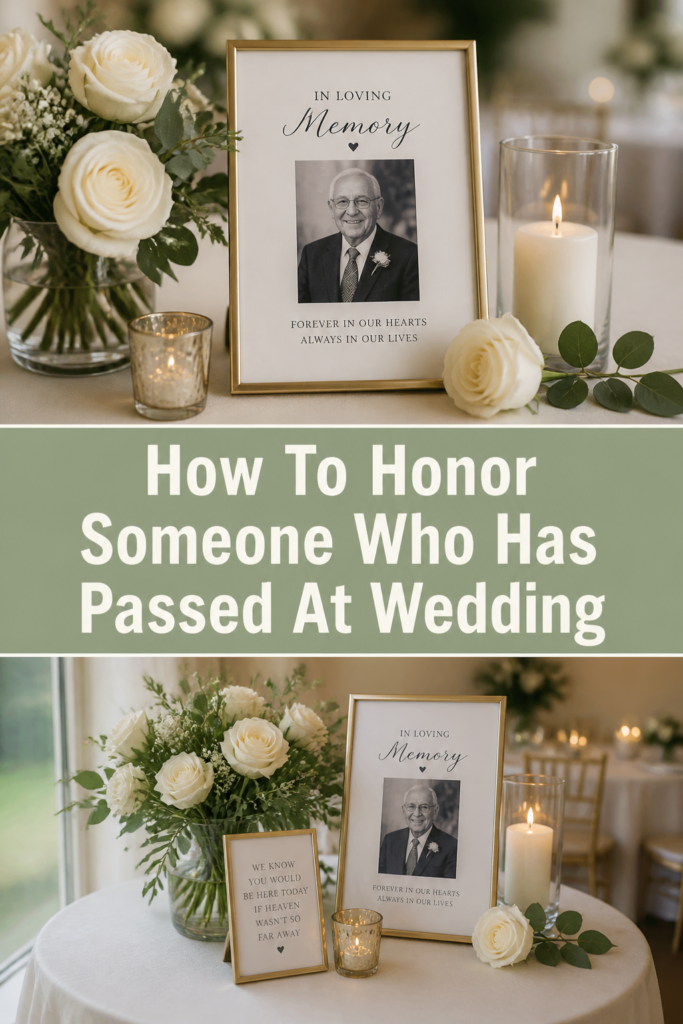
Physical memorials often include a “memory table” with framed photographs, a reserved seat at the ceremony, or a small charm attached to a bouquet.
Think about symbolic gestures like lighting a candle, playing a specific song, or serving a favorite dish that the person used to love.
Spoken tributes usually happen during the ceremony through a moment of silence or during the reception toasts given by family members.
Step 3: Incorporate Sentimental Items Into Your Attire
Look for ways to keep your loved one close to you literally as you walk down the aisle.
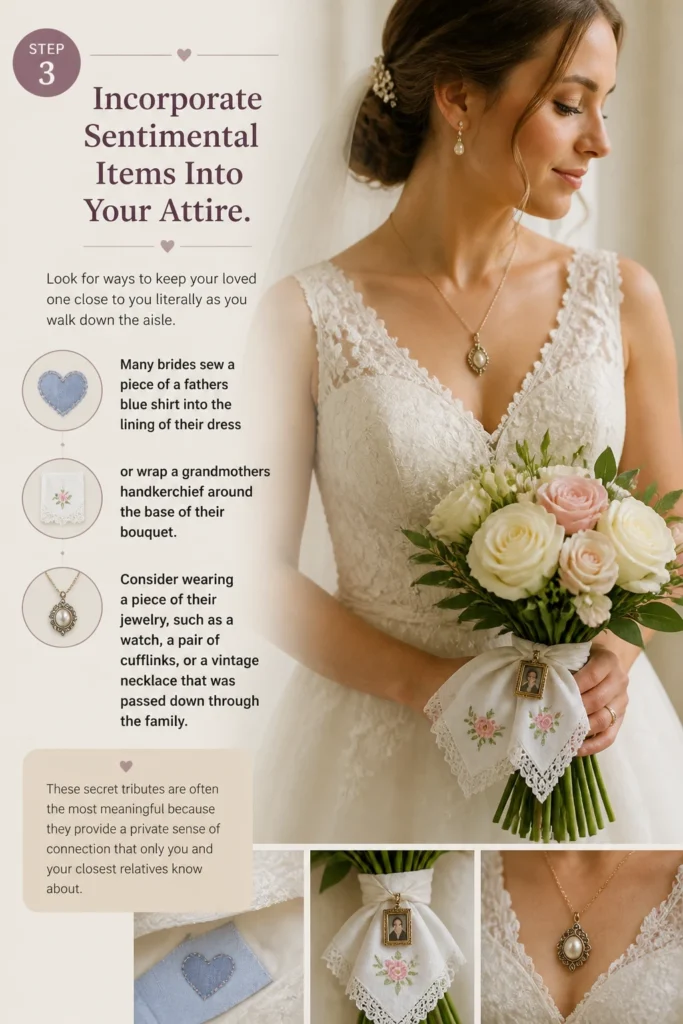
Many brides sew a piece of a father’s blue shirt into the lining of their dress or wrap a grandmother’s handkerchief around the base of their bouquet.
Consider wearing a piece of their jewelry, such as a watch, a pair of cufflinks, or a vintage necklace that was passed down through the family.
These “secret” tributes are often the most meaningful because they provide a private sense of connection that only you and your closest relatives know about.
Step 4: Design a Dedicated Memory Space
Select a specific area at your ceremony or reception venue to serve as a designated memorial spot.
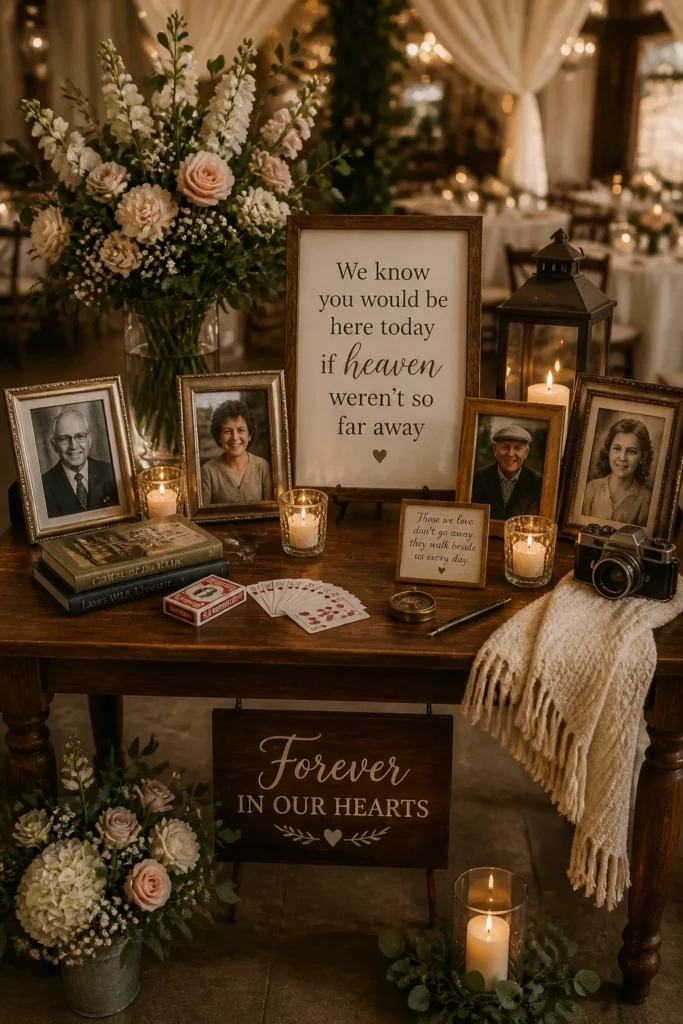
A simple wooden table decorated with a few framed photos and a sign that says “We know you would be here today if heaven weren’t so far away” is a classic choice.
Enhance the space with flowers that were favorites of the deceased or small items that represent their hobbies, like a deck of cards or a specific book.
Ensure the lighting in this area is soft and inviting, making it a place where guests can stop for a quiet moment of reflection.
Step 5: Integrate Mention Into the Ceremony
Work with your officiant to find a natural place in the script to acknowledge those who are watching from above.
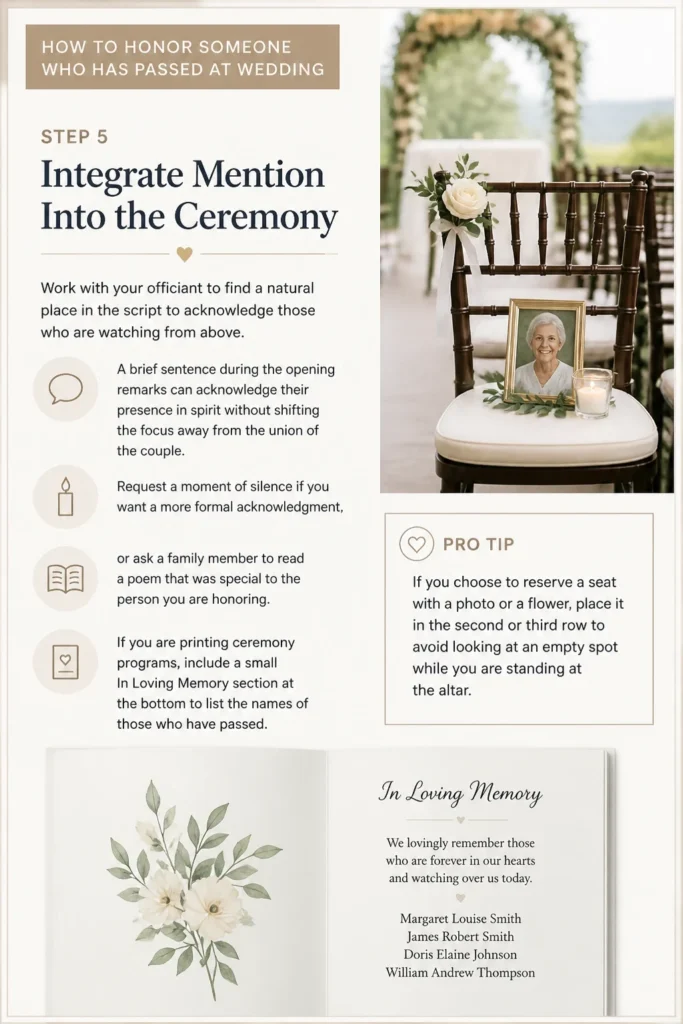
A brief sentence during the opening remarks can acknowledge their presence in spirit without shifting the focus away from the union of the couple.
Request a moment of silence if you want a more formal acknowledgment, or ask a family member to read a poem that was special to the person you are honoring.
If you are printing ceremony programs, include a small “In Loving Memory” section at the bottom to list the names of those who have passed.
Pro Tip: If you choose to reserve a seat with a photo or a flower, place it in the second or third row to avoid looking at an “empty” spot while you are standing at the altar.
Step 6: Plan a Living Tribute
Incorporate a “living” element into your day that honors the legacy of your loved one through action.
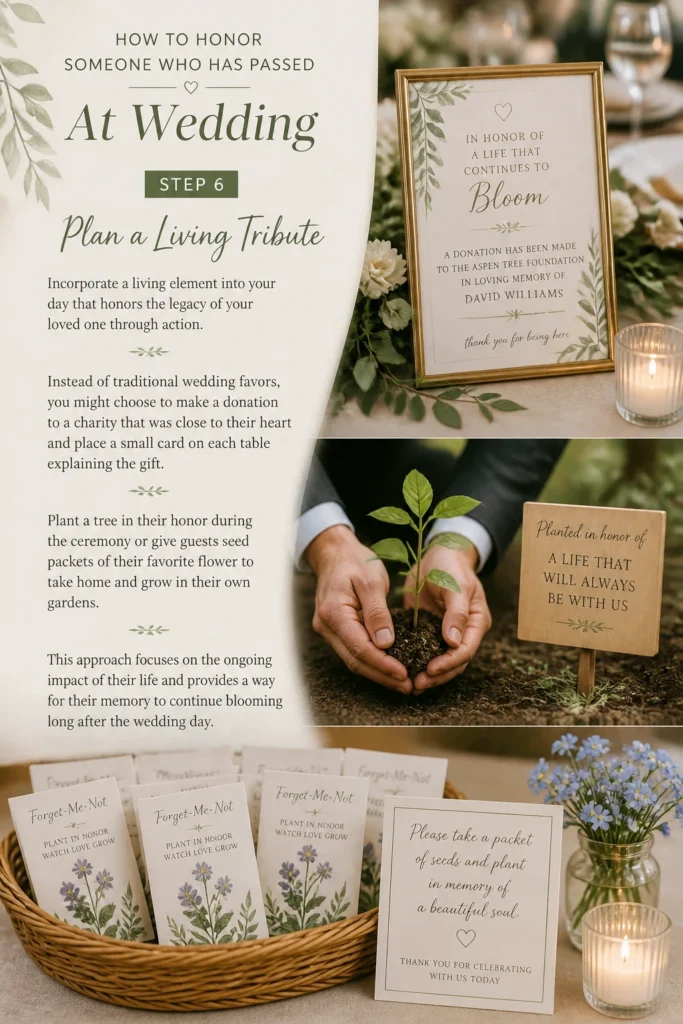
Instead of traditional wedding favors, you might choose to make a donation to a charity that was close to their heart and place a small card on each table explaining the gift.
Plant a tree in their honor during the ceremony or give guests seed packets of their favorite flower to take home and grow in their own gardens.
This approach focuses on the ongoing impact of their life and provides a way for their memory to continue blooming long after the wedding day.
Step 7: Coordinate with Your Photographer
Communicate clearly with your photographer about the importance of the memorial elements you have planned.
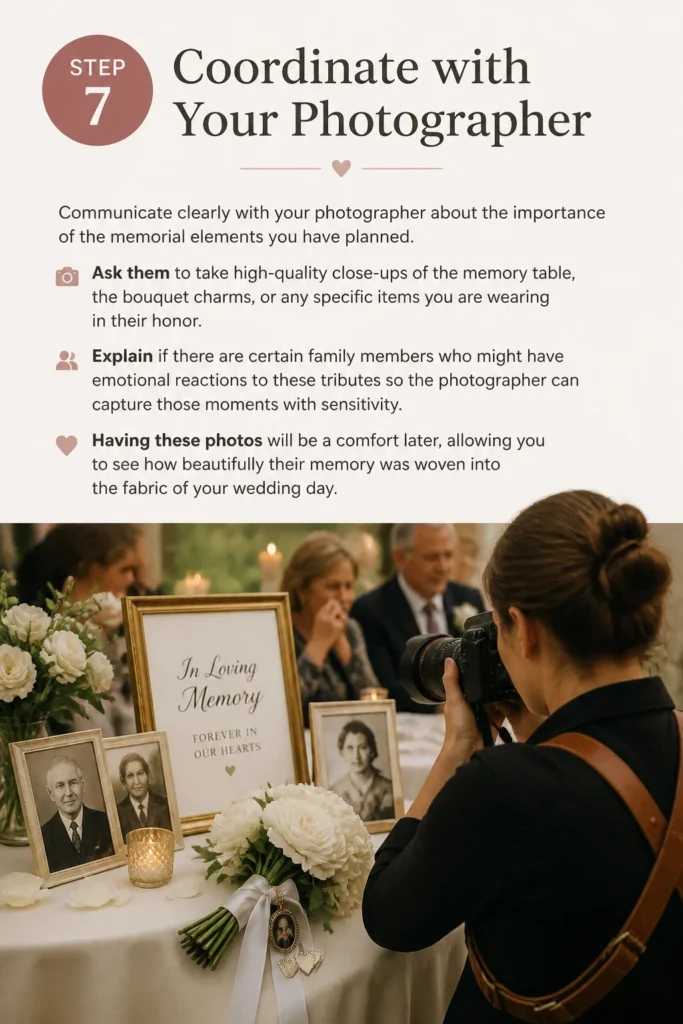
Ask them to take high-quality close-ups of the memory table, the bouquet charms, or any specific items you are wearing in their honor.
Explain if there are certain family members who might have emotional reactions to these tributes so the photographer can capture those moments with sensitivity.
Having these photos will be a comfort later, allowing you to see how beautifully their memory was woven into the fabric of your wedding day.
Step 8: Prepare for the Emotional Impact
Acknowledge that seeing these tributes on the actual wedding day might affect you differently than it did during the planning phase.
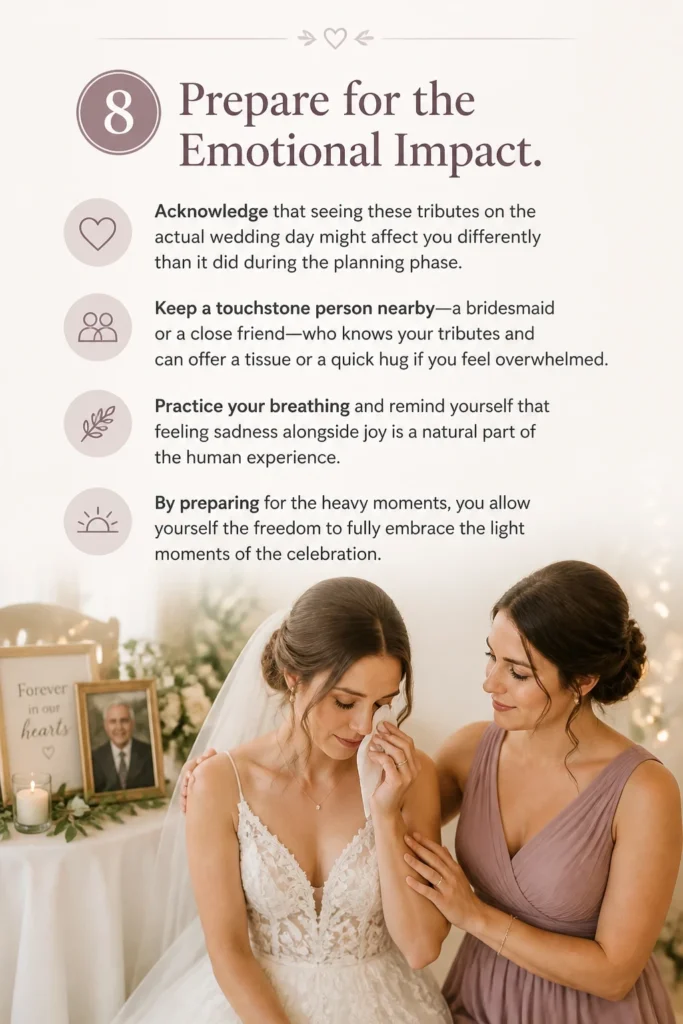
Keep a “touchstone” person nearby—a bridesmaid or a close friend—who knows your tributes and can offer a tissue or a quick hug if you feel overwhelmed.
Practice your breathing and remind yourself that feeling sadness alongside joy is a natural part of the human experience.
By preparing for the “heavy” moments, you allow yourself the freedom to fully embrace the “light” moments of the celebration.
Common Mistakes to Avoid
Turning the Wedding Into a Memorial Service
It is easy to get caught up in the desire to honor someone and accidentally shift the tone of the event from a celebration of life to a mourning of loss. A wedding is primarily about the beginning of a new chapter for two people. Keep tributes focused and intentional rather than letting them dominate the entire evening.
Surprising Grieving Family Members
Unexpectedly seeing a photo of a lost child or spouse can be incredibly jarring for guests who are also grieving. Always check in with immediate family members before finalizing a public tribute. They may find certain gestures too painful to witness in a public setting, and their comfort should be a priority.
Forgetting the Logistics of Outdoor Tributes
If you are planning to light a candle or display photos outdoors, you must account for wind and weather. Photos can blow over, and candles often won’t stay lit in a breeze. Use heavy frames and battery-operated candles if you are worried about the elements disrupting your memorial.
Troubleshooting
Family Members Disagree on the Tribute
Grief is personal, and siblings or parents may have different ideas about how a loved one should be remembered. If conflict arises, opt for private tributes over public ones. Wearing a piece of jewelry or sewing a patch into your attire allows you to honor the person without causing friction among the living guests.
The Tribute Feels Too “Heavy” During Rehearsal
If you find yourself breaking down during the wedding rehearsal because of a specific tribute, it is okay to scale it back. You can move a photo from the front row to a side table or decide to skip a spoken mention in favor of a note in the program. Your mental well-being on the wedding day is more important than sticking to a plan that is causing distress.
Technical Issues with Digital Tributes
Many couples try to play a slideshow of photos during the reception, but technical glitches are common. Always have a backup plan, such as a physical photo album on a table, in case the projector or laptop fails. Test all digital files at the venue at least 24 hours before the wedding starts.
Key Takeaways
- Prioritize your own emotional comfort when deciding between public and private tributes.
- Consult with close family members to ensure the planned honors are supportive rather than triggering.
- Use physical items like photos, charms, or clothing patches for a tangible sense of connection.
- Balance the tribute so it acknowledges the past without overshadowing the celebration of the future.
- Incorporate “living” tributes like charitable donations or seed packets to honor their lasting legacy.
- Work closely with your officiant and photographer to ensure memorial moments are handled with grace.
Frequently Asked Questions
Is it okay to leave an empty chair at the ceremony?
Leaving an empty chair is a powerful visual, but it can be very emotional for the people sitting nearby. If you choose this route, consider placing a single flower or a framed photo on the seat so it feels like a “reserved” space rather than a “missing” space. This small distinction can make the gesture feel more like an invitation for their spirit to be present.
How do I mention a deceased parent in the wedding program?
A simple and elegant way to do this is to list them under a heading like “In Loving Remembrance” or “With Us in Spirit.” You can list their name and their relationship to the bride or groom. Some couples also include a short sentence like, “Today we celebrate with the love and guidance of those who could not be here with us.”
Should I have a moment of silence during the ceremony?
A moment of silence is appropriate if the loss was recent or if the person played a central role in your life. Keep it brief—usually around 30 seconds—and have the officiant lead into it with a few gentle words. This provides a collective space for guests to offer their own silent prayers or thoughts before the ceremony continues.
What if I want to honor multiple people who have passed?
When honoring several people, a “Memory Table” or a “Family Tree” display is usually the best approach. You can arrange photos of grandparents, parents, or friends together in a cohesive display. This allows you to acknowledge everyone collectively without needing individual moments for each person during the ceremony.
Our Top Recommended Finds
- Bouquet Photo Charms: Small, elegant frames that clip onto the stems of a bouquet, allowing you to “walk” with your loved one.
- Memorial Lanterns: These provide a beautiful, safe way to keep a “flame” burning throughout the evening, especially for indoor or evening weddings.
- Custom Embroidered Patches: These can be sewn into the inside of a suit jacket or wedding dress, featuring a message in the loved one’s actual handwriting.
Creating Lasting Memories Through Meaningful Tributes
Honoring a loved one at your wedding is a beautiful way to integrate your history into your future.
By choosing tributes that resonate with your personal relationship, you ensure that their spirit is felt without losing the joy of the occasion.
Take some time today to look through old photographs or talk to your partner about which memories bring you the most peace.
If you found this guide helpful, you might also want to explore our tips on writing meaningful wedding vows or choosing the perfect processional music.
Wedding Planning
No fluff, no drama. Just easy weekly advice, planning shortcuts, and gentle reminders to help you actually enjoy your engagement.