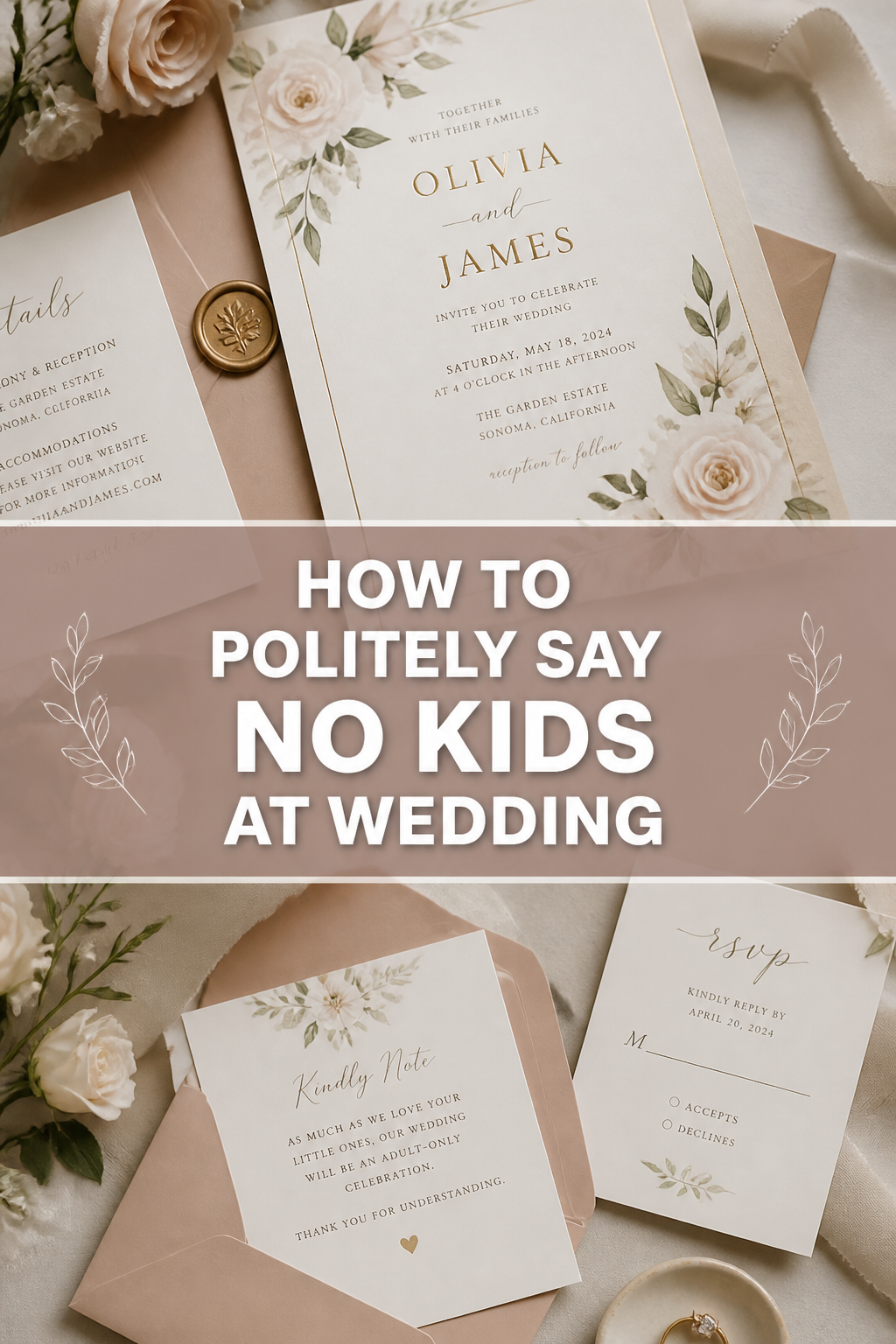
💌 How To Politely Say No Kids At Wedding

Wedding Planning
No fluff, no drama. Just easy weekly advice, planning shortcuts, and gentle reminders to help you actually enjoy your engagement.
Planning a wedding brings immense joy, but sometimes, tricky decisions arise. Deciding on an adults-only celebration is one such choice many couples face. I’ve navigated this myself and watched countless friends manage the delicate balance of setting boundaries while keeping guests happy.
This guide shares practical, empathetic steps to communicate your preference clearly and kindly. You can create the wedding day you envision without awkwardness or hurt feelings.
Quick Overview
This guide empowers you to clearly and politely communicate your desire for an adults-only wedding. You will learn how to set expectations early, craft gentle wording, and manage potential reactions with grace.
- Time needed: 1-2 hours (for planning, wording, and follow-up)
- Difficulty: Intermediate
- What you’ll need: Wedding invitations, wedding website, a clear communication plan, and patience.
Step-by-Step Instructions
Step 1: Define Your “No Kids” Policy Early
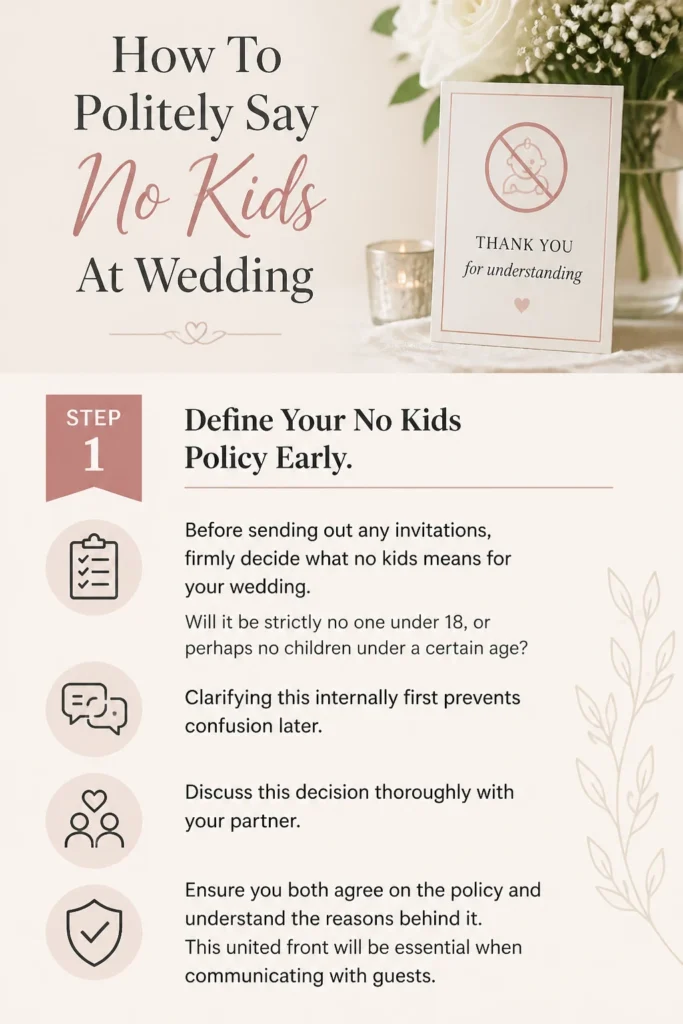
Before sending out any invitations, firmly decide what “no kids” means for your wedding. Will it be strictly no one under 18, or perhaps no children under a certain age? Clarifying this internally first prevents confusion later.
Discuss this decision thoroughly with your partner. Ensure you both agree on the policy and understand the reasons behind it. This united front will be essential when communicating with guests.
Step 2: Communicate Clearly on Your Invitations
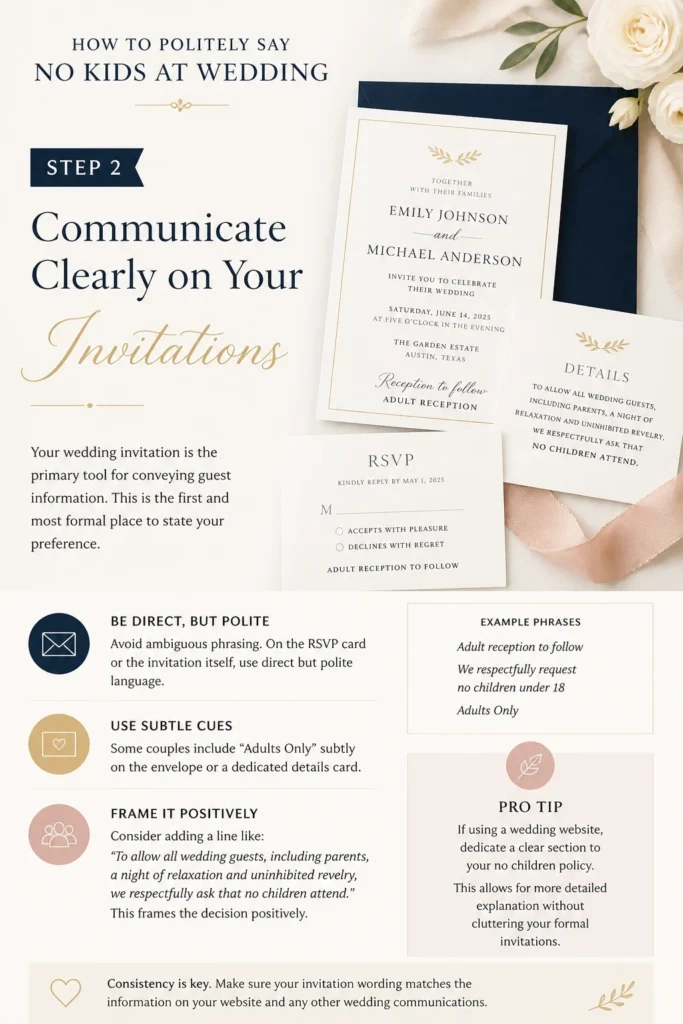
Your wedding invitation is the primary tool for conveying guest information. This is the first and most formal place to state your preference. Avoid ambiguous phrasing.
On the RSVP card or the invitation itself, use direct but polite language. Phrases like “Adult reception to follow” or “We respectfully request no children under 18” work well. Some couples include “Adults Only” subtly on the envelope or a dedicated details card.
Consider adding a line like “To allow all wedding guests, including parents, a night of relaxation and uninhibited revelry, we respectfully ask that no children attend.” This frames the decision positively.
Pro Tip: If using a wedding website, dedicate a clear section to your “no children” policy. This allows for more detailed explanation without cluttering your formal invitation. You can also list local babysitting services or resources here.
Step 3: Leverage Your Wedding Website
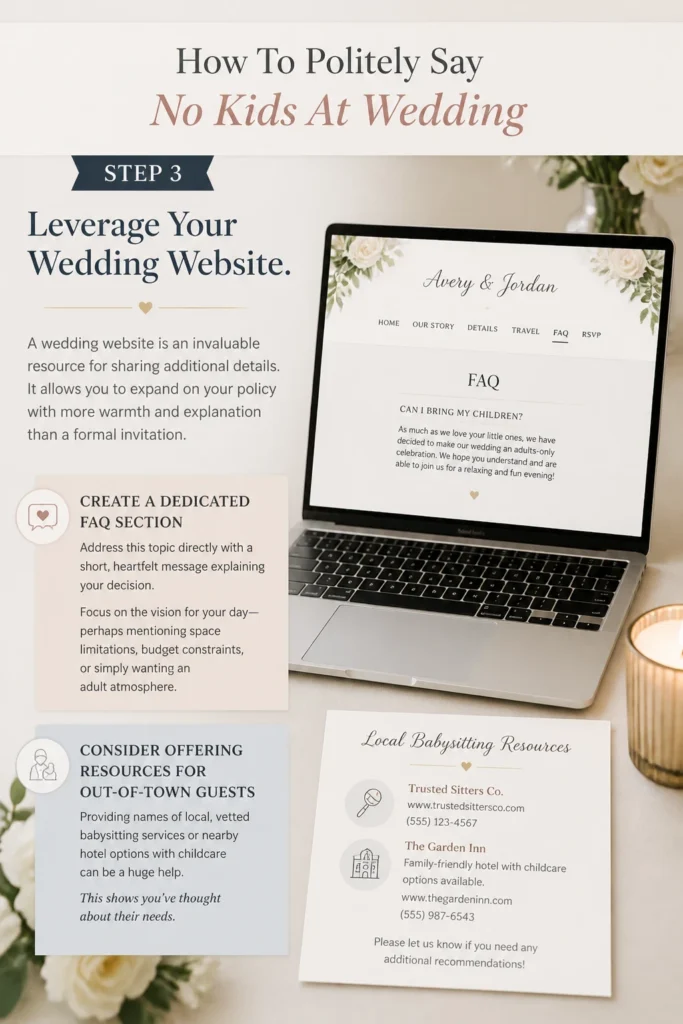
A wedding website is an invaluable resource for sharing additional details. It allows you to expand on your policy with more warmth and explanation than a formal invitation. Create a dedicated FAQ section to address this topic directly.
You can write a short, heartfelt message explaining your decision. Focus on the vision for your day, perhaps mentioning space limitations, budget constraints, or simply wanting an adult atmosphere. This personal touch can soften the message.
Consider offering resources for out-of-town guests. Providing names of local, vetted babysitting services or nearby hotel options with childcare can be a huge help. This shows you’ve thought about their needs.
Step 4: Prepare for Personal Conversations
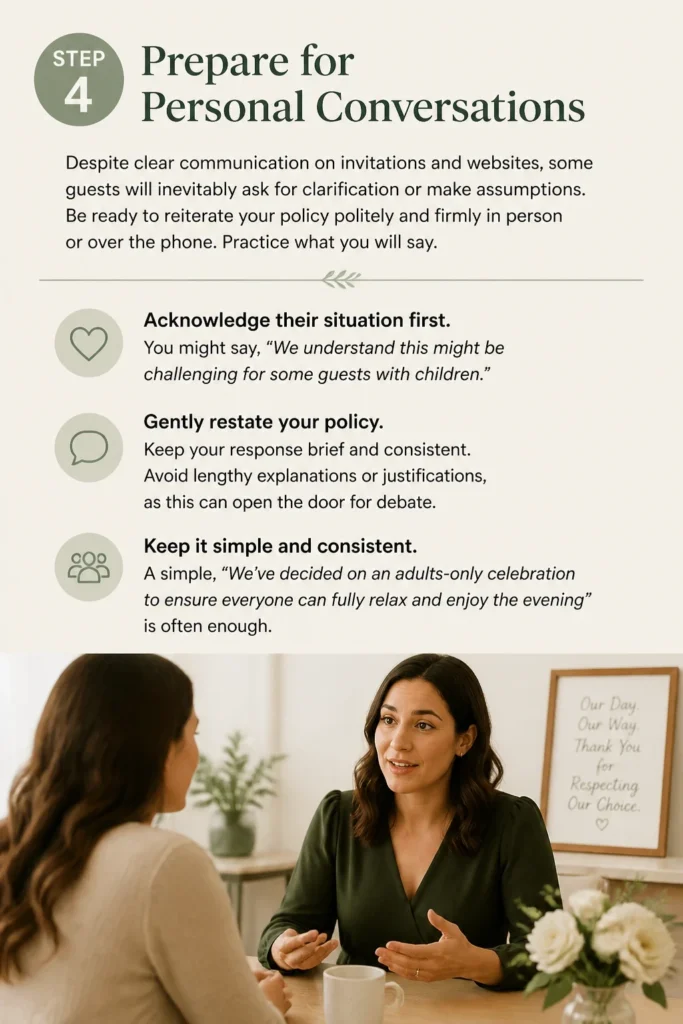
Despite clear communication on invitations and websites, some guests will inevitably ask for clarification or make assumptions. Be ready to reiterate your policy politely and firmly in person or over the phone. Practice what you will say.
When a guest asks, acknowledge their situation first. You might say, “We understand this might be challenging for some guests with children.” Then, gently restate your policy.
Keep your response brief and consistent. Avoid lengthy explanations or justifications, as this can open the door for debate. A simple, “We’ve decided on an adults-only celebration to ensure everyone can fully relax and enjoy the evening” is often enough.
Step 5: Craft Your Polite Wording
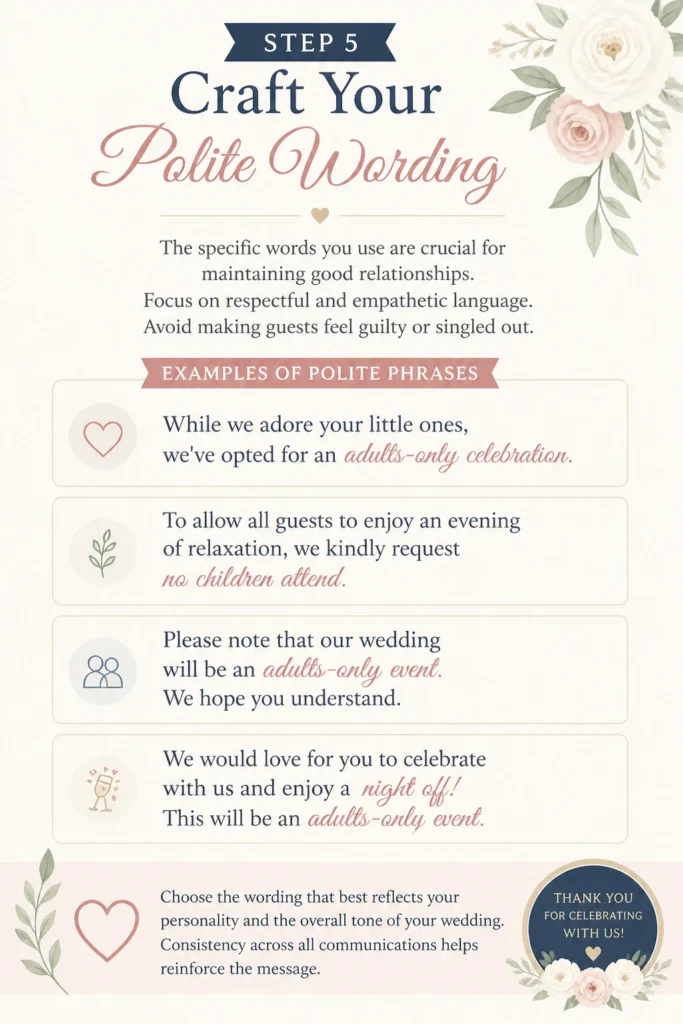
The specific words you use are crucial for maintaining good relationships. Focus on respectful and empathetic language. Avoid making guests feel guilty or singled out.
Here are a few examples of polite phrases:
- “While we adore your little ones, we’ve opted for an adults-only celebration.”
- “To allow all guests to enjoy an evening of relaxation, we kindly request no children attend.”
- “Please note that our wedding will be an adults-only event. We hope you understand.”
- “We would love for you to celebrate with us and enjoy a night off! This will be an adults-only event.”
Choose the wording that best reflects your personality and the overall tone of your wedding. Consistency across all communications helps reinforce the message.
Step 6: Handle Pushback Gracefully
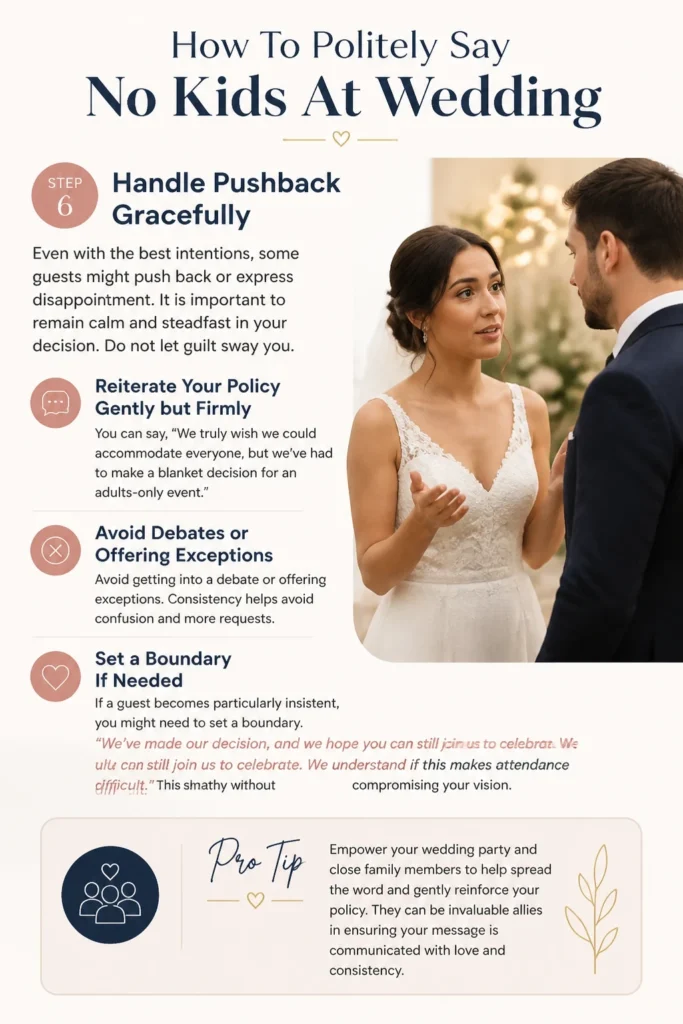
Even with the best intentions, some guests might push back or express disappointment. It is important to remain calm and steadfast in your decision. Do not let guilt sway you.
Reiterate your policy gently but firmly. You can say, “We truly wish we could accommodate everyone, but we’ve had to make a blanket decision for an adults-only event.” Avoid getting into a debate or offering exceptions.
If a guest becomes particularly insistent, you might need to set a boundary. “We’ve made our decision, and we hope you can still join us to celebrate. We understand if this makes attendance difficult.” This shows empathy without compromising your vision.
Pro Tip: Empower your wedding party and close family members to help spread the word and gently reinforce your policy. They can be invaluable allies in fielding questions.
Step 7: Be Consistent and United
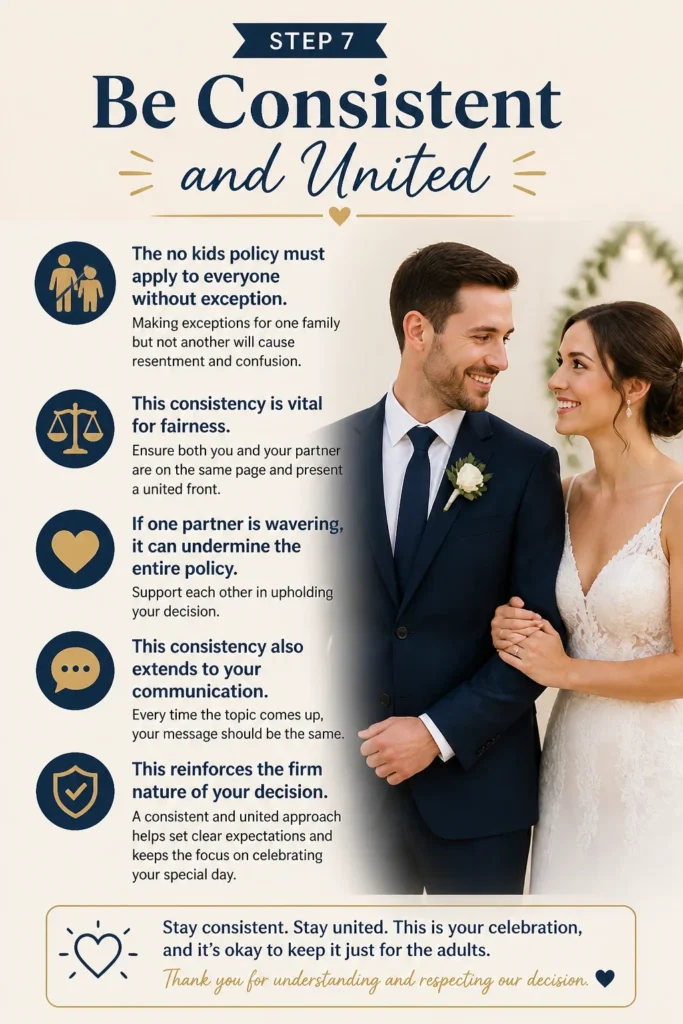
The “no kids” policy must apply to everyone without exception. Making exceptions for one family but not another will cause resentment and confusion. This consistency is vital for fairness.
Ensure both you and your partner are on the same page and present a united front. If one partner is wavering, it can undermine the entire policy. Support each other in upholding your decision.
This consistency also extends to your communication. Every time the topic comes up, your message should be the same. This reinforces the firm nature of your decision.
Step 8: Follow Up If Necessary
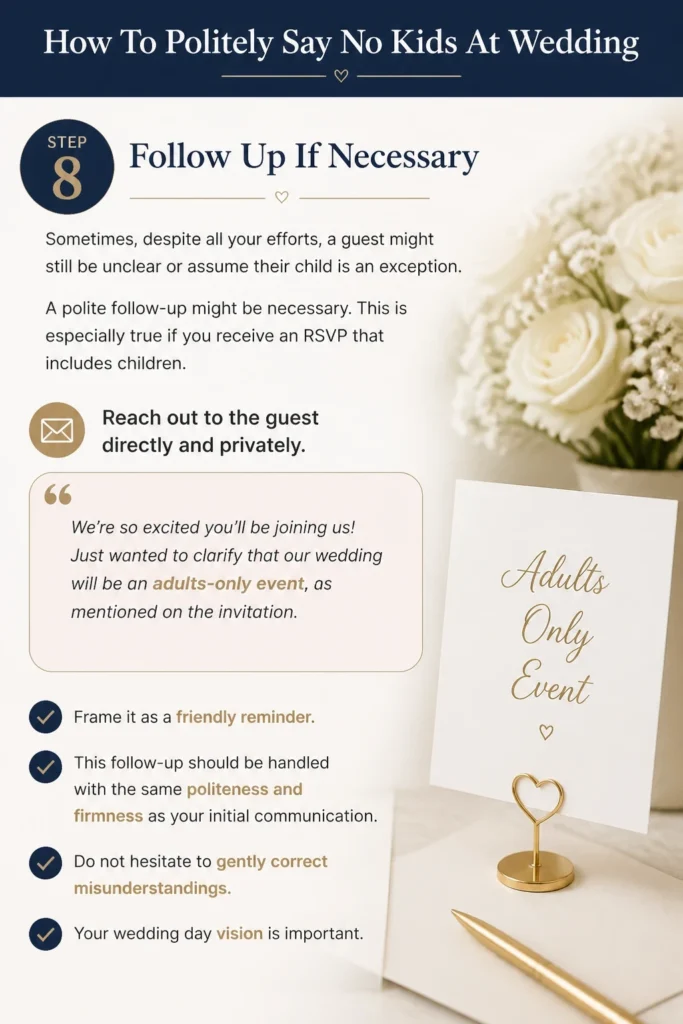
Sometimes, despite all your efforts, a guest might still be unclear or assume their child is an exception. A polite follow-up might be necessary. This is especially true if you receive an RSVP that includes children.
Reach out to the guest directly and privately. “We’re so excited you’ll be joining us! Just wanted to clarify that our wedding will be an adults-only event, as mentioned on the invitation.” Frame it as a friendly reminder.
This follow-up should be handled with the same politeness and firmness as your initial communication. Do not hesitate to gently correct misunderstandings. Your wedding day vision is important.
Common Mistakes to Avoid
Assuming Everyone Will Understand
It is easy to think that a simple note on an invitation is enough. However, guests often overlook details or assume exceptions apply to them. Proactive communication across multiple channels is key. Do not rely solely on one method to convey your message.
Apologizing Excessively
While politeness is important, excessive apologies can make your decision seem less firm. It might imply that your policy is negotiable. State your preference clearly without over-apologizing for a choice that is yours to make.
Making Exceptions
This is perhaps the biggest pitfall. Allowing one guest to bring their child will inevitably lead to others feeling slighted or asking for similar exceptions. This can quickly unravel your entire policy. Stick to your rule consistently for all guests.
Waiting Until the Last Minute
Informing guests about an adults-only wedding close to the date can cause significant inconvenience. Parents need time to arrange childcare, especially for out-of-town travel. Communicate your policy as early as possible, ideally when save-the-dates or invitations go out.
Troubleshooting
Guest Calls to Clarify
This is a very common scenario. Be prepared with your concise, polite explanation. “Thank you for asking! We’ve decided to have an adults-only celebration to ensure everyone can fully enjoy the evening.” Avoid lengthy justifications. If they press, reiterate that it’s a decision for all guests.
Family Member Expresses Disappointment
Close family members might feel entitled or genuinely hurt. Acknowledge their feelings without caving. “We understand this might be disappointing, but we truly hope you can still join us. This decision was made for everyone’s enjoyment.” You might offer to spend dedicated time with their children on a different occasion.
Someone Shows Up With Kids Anyway
This is a rare but stressful situation. Have a plan in place with your wedding planner or a trusted family member. They can discreetly and politely explain the policy at the door. They should direct the guest to a pre-arranged childcare option if available, or suggest alternative arrangements. Avoid a scene at all costs.
Key Takeaways
- Decide on your “no kids” policy early and communicate it clearly and consistently.
- Utilize both invitations and a wedding website for comprehensive messaging.
- Prepare for personal conversations with polite, firm, and consistent language.
- Avoid making exceptions, as this can lead to resentment and undermine your policy.
- Offer resources like local babysitting information to show empathy for parents.
- Empower your wedding party and close family to help reinforce the message.
Frequently Asked Questions
When is the best time to inform guests?
Ideally, your “no kids” policy should be communicated on your save-the-date or, at the very latest, on your formal wedding invitation. This gives parents ample time to arrange childcare and plan their attendance.
Should I make exceptions for close family?
Making exceptions, even for close family, is generally not recommended. It can lead to other guests feeling unfairly treated and can be difficult to explain. Consistency is key to a smooth process and avoiding hurt feelings among other guests.
What if my venue allows kids?
The venue’s policy does not dictate your guest list. Even if the venue is child-friendly, you are still within your right to request an adults-only event. Your decision is about your personal preference for the day, not the venue’s capabilities.
Is it okay to only invite older children?
Some couples choose to invite only children above a certain age (e.g., 12 or 16). If this is your preference, state it clearly: “We respectfully request no children under the age of 12.” Be prepared for similar questions about exceptions, and maintain consistency.
Our Top Recommended Finds
- Custom Wedding Invitation Service: Look for services that allow clear, elegant wording on invitation suites and detail cards, making your policy unambiguous.
- Wedding Website Builder with FAQ Feature: Platforms like The Knot, Zola, or Squarespace offer robust website builders where you can create a detailed FAQ section for guest information.
- Local Babysitting Service Directory: Research reputable local childcare agencies or services in your wedding location. Having a list to share shows thoughtfulness and helps guests.
Embrace Your Vision for the Big Day
Deciding on an adults-only wedding is a personal choice that contributes to the unique atmosphere of your celebration. By approaching this topic with clear communication, empathy, and a united front, you can ensure your guests understand and respect your wishes. Focus on creating the memorable, joyful day you’ve always dreamed of, surrounded by those who are there to celebrate your love. Start planning your communication strategy today to ensure a smooth and stress-free journey to your wedding.
Wedding Planning
No fluff, no drama. Just easy weekly advice, planning shortcuts, and gentle reminders to help you actually enjoy your engagement.