🕊️ How To Include Lost Loved Ones In Wedding

Wedding Planning
No fluff, no drama. Just easy weekly advice, planning shortcuts, and gentle reminders to help you actually enjoy your engagement.
Planning a wedding is a season of immense joy, but it often highlights the painful absence of those who are no longer with us.
I remember the quiet ache I felt while choosing my wedding flowers, knowing my mother wouldn’t be there to pin a corsage to her dress.
Through years of helping couples navigate these emotional waters, I have learned that honoring a lost loved one is about finding a balance between beautiful remembrance and the celebration of your new future.
Quick Overview
This guide will help you navigate the delicate process of weaving the memory of your loved ones into your wedding day with grace and intentionality.
- Time needed: 2 to 4 weeks of planning and preparation
- Difficulty: Intermediate (requires emotional reflection and coordination)
- What you’ll need: Photographs, heirlooms, stationary, candles, and a supportive partner
Step-by-Step Instructions
Step 1: Perform an emotional audit
Reflect on your current state of grief and what you can realistically handle on a high-emotion day.
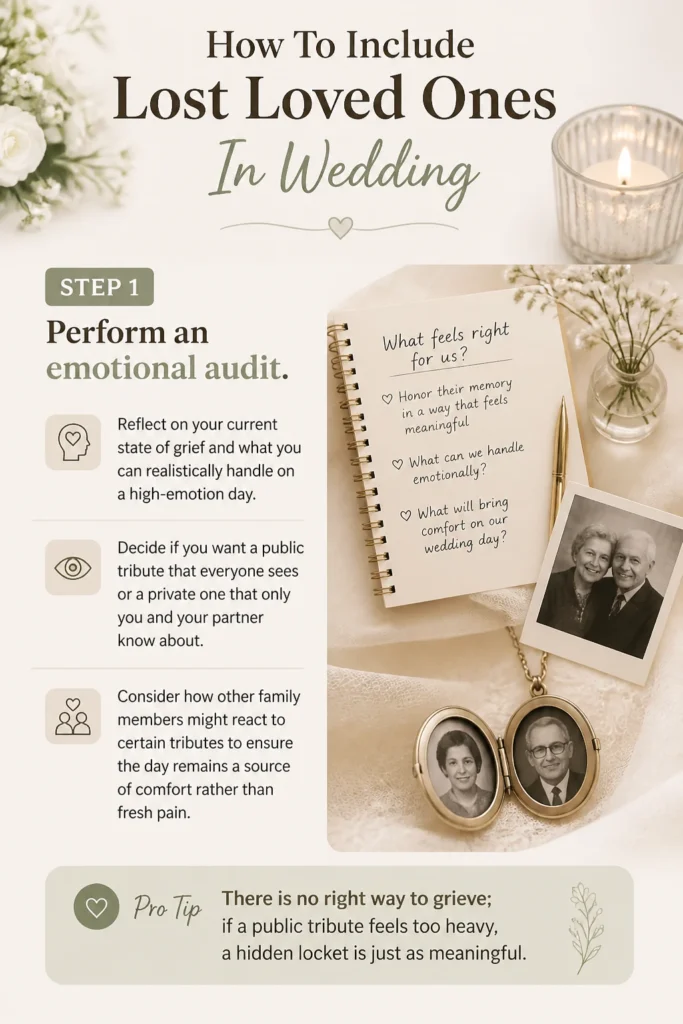
Decide if you want a public tribute that everyone sees or a private one that only you and your partner know about.
Consider how other family members might react to certain tributes to ensure the day remains a source of comfort rather than fresh pain.
Pro Tip: There is no “right” way to grieve; if a public tribute feels too heavy, a hidden locket is just as meaningful.
Step 2: Choose your visibility level
Determine whether you want the tribute to be a focal point or a subtle detail integrated into your surroundings.
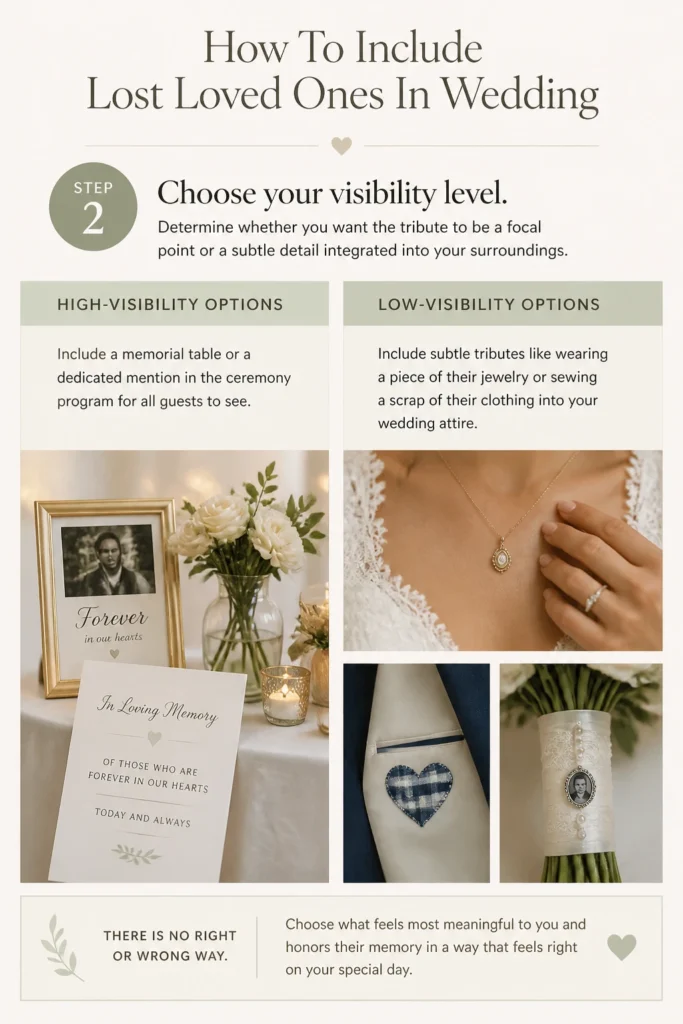
High-visibility options include a memorial table or a dedicated mention in the ceremony program for all guests to see.
Low-visibility options might include wearing a piece of their jewelry or sewing a scrap of their clothing into your wedding attire.
Step 3: Curate meaningful photographs
Select images that capture the essence and joy of the person you are honoring rather than just a formal portrait.
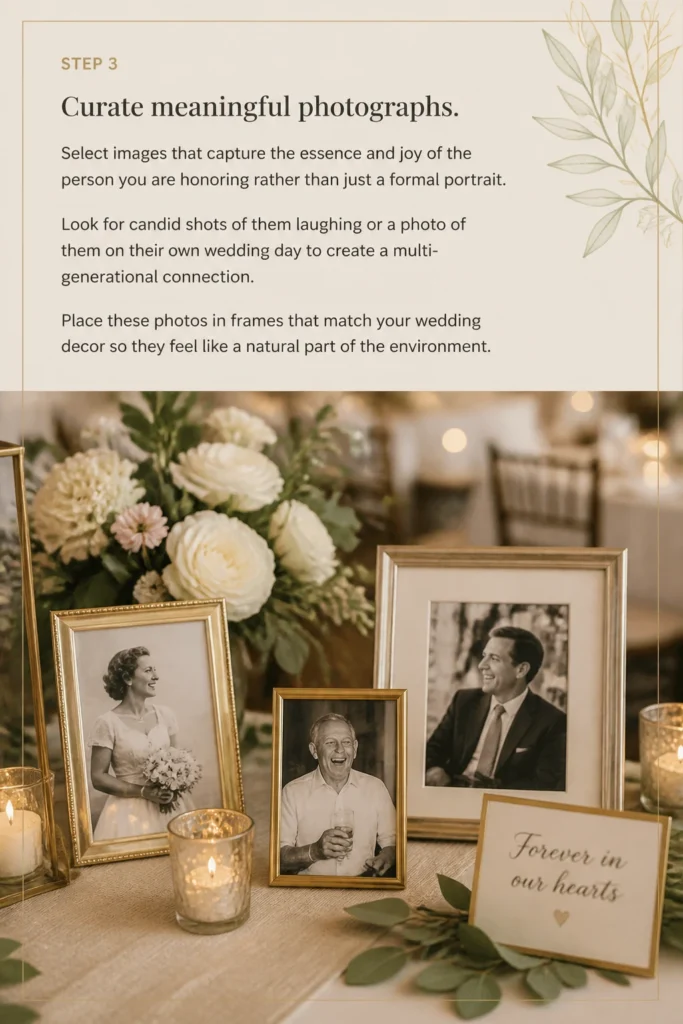
Look for candid shots of them laughing or a photo of them on their own wedding day to create a multi-generational connection.
Place these photos in frames that match your wedding decor so they feel like a natural part of the environment.
Step 4: Incorporate heirlooms into your attire
Integrate physical items from your loved ones into what you are wearing to keep them physically close as you walk down the aisle.
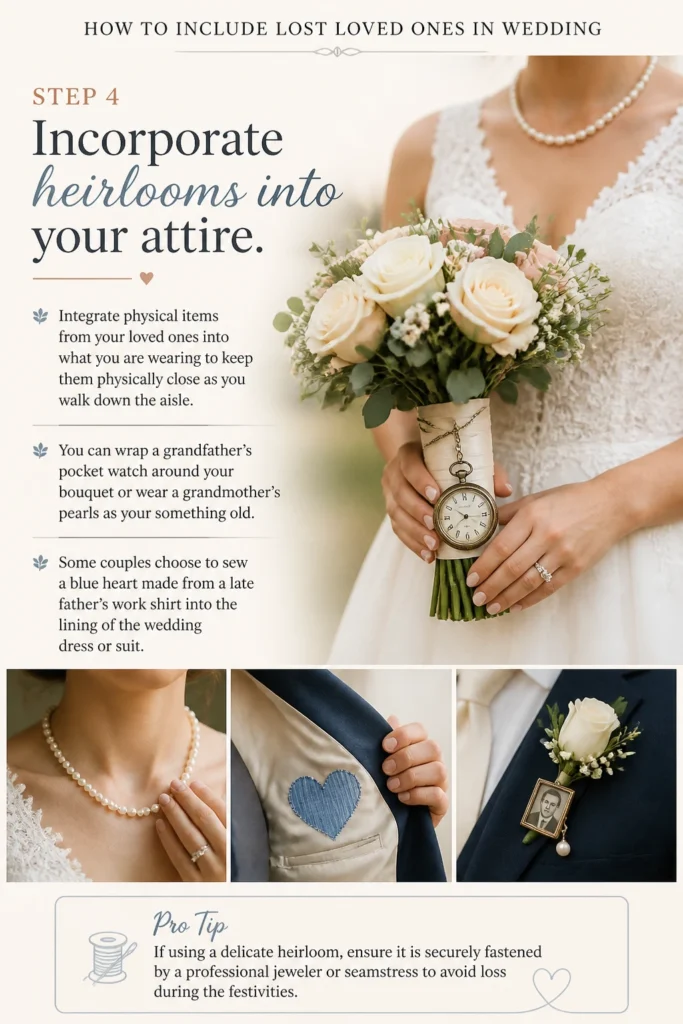
You can wrap a grandfather’s pocket watch around your bouquet or wear a grandmother’s pearls as your “something old.”
Some couples choose to sew a blue heart made from a late father’s work shirt into the lining of the wedding dress or suit.
Pro Tip: If using a delicate heirloom, ensure it is securely fastened by a professional jeweler or seamstress to avoid loss during the festivities.
Step 5: Design a dedicated memorial space
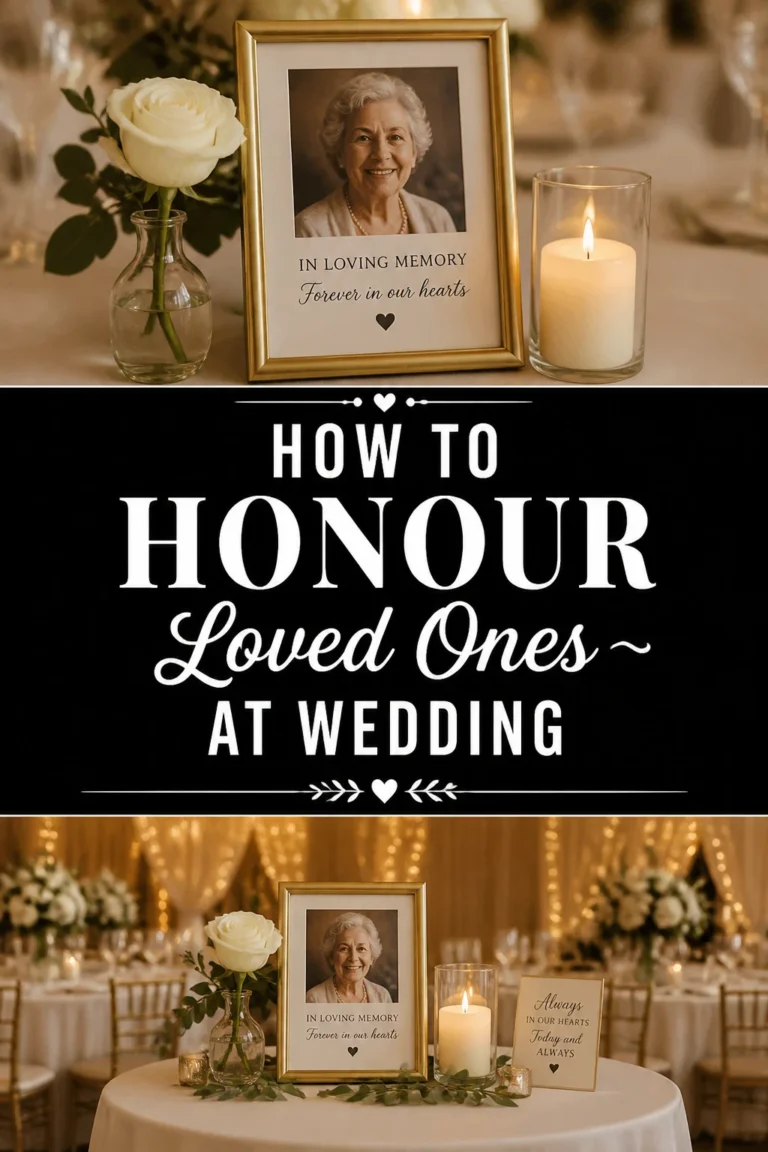
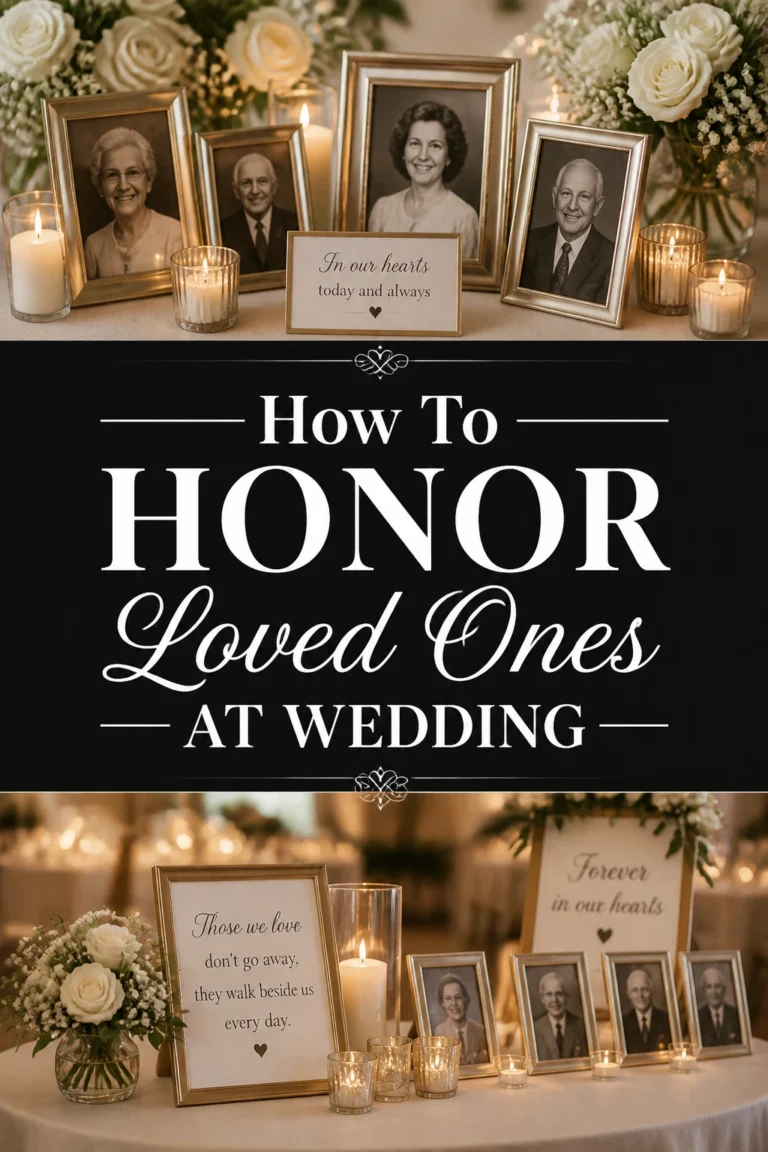
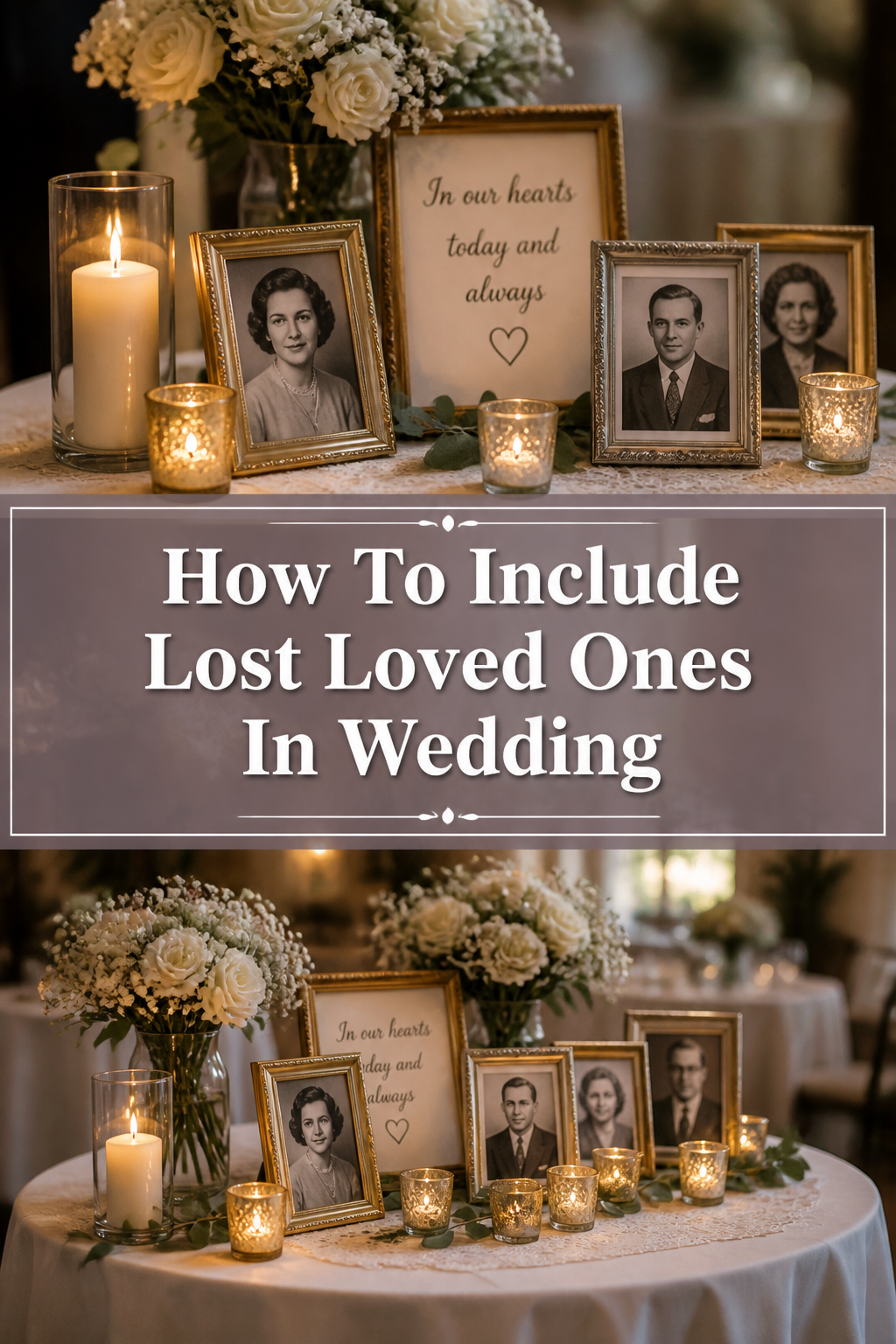
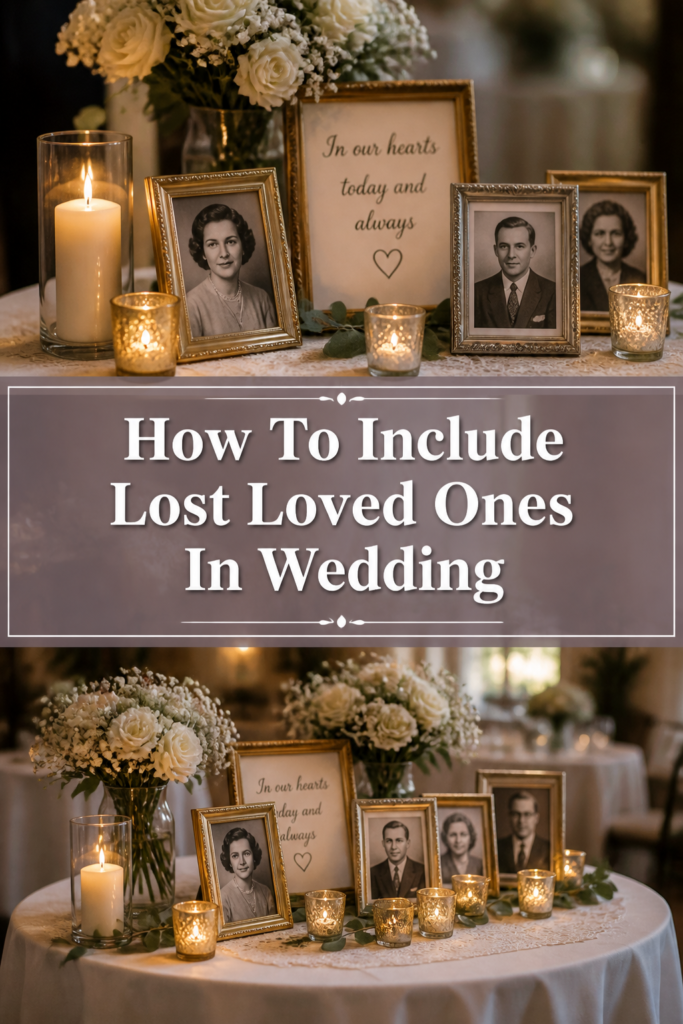
Create a specific area at the ceremony or reception, often called a “Memory Table,” to honor those who have passed.
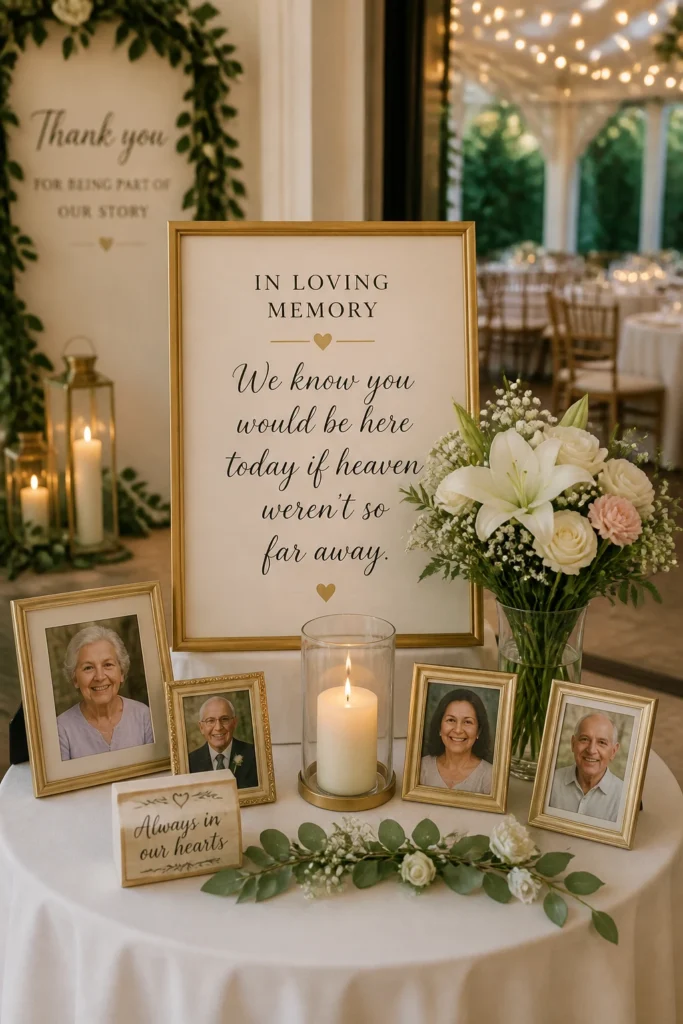
Use a sign with a gentle message like, “We know you would be here today if heaven weren’t so far away,” to anchor the display.
Add a single candle or a vase of their favorite flowers to bring a sense of life and fragrance to the memorial.
Step 6: Weave their memory into the ceremony
Acknowledge your loved ones during the official proceedings through spoken words or intentional silence.
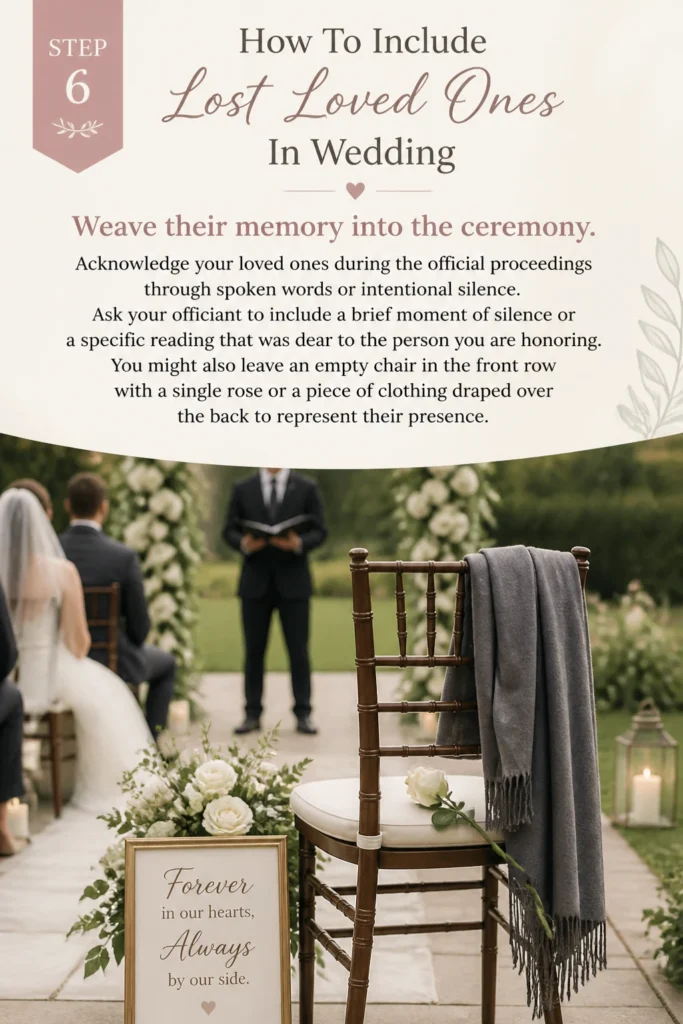
Ask your officiant to include a brief moment of silence or a specific reading that was dear to the person you are honoring.
You might also leave an empty chair in the front row with a single rose or a piece of clothing draped over the back to represent their presence.
Step 7: Dedicate a sensory tribute
Engage the senses of your guests by including a favorite song, a specific scent, or a signature dish that reminds you of them.
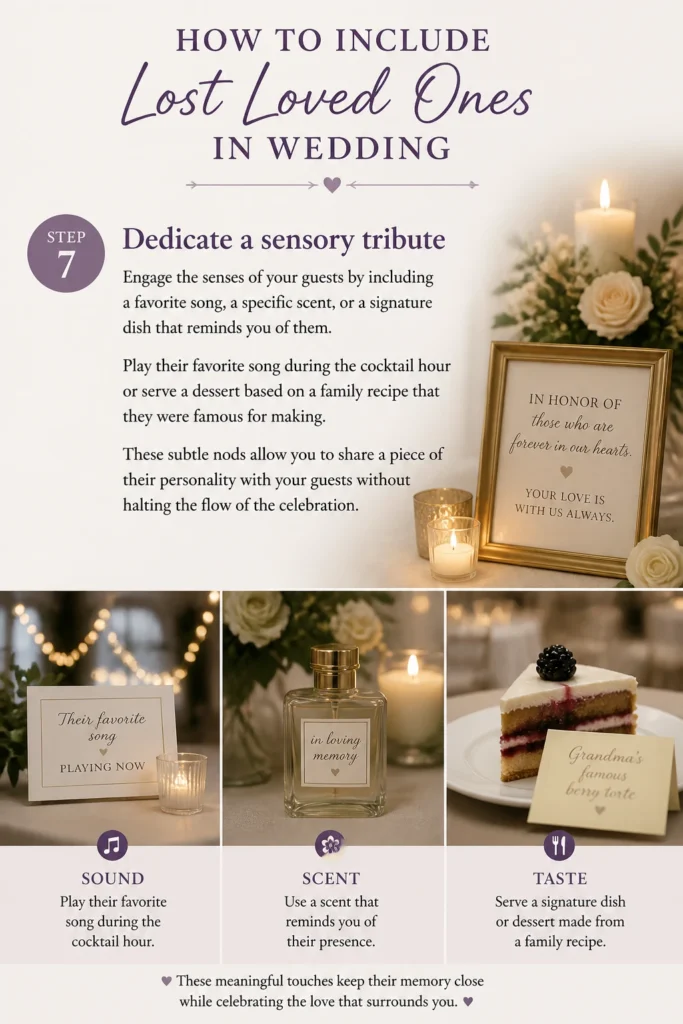
Play their favorite song during the cocktail hour or serve a dessert based on a family recipe that they were famous for making.
These subtle nods allow you to share a piece of their personality with your guests without halting the flow of the celebration.
Step 8: Offer a living legacy
Extend the impact of their life by making a charitable donation in their name in lieu of traditional wedding favors.
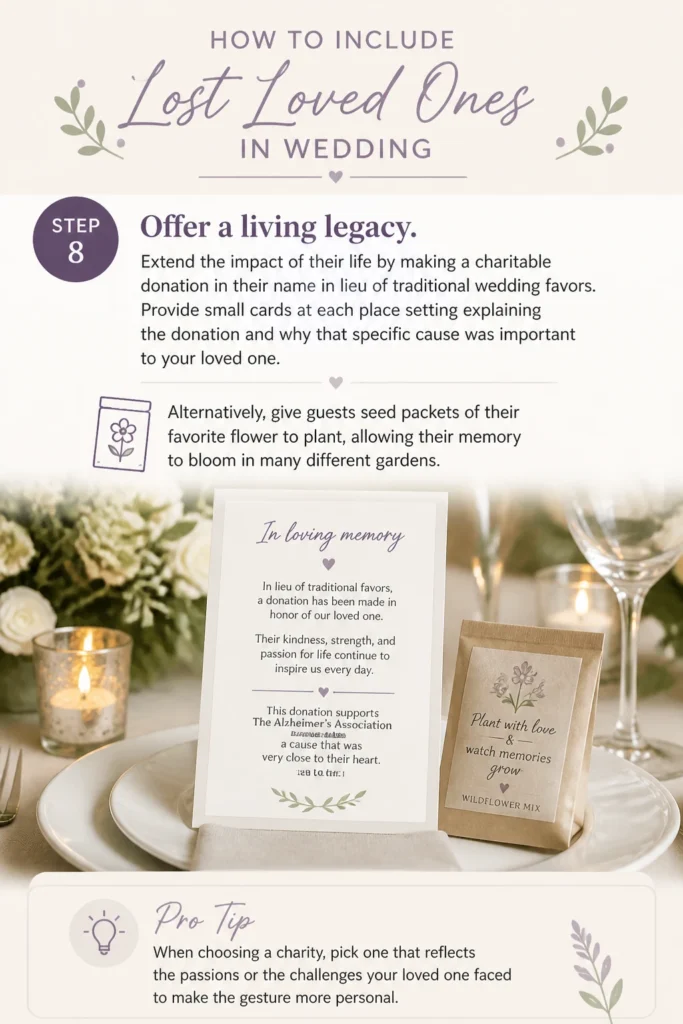
Provide small cards at each place setting explaining the donation and why that specific cause was important to your loved one.
Alternatively, give guests seed packets of their favorite flower to plant, allowing their memory to bloom in many different gardens.
Pro Tip: When choosing a charity, pick one that reflects the passions or the challenges your loved one faced to make the gesture more personal.
Common Mistakes to Avoid
Overwhelming the celebration with grief
It is easy to let the sadness of a loss overshadow the joy of the union if the tributes are too numerous or heavy.
A wedding is primarily a celebration of a new beginning, so try to keep the memorials focused on love and legacy rather than the tragedy of the loss.
Balance a somber moment of silence with an upbeat song or a joyful story to help the energy of the room recover.
Forgetting the feelings of living relatives
While you may want a large photo of a late parent, it might be incredibly difficult for the surviving spouse to look at all evening.
Talk to your closest family members about your plans before the big day to ensure your tribute doesn’t cause them unexpected distress.
Being mindful of their journey through grief shows respect for the living while you honor the dead.
Procrastinating on the logistics
Finding the right photos, getting heirlooms cleaned, or printing memorial signs often takes longer than anticipated.
Waiting until the week of the wedding can lead to rushed decisions or added stress during an already busy time.
Start gathering your memorial items at least a month in advance to ensure everything is perfect and handled with care.
Troubleshooting
Conflicting opinions on how to honor someone
Sometimes family members have very different ideas about what is appropriate for a wedding memorial.
If tensions arise, opt for a more private tribute, such as a photo in a locket or a note in your pocket, to honor your personal relationship.
Remember that your primary responsibility is to your own peace of mind and your partner’s comfort on your wedding day.
Sudden emotional overwhelm during the day
Even with the best planning, a specific song or sight might trigger a wave of intense grief during the ceremony or reception.
Build “buffer time” into your schedule where you can step away for five minutes to breathe and compose yourself in private.
Trust your bridal party or a designated friend to keep an eye on you and provide a quick escape if they see you struggling.
Key Takeaways
- Choose a tribute visibility level that aligns with your current emotional capacity.
- Use heirlooms and photographs to create a tangible connection to the past.
- Talk to surviving family members to ensure tributes are supportive rather than triggering.
- Focus on the joy and legacy of the person’s life rather than the sadness of their absence.
- Keep memorial logistics on your early planning checklist to avoid last-minute stress.
- Allow yourself the grace to feel both joy and sadness simultaneously on your big day.
Frequently Asked Questions
Should I mention my deceased parent in the wedding toast?
Mentioning a late parent in a toast is a beautiful way to acknowledge their influence on your life. Keep the mention brief and focused on a positive trait or a piece of advice they gave you to keep the tone of the evening uplifted. It is often helpful to write this part down so you don’t lose your place if you become emotional.
Is it okay to have an empty chair at the ceremony?
An empty chair is a very powerful and visible symbol of loss. While many find it comforting, others find it a bit too stark or sad for a wedding. If you choose this, placing a memento like a hat or a bouquet on the seat can make it feel more like a reserved space for a guest of honor rather than a void.
What if I don’t want a public memorial at all?
That is completely acceptable and very common. Many couples prefer to keep their grief private to avoid feeling “on display” during their wedding. A small photo tucked into a bouquet or a specific flower in your arrangements can serve as a powerful personal connection that doesn’t require a public announcement.
How can I involve lost loved ones if I never met them?
You can honor your partner’s lost loved ones by asking your partner about their favorite things. Including a specific flower they loved or a song they enjoyed is a wonderful way to show your partner that you value their family history. It demonstrates a deep level of support for your partner’s heritage and their personal journey.
Our Top Recommended Finds
- Bouquet Photo Charms: Small, elegant frames that attach to the ribbon of a bouquet, allowing you to carry a picture of your loved one with you.
- Personalized Memorial Candles: High-quality candles with custom labels that can be lit during the ceremony to represent a continuing light.
- Memory Table Signage: Professionally printed acrylic or wooden signs that provide a polished and respectful look for your memorial display.
Carrying Their Love Into Your Marriage
Including those you have lost in your wedding is a profound way to bridge the gap between your past and your future.
Once you have decided on your tributes, take a moment to sit with your partner and share why these choices matter to you.
This process of honoring the dead can actually strengthen your bond with the living as you build a foundation of shared history and mutual respect.
Start by looking through old photo albums this weekend to see which images spark the most joy and warmth in your heart.
Wedding Planning
No fluff, no drama. Just easy weekly advice, planning shortcuts, and gentle reminders to help you actually enjoy your engagement.