💍 How To Plan A Wedding In 6 Months

Wedding Planning
No fluff, no drama. Just easy weekly advice, planning shortcuts, and gentle reminders to help you actually enjoy your engagement.
Planning a wedding in six months might seem like a whirlwind, but it is absolutely achievable. My best friend pulled off her dream wedding in this exact timeframe, and it was beautiful, personal, and stress-free. This guide distills that experience and other expert advice into actionable steps, giving you the confidence and tools to create your perfect day without feeling overwhelmed.
You have everything you need to make this happen.
Quick Overview
This guide will walk you through transforming your wedding vision into reality in half a year. You’ll learn how to prioritize, delegate, and stay organized to enjoy your engagement and your big day.
- Time needed: 6 months of focused planning
- Difficulty: Intermediate (requires dedication and quick decision-making)
- What you’ll need: A wedding planner or digital planning tools, a clear budget, and a supportive partner/team.
Step-by-Step Instructions
Step 1: Envision Your Day & Set Your Budget (Month 1)
This initial phase sets the foundation for everything that follows. Spend time with your partner discussing your ideal wedding. What kind of atmosphere do you want?
Define your wedding vision. Think about size (intimate vs. grand), style (formal, casual, rustic), and location (destination, local venue). Create a shared Pinterest board or vision document.
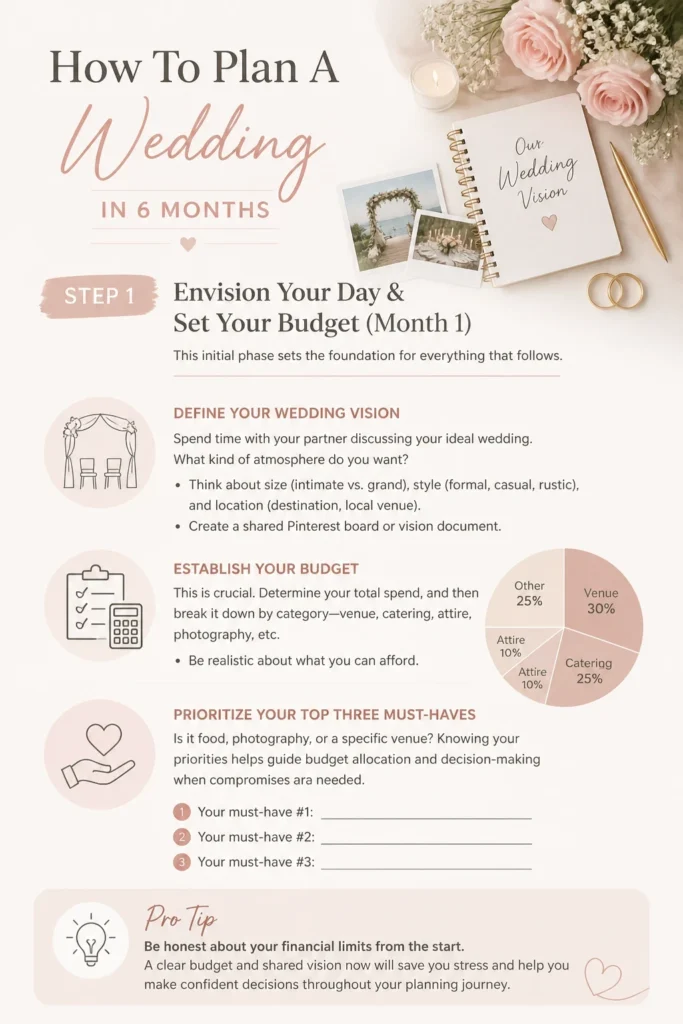
Establish your budget. This is crucial. Determine your total spend, and then break it down by category: venue, catering, attire, photography, etc. Be realistic about what you can afford.
Prioritize your top three must-haves. Is it food, photography, or a specific venue? Knowing your priorities helps guide budget allocation and decision-making when compromises are needed.
Pro Tip: Be honest about your financial limits from the start. A clear budget prevents stress later on and helps you make informed choices.
Step 2: Secure Your Venue & Key Vendors (Month 1-2)
With only six months, venue and key vendor availability is your biggest challenge. Act quickly once your vision and budget are clear.
Book your venue immediately. Many venues book a year or more in advance, so be flexible with dates or consider off-peak days. Look for venues that offer in-house catering or packages to simplify things.
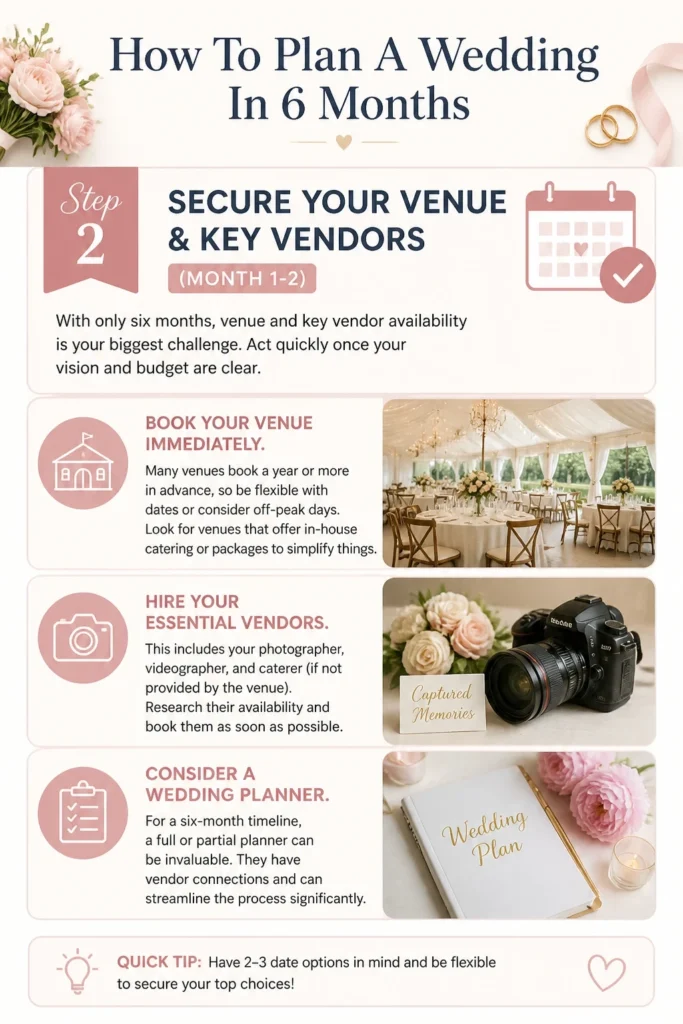
Hire your essential vendors. This includes your photographer, videographer, and caterer (if not provided by the venue). Research their availability and book them as soon as possible.
Consider a wedding planner. For a six-month timeline, a full or partial planner can be invaluable. They have vendor connections and can streamline the process significantly.
Step 3: Build Your Guest List & Send Save the Dates (Month 2-3)
The guest list influences many decisions, from venue size to catering costs. Get this sorted early.
Draft your guest list. Decide on your “A” list (must-haves) and “B” list (if space/budget allows). Be firm with numbers to avoid exceeding your venue capacity or budget.
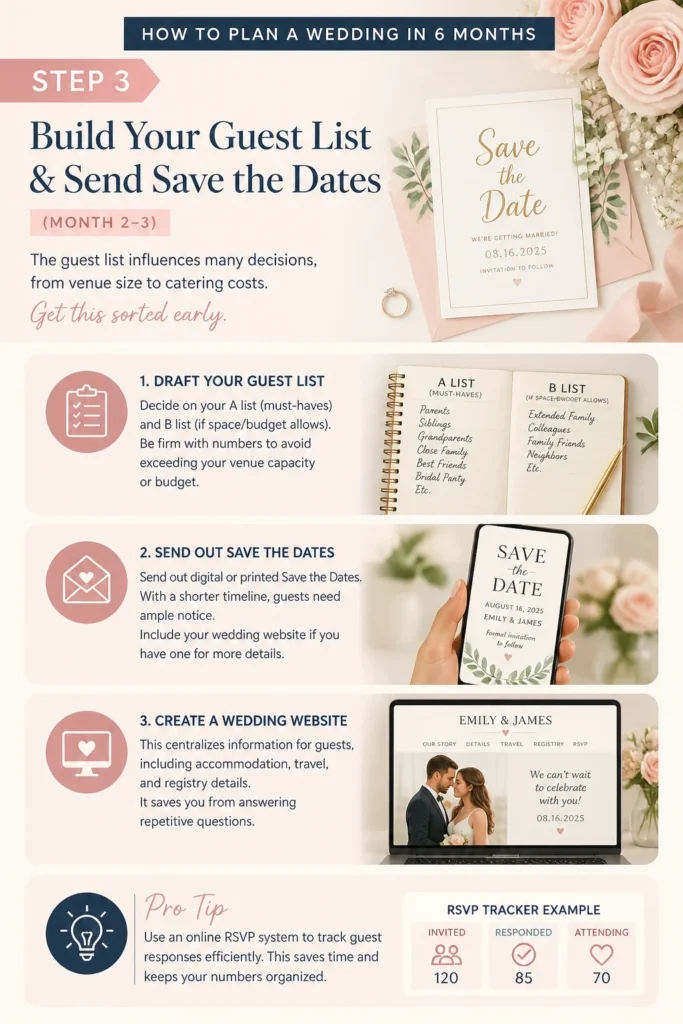
Send out digital or printed Save the Dates. With a shorter timeline, guests need ample notice. Include your wedding website if you have one for more details.
Create a wedding website. This centralizes information for guests, including accommodation, travel, and registry details. It saves you from answering repetitive questions.
Pro Tip: Use an online RSVP system to track guest responses efficiently. This saves time and keeps your numbers organized.
Step 4: Choose Attire & Finalize Your Wedding Party (Month 3-4)
Wedding attire often requires significant lead time for ordering and alterations. Don’t delay these decisions.
Select your wedding attire. Brides, start dress shopping now. Many gowns take 4-6 months to arrive, plus 6-8 weeks for alterations. Grooms, choose suits or tuxedos and arrange fittings.

Confirm your wedding party. Ask your bridesmaids and groomsmen to stand by you. Provide them with details on their attire requirements and any associated costs.
Shop for wedding rings. These can be ordered relatively quickly, but allow time for sizing and any custom engraving. Ensure they are picked up well before the wedding day.
Step 5: Detail Planning & Vendor Coordination (Month 4-5)
This phase is all about refining the details and ensuring all your vendors are on the same page.
Meet with your vendors. Schedule meetings with your florist, baker, DJ/band, and officiant. Discuss your vision, timelines, and specific requests. Finalize contracts and payment schedules.
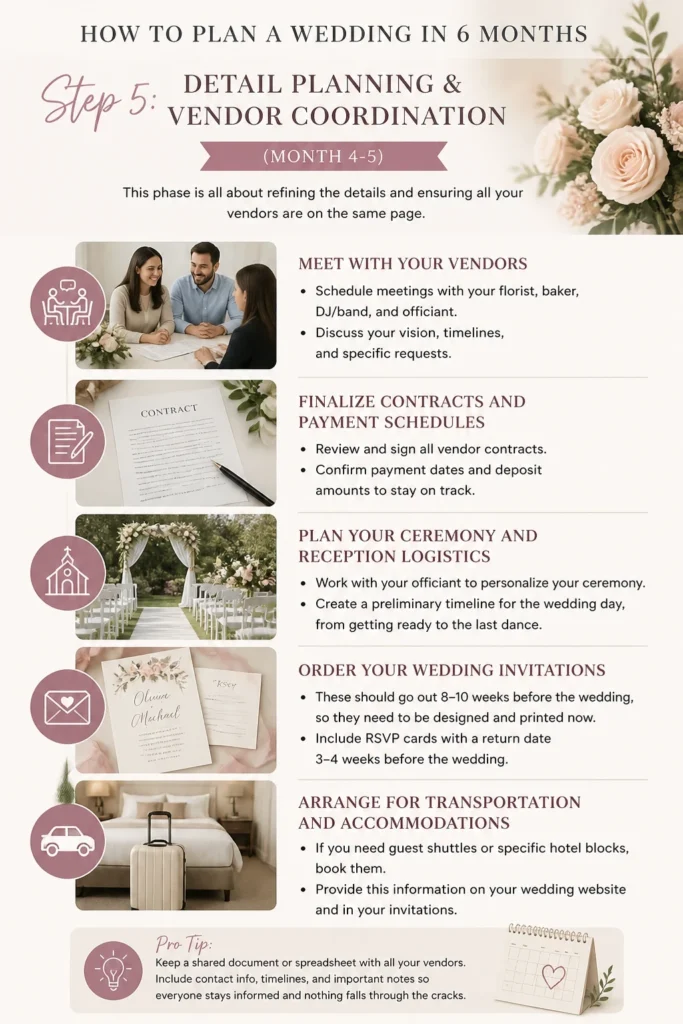
Plan your ceremony and reception logistics. Work with your officiant to personalize your ceremony. Create a preliminary timeline for the wedding day, from getting ready to the last dance.
Order your wedding invitations. These should go out 8-10 weeks before the wedding, so they need to be designed and printed now. Include RSVP cards with a return date 3-4 weeks before the wedding.
Arrange for transportation and accommodations. If you need guest shuttles or specific hotel blocks, book them. Provide this information on your wedding website or with invitations.
Pro Tip: Create a shared document for all vendor contact information, timelines, and payment due dates. Share it with your wedding party or planner.
Step 6: Final Touches & Confirmations (Month 5-6)
The last month is for tying up loose ends and confirming everything. This is where your detailed planning pays off.
Finalize your menu and bar selections. Attend any tasting sessions your caterer offers. Confirm dietary restrictions with your guests and provide this information to the caterer.
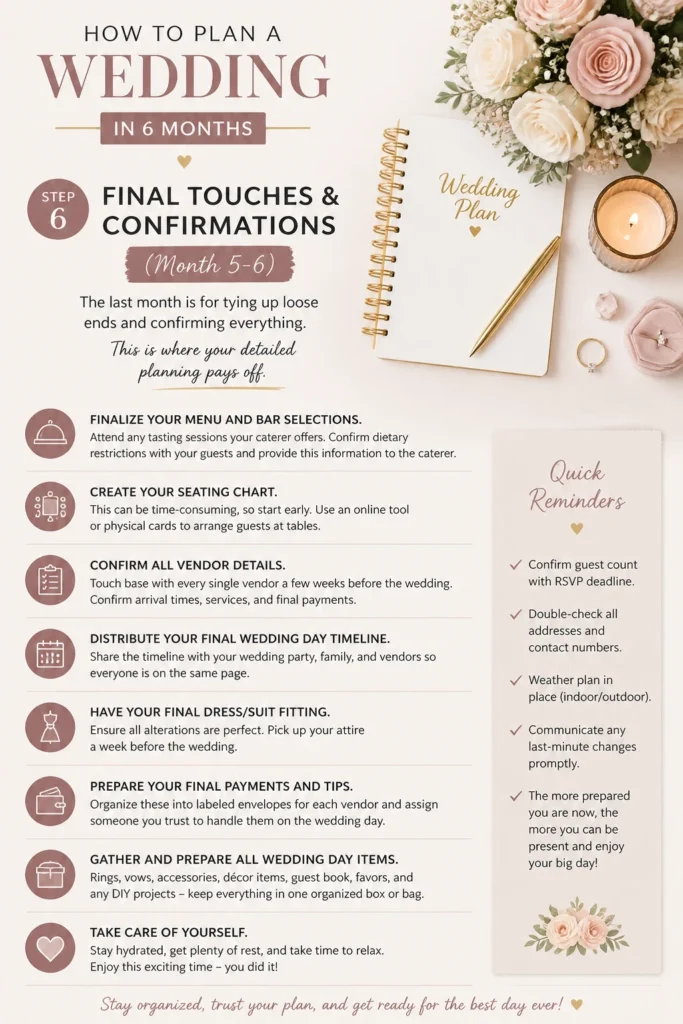
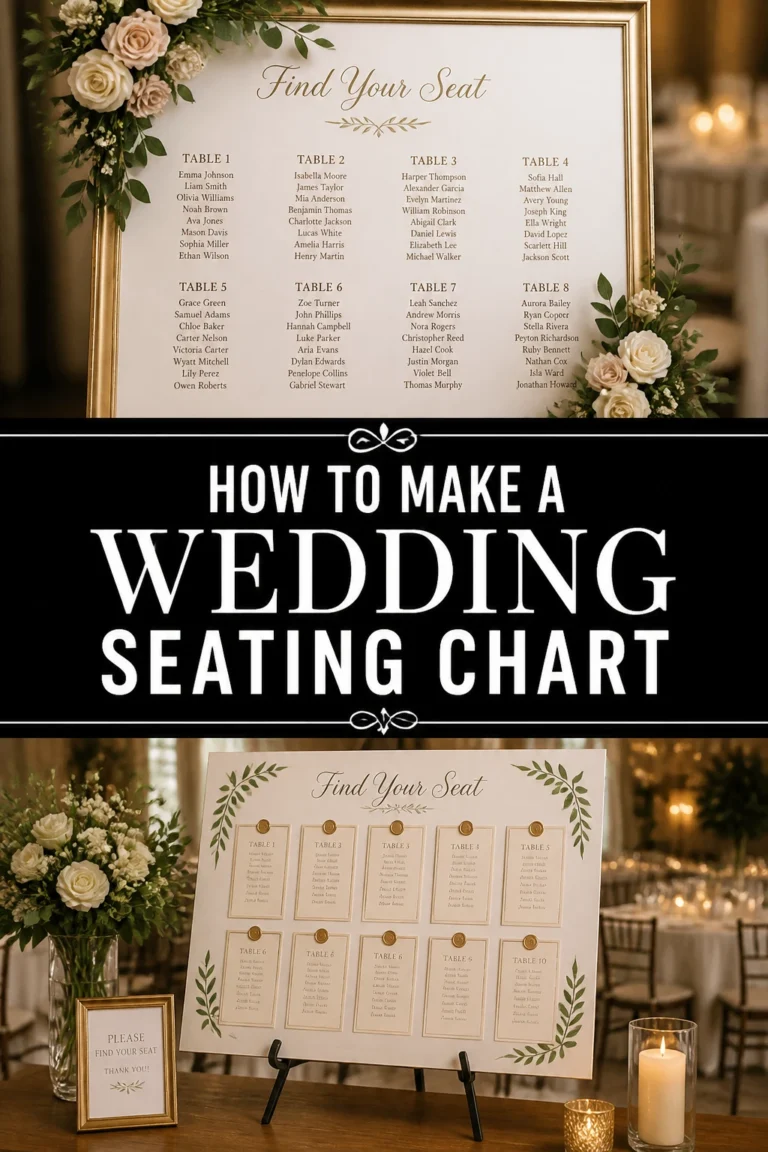
Create your seating chart. This can be time-consuming, so start early. Use an online tool or physical cards to arrange guests at tables.
Confirm all vendor details. Touch base with every single vendor a few weeks before the wedding. Confirm arrival times, services, and final payments. Distribute your final wedding day timeline.
Have your final dress/suit fitting. Ensure all alterations are perfect. Pick up your attire a week before the wedding.
Prepare your final payments and tips. Organize these into labeled envelopes for easy distribution on the wedding day, often handled by a trusted friend or planner.
Step 7: The Week Of & Wedding Day (Month 6)
The final days should be about excitement, not stress. Delegate tasks and enjoy the build-up.
Delegate last-minute tasks. Assign someone to pick up flowers, handle guest issues, or manage gifts. Your wedding party and family can be a great help.
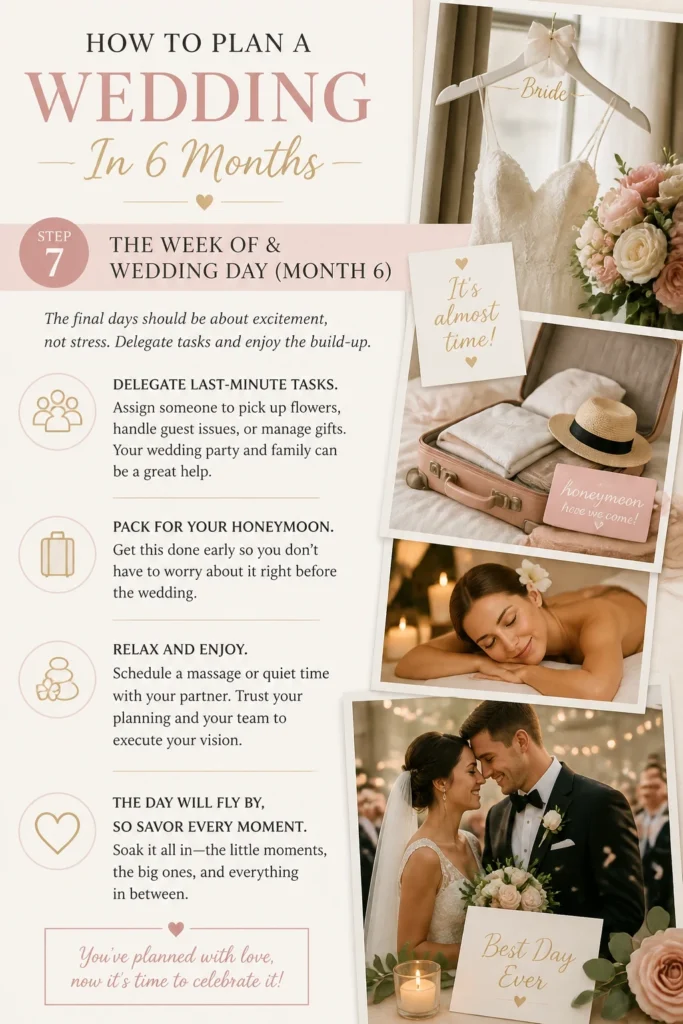
Pack for your honeymoon. Get this done early so you don’t have to worry about it right before the wedding.
Relax and enjoy. Schedule a massage or quiet time with your partner. Trust your planning and your team to execute your vision. The day will fly by, so savor every moment.
Common Mistakes to Avoid
Underestimating the Budget
Many couples start planning without a firm budget, leading to overspending or cutting corners on important details later. Establish a realistic budget from day one and track every expense. This keeps you accountable and prevents financial surprises.
Delaying Venue & Key Vendor Bookings
With a six-month timeline, popular venues and vendors book up incredibly fast. Waiting even a week can mean losing your first choice. Make these decisions quickly once your budget is set.
Trying to Do Everything Yourself
It’s easy to feel overwhelmed when planning a wedding quickly. Trying to manage every single detail personally will lead to burnout. Delegate tasks to your partner, wedding party, family, or a professional planner.
Forgetting to Prioritize
When time is short, you can’t have everything. Not knowing your top priorities can lead to indecision and missed opportunities. Decide what matters most to you and your partner, and let those priorities guide your choices.
Troubleshooting
Limited Vendor Availability
If your top-choice vendors are booked, don’t panic. Ask for referrals from your venue or other vendors you’ve already booked. Consider less conventional options, newer talent, or vendors slightly outside your immediate area. Being flexible with dates (e.g., a weekday wedding) can also open up options.
Budget Overruns
If you find yourself going over budget, revisit your priorities. Look for areas where you can trim costs without sacrificing your core vision. This might mean reducing your guest list, opting for simpler floral arrangements, or choosing a less elaborate menu. DIY projects for non-essential items can also help.
Feeling Overwhelmed and Stressed
It’s normal to feel stress, especially with a tight timeline. Take regular breaks from planning. Schedule “no wedding talk” dates with your partner. Lean on your support system and delegate tasks. Remember the ultimate goal: celebrating your love, not achieving perfection.
Key Takeaways
- Start with a Clear Vision and Budget: These foundational elements guide all subsequent decisions.
- Act Quickly on Venue and Key Vendors: Availability is your biggest constraint with a six-month timeline.
- Prioritize and Delegate: Focus on what matters most and enlist help from your support system.
- Maintain Open Communication: Talk regularly with your partner, vendors, and wedding party.
- Stay Organized: Use planning tools, checklists, and timelines to keep everything on track.
- Embrace Flexibility: Be prepared to make compromises and adapt when unexpected challenges arise.
Frequently Asked Questions
Is a six-month wedding plan realistic?
Absolutely, yes! Many couples successfully plan beautiful weddings in six months or even less. It requires quick decision-making, clear communication, and a willingness to prioritize. A wedding planner can be a huge asset for a shorter timeline.
What if I can’t find a venue or photographer in time?
Be flexible with your wedding date. Consider a weekday, a Sunday, or an off-season month. Look for venues that are newer or less well-known. For photographers, explore emerging talent or ask for recommendations from other vendors you’ve booked. Sometimes, expanding your search radius can also help.
How do I manage the guest list quickly?
Start with your absolute must-have guests. Decide on a firm number you can accommodate and stick to it. Use digital Save the Dates and invitations to speed up delivery and RSVPs. Consider a smaller, more intimate wedding if guest list challenges persist.
Should I hire a wedding planner for a short timeline?
Hiring a planner, even for partial assistance or day-of coordination, is highly recommended for a six-month timeline. They have established vendor relationships, understand the logistics, and can help you make decisions efficiently, saving you time and potential stress.
Your Beautiful Day Awaits
You’ve got this! Planning a wedding in six months is an exciting adventure, full of quick decisions and joyful moments. By following these steps and staying organized, you can create a day that perfectly reflects your love story.
Start visualizing your dream wedding today. Take the first step, embrace the process, and get ready to celebrate your commitment sooner than you think.
Wedding Planning
No fluff, no drama. Just easy weekly advice, planning shortcuts, and gentle reminders to help you actually enjoy your engagement.