👰♀️ How To Walk Down The Aisle Wedding Order
Wedding Planning
No fluff, no drama. Just easy weekly advice, planning shortcuts, and gentle reminders to help you actually enjoy your engagement.
Walking down the aisle is a truly memorable moment. It marks the beautiful beginning of your wedding ceremony.
As a former event planner, I’ve seen countless couples navigate this exciting tradition. This guide will help you create a seamless and heartfelt procession.
Quick Overview
This guide will empower you to plan every detail of your wedding processional. You will learn the traditional order, key roles, and timing for a perfect walk down the aisle.
- Time needed: 1-2 hours for planning, plus rehearsal time
- Difficulty: Beginner
- What you’ll need: Guest list, wedding party roles, ceremony music, aisle dimensions
Step-by-Step Instructions
Step 1: Understand the Traditional Order
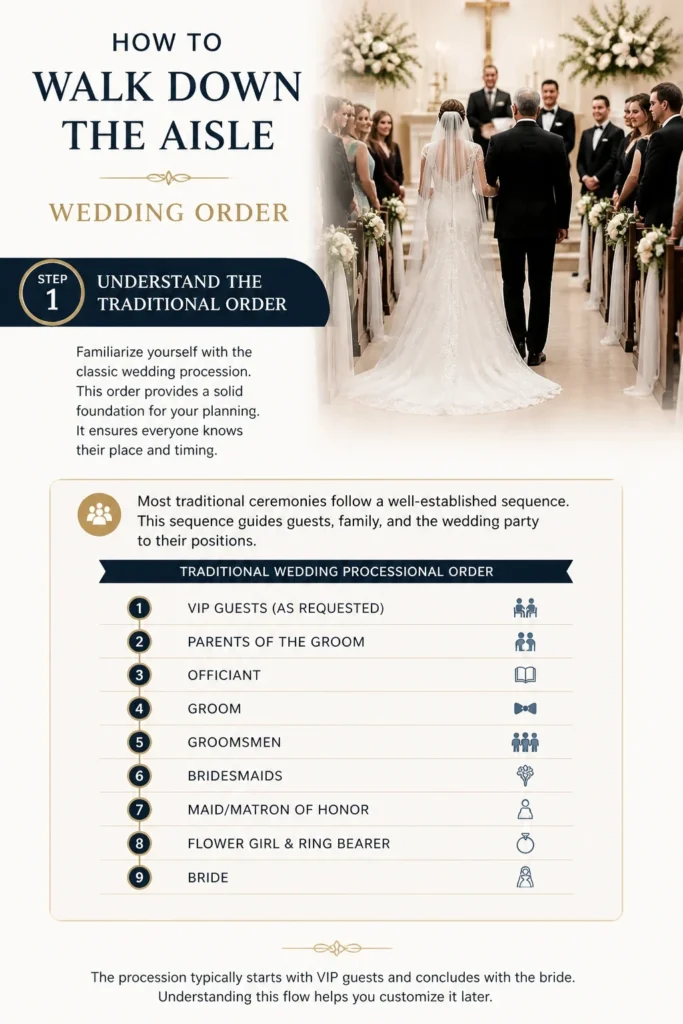
Familiarize yourself with the classic wedding procession. This order provides a solid foundation for your planning. It ensures everyone knows their place and timing.
Most traditional ceremonies follow a well-established sequence. This sequence guides guests, family, and the wedding party to their positions.
The procession typically starts with VIP guests and concludes with the bride. Understanding this flow helps you customize it later.
Step 2: Seat Your VIP Guests
The seating of special guests often signals the start of the ceremony. This usually includes the grandparents of the couple. It also involves the parents of the groom.
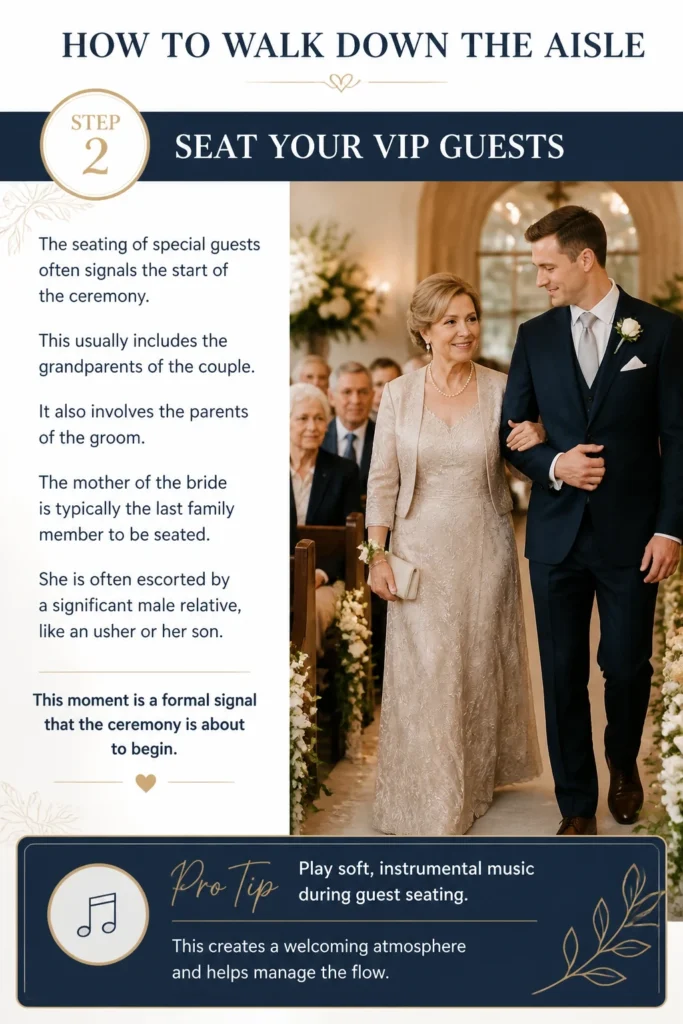
The mother of the bride is typically the last family member to be seated. She is often escorted by a significant male relative, like an usher or her son. This moment is a formal signal that the ceremony is about to begin.
Pro Tip: Play soft, instrumental music during guest seating. This creates a welcoming atmosphere and helps manage the flow.
Step 3: The Officiant and Groom Take Their Places
The officiant and the groom are usually the first to stand at the altar. They can enter from a side door or walk down the aisle. Their presence signifies readiness for the ceremony to commence.
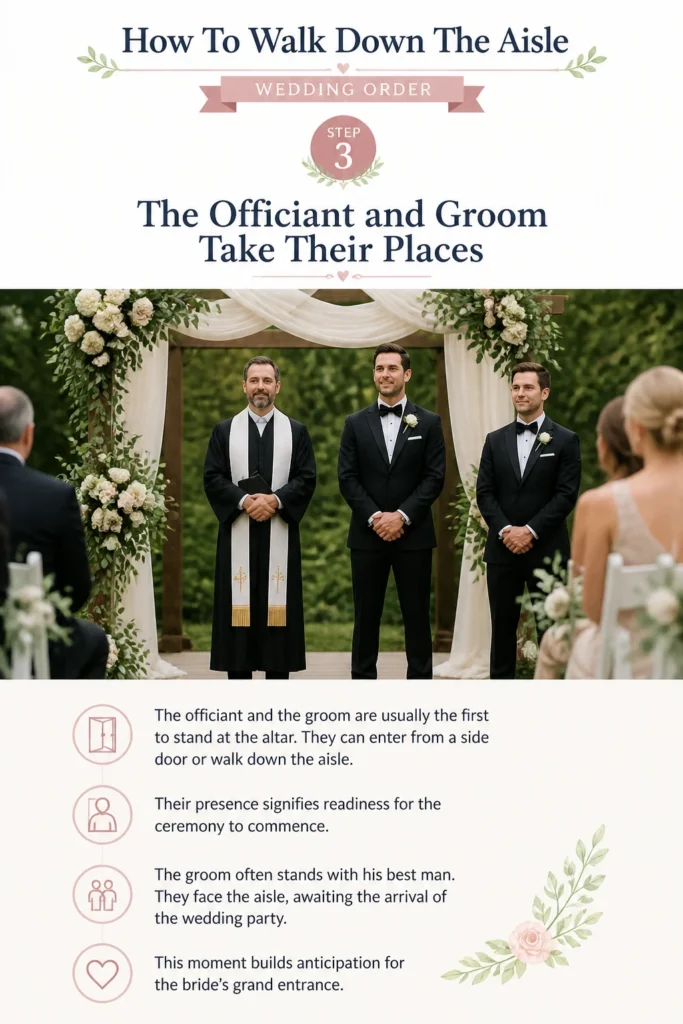
The groom often stands with his best man. They face the aisle, awaiting the arrival of the wedding party. This moment builds anticipation for the bride’s grand entrance.
Step 4: Groomsmen Make Their Entrance
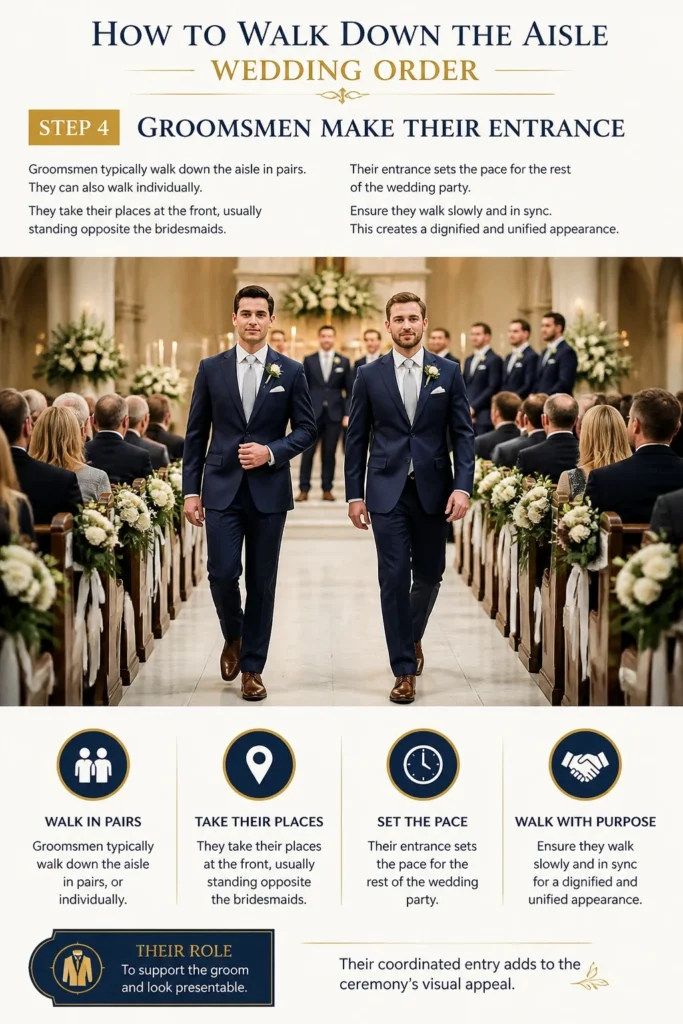
Groomsmen typically walk down the aisle in pairs. They can also walk individually. They take their places at the front, usually standing opposite the bridesmaids.
Their entrance sets the pace for the rest of the wedding party. Ensure they walk slowly and in sync. This creates a dignified and unified appearance.
The groomsmen’s role is to support the groom and look presentable. Their coordinated entry adds to the ceremony’s visual appeal.
Step 5: Bridesmaids Grace the Aisle
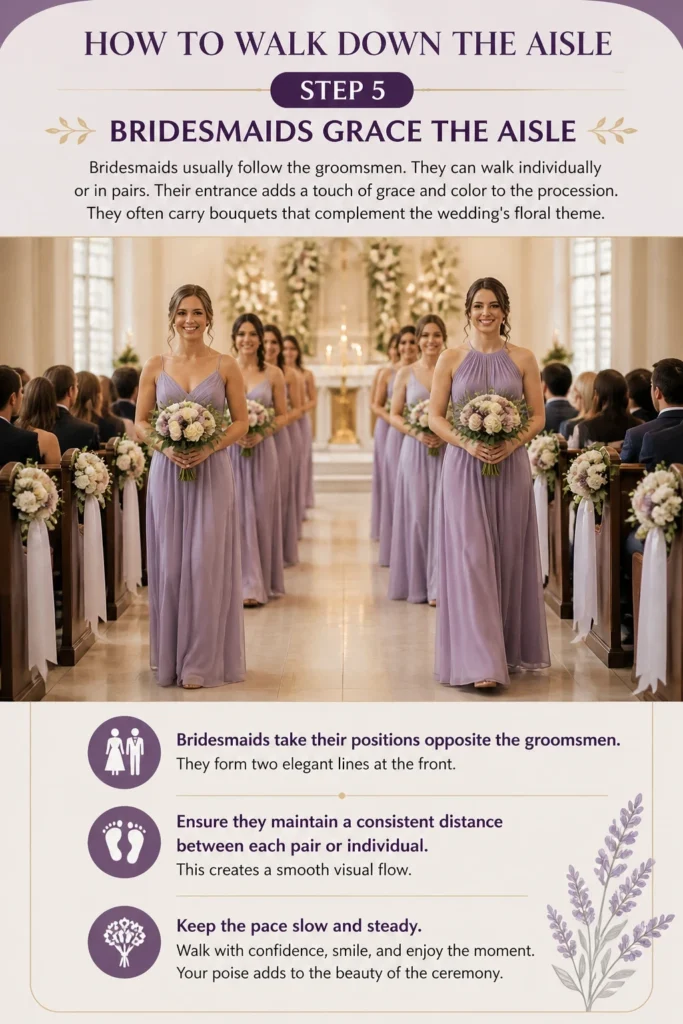
Bridesmaids usually follow the groomsmen. They can walk individually or in pairs. Their entrance adds a touch of grace and color to the procession.
They often carry bouquets that complement the wedding’s floral theme. Bridesmaids take their positions opposite the groomsmen. They form two elegant lines at the front.
Ensure they maintain a consistent distance between each pair or individual. This creates a smooth visual flow.
Step 6: The Little Ones: Flower Girl(s) and Ring Bearer(s)
The flower girl(s) and ring bearer(s) often bring a delightful moment of charm. They typically walk after the bridesmaids. Their roles are to scatter petals or carry symbolic rings.
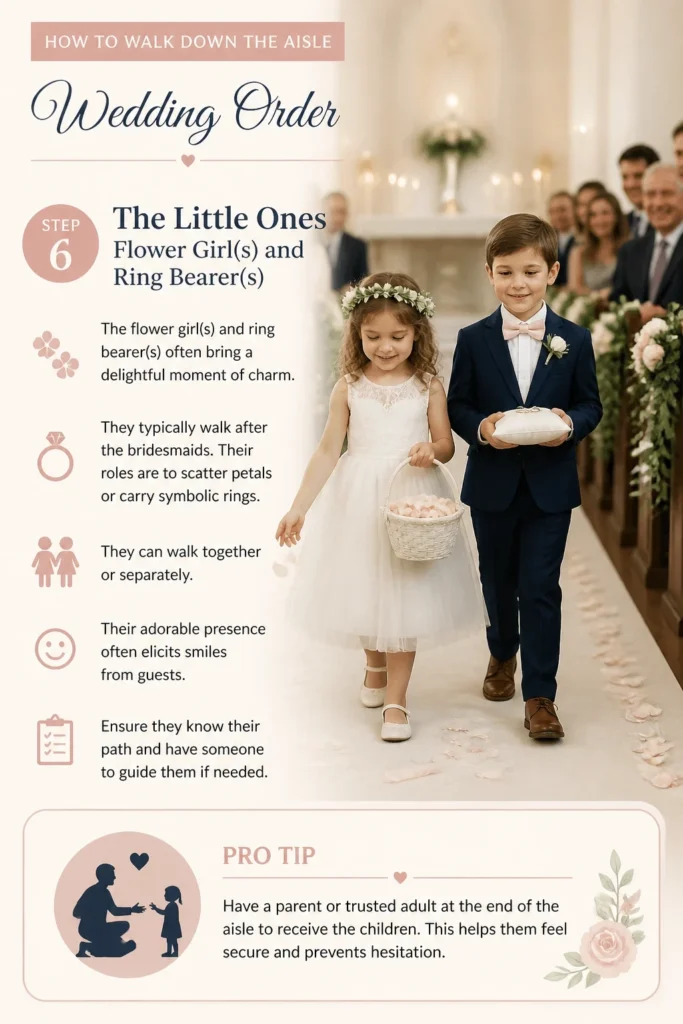
They can walk together or separately. Their adorable presence often elicits smiles from guests. Ensure they know their path and have someone to guide them if needed.
Pro Tip: Have a parent or trusted adult at the end of the aisle to receive the children. This helps them feel secure and prevents hesitation.
Step 7: The Maid of Honor/Matron of Honor’s Special Walk
The Maid of Honor or Matron of Honor walks alone. She is the last member of the bridal party before the bride. This solo walk highlights her significant role.
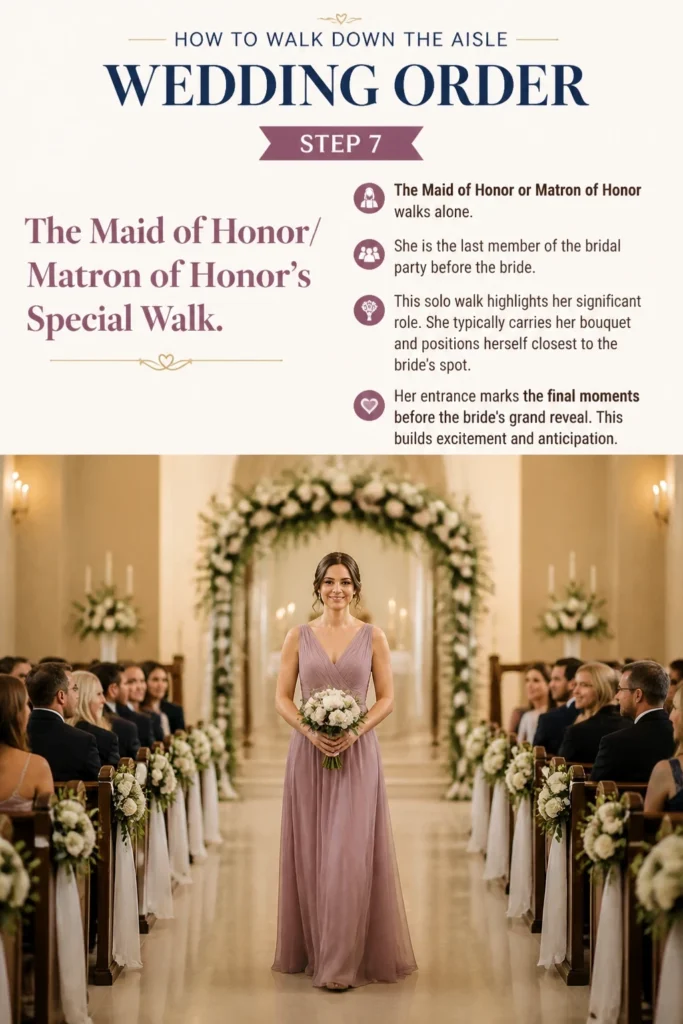
She typically carries her bouquet and positions herself closest to the bride’s spot. Her entrance marks the final moments before the bride’s grand reveal. This builds excitement and anticipation.
Step 8: The Bride’s Grand Entrance
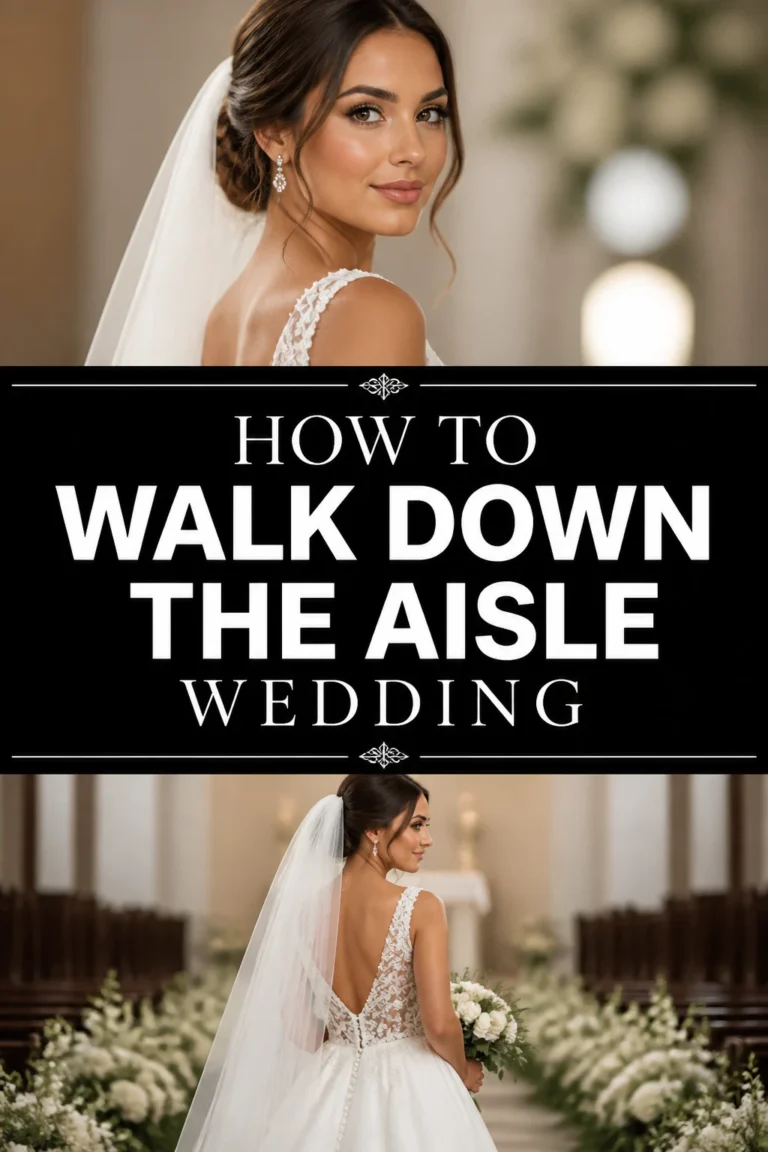
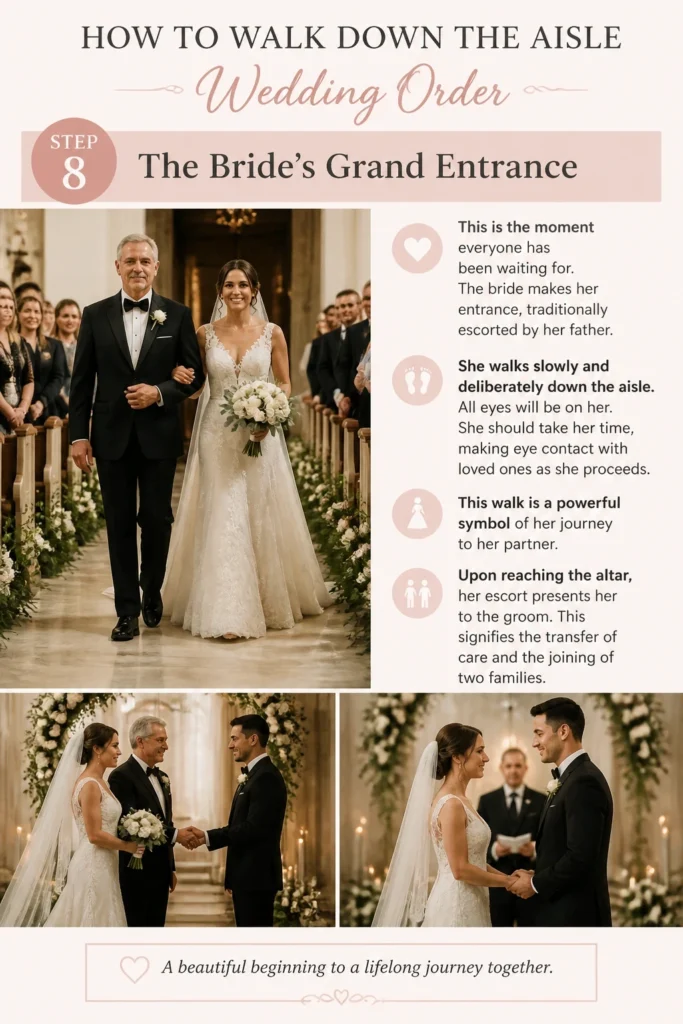
This is the moment everyone has been waiting for. The bride makes her entrance, traditionally escorted by her father. She walks slowly and deliberately down the aisle.
All eyes will be on her. She should take her time, making eye contact with loved ones as she proceeds. This walk is a powerful symbol of her journey to her partner.
Upon reaching the altar, her escort presents her to the groom. This signifies the transfer of care and the joining of two families.
Common Mistakes to Avoid
Rushing the Procession
A common mistake is allowing the wedding party to walk too quickly. This can make the ceremony feel rushed and less formal. Each person should walk at a measured, deliberate pace, taking their time to enjoy the moment. Encourage a slow, steady rhythm during rehearsal to prevent this.
Inconsistent Spacing
Another pitfall is having inconsistent gaps between individuals or pairs. Too much space can create awkward pauses, while too little makes it feel cramped. Practice maintaining equal distances during the rehearsal. This ensures a graceful and cohesive visual flow for all.
Ignoring Music Cues
Failing to coordinate the procession with the music can disrupt the atmosphere. Different songs or musical cues should align with different segments of the procession. Ensure your DJ or musicians know exactly when to switch songs. This creates a seamless audio experience.
Lack of Rehearsal
Skipping or rushing the rehearsal is a significant error. Rehearsal allows everyone to understand their timing, spacing, and roles. It reduces anxiety and ensures a smooth execution on the actual day. Dedicate ample time to practice the full processional sequence.
Troubleshooting
Children Are Uncooperative
If your flower girl or ring bearer becomes shy or refuses to walk, do not force them. Have a backup plan, such as a parent walking with them. Alternatively, they can simply be seated with their parents instead. The goal is to keep the mood light and joyful.
Someone Forgets Their Cue
It’s common for nerves to cause someone to miss their cue. Have your wedding coordinator or an assigned helper discreetly signal the next person in line. A gentle nod or hand gesture can guide them. Keep the processional music flowing to cover any minor delays.
Aisle Obstructions
Unexpected items might appear in the aisle, like a guest’s bag or a stray decoration. Before the ceremony begins, have an usher or coordinator do a final sweep of the aisle. If something appears during the procession, the person walking can subtly maneuver around it. Keep walking naturally if possible.
Key Takeaways
- Plan your processional order well in advance, detailing each person’s role.
- Practice the entire sequence during your rehearsal to ensure smooth timing and spacing.
- Ensure music cues align perfectly with each stage of the procession.
- Encourage a slow, deliberate pace for everyone walking down the aisle.
- Have contingency plans for young children or unexpected delays.
- Communicate clearly with your wedding party, officiant, and musicians.
Frequently Asked Questions
Who walks down the aisle first in a traditional wedding?
Traditionally, the officiant and groom take their places at the altar first. The processional then begins with the seating of VIP guests, followed by the wedding party. This sequence builds anticipation for the bride’s arrival.
Can the bride walk alone down the aisle?
Absolutely. Many brides choose to walk alone down the aisle. This symbolizes her independence and journey to her partner. It is a powerful and increasingly popular choice.
How long should the walk down the aisle take?
The length of the walk depends on the aisle itself and the number of people. A good rule of thumb is to aim for a slow, comfortable pace. This allows for about 15-20 seconds per pair or individual. A rehearsal helps perfect this timing.
What if we don’t have a traditional wedding party?
If you have a smaller or non-traditional wedding party, adapt the order. You can have family members walk together. Or, simply have everyone enter from the side. Focus on what feels authentic and meaningful to you as a couple.
Our Top Recommended Finds
- Aisle Runner: A beautiful runner defines the path and adds a touch of elegance. It protects the bride’s dress and creates a focal point.
- Ceremony Music Playlist: A curated list of instrumental songs sets the perfect tone for each part of the procession. It guides emotions and transitions smoothly.
- Wedding Day Coordinator: A professional coordinator handles all the logistics on the day. They ensure everyone is in place and on time.
Crafting Your Perfect Aisle Moment
Designing your wedding processional is more than just an order of operations. It’s about setting the stage for your lifelong commitment. Each step, each song, each person contributes to this sacred beginning.
Take these steps, personalize them, and make them truly yours. Start planning today to ensure your walk down the aisle is everything you’ve dreamed of. This moment will be cherished forever.
Wedding Planning
No fluff, no drama. Just easy weekly advice, planning shortcuts, and gentle reminders to help you actually enjoy your engagement.