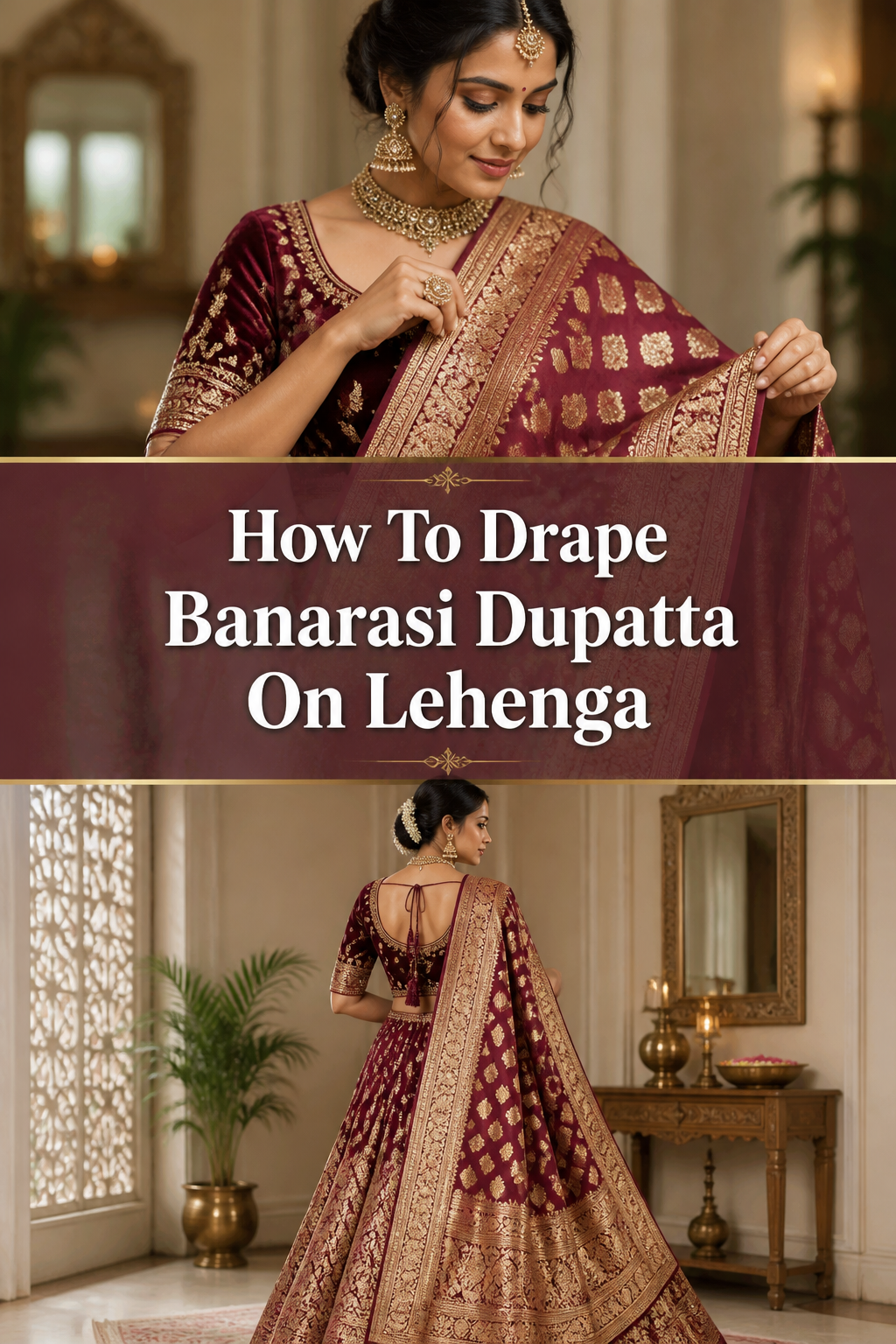
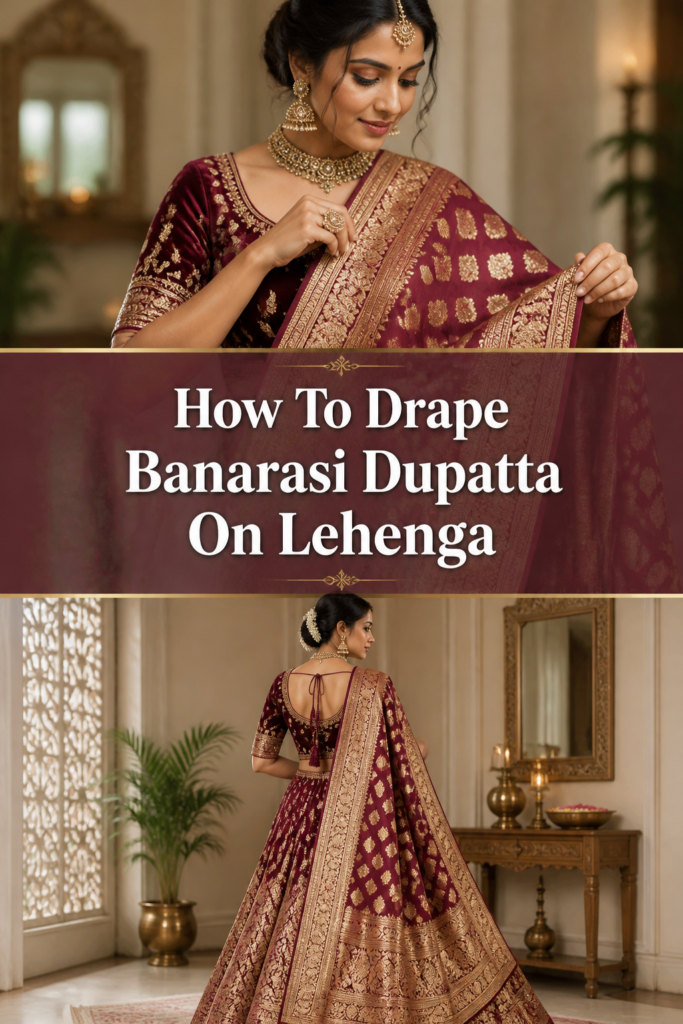
💃 How To Drape Banarasi Dupatta On Lehenga
Wedding Planning
No fluff, no drama. Just easy weekly advice, planning shortcuts, and gentle reminders to help you actually enjoy your engagement.
A Banarasi dupatta is more than just a piece of fabric; it is a piece of Indian heritage that can transform a simple lehenga into a royal ensemble.
I have spent years styling ethnic wear for weddings and festivals, learning exactly how to manage the heavy, stiff texture of authentic silk.
This guide will show you how to master the art of draping so you feel confident and comfortable all day long.
Quick Overview
This guide provides several methods to style your Banarasi dupatta, ranging from traditional royal looks to modern, functional drapes.
- Time needed: 15-20 minutes
- Difficulty: Intermediate
- What you’ll need: Safety pins (medium and large), a full-length mirror, a waist belt (optional), and a fabric steamer.
Step-by-Step Instructions
Step 1: Prepare Your Fabric and Attire
Steam your Banarasi dupatta before you begin the draping process.
Banarasi silk is naturally stiff due to the heavy zari work, and any unwanted creases will make the drape look bulky and unrefined.
Check the weight of the borders to determine which side has the most intricate design, as this should be the side that faces outward.
Pro Tip: Use a low heat setting or a handheld steamer to avoid burning the delicate silk threads or tarnishing the gold zari.
Ensure your lehenga is tied securely at the waist before you start pinning the dupatta.
The weight of a heavy silk dupatta can pull on your skirt, so a firm foundation is essential for a look that lasts all night.
Step 2: Create the Classic Single Shoulder Drape
Gather one end of the dupatta and create neat pleats that are about three to four inches wide.
Since Banarasi fabric is thick, you should aim for fewer, well-defined pleats rather than many small ones.
Place the pleated section on your left shoulder, ensuring the front end falls just below your waist.
Secure the pleats to your blouse or choli using a large safety pin placed from the inside to hide the metal.
Pro Tip: Pin the dupatta slightly behind the shoulder seam to prevent it from sliding forward throughout the event.
Let the rest of the fabric hang naturally behind your back or bring it forward over your right arm for a regal, queen-like silhouette.
Step 3: Execute the Front Flowing Gujarati Style
Start by tucking one corner of the dupatta into the right side of your lehenga waist at the back.
Bring the rest of the fabric around your left hip and over your right shoulder from back to front.
Adjust the length so the front “pallu” hangs down to your mid-thigh or knees, showcasing the heavy embroidery.
Spread the fabric across your chest to highlight the intricate weave of the Banarasi silk.
Pin the top edge of the dupatta to your left shoulder or tuck it neatly into the left side of your waist to create a structured “V” shape.
Step 4: Master the Double-Sided Royal Drape
Take one end of the dupatta and pin it to your right shoulder, letting a small portion hang in front.
Drape the long end of the fabric across your back and bring it over your left forearm.
Adjust the fabric so it creates a graceful “U” shape across your back, showing off the back design of your blouse.
Secure the section on your left forearm with a small pin or a decorative bangle to keep it in place while you move.
This style is perfect for brides or wedding guests who want to look traditional while keeping their hands relatively free.
Step 5: Style the Modern Belted Drape
Place the dupatta over one shoulder and let it hang straight down both the front and the back.
Ensure the lengths are even on both sides to maintain a balanced look.
Wrap a metallic or embroidered waist belt (kamarband) over the dupatta at your natural waistline.
Pull the fabric slightly above the belt to create a small “pouf” that adds volume and prevents the fabric from feeling too restrictive.
Pro Tip: A belt is the best way to manage a very heavy Banarasi dupatta as it distributes the weight across your waist instead of just your shoulder.
Step 6: The Diagonal Cross Drape
Pin one corner of the dupatta to the center-back of your lehenga skirt.
Bring the fabric under your right arm and pull it diagonally across your torso toward your left shoulder.
Pleat the fabric at the shoulder and secure it firmly with a pin.
Allow the remaining fabric to fall gracefully behind you, or tuck the end into the back of your waist for a cleaner look.
This drape mimics the look of a saree and is incredibly flattering for all body types as it creates a long, lean line.
Step 7: Final Security and Adjustments
Stand in front of a mirror and move your arms to check for any restricted movement.
Add extra pins at the waist or hip if the fabric feels like it is shifting too much.
Smooth out the pleats one last time to ensure the zari borders are perfectly aligned and visible.
Spray a tiny amount of fabric-safe anti-static spray if the silk is clinging to your leggings or lehenga lining.
Common Mistakes to Avoid
Using Small or Weak Safety Pins
Banarasi silk is dense and heavy, often featuring real metallic threads that add significant weight. Small, flimsy pins will often bend or pop open, which can damage the fabric or cause the drape to fall apart. Always opt for medium to large steel pins that can pierce through multiple layers of silk and blouse fabric without failing.
Over-Pleating the Fabric
Because the fabric is thick, trying to create too many narrow pleats will result in a bulky mass on your shoulder. This can make your shoulder look disproportionately large and feel very uncomfortable. Stick to wider pleats and focus on keeping them flat and crisp rather than numerous.
Incorrect Pin Placement
Many people pin the dupatta too far forward on the shoulder, which causes the fabric to constantly fall toward the neck. This ruins the silhouette and requires constant adjustment. Always pin the dupatta about an inch behind the actual shoulder seam of your blouse to use your body’s natural frame for support.
Ignoring the Blouse Design
A common mistake is covering up a heavily embroidered blouse with a wide dupatta drape. If your blouse has intricate work on the front, choose a narrower pleat or a side-flowing drape. The goal is to complement the outfit, not to hide the most expensive parts of it under a wall of silk.
Troubleshooting
The Dupatta is Slipping Off the Shoulder
If your dupatta keeps sliding, it is likely because the fabric is too smooth or the pin is too loose. Try pinning the dupatta not just to the blouse, but also to your bra strap for extra stability. You can also use a small piece of double-sided fashion tape between the dupatta and the blouse fabric to prevent shifting.
The Fabric Looks Too Stiff and Boxy
New Banarasi silk can sometimes feel like cardboard, making the drape look unnatural. To fix this, gently “scrunch” the fabric in your hands to break the initial stiffness before draping. If you have time, hanging the dupatta in a humid bathroom for ten minutes can also help soften the fibers slightly.
The Drape is Pulling the Lehenga Down
If the weight of the dupatta is causing your skirt to sag, you need to redistribute the weight. Instead of pinning everything to the waist, try the belted style or pin a portion of the dupatta to the blouse at the back. This moves the weight to your shoulders and upper body, relieving the pressure on your waistline.
Key Takeaways
- Preparation is key: Always steam the silk to remove creases before you start.
- Use the right tools: Heavy-duty safety pins are mandatory for thick Banarasi fabric.
- Balance the pleats: Wider pleats look more elegant and feel less bulky on the shoulder.
- Secure the foundation: Pin to the shoulder seam and consider pinning to the bra strap for maximum security.
- Highlight the borders: The zari work is the star of the show, so ensure the borders are always visible.
- Adapt to the occasion: Use a belted drape for dancing and a classic shoulder drape for formal photos.
Frequently Asked Questions
Can I wear a Banarasi dupatta with a simple georgette lehenga?
Yes, this is a very popular styling choice. The heavy texture of the Banarasi silk provides a beautiful contrast to the light, flowy nature of georgette or chiffon. It elevates a simple outfit into something suitable for a grand wedding or festival.
How do I prevent safety pins from making holes in the silk?
You can use “garment shields” or simply slide a small piece of matching ribbon or paper onto the pin before piercing the fabric. This prevents the delicate silk threads from getting caught in the coil of the safety pin. Always use sharp, new pins to ensure they glide through the weave rather than tearing it.
Is it better to drape the dupatta on the left or right shoulder?
Traditionally, the dupatta is draped on the right shoulder for Gujarati styles and the left shoulder for most other styles. However, it largely depends on which side you feel more comfortable with. If you are right-handed and need to use your hand for eating or greeting, draping on the left shoulder is often more practical.
How can I make a Banarasi dupatta look modern?
To give this traditional fabric a modern twist, use a contemporary leather or metallic belt to cinch it at the waist. You can also try the “cape” style drape, where the dupatta is pinned to both shoulders and hangs behind you like a royal cape. Pairing it with a crop top or a corset-style blouse also updates the look significantly.
Our Top Recommended Finds
- Heavy-Duty Steel Safety Pins: These are essential for piercing through thick zari without bending or breaking.
- Embroidered Waist Belt: A beautiful “Kamarband” helps manage the weight of the silk while adding a trendy element to your lehenga.
- Handheld Fabric Steamer: This is the safest way to remove wrinkles from expensive Banarasi silk without the risk of a traditional iron.
Elevate Your Traditional Ensemble
Mastering the drape of a Banarasi dupatta allows you to showcase the beauty of Indian craftsmanship while looking your absolute best.
Try practicing these different styles a few days before your event to see which one complements your body type and the design of your lehenga.
Once you feel comfortable with the weight and the pinning, you will be able to move with grace and elegance all night long.
Consider experimenting with different jewelry sets, like heavy Polki or Kundan, to further enhance the regal feel of your silk dupatta.
Take a few photos of your favorite drapes so you can quickly replicate them the next time you have a special occasion to attend.
Wedding Planning
No fluff, no drama. Just easy weekly advice, planning shortcuts, and gentle reminders to help you actually enjoy your engagement.