💍 How To Ask Someone To Be Your Officiant

Wedding Planning
No fluff, no drama. Just easy weekly advice, planning shortcuts, and gentle reminders to help you actually enjoy your engagement.
Choosing the person who will stand between you and your partner as you say your vows is a monumental decision.
I remember the nerves I felt when asking my best friend to marry my spouse and me three years ago.
This guide draws from that personal experience and dozens of weddings I have helped plan to ensure your request is heartfelt and successful.

Quick Overview
Asking a friend or family member to officiate requires more than just a casual “hey, want to do this?”
You need to balance the emotional weight of the request with the practical realities of legal paperwork and public speaking.
- Time needed: 2-4 weeks of preparation and conversation
- Difficulty: Intermediate
- What you’ll need: A clear vision, legal research for your venue’s location, and a thoughtful way to ask
Step-by-Step Instructions
Step 1: Define Your Ceremony Vision
Before you approach anyone, you and your partner must be on the same page about the ceremony style.
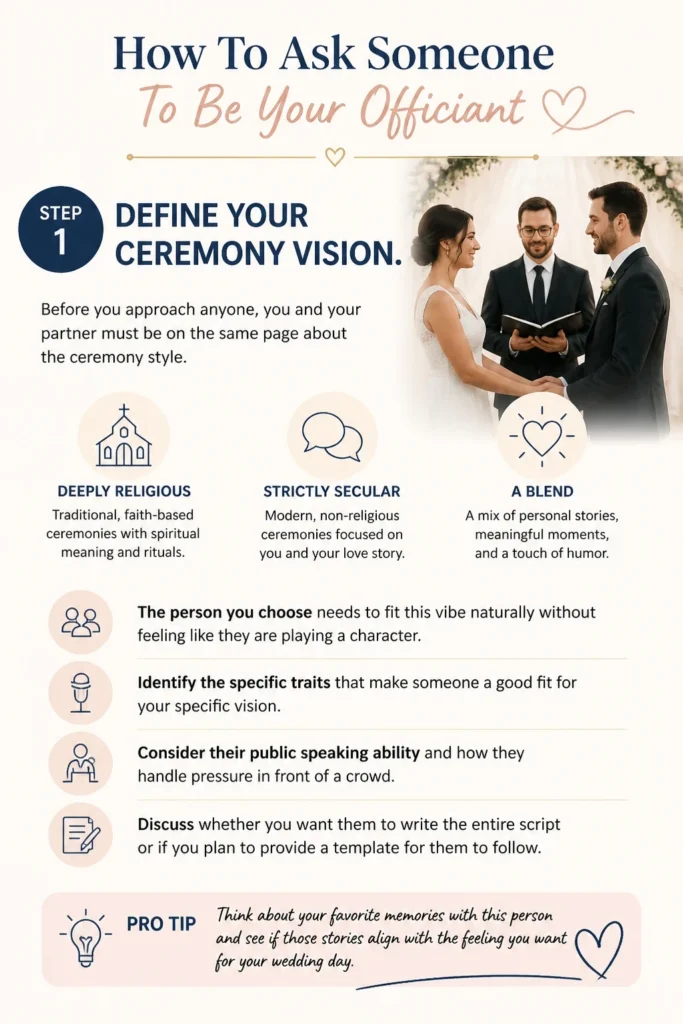
Do you want something deeply religious, strictly secular, or a blend of personal stories and humor?
The person you choose needs to fit this vibe naturally without feeling like they are playing a character.
Identify the specific traits that make someone a good fit for your specific vision.
Consider their public speaking ability and how they handle pressure in front of a crowd.
Discuss whether you want them to write the entire script or if you plan to provide a template for them to follow.
Pro Tip: Think about your favorite memories with this person and see if those stories align with the “feeling” you want for your wedding day.
Step 2: Research Local Legal Requirements
Marriage laws vary significantly from one county to another, let alone between different states or countries.
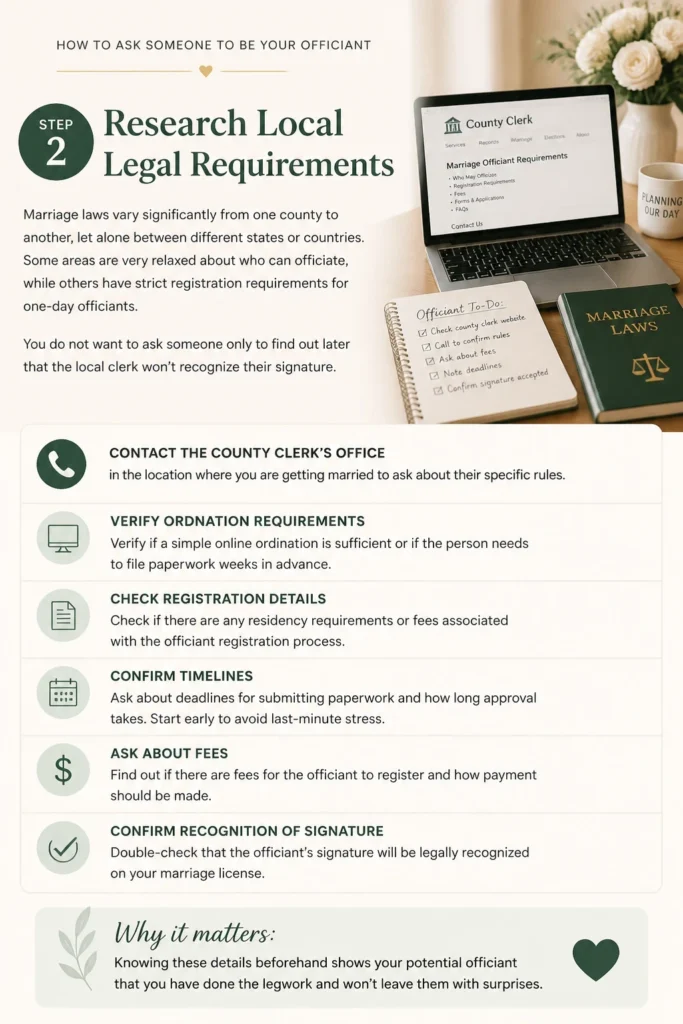
Some areas are very relaxed about who can officiate, while others have strict registration requirements for “one-day” officiants.
You do not want to ask someone only to find out later that the local clerk won’t recognize their signature.
Contact the county clerk’s office in the location where you are getting married to ask about their specific rules.
Verify if a simple online ordination is sufficient or if the person needs to file paperwork weeks in advance.
Check if there are any residency requirements or fees associated with the officiant registration process.
Knowing these details beforehand shows your potential officiant that you have done the legwork and won’t leave them with a legal headache.
Step 3: Prepare Your “Pitch”
Asking someone to officiate is a big “ask” because it involves a significant amount of work and emotional labor.
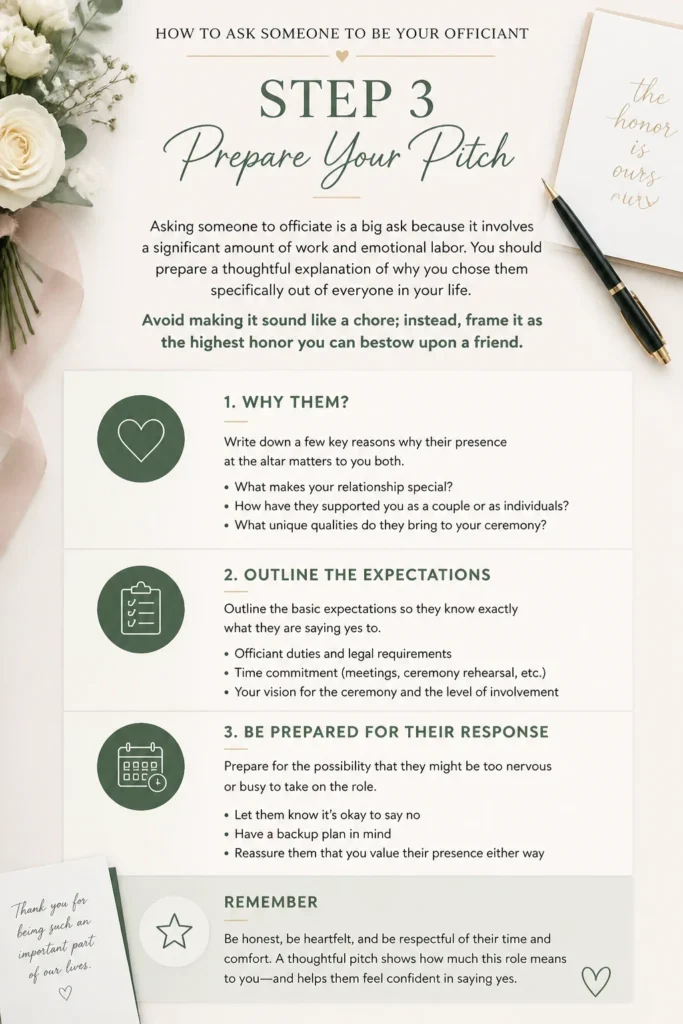
You should prepare a thoughtful explanation of why you chose them specifically out of everyone in your life.
Avoid making it sound like a chore; instead, frame it as the highest honor you can bestow upon a friend.
Write down a few key reasons why their presence at the altar matters to you both.
Outline the basic expectations so they know exactly what they are saying “yes” to.
Prepare for the possibility that they might be too nervous or busy to take on the role.
Step 4: Choose the Right Setting
This is not a question to ask via a group text or a casual phone call while they are at work.
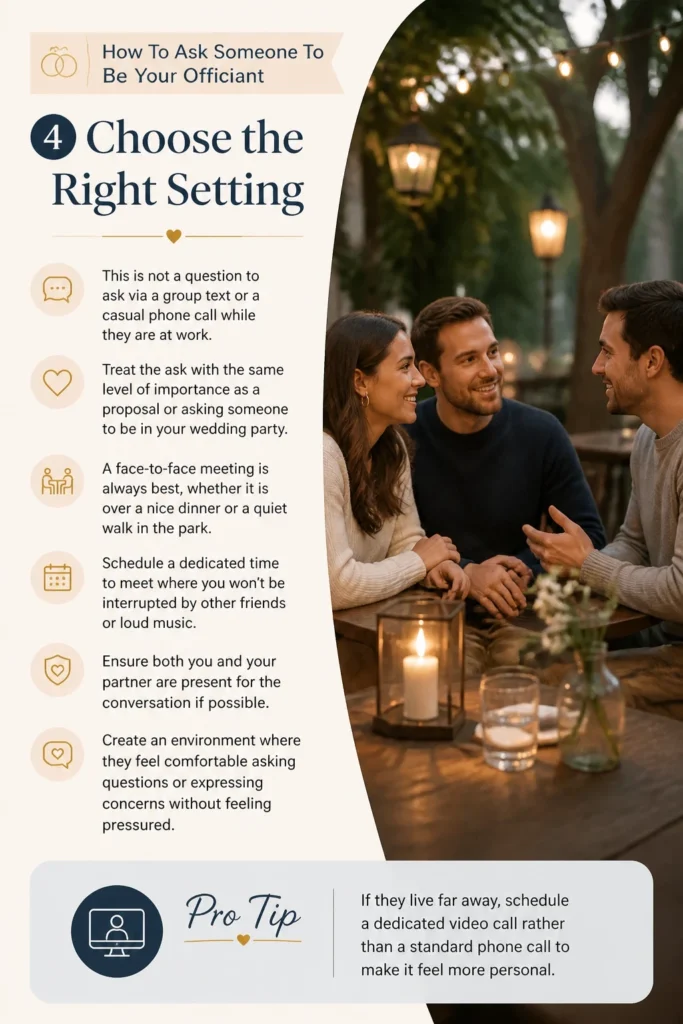
Treat the “ask” with the same level of importance as a proposal or asking someone to be in your wedding party.
A face-to-face meeting is always best, whether it is over a nice dinner or a quiet walk in the park.
Schedule a dedicated time to meet where you won’t be interrupted by other friends or loud music.
Ensure both you and your partner are present for the conversation if possible.
Create an environment where they feel comfortable asking questions or expressing concerns without feeling pressured.
Pro Tip: If they live far away, schedule a dedicated video call rather than a standard phone call to make it feel more personal.
Step 5: Make the Ask Heartfelt
When the moment arrives, be direct but emotional about your request.
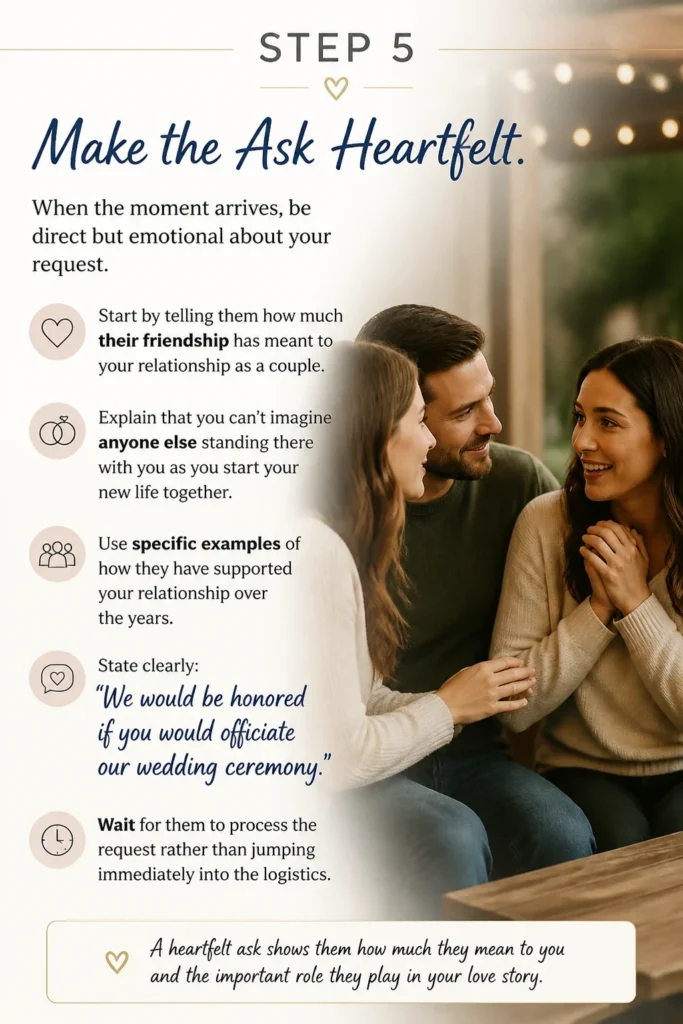
Start by telling them how much their friendship has meant to your relationship as a couple.
Explain that you can’t imagine anyone else standing there with you as you start your new life together.
Use specific examples of how they have supported your relationship over the years.
State clearly: “We would be honored if you would officiate our wedding ceremony.”
Wait for them to process the request rather than jumping immediately into the logistics.
Step 6: Detail the Expected Workload
Once they have expressed interest, you need to be transparent about what the role entails.
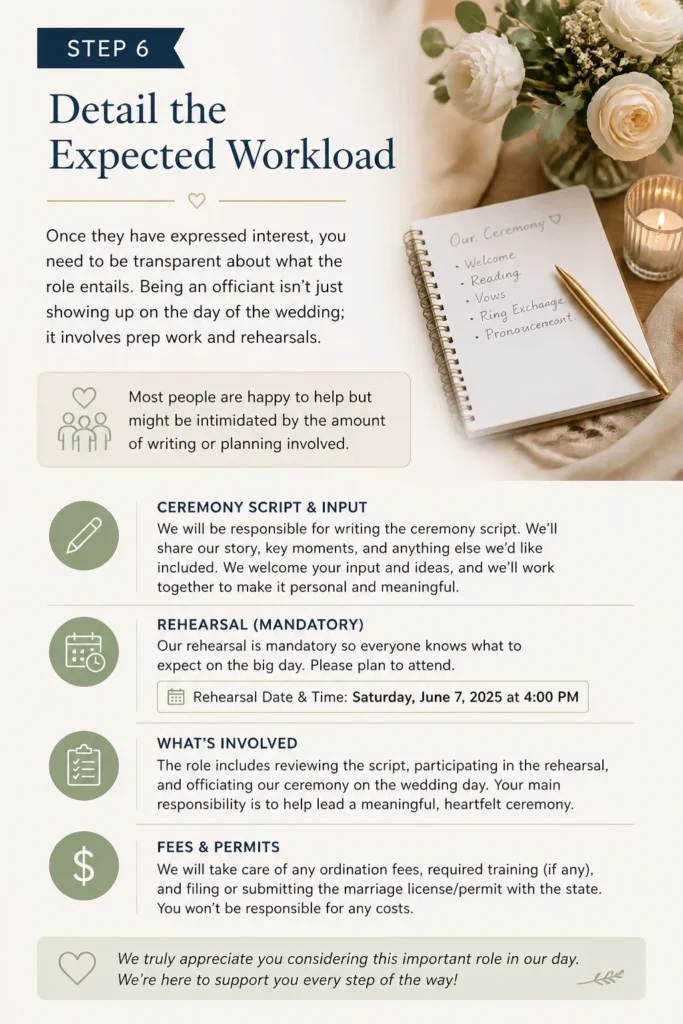
Being an officiant isn’t just showing up on the day of the wedding; it involves prep work and rehearsals.
Most people are happy to help but might be intimidated by the amount of writing or planning involved.
Explain who will be responsible for writing the ceremony script and how much input they will have.
Mention the rehearsal date and time, as their presence there is absolutely mandatory.
Clarify that you will handle the costs of any ordination fees or filing permits required by the state.
Step 7: Give Them a “Graceful Out”
Public speaking is one of the most common fears, and officiating a wedding is a high-pressure situation.
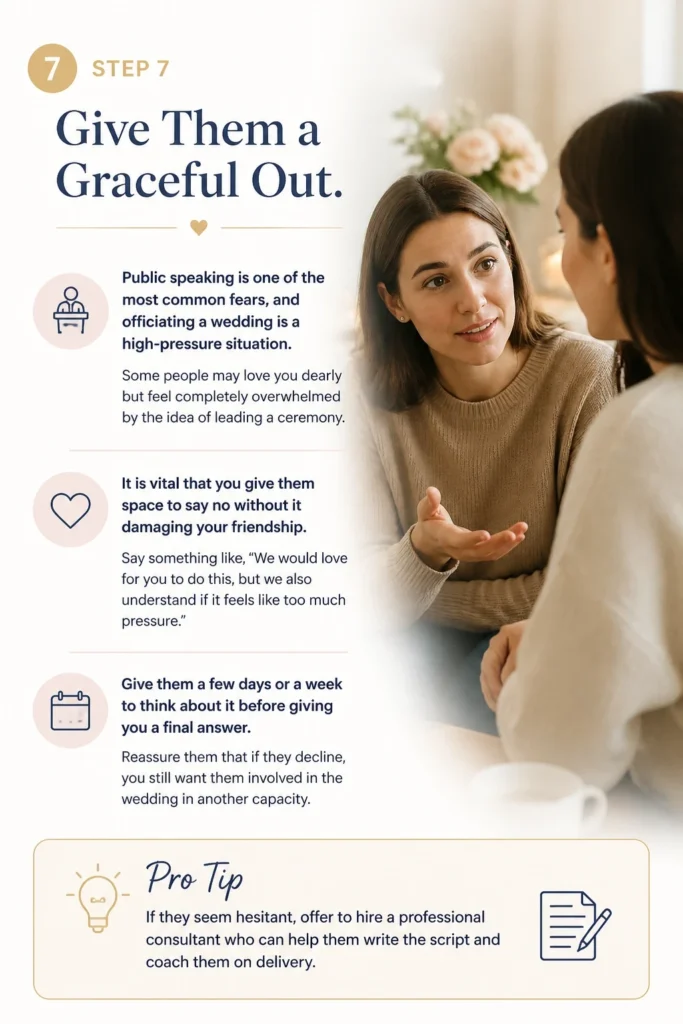
Some people may love you dearly but feel completely overwhelmed by the idea of leading a ceremony.
It is vital that you give them space to say no without it damaging your friendship.
Say something like, “We would love for you to do this, but we also understand if it feels like too much pressure.”
Give them a few days or a week to think about it before giving you a final answer.
Reassure them that if they decline, you still want them involved in the wedding in another capacity.
Pro Tip: If they seem hesitant, offer to hire a professional consultant who can help them write the script and coach them on delivery.
Step 8: Follow Up and Formalize
Once they say yes, celebrate the moment and then get the ball rolling on the official details.
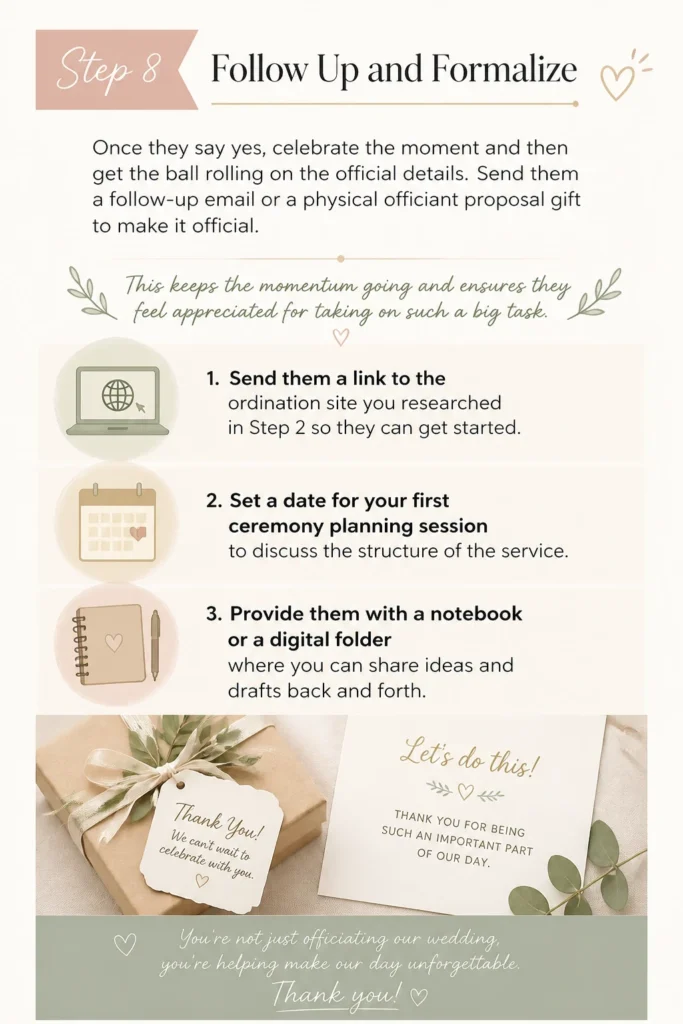
Send them a follow-up email or a physical “officiant proposal” gift to make it official.
This keeps the momentum going and ensures they feel appreciated for taking on such a big task.
Send them a link to the ordination site you researched in Step 2 so they can get started.
Set a date for your first “ceremony planning session” to discuss the structure of the service.
Provide them with a notebook or a digital folder where you can share ideas and drafts back and forth.
Common Mistakes to Avoid
Asking Too Late in the Planning Process
Waiting until two months before the wedding to ask someone to officiate is a recipe for disaster. This role requires significant preparation, script-writing time, and potentially legal registration that can take weeks to process. You should aim to ask your officiant at least six to eight months before the big day to give them ample time to prepare.
Ignoring the Legal Fine Print
Many couples assume that an online ordination is universally accepted, but this is not the case in every jurisdiction. Some counties require the officiant to appear in person at the clerk’s office before the wedding to present their credentials. Failing to check these rules can result in a ceremony that is sentimental but not legally binding, forcing you to have a separate courthouse wedding later.
Not Discussing the Tone Explicitly
Assuming your funniest friend will know when to be serious is a major risk for your ceremony. If you don’t discuss the balance of humor and solemnity, you might end up with a ceremony that feels like a stand-up comedy routine or, conversely, a dry lecture. Be very clear about the “vibe” you want so your officiant can tailor their writing style to your expectations.
Troubleshooting
The Person Is Terrified of Public Speaking
If your dream officiant is nervous about speaking in front of a crowd, you can offer solutions to ease their anxiety. Suggest that they keep the ceremony short, or offer to have a “co-officiant” where they share the duties with someone else. You can also provide a fully written script so they don’t have to worry about what to say, only how to say it.
Legal Roadblocks in Your Destination
If you find out that a friend cannot legally officiate in your chosen location, you have a few options. You can have a “symbolic” ceremony led by your friend and sign the legal paperwork at a local courthouse a few days prior. Alternatively, some professional officiants offer “signing only” services where they handle the legalities while your friend performs the actual ceremony for the guests.
Conflicting Family Expectations
Sometimes parents or elders may be upset that you aren’t using a traditional religious leader. Handle this by explaining that having a personal connection to the officiant is the most important factor for your marriage foundation. You can also find ways to include religious elements or traditional readings within the friend-led ceremony to honor your family’s heritage.
Key Takeaways
- Start early: Give your officiant at least six months to prepare and handle legalities.
- Verify laws: Never assume an online ordination is enough without checking with the local county clerk.
- Be specific: Tell the person exactly why you want them and what the role will involve.
- Offer an out: Ensure they know it is okay to say no if the pressure is too high.
- Collaborate: Work together on the script to ensure the tone matches your wedding vision.
- Show gratitude: Treat the request with importance and follow up with a thoughtful gift or gesture.
Frequently Asked Questions
Should I pay a friend who officiates my wedding?
While you don’t usually pay a friend a “professional fee,” you should absolutely cover all their costs. This includes ordination fees, travel expenses, and their hotel stay if it is a destination wedding. A generous thank-you gift or a gift card to a nice restaurant is also standard practice to show your appreciation for their hard work.
Do they have to write the whole ceremony themselves?
Not necessarily. Many couples prefer to write their own ceremony and have the officiant simply read it and add a few personal opening remarks. You should discuss this during the “ask” phase so the person knows if they are responsible for creative writing or just public speaking.
What if they aren’t religious but we want a religious ceremony?
If you want a deeply religious ceremony, it is usually better to hire a member of the clergy. However, if you just want a few prayers or scriptures included, most friends are happy to read whatever text you provide. Just make sure they are comfortable representing those beliefs before you finalize the plan.
Can I have two people officiate together?
Yes, “co-officiating” is a great way to include two important people or to take the pressure off a single person. One person can handle the storytelling and personal elements, while the other handles the vows and legal pronouncements. Just ensure they practice together so the transitions feel smooth and natural.
Our Top Recommended Finds
- A Premium Leather Journal: This is a great gift to give when you ask, providing them a dedicated place to draft the ceremony and take notes during your planning sessions.
- “Officiant” Proposal Card or Box: Using a formal card or a small gift box makes the moment feel special and serves as a lasting memento of the request.
- A Professional Script Template: Buying a guide or template for wedding ceremonies can give your friend a solid foundation to build upon, making the writing process much less intimidating.
Ready To Make It Official?
Now that you have the roadmap, it is time to take the first step and check those local marriage laws.
Once you know the legalities are covered, reach out to your chosen person and set up a time to talk.
Taking this action today will give your officiant the time they need to craft a ceremony you will remember for the rest of your lives.
After they say yes, you can move on to the fun part: picking out readings and writing those heartfelt vows.
Wedding Planning
No fluff, no drama. Just easy weekly advice, planning shortcuts, and gentle reminders to help you actually enjoy your engagement.