🕺 How To Build A Dance Floor For Wedding
Wedding Planning
No fluff, no drama. Just easy weekly advice, planning shortcuts, and gentle reminders to help you actually enjoy your engagement.
My own sister’s wedding had a DIY dance floor, and it was the highlight of the night. Seeing everyone celebrate on a space we crafted ourselves was incredibly rewarding. This guide shares the practical steps and insights I’ve gathered to help you achieve the same unforgettable experience.
Quick Overview
You’re about to embark on a rewarding project: constructing a custom dance floor for a wedding. This guide will walk you through planning, material selection, assembly, and finishing, ensuring a safe and beautiful space for celebration. You’ll create a durable, appealing dance area that adds a personal touch to the big day.
- Time needed: 1-2 days for planning and material acquisition, 6-12 hours for construction (can be split).
- Difficulty: Intermediate
- What you’ll need: Plywood, lumber (2x4s or 2x6s), screws, power drill, circular saw, sander, wood finish, measuring tape.
Step-by-Step Instructions
Step 1: Plan Your Layout and Size
Begin by envisioning the wedding reception space. Consider the number of guests you expect to be dancing simultaneously. A good rule of thumb is 3-5 square feet per dancer.
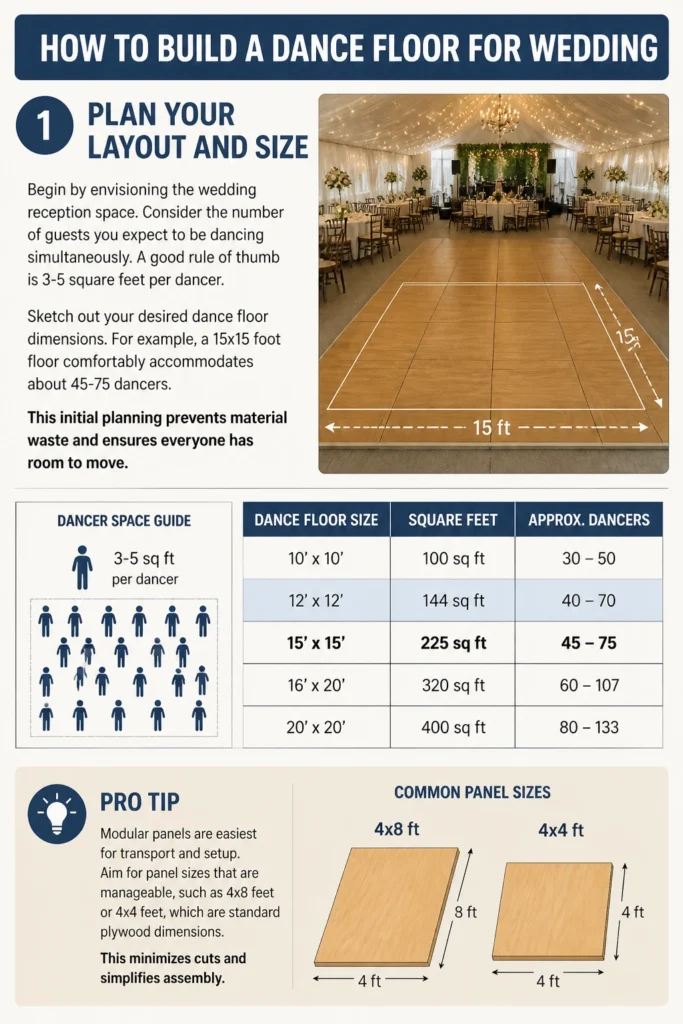
Sketch out your desired dance floor dimensions. For example, a 15×15 foot floor comfortably accommodates about 45-75 dancers. This initial planning prevents material waste and ensures everyone has room to move.
Pro Tip: Modular panels are easiest for transport and setup. Aim for panel sizes that are manageable, such as 4×8 feet or 4×4 feet, which are standard plywood dimensions. This minimizes cuts and simplifies assembly.
Step 2: Gather Your Materials
Head to your local lumber yard or home improvement store. You’ll need high-quality plywood for the dance surface. CDX plywood, at least 3/4 inch thick, offers excellent durability and a smooth surface after sanding.
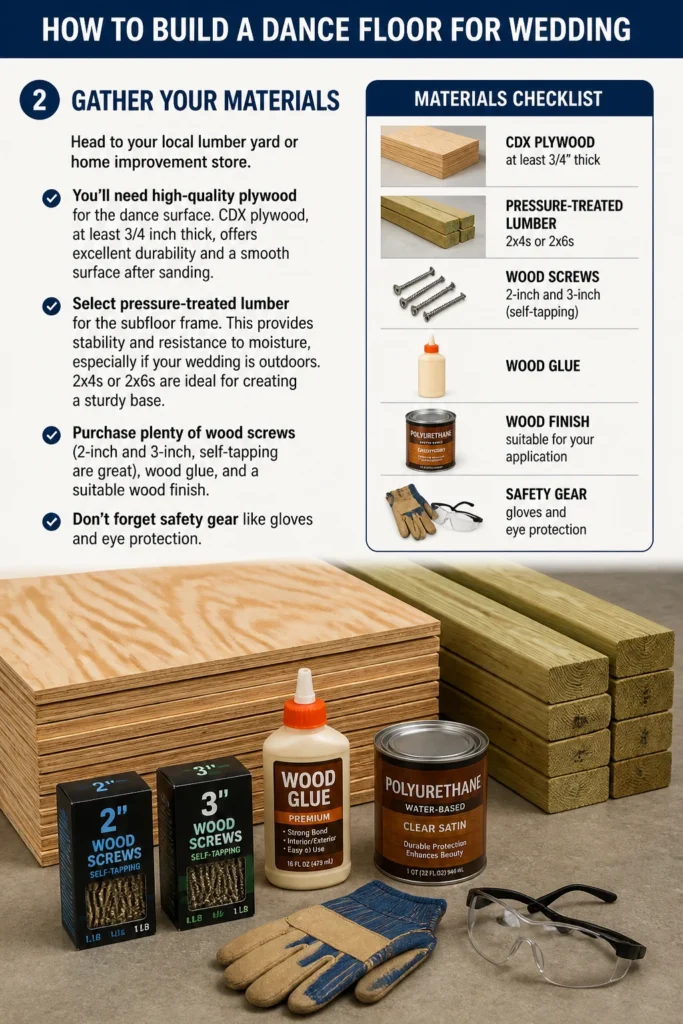
Select pressure-treated lumber for the subfloor frame. This provides stability and resistance to moisture, especially if your wedding is outdoors. 2x4s or 2x6s are ideal for creating a sturdy base.
Purchase plenty of wood screws (2-inch and 3-inch, self-tapping are great), wood glue, and a suitable wood finish. Don’t forget safety gear like gloves and eye protection.
Step 3: Prepare the Base Layer (Subfloor)
The subfloor is crucial for a stable, level dance surface. Start by cutting your lumber into frame pieces for each modular panel. For a 4×8 foot plywood panel, you’ll need two 8-foot lengths and several 3’9″ cross-members (to fit inside the 4-foot width).
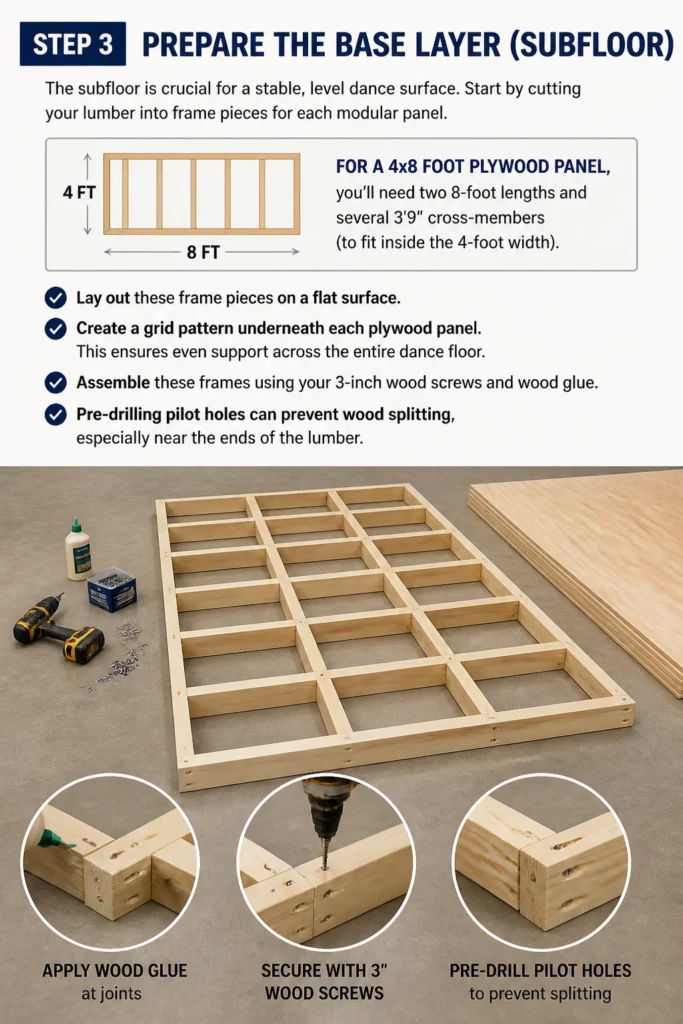
Lay out these frame pieces on a flat surface. Create a grid pattern underneath each plywood panel. This ensures even support across the entire dance floor.
Assemble these frames using your 3-inch wood screws and wood glue. Pre-drilling pilot holes can prevent wood splitting, especially near the ends of the lumber.
Step 4: Cut Plywood Panels
Measure and mark your plywood sheets according to your planned modular panel sizes. A circular saw with a fine-tooth blade will give you clean, straight cuts. If you’re using 4×8 foot plywood, you might only need to cut it if you’re making smaller modules like 4×4.
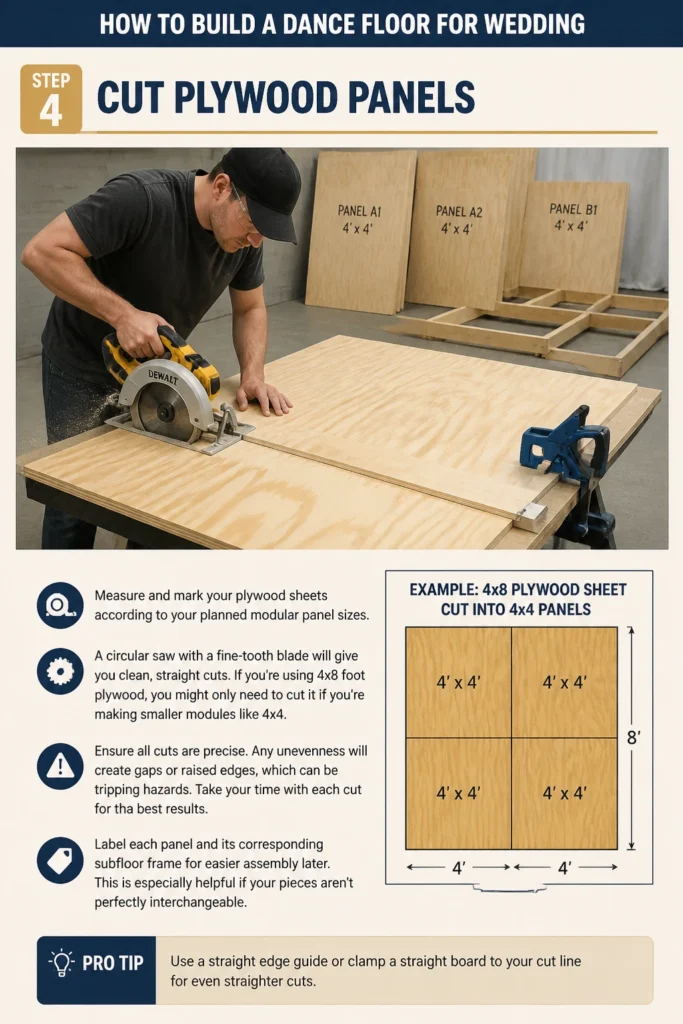
Ensure all cuts are precise. Any unevenness will create gaps or raised edges, which can be tripping hazards. Take your time with each cut for the best results.
Label each panel and its corresponding subfloor frame for easier assembly later. This is especially helpful if your pieces aren’t perfectly interchangeable.
Step 5: Assemble the Sections
Now, it’s time to attach the plywood surface to the subfloor frames. Place a plywood panel squarely on top of its assembled lumber frame. Ensure the edges are flush.
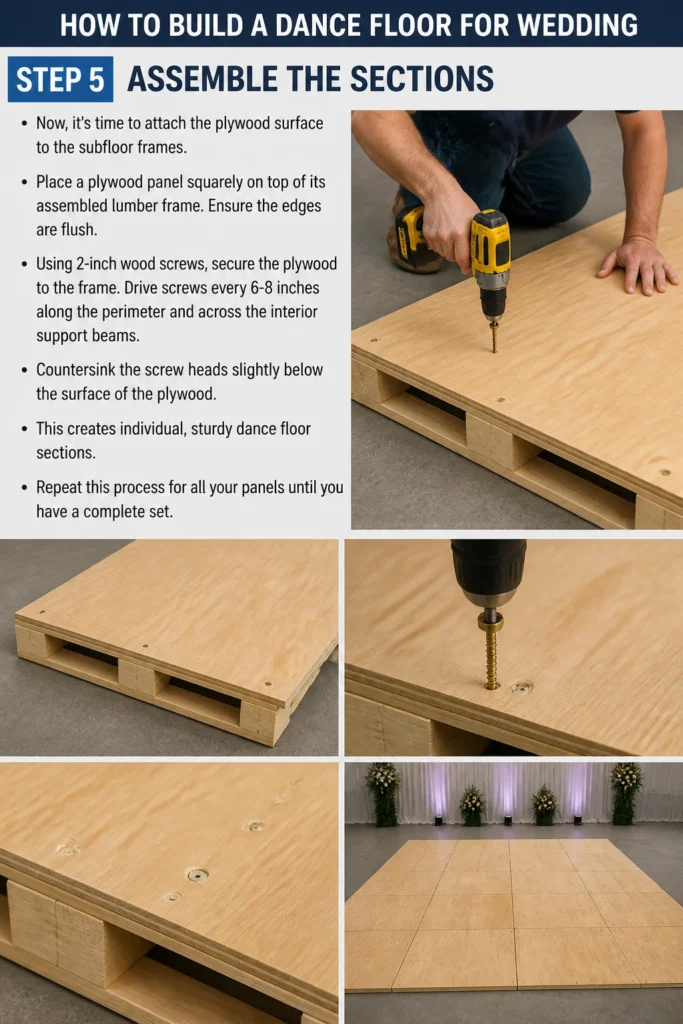
Using 2-inch wood screws, secure the plywood to the frame. Drive screws every 6-8 inches along the perimeter and across the interior support beams. Countersink the screw heads slightly below the surface of the plywood.
This creates individual, sturdy dance floor sections. Repeat this process for all your panels until you have a complete set.
Step 6: Sand and Finish the Surface
A smooth surface is essential for dancing and safety. Begin by sanding the entire plywood surface of each panel. Start with a coarse-grit sandpaper (e.g., 80-grit) to remove any imperfections or splinters.
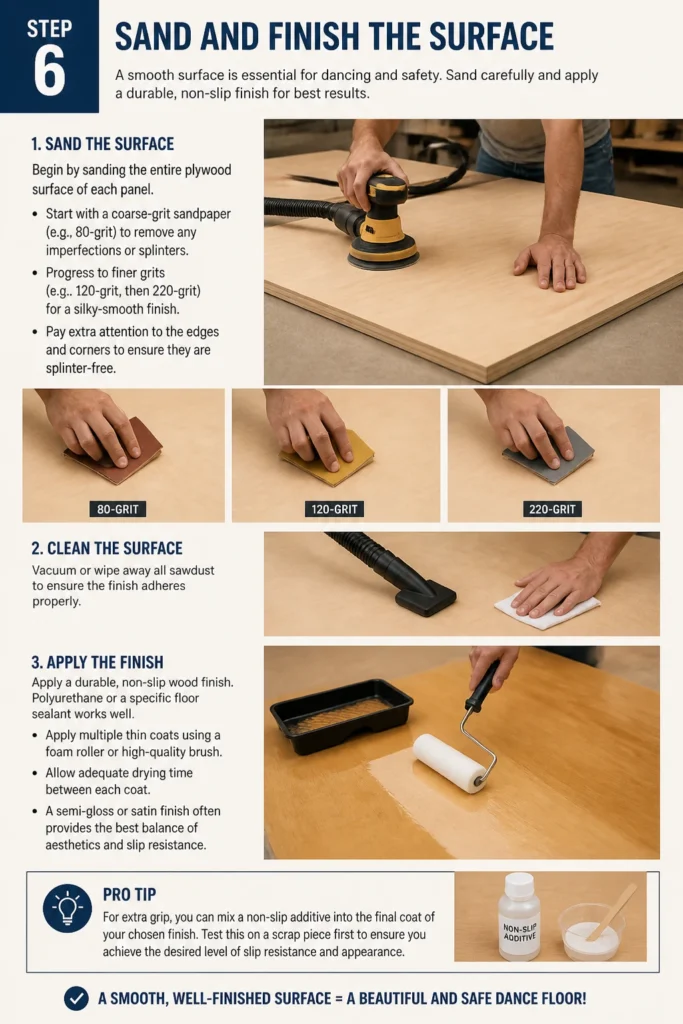
Progress to finer grits (e.g., 120-grit, then 220-grit) for a silky-smooth finish. Pay extra attention to the edges and corners to ensure they are splinter-free. Vacuum or wipe away all sawdust.
Apply a durable, non-slip wood finish. Polyurethane or a specific floor sealant works well. Apply multiple thin coats, allowing adequate drying time between each. A semi-gloss or satin finish often provides the best balance of aesthetics and slip resistance.
Pro Tip: For extra grip, you can mix a non-slip additive into the final coat of your chosen finish. Test this on a scrap piece first to ensure the desired texture and appearance.
Step 7: Edge the Dance Floor
Edging provides a finished look and, more importantly, prevents tripping hazards. Cut thin strips of lumber (e.g., 1x4s or decorative trim) to create a ramped edge around the entire perimeter of your assembled dance floor.
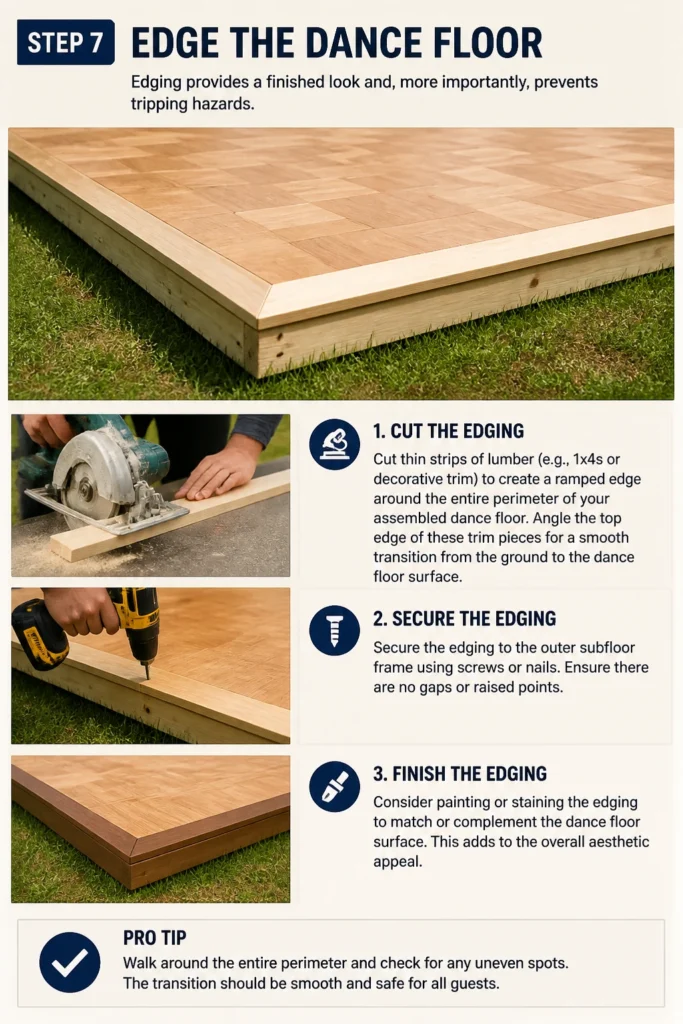
Angle the top edge of these trim pieces for a smooth transition from the ground to the dance floor surface. Secure the edging to the outer subfloor frame using screws or nails. Ensure there are no gaps or raised points.
Consider painting or staining the edging to match or complement the dance floor surface. This adds to the overall aesthetic appeal.
Step 8: Lay Out and Secure the Floor
On the wedding day (or the day before), prepare the ground where the dance floor will sit. Ensure it’s as level as possible. If outdoors, a tarp underneath can help with moisture control.
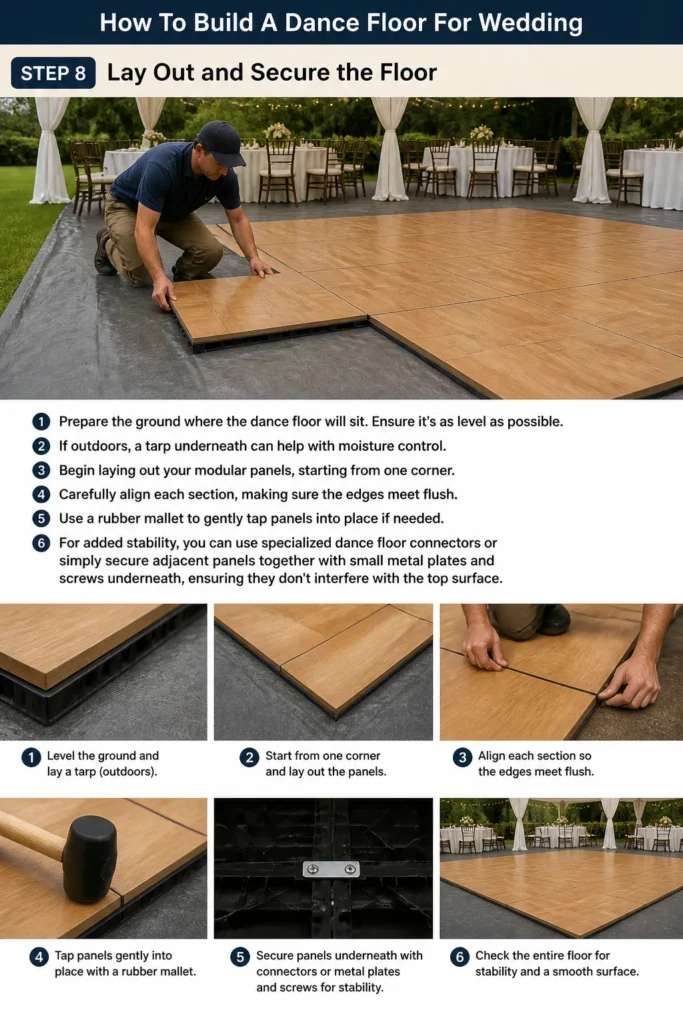
Begin laying out your modular panels, starting from one corner. Carefully align each section, making sure the edges meet flush. Use a rubber mallet to gently tap panels into place if needed.
For added stability, you can use specialized dance floor connectors or simply secure adjacent panels together with small metal plates and screws underneath, ensuring they don’t interfere with the top surface.
Step 9: Perform a Safety Check
Once the entire dance floor is assembled, conduct a thorough safety inspection. Walk across every section, checking for any wobbles, loose panels, or uneven spots. Use shims under the subfloor frames if the ground is uneven.
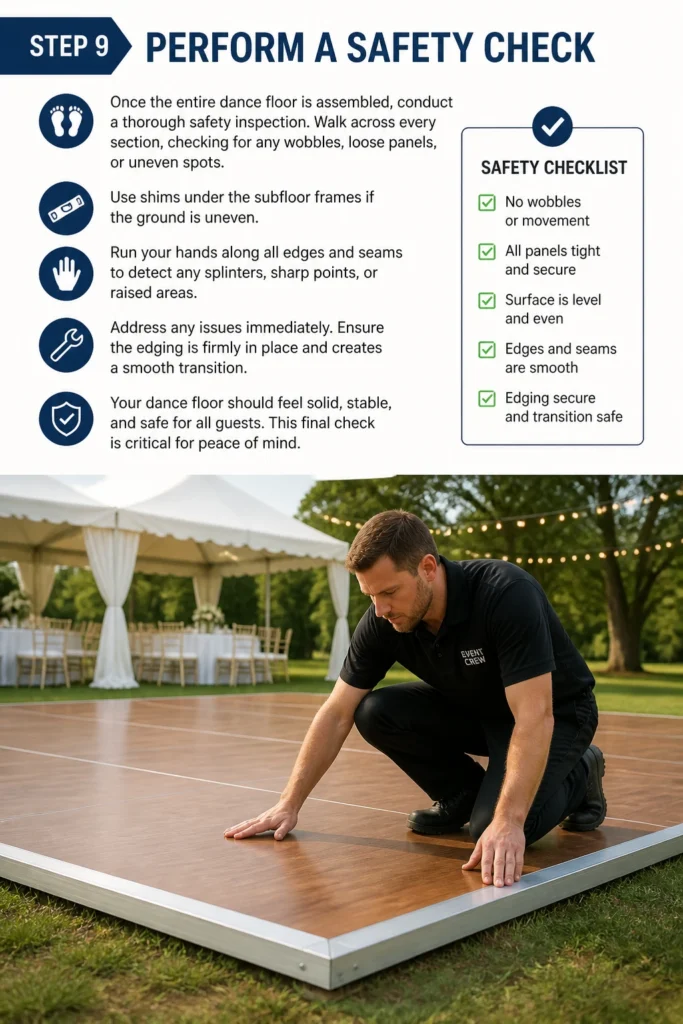
Run your hands along all edges and seams to detect any splinters, sharp points, or raised areas. Address any issues immediately. Ensure the edging is firmly in place and creates a smooth transition.
Your dance floor should feel solid, stable, and safe for all guests. This final check is critical for peace of mind.
Step 10: Clean and Maintain
Give the finished dance floor a final wipe-down. Remove any dust, debris, or footprints from the installation process. A clean surface is inviting and ready for use.
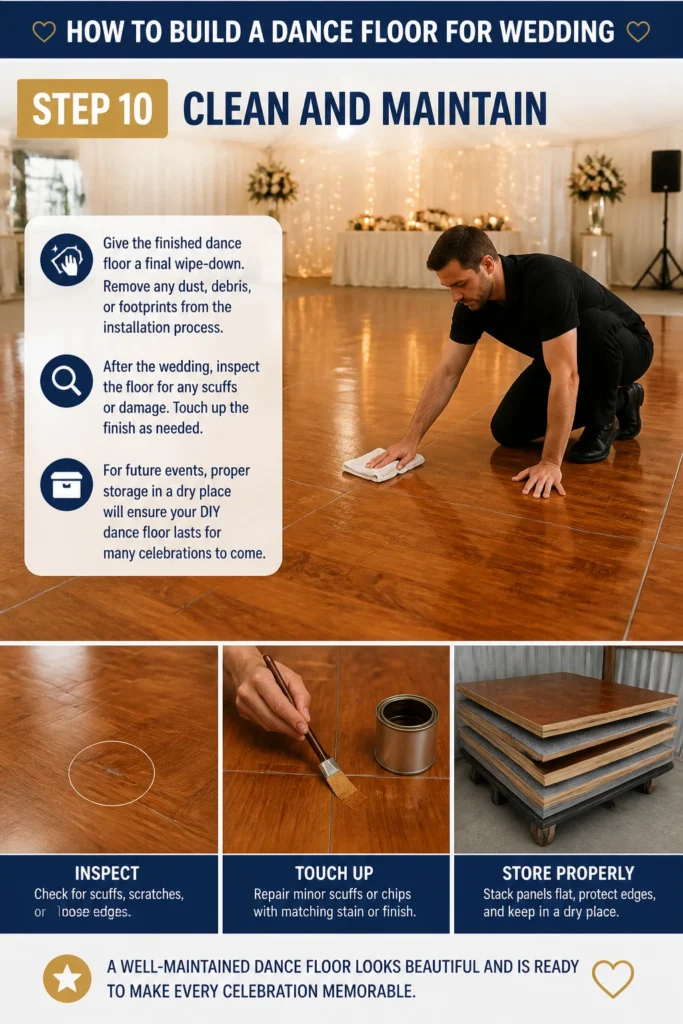
After the wedding, inspect the floor for any scuffs or damage. Touch up the finish as needed. For future events, proper storage in a dry place will ensure your DIY dance floor lasts for many celebrations to come.
Common Mistakes to Avoid
Underestimating Size and Guest Count
A common pitfall is building a dance floor that is simply too small for the anticipated number of guests. This leads to overcrowding, making dancing uncomfortable and less enjoyable. Always err on the side of slightly larger, considering that not everyone will dance at once, but those who do need ample space.
Ignoring the Subfloor and Leveling
Failing to create a stable, level subfloor is a major mistake. An uneven or wobbly dance floor is not only uncomfortable but also a significant safety hazard. Invest time in properly constructing the subfloor frame and ensuring the ground underneath is as level as possible, using shims if necessary.
Skipping Surface Finishing and Sanding
Neglecting to thoroughly sand and finish the plywood surface results in a rough, splintery, or unappealing dance floor. This can cause injuries, snag clothing, and detract from the overall wedding aesthetic. A smooth, properly sealed, and non-slip surface is vital for both appearance and safety.
Poor Material Choice
Using thin, weak plywood or untreated lumber for the subfloor can lead to a flimsy and short-lived dance floor. Opting for cheaper, less durable materials will compromise the structure’s integrity and safety. Always choose at least 3/4-inch CDX plywood and sturdy, possibly pressure-treated, lumber for the frame.
Troubleshooting
Floor Feels Wobbly or Uneven
If your assembled dance floor sections feel unstable, the issue likely lies with the subfloor. First, check the ground beneath the floor. It might be uneven. Use shims, small pieces of wood or plastic wedges, placed strategically under the subfloor frames to level out any dips.
Also, inspect the connections between your plywood surface and the subfloor frame. Ensure all screws are securely fastened and that there are no loose boards. Adding more screws along the perimeter and interior supports can often resolve minor wobbles.
Edges are Tripping Hazards
If guests are catching their feet on the edges of the dance floor, your edging might not be sufficient or properly installed. Re-examine the transition from the ground to the dance floor surface. The edging should create a smooth, gentle ramp.
Consider adding a second, smaller strip of trim underneath the main edging to create a more gradual slope. Ensure all edging pieces are firmly secured to the dance floor’s subframe and that there are no gaps where a foot could get caught.
Surface is Slippery
A dance floor that is too slick can be dangerous. If your chosen finish has made the surface too slippery, there are a few solutions. First, ensure the floor is perfectly clean and free of any residue. Sometimes, simply cleaning it thoroughly with a mild, non-residue cleaner can help.
If cleaning isn’t enough, you may need to apply another coat of finish mixed with a non-slip additive. These additives are usually fine powders that create a subtle texture. Alternatively, you can use specialized non-slip floor waxes or treatments designed for dance floors, which can be applied over your existing finish.
Key Takeaways
- Thorough planning of size and layout is essential for a functional and spacious dance floor.
- Utilize modular panel design for easier transport, assembly, and future storage.
- A robust and level subfloor is the foundation of a safe and stable dance experience.
- Invest in high-quality plywood and lumber to ensure durability and longevity.
- Proper sanding and application of a non-slip finish are critical for safety and aesthetics.
- Always prioritize safety checks during and after assembly to prevent accidents.
Frequently Asked Questions
How large should a wedding dance floor be?
A good general guideline is to allocate 3-5 square feet per guest who will be dancing at any given time. For a wedding with 150 guests, assuming about half will dance at once, a 15×15 foot (225 sq ft) or 18×18 foot (324 sq ft) dance floor is usually sufficient. Always consider your specific guest count and the venue space.
What’s the best wood for a dance floor?
For the surface, 3/4-inch CDX plywood is a popular and cost-effective choice, offering good durability and a smooth finish when properly sanded and sealed. For the subfloor frame, 2x4s or 2x6s made of pressure-treated lumber are recommended for their strength and resistance to moisture, especially in outdoor settings.
Can I make it weatherproof for outdoor weddings?
Yes, you can significantly enhance its weather resistance. Use pressure-treated lumber for the subfloor to prevent rot. Apply multiple coats of a marine-grade or exterior-grade polyurethane sealant to the plywood surface. Consider placing a heavy-duty tarp directly under the subfloor to prevent ground moisture from wicking up.
How long does it take to build a dance floor?
The actual construction time for the modular panels can range from 6 to 12 hours, depending on your experience and tools. However, this doesn’t include the crucial planning phase (design, material sourcing) which can take another day or two. Factor in drying time for finishes, which adds another 24-48 hours before final assembly.
Our Top Recommended Finds
- Cordless Drill/Driver: Essential for quickly and efficiently driving screws, making assembly much faster.
- Circular Saw: Provides clean, straight cuts for both plywood and lumber, crucial for precise panels.
- Orbital Sander: Makes quick work of sanding the plywood surface, ensuring a smooth, splinter-free finish.
Crafting Memories, One Step at a Time
Building your own wedding dance floor is a labor of love that adds a deeply personal touch to your special day. It’s a project that, while requiring effort, rewards you with a unique space for joy and memories. This custom dance floor becomes a silent witness to laughter, twirls, and heartfelt embraces.
Now that you have the blueprint, it’s time to gather your tools and start bringing this dream to life. Imagine the happiness as your loved ones dance the night away on a floor you meticulously crafted. Begin your planning today, and make your wedding truly unforgettable.
Wedding Planning
No fluff, no drama. Just easy weekly advice, planning shortcuts, and gentle reminders to help you actually enjoy your engagement.