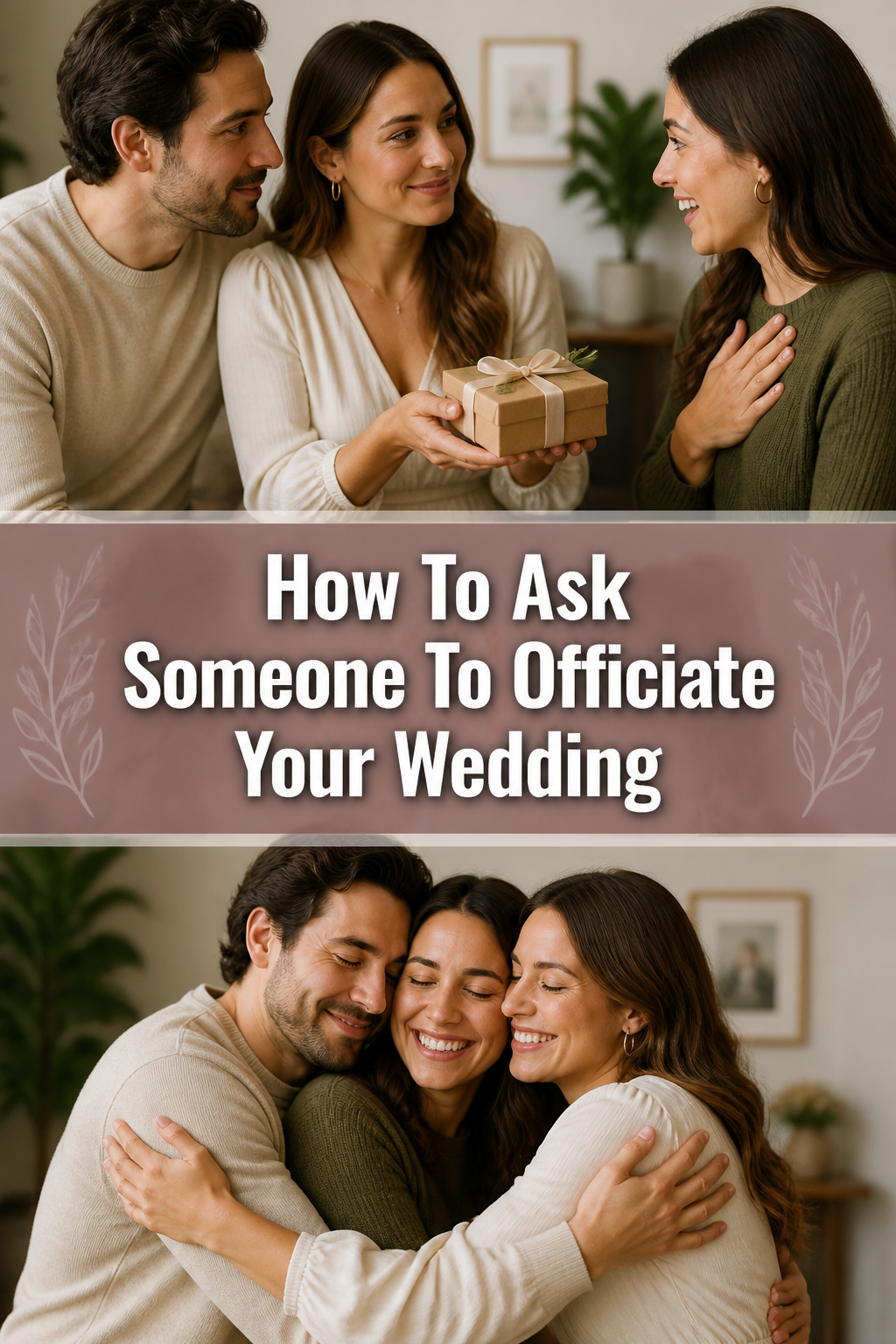
💍 How To Ask Someone To Officiate Your Wedding

Wedding Planning
No fluff, no drama. Just easy weekly advice, planning shortcuts, and gentle reminders to help you actually enjoy your engagement.
Asking a loved one to officiate your wedding is a deeply personal and meaningful choice.
It adds an intimate touch to your ceremony, making your special day even more memorable.
Having navigated this process myself, I understand the blend of excitement and slight apprehension involved. This guide shares practical steps to make your request heartfelt and clear.
Quick Overview
This guide will equip you to confidently ask a cherished individual to officiate your wedding, ensuring a smooth and respectful process for everyone involved.
- Time needed: 1-2 weeks (for preparation and the actual ask)
- Difficulty: Intermediate
- What you’ll need: A clear understanding of your vision, basic legal research, and a thoughtful approach.
Step-by-Step Instructions
Step 1: Understand the Role and Your Vision
Before approaching anyone, clearly define what you envision for your ceremony. An officiant does more than just say “I do.”
They guide the ceremony, often help craft vows, and ensure all legal requirements are met.
Consider the tone, style, and length of your ideal ceremony. Will it be serious, lighthearted, spiritual, or secular?
- Reflect on the kind of ceremony you want.
- List key elements you hope to include.
- Consider if you need help with writing, rehearsal, or just the official pronouncement.
Pro Tip: Think about your overall wedding vibe. This helps you articulate the role clearly and choose the right person who fits that energy.
Step 2: Identify Your Ideal Candidate
Choosing an officiant is a significant decision. You want someone who feels truly connected to you and your partner.
This person should understand your relationship and be comfortable speaking in front of a crowd.
Think about friends, family members, or mentors who possess warmth, good public speaking skills, and a genuine desire to celebrate your union.
- Brainstorm a list of potential candidates.
- Evaluate their public speaking ability and comfort level.
- Consider their relationship with both you and your partner.
- Prioritize someone who would truly cherish this honor.
Step 3: Research State and Local Legal Requirements
This is a crucial step that many couples overlook. Wedding officiant laws vary significantly by state and even by county.
Some states allow anyone to become temporarily ordained online, while others have stricter requirements.
Knowing these details beforehand prevents last-minute stress and ensures your marriage is legally recognized.
- Visit your state government’s official website (e.g., Secretary of State, Department of Health) to find marriage officiant laws.
- Look for information on who can legally perform a marriage.
- Determine if online ordination is accepted in your area.
- Note any registration or filing requirements for the officiant.
Pro Tip: Print out or save the relevant legal documents. You can offer these to your potential officiant to ease their research burden.
Step 4: Prepare Your Thoughtful Request
The way you ask matters. This isn’t a casual favor; it’s a profound honor.
Plan what you want to say, ensuring your request conveys sincerity, trust, and excitement.
Gather all necessary information, including your vision for the ceremony and the legal requirements you’ve researched.
- Draft a clear and heartfelt message.
- Explain why you’ve chosen them specifically.
- Mention your appreciation for their role in your lives.
- Include details about the date, time, and location of the wedding.
- Provide the legal research you’ve gathered.
Step 5: Choose the Right Setting for the Ask
The environment where you make your request can enhance its significance. Avoid rushing the conversation or asking in a public, noisy place.
Opt for a private, comfortable setting where you can have an uninterrupted, meaningful discussion.
This shows respect for the person and the importance of the question.
- Arrange a private meeting or call.
- Ensure you have ample time for discussion.
- Create a relaxed and intimate atmosphere.
- Consider a quiet dinner or a heartfelt coffee chat.
Step 6: Make the Heartfelt Offer
Once you’re in the right setting, deliver your prepared request. Start by expressing your love and appreciation for them.
Explain why they are the perfect person to stand with you on such an important day.
Then, present the question clearly and directly, allowing them space to process and respond.
- Start by sharing your feelings for them.
- Explain the unique qualities that make them ideal.
- State your request: “Would you be willing to officiate our wedding?”
- Reassure them that there’s no pressure to say yes.
- Offer your support for any questions or concerns.
Pro Tip: Consider bringing a small, thoughtful gift, like a personalized card or a bottle of their favorite wine, to accompany your request. It adds a lovely touch.
Step 7: Discuss Expectations and Logistics
Once they’ve accepted, it’s time to delve into the practicalities. Be transparent about your expectations for their involvement.
Discuss ceremony length, desired readings, and any specific rituals you want to include.
Clarify their role in rehearsals, paperwork, and overall wedding day flow.
- Outline the ceremony’s desired length and style.
- Share ideas for readings, vows, and unique elements.
- Discuss their involvement in the rehearsal dinner.
- Clarify who will handle the legal paperwork after the ceremony.
- Ask about any questions or concerns they might have.
Step 8: Provide Support and Resources
Even the most confident public speaker might feel nervous about officiating a wedding. Offer continuous support and resources.
Provide links to online ordination sites, sample ceremony scripts, or books on officiating.
Reassure them that you’re there to help every step of the way, making it a collaborative effort.
- Share links to relevant online ordination services.
- Offer sample ceremony scripts or outlines.
- Suggest resources for public speaking or ceremony writing.
- Schedule regular check-ins to discuss progress and alleviate stress.
- Reiterate your gratitude and excitement.
Step 9: Plan for the “No” (and What to Do)
While you hope for a “yes,” it’s wise to prepare for the possibility of a “no.” Someone might decline due to discomfort with public speaking, time constraints, or feeling overwhelmed.
Handle a refusal with grace and understanding. Thank them for considering your request.
Have a backup plan in mind, whether it’s another friend or a professional officiant.
- Acknowledge their honesty and feelings.
- Reassure them that your friendship remains paramount.
- Thank them sincerely for their consideration.
- Move to your backup plan without resentment.
- Maintain a positive attitude, regardless of the outcome.
Common Mistakes to Avoid
Not Researching Legalities First
Many couples get excited and ask someone without checking if that person can legally officiate in their state. This can lead to your marriage not being recognized, requiring a separate courthouse ceremony. Always do your homework on state-specific laws before asking.
Making It a Casual Request
Asking someone to officiate is a huge responsibility and honor. Don’t text them or casually mention it in passing. A rushed or informal request can make the person feel undervalued or pressured, diminishing the significance of the role.
Not Clarifying Expectations
Assuming your officiant knows what you want for the ceremony can lead to misunderstandings. Without clear communication about the tone, content, and their specific duties, you might end up with a ceremony that doesn’t reflect your vision. Be explicit about all expectations.
Pressuring Them to Say Yes
While you want them to accept, putting undue pressure on someone can make them feel trapped. They might agree out of obligation rather than genuine enthusiasm. Make it clear that they can decline without hurting your feelings, fostering an honest and open conversation.
Troubleshooting
They Seem Hesitant or Overwhelmed
If your chosen officiant expresses reservations, listen carefully to their concerns. It might be public speaking anxiety, fear of legalities, or simply feeling unprepared. Offer specific support, like finding ceremony templates or practicing together. Reassure them that you’ll guide them through the process.
They’re Unsure About the Legal Process
The legal steps can be confusing. Provide them with the exact links and information you found during your research. Offer to walk them through the online ordination process or help them fill out any necessary registration forms. Breaking it down into small, manageable steps often helps.
They Feel Uncomfortable with Public Speaking
This is a common concern. Suggest ways to make them more comfortable, such as keeping the ceremony script short or allowing them to read from notes. Offer to have a friend or professional officiant handle parts they’re less comfortable with, like a long reading, while they focus on the core vows and pronouncement. Rehearsing extensively also builds confidence.
Key Takeaways
- Thoroughly research legal requirements for officiants in your wedding location.
- Choose someone with a genuine connection to you and a willingness to embrace the role.
- Craft a sincere, personal request delivered in a private, thoughtful setting.
- Clearly communicate your ceremony vision and specific expectations.
- Provide comprehensive support and resources to your chosen officiant.
- Be prepared for a “no” and handle any refusal with grace and understanding.
Frequently Asked Questions
Do we have to pay our friend/family member to officiate?
It’s generally not expected to pay a friend or family member a professional fee. However, covering their travel and accommodation expenses, if applicable, is a thoughtful gesture. A nice thank-you gift is also highly recommended as a token of your appreciation.
How far in advance should we ask someone to officiate?
Aim to ask at least 6-12 months before your wedding date. This gives them ample time to consider the request, complete any necessary ordination or registration, and prepare the ceremony. It also allows you to find an alternative if they decline.
What if they’re not religious, and we want a religious ceremony?
This depends on the individual and your comfort level. If they are willing to respectfully incorporate religious elements you provide, it can work. However, if they are uncomfortable or you desire a deeply religious ceremony, a professional religious officiant might be a better fit to maintain authenticity.
What if our chosen officiant backs out last minute?
While rare, it can happen. Have a contingency plan. This might involve identifying a backup friend or knowing a local professional officiant you could contact in an emergency. Keep their contact details handy. Stay calm and remember the most important thing is that you and your partner are getting married.
Our Top Recommended Finds
- A Beautiful Keepsake Journal: Perfect for your officiant to jot down ceremony ideas, notes, and personal thoughts throughout the planning process.
- “The Wedding Officiant’s Guide” by Lisa Francesca: A practical book offering step-by-step guidance on crafting and performing a personalized wedding ceremony.
- A Thoughtful Thank-You Gift Basket: A personalized collection of their favorite snacks, drinks, or a gift certificate to a beloved local business, showing immense gratitude.
Your Ceremony, Your Story
Asking a loved one to officiate your wedding is a beautiful way to infuse your ceremony with personal meaning.
It’s an invitation to deepen a bond and create a shared memory that will last a lifetime.
Take these steps, approach with an open heart, and build the foundation for a truly unique and unforgettable day.
Wedding Planning
No fluff, no drama. Just easy weekly advice, planning shortcuts, and gentle reminders to help you actually enjoy your engagement.