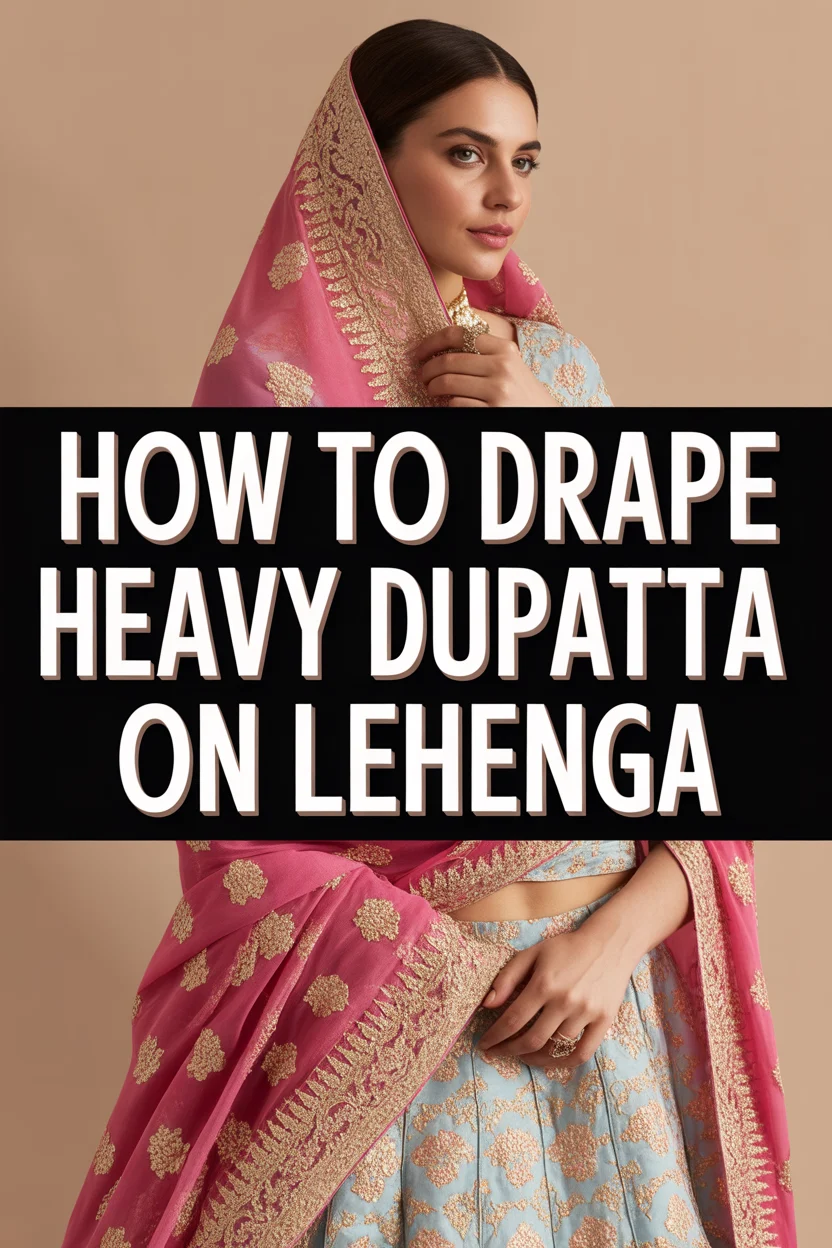
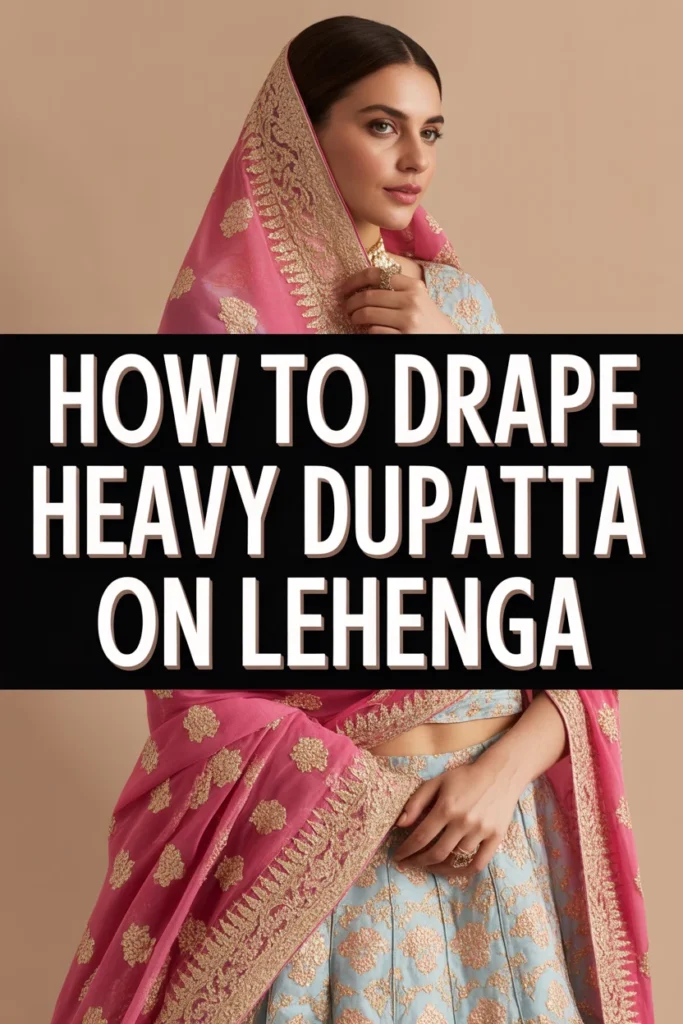
How To Drape Heavy Dupatta On Lehenga

Wedding Planning
No fluff, no drama. Just easy weekly advice, planning shortcuts, and gentle reminders to help you actually enjoy your engagement.
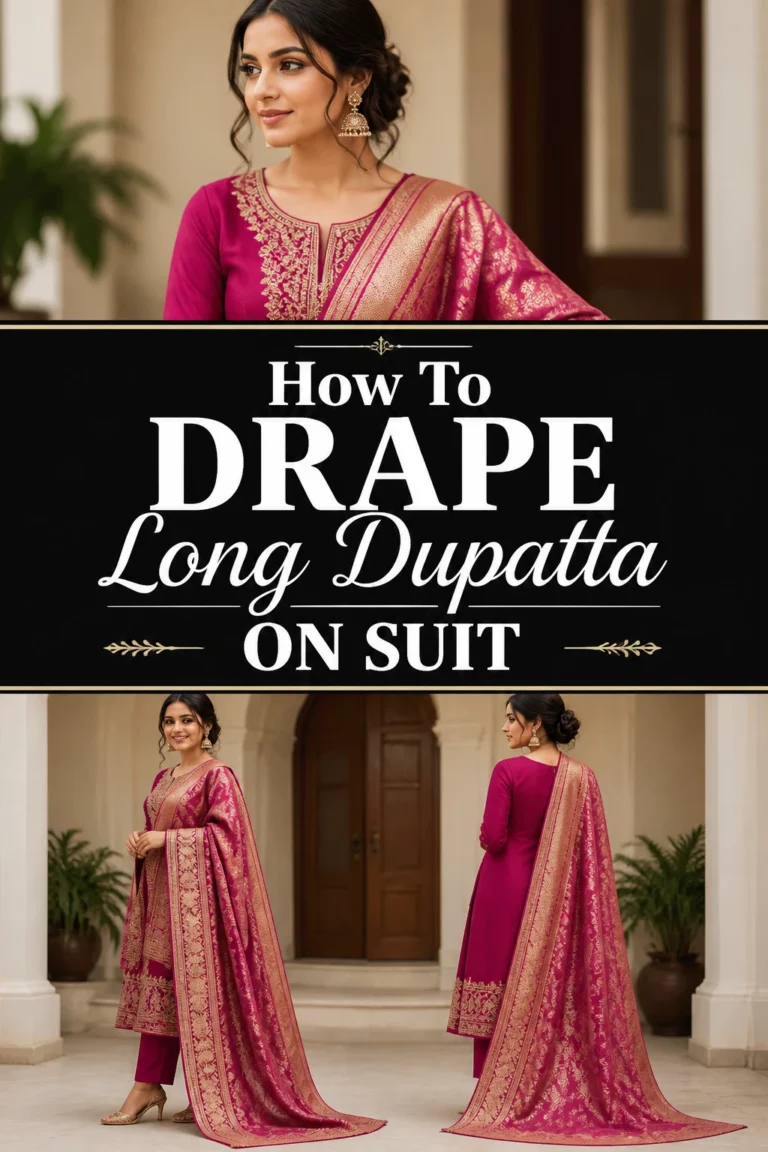
Draping a heavy dupatta on your lehenga can transform your entire look, adding elegance and grandeur.
It’s not just about tossing fabric over your shoulder; it’s an art that balances weight, style, and comfort.
Having styled countless lehengas myself, I understand the nuances of making a heavy dupatta look effortless and stay put.
Quick Overview
This guide will equip you with the skills to confidently drape any heavy dupatta, ensuring you look stunning and feel secure throughout your event.
- Time needed: 15-25 minutes (practice makes perfect!)
- Difficulty: Intermediate
- What you’ll need: Your heavy dupatta, lehenga set, safety pins (various sizes), a few decorative pins, and a mirror.
Step-by-Step Instructions
Step 1: Prepare Your Foundation
Put on your lehenga skirt and choli first. Ensure they are comfortably fitted and secure before you even touch the dupatta.
A well-fitted base is essential for the dupatta to sit correctly and not pull in awkward places.
Pro Tip: Wear the bra or innerwear you plan to wear with your outfit. This ensures the drape considers your actual silhouette.
Step 2: Find Your Dupatta’s Center
Hold the dupatta by its two corners along one of its shorter edges. Gently shake it out to identify the midpoint of this edge.
This central point will often be the starting anchor for many elegant drapes, especially with heavy fabrics.
Step 3: Secure the First Anchor Point
Place the identified center point of the dupatta at your waist, slightly to your left side, just above your lehenga skirt’s waistband.
Use a medium-sized safety pin to firmly attach this point to your lehenga skirt’s waistband. Ensure the pin goes through both the dupatta and the waistband fabric for maximum security.
Step 4: Create the Front Pleats
Gather the remaining fabric of the dupatta from the pinned waist point towards your right side.
Form neat, even pleats, approximately 4-6 inches wide, starting from the pinned point. The pleats should flow smoothly across your front.
Arrange these pleats to fall gracefully over your lehenga skirt, showcasing any border work on the dupatta.
Pro Tip: Use a smaller safety pin to temporarily hold these pleats together near your waist while you work on the next section. This keeps them tidy.
Step 5: Drape Over the Shoulder
Bring the pleated section of the dupatta up over your right shoulder, allowing it to fall elegantly down your back.
Adjust the length of the drape at the back to your preference, ensuring it doesn’t drag on the ground but also isn’t too short.
Pin the dupatta securely to your choli or blouse at the shoulder. Use a strong safety pin, making sure it catches enough fabric from both the dupatta and the choli for stability.
Step 6: Refine the Front Drape
Take the unpleated side of the dupatta, which is still flowing from the initial waist anchor point on your left.
Pull this section gently across your front, allowing it to sweep over your chest.
Bring it up to your left shoulder, or if you prefer a more open look, leave it hanging loosely over your left arm.
Pro Tip: For extra security and a polished look, you can gather a small section of the dupatta near your left armpit and pin it discreetly to your choli. This prevents it from slipping off your arm.
Step 7: Secure the Second Shoulder (Optional but Recommended)
If you opted to bring the left side over your left shoulder, pin it there securely to your choli.
This creates a balanced, double-draped look that is very stable, especially with heavy dupattas.
Ensure both shoulder drapes are symmetrical and comfortable, allowing for ease of movement.
Step 8: Final Adjustments and Embellishments
Stand in front of a full-length mirror and examine your drape from all angles.
Adjust any folds, pleats, or pins to ensure a smooth, elegant flow.
Add decorative pins or brooches to hide safety pins or to enhance the drape’s aesthetic, particularly at the shoulder or waist.
Common Mistakes to Avoid
Underestimating Pin Power
Many people use too few or too small safety pins. A heavy dupatta requires robust pinning to stay in place.
Always use several medium to large safety pins, securing them discreetly but firmly into both the dupatta and the garment underneath.
Ignoring Dupatta Weight and Fabric
Not all heavy dupattas drape the same way. A stiff, heavily embroidered dupatta will hold pleats differently than a softer, flowing one.
Experiment with your specific dupatta’s fabric. Some might need tighter pleats, while others might look better with wider, softer folds.
Over-tightening or Under-tightening
Draping too tightly restricts movement and can look stiff. Draping too loosely leads to slippage and a messy appearance.
Aim for a comfortable snugness. The dupatta should feel secure without pulling or causing discomfort around your neck or shoulders.
Forgetting About Movement
A beautiful drape that falls apart when you sit or dance is not practical. Always test your drape by moving around, sitting, and raising your arms.
Pre-emptively add extra pins in areas that feel vulnerable during movement. Comfort and security are just as important as aesthetics.
Troubleshooting
Dupatta Keeps Slipping Off Shoulder
This is a common issue with heavy fabrics. The pin might not be catching enough fabric, or it’s placed too close to the edge.
Solution: Use a larger, stronger safety pin. Secure it deeper into your choli’s shoulder seam or strap. Consider using two pins side-by-side for extra grip. A small piece of double-sided fashion tape under the dupatta at the shoulder can also add grip.
Pleats Are Not Staying Defined
Heavy, soft fabrics can sometimes lose their pleat definition, especially with movement.
Solution: When creating pleats, iron them lightly beforehand if the fabric allows. Once pleated, use a small, clear safety pin or a decorative brooch at the base of the pleats near your waist to hold them firmly together.
Feeling Too Heavy or Constricted
A heavy dupatta, if not draped correctly, can feel burdensome and limit your movement.
Solution: Redistribute the weight. Ensure the dupatta is pinned at multiple points (waist, both shoulders, perhaps even under an arm) rather than relying on a single anchor. Loosen the drape slightly around your neck or chest if it feels restrictive, adjusting the shoulder pins accordingly.
Key Takeaways
- Always start by securing the lehenga and choli before draping.
- Use plenty of strong safety pins for a secure and long-lasting drape.
- Practice your drape to understand how your specific dupatta fabric behaves.
- Prioritize comfort and ease of movement alongside aesthetic appeal.
- Strategic pinning at the waist and shoulders prevents slipping and creates balance.
- Don’t be afraid to add decorative pins to enhance your final look.
Frequently Asked Questions
Can I wear a heavy dupatta without pinning it?
While possible for very short periods or specific poses, for an event, it’s highly recommended to use pins. Heavy dupattas are prone to slipping, dragging, or getting in the way without proper securement, which can be inconvenient and even dangerous.
What type of safety pins are best for heavy dupattas?
Opt for sturdy, rust-resistant safety pins in medium to large sizes. Pins with a stronger spring mechanism are ideal. Avoid flimsy, small pins as they can bend or come undone easily under the weight of the fabric.
How can I prevent the dupatta from wrinkling during the event?
Choosing a fabric that resists wrinkling helps. However, strategic pinning is key. Ensure the drape isn’t too tight in any one spot, which can cause creasing. When sitting, gently gather and arrange the dupatta to avoid crushing it under your body. A final light steam before leaving can also work wonders.
Can this drape style work for any body type?
Yes, this classic drape is universally flattering. You can adjust the width of the front pleats and the length of the shoulder drape to suit your preference. For a more defined waist, ensure the initial waist pin is snug. For broader shoulders, drape a little wider across the chest.
Our Top Recommended Finds
- Assorted Heavy-Duty Safety Pins: Essential for securing any heavy fabric, ensuring your drape stays perfect.
- Decorative Brooch Set: Elevate your drape by hiding functional pins with elegant, sparkling embellishments.
- Fashion Tape Strips: Handy for discreetly holding fabric in place, especially on shoulders or near armpits, preventing slips.
Embrace Your Inner Diva
Mastering the art of draping a heavy dupatta is a skill that will serve you well for countless special occasions.
It’s about confidence, elegance, and making a statement with your style.
Take these steps, practice a few times, and step out knowing you look magnificent and feel completely at ease.
Wedding Planning
No fluff, no drama. Just easy weekly advice, planning shortcuts, and gentle reminders to help you actually enjoy your engagement.