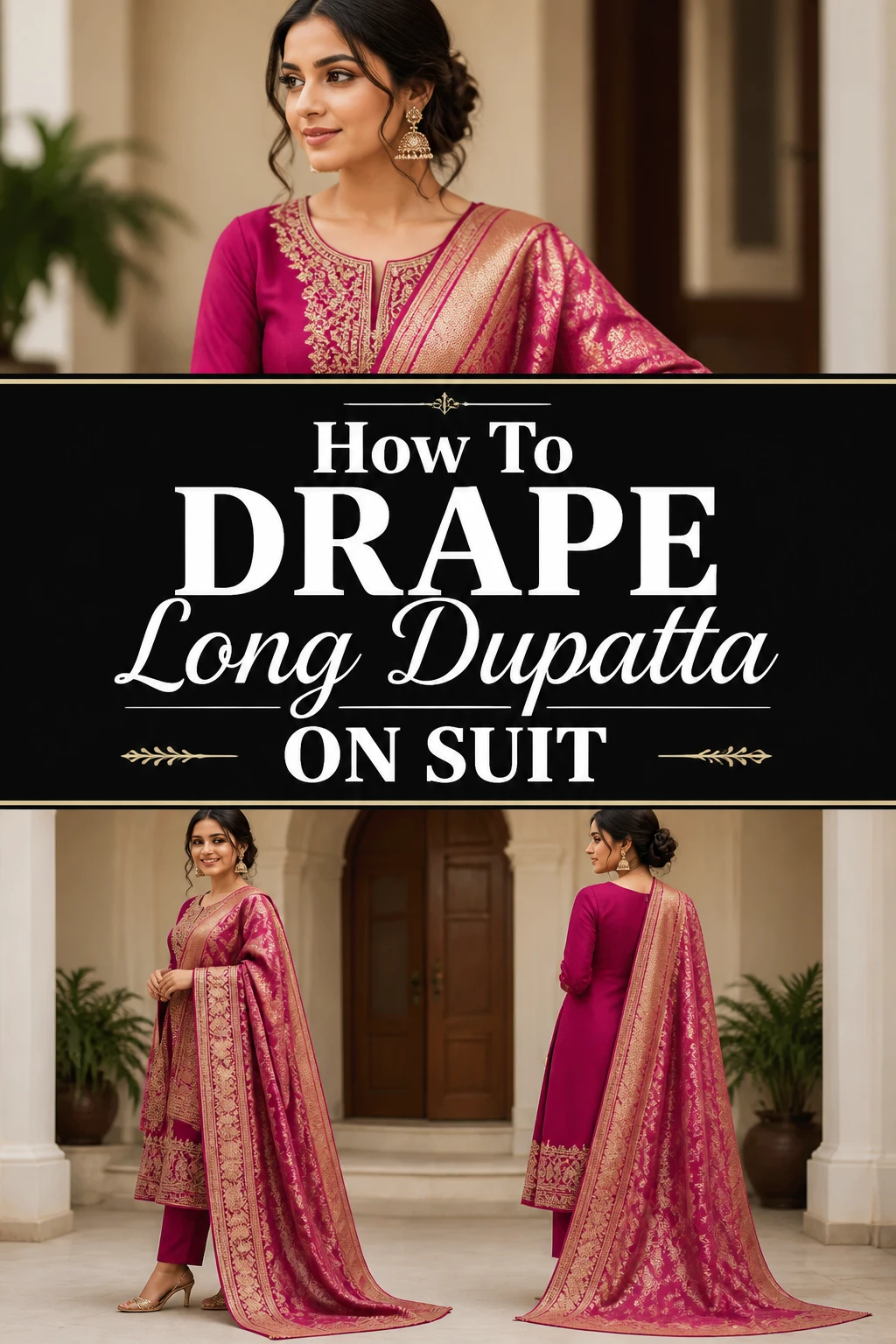
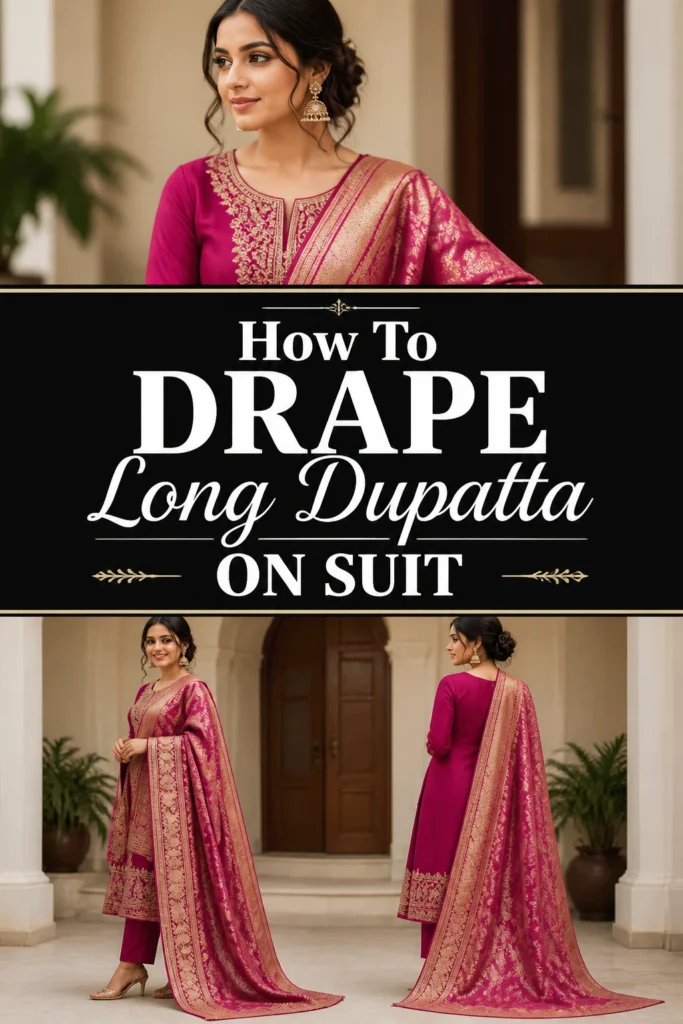
🧣 How To Drape Long Dupatta On Suit
Wedding Planning
No fluff, no drama. Just easy weekly advice, planning shortcuts, and gentle reminders to help you actually enjoy your engagement.
A long dupatta is more than just a piece of fabric; it is the soul of a traditional suit.
I have spent years experimenting with different fabrics and lengths to find the perfect balance between comfort and elegance.
This guide will help you master the art of draping so your outfit looks polished and effortless every single time.
Quick Overview
Before you begin, it is helpful to understand the basic requirements for a perfect drape.
- Time needed: 10-15 minutes
- Difficulty: Beginner
- What you’ll need: A long dupatta (2.5 meters or more), safety pins, double-sided fashion tape, a full-length mirror, and a decorative belt (optional).
Step-by-Step Instructions
Step 1: Prepare Your Fabric and Outfit
Steam or iron your dupatta according to its fabric type to remove any unsightly creases.
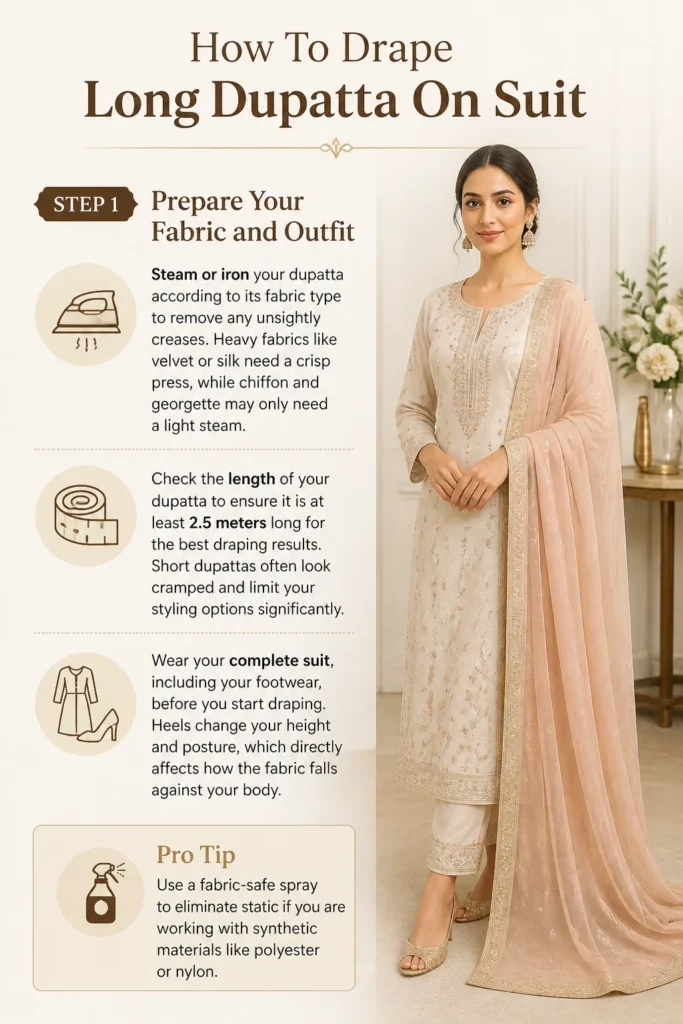
Heavy fabrics like velvet or silk need a crisp press, while chiffon and georgette may only need a light steam.
Check the length of your dupatta to ensure it is at least 2.5 meters long for the best draping results.
Short dupattas often look cramped and limit your styling options significantly.
Wear your complete suit, including your footwear, before you start draping.
Heels change your height and posture, which directly affects how the fabric falls against your body.
Pro Tip: Use a fabric-safe spray to eliminate static if you are working with synthetic materials like polyester or nylon.
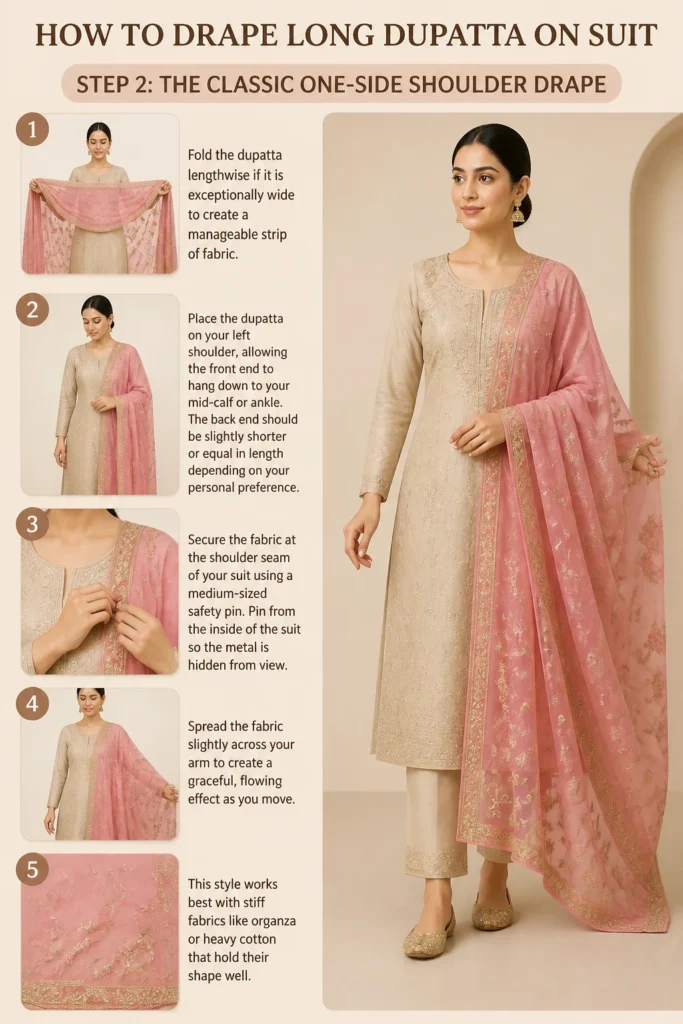
Step 2: The Classic One-Side Shoulder Drape
Fold the dupatta lengthwise if it is exceptionally wide to create a manageable strip of fabric.
This style is perfect for showing off heavy embroidery on the front of your suit or kurta.
Place the dupatta on your left shoulder, allowing the front end to hang down to your mid-calf or ankle.
The back end should be slightly shorter or equal in length depending on your personal preference.
Secure the fabric at the shoulder seam of your suit using a medium-sized safety pin.
Pin from the inside of the suit so the metal is hidden from view.
Spread the fabric slightly across your arm to create a graceful, flowing effect as you move.
This style works best with stiff fabrics like organza or heavy cotton that hold their shape well.
Step 3: The Elegant Front U-Drape
Take one corner of the dupatta and pin it to your right shoulder, making sure it is secure.
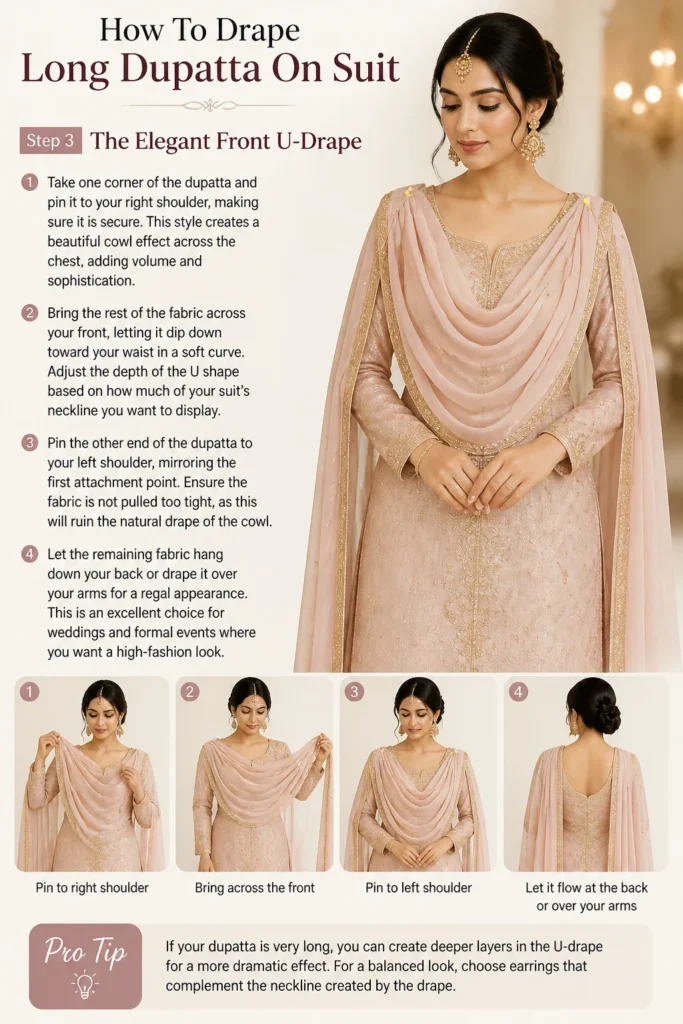
This style creates a beautiful “cowl” effect across the chest, adding volume and sophistication.
Bring the rest of the fabric across your front, letting it dip down toward your waist in a soft curve.
Adjust the depth of the “U” shape based on how much of your suit’s neckline you want to display.
Pin the other end of the dupatta to your left shoulder, mirroring the first attachment point.
Ensure the fabric is not pulled too tight, as this will ruin the natural drape of the cowl.
Let the remaining fabric hang down your back or drape it over your arms for a regal appearance.
This is an excellent choice for weddings and formal events where you want a high-fashion look.
Pro Tip: If your dupatta is very heavy, use two pins on each shoulder to distribute the weight and prevent the suit from pulling.
Step 4: The Regal Double-Shoulder Spread
Center the dupatta behind your neck so that equal lengths hang over both shoulders toward the front.
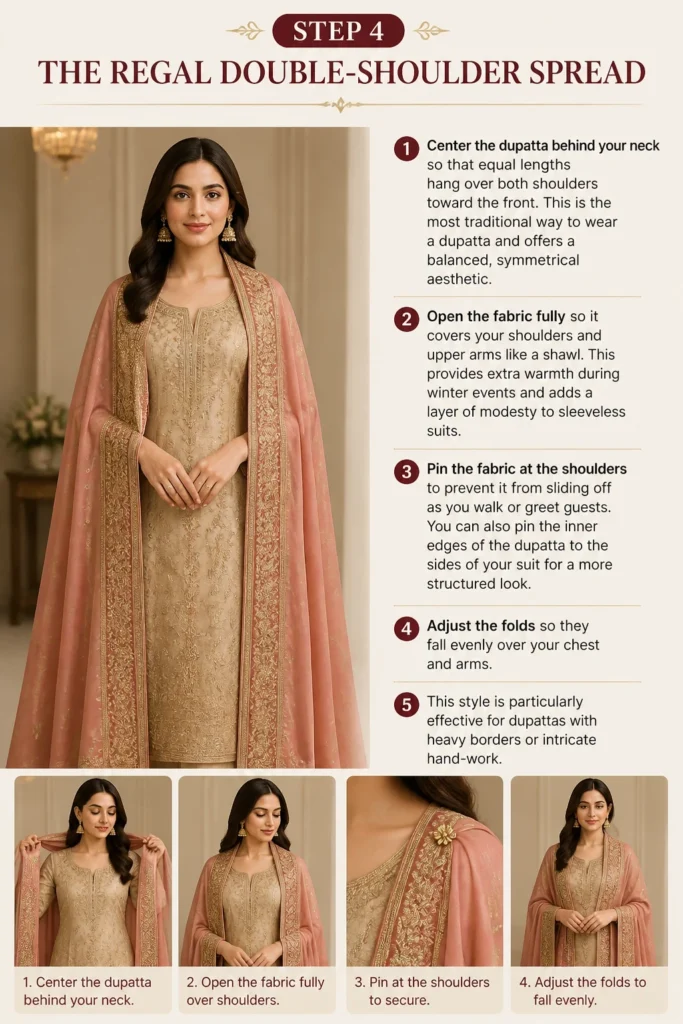
This is the most traditional way to wear a dupatta and offers a balanced, symmetrical aesthetic.
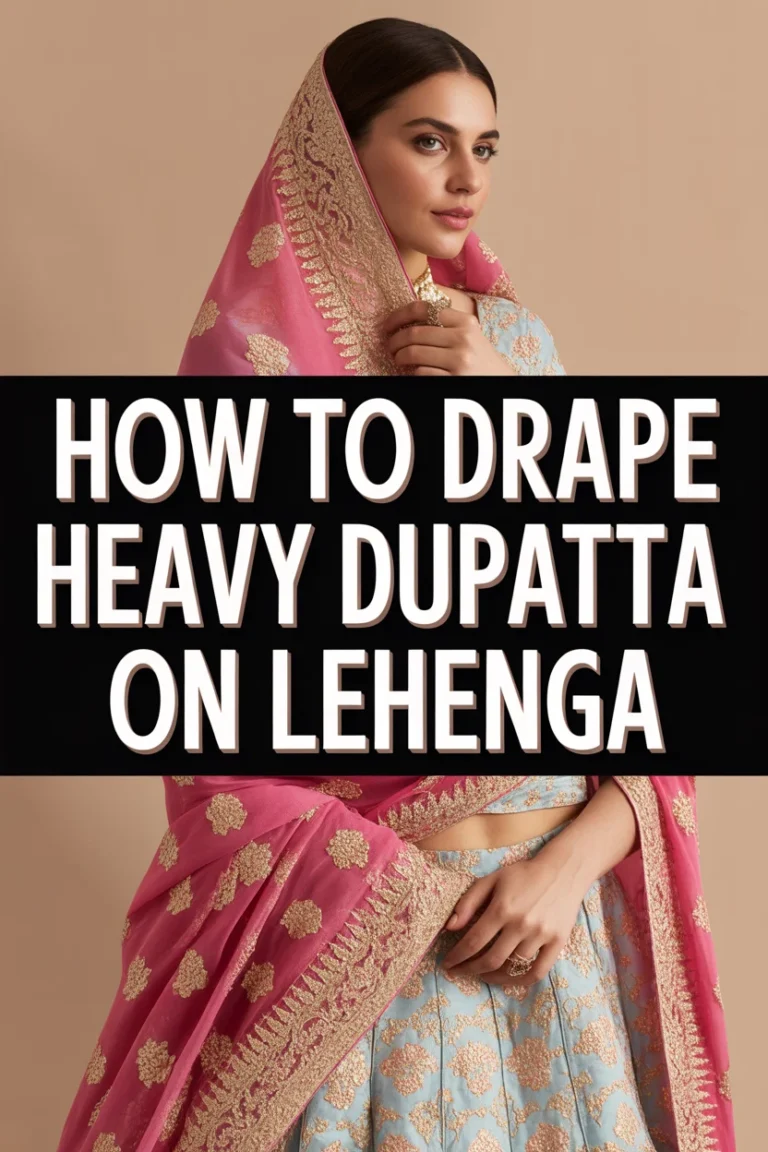
Open the fabric fully so it covers your shoulders and upper arms like a shawl.
This provides extra warmth during winter events and adds a layer of modesty to sleeveless suits.
Pin the fabric at the shoulders to prevent it from sliding off as you walk or greet guests.
You can also pin the inner edges of the dupatta to the sides of your suit for a more structured look.
Adjust the folds so they fall evenly over your chest and arms.
This style is particularly effective for dupattas with heavy borders or intricate hand-work.
Step 5: The Modern Belted Cinch
Drape the dupatta over one shoulder, letting it hang straight down the front and back.
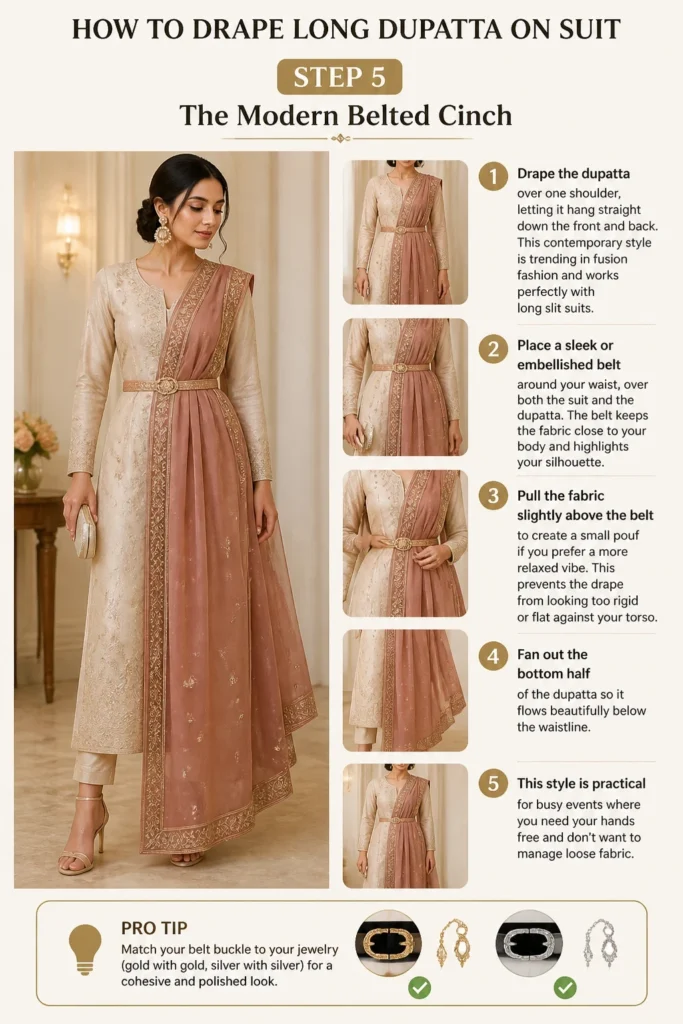
This contemporary style is trending in fusion fashion and works perfectly with long slit suits.
Place a sleek or embellished belt around your waist, over both the suit and the dupatta.
The belt keeps the fabric close to your body and highlights your silhouette.
Pull the fabric slightly above the belt to create a small “pouf” if you prefer a more relaxed vibe.
This prevents the drape from looking too rigid or flat against your torso.
Fan out the bottom half of the dupatta so it flows beautifully below the waistline.
This style is practical for busy events where you need your hands free and don’t want to manage loose fabric.
Pro Tip: Match your belt buckle to your jewelry (gold with gold, silver with silver) for a cohesive finish.
Step 6: The Sophisticated Elbow Glide
Rest the dupatta across your back, holding the two ends in the crooks of your elbows.
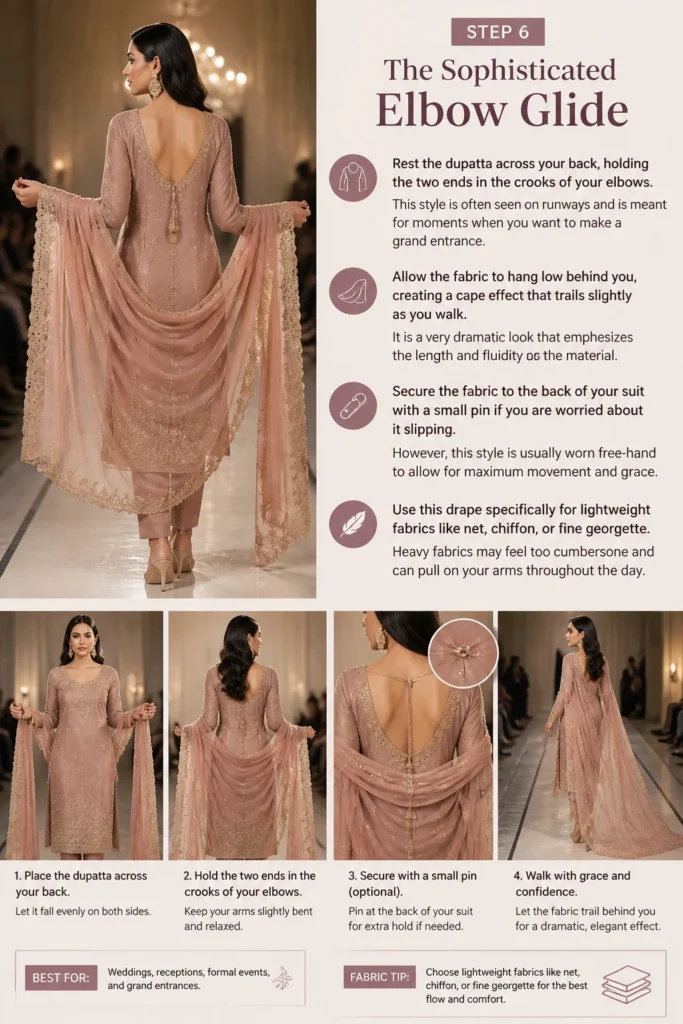
This style is often seen on runways and is meant for moments when you want to make a grand entrance.
Allow the fabric to hang low behind you, creating a “cape” effect that trails slightly as you walk.
It is a very dramatic look that emphasizes the length and fluidity of the material.
Secure the fabric to the back of your suit with a small pin if you are worried about it slipping.
However, this style is usually worn “free-hand” to allow for maximum movement and grace.
Use this drape specifically for lightweight fabrics like net, chiffon, or fine georgette.
Heavy fabrics may feel too cumbersome and can pull on your arms throughout the day.
Step 7: The Diagonal Cross-Body Wrap
Tuck one corner of the dupatta into the side of your waist (at the hip) on the left side.
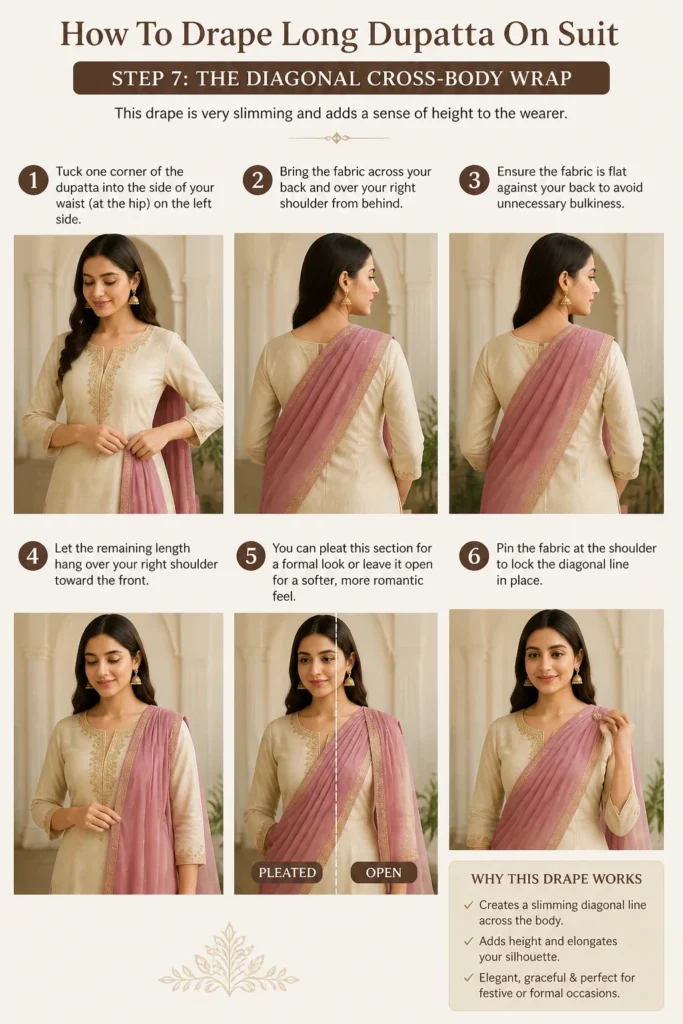
This creates a base for a wrap that mimics the look of a saree pallu.
Bring the fabric across your back and over your right shoulder from behind.
Ensure the fabric is flat against your back to avoid unnecessary bulkiness.
Let the remaining length hang over your right shoulder toward the front.
You can pleat this section for a formal look or leave it open for a softer, more romantic feel.
Pin the fabric at the shoulder to lock the diagonal line in place.
This drape is very slimming and adds a sense of height to the wearer.
Common Mistakes to Avoid
Using Oversized Safety Pins
Many people reach for large safety pins thinking they are more secure, but they often leave visible holes in delicate fabrics like silk or net. Large pins are also harder to hide and can look clunky against a refined outfit. Always opt for small, sharp pins that match the color of your dupatta or suit.
Ignoring Fabric Weight
Draping a heavy velvet dupatta the same way you would a light chiffon one is a recipe for discomfort. Heavy fabrics require more points of contact and stronger pinning to stay in place without sagging. If you try to do a complex cowl drape with a thick fabric, it will likely look bulky rather than elegant.
Uneven Lengths
Failing to check the symmetry of your drape in a mirror can lead to a lopsided appearance that distracts from the beauty of the suit. One side hanging significantly lower than the other often looks accidental rather than intentional. Always take a moment to walk around and see how the fabric settles before leaving the house.
Pinning Too Tight
If you pin the dupatta too tightly to your suit, it will restrict your arm movement and cause the suit fabric to pucker. This not only looks bad but can also lead to the fabric tearing if you reach for something or sit down suddenly. Always leave a little bit of “give” or slack in the fabric when securing it.
Troubleshooting
The Dupatta Keeps Slipping Off
Slippery fabrics like satin or highly polished silk are notorious for sliding off the shoulder. The best solution is to use a small piece of double-sided fashion tape between the dupatta and your shoulder. This provides an invisible grip that holds the fabric in place without the need for excessive pinning.
The Fabric Looks Too Bulky Around the Neck
If your dupatta is very wide, it can bunch up around your neck and make you look shorter. To fix this, fold the dupatta lengthwise into thirds before you begin any drape. This reduces the volume around your neckline while still allowing the length to flow beautifully.
Safety Pins are Visible
Visible pins can ruin the seamless look of a high-end suit. To solve this, always pin from the underside of the garment. If the pin is still showing, try covering the head of the pin with a small piece of matching thread or use a decorative brooch that is meant to be seen.
Key Takeaways
- Preparation is key: Always iron or steam your dupatta before styling to ensure a professional finish.
- Choose the right pins: Use small, sharp safety pins and hide them under the seams whenever possible.
- Match style to fabric: Use stiff fabrics for structured drapes and flowing fabrics for cowls and wraps.
- Consider the occasion: Belted styles are great for movement, while shoulder spreads are perfect for formal portraits.
- Check your proportions: Use the mirror to ensure the lengths are balanced and the drape complements your height.
Frequently Asked Questions
What is the best dupatta fabric for beginners to drape?
Chiffon and georgette are the easiest fabrics for beginners because they are lightweight and have a natural “cling” that helps them stay in place. They are also very forgiving and do not show wrinkles as easily as cotton or silk. You can practice various styles with these fabrics before moving on to stiffer materials.
How do I handle a dupatta with very heavy borders?
For dupattas with heavy borders, the one-side shoulder drape is usually the best option. This allows the border to hang straight down, showcasing the craftsmanship without the fabric becoming too heavy to manage. Avoid styles that require a lot of folding, as the heavy borders will create a lot of bulk.
Should I drape my dupatta on the left or right shoulder?
Traditionally, the dupatta is draped on the left shoulder, but this is entirely a matter of personal comfort and the design of your suit. If your suit has specific embroidery on one side, drape the dupatta on the opposite side to balance the look. Most people find it easier to manage the fabric on their non-dominant side.
Can I wear a long dupatta with a short kurti?
Yes, a long dupatta can look very stylish with a short kurti, especially if you use a belted drape or a diagonal wrap. It adds a layer of sophistication and can make the outfit feel more formal. Just ensure the dupatta does not completely overwhelm the short length of the top.
Our Top Recommended Finds
- Steel Safety Pins (Assorted Sizes): Essential for securing different fabric weights without causing damage.
- Double-Sided Fashion Tape: The secret weapon for keeping slippery fabrics perfectly in place on your shoulders.
- Handheld Garment Steamer: Perfect for quick touch-ups to remove wrinkles right before you head out the door.
Master Your Signature Style
Now that you know the fundamental techniques for draping a long dupatta, it is time to practice in front of the mirror.
Every fabric behaves differently, so do not be afraid to experiment with different folds and pin placements until you find what feels most comfortable.
Try the modern belted look for your next casual outing, or master the regal double-shoulder spread for an upcoming wedding.
Once you feel confident with these styles, you might want to explore how to pair different dupatta colors with neutral suits to expand your wardrobe even further.
Take a few minutes today to try out one of these drapes and see how it completely transforms your favorite suit.
Wedding Planning
No fluff, no drama. Just easy weekly advice, planning shortcuts, and gentle reminders to help you actually enjoy your engagement.