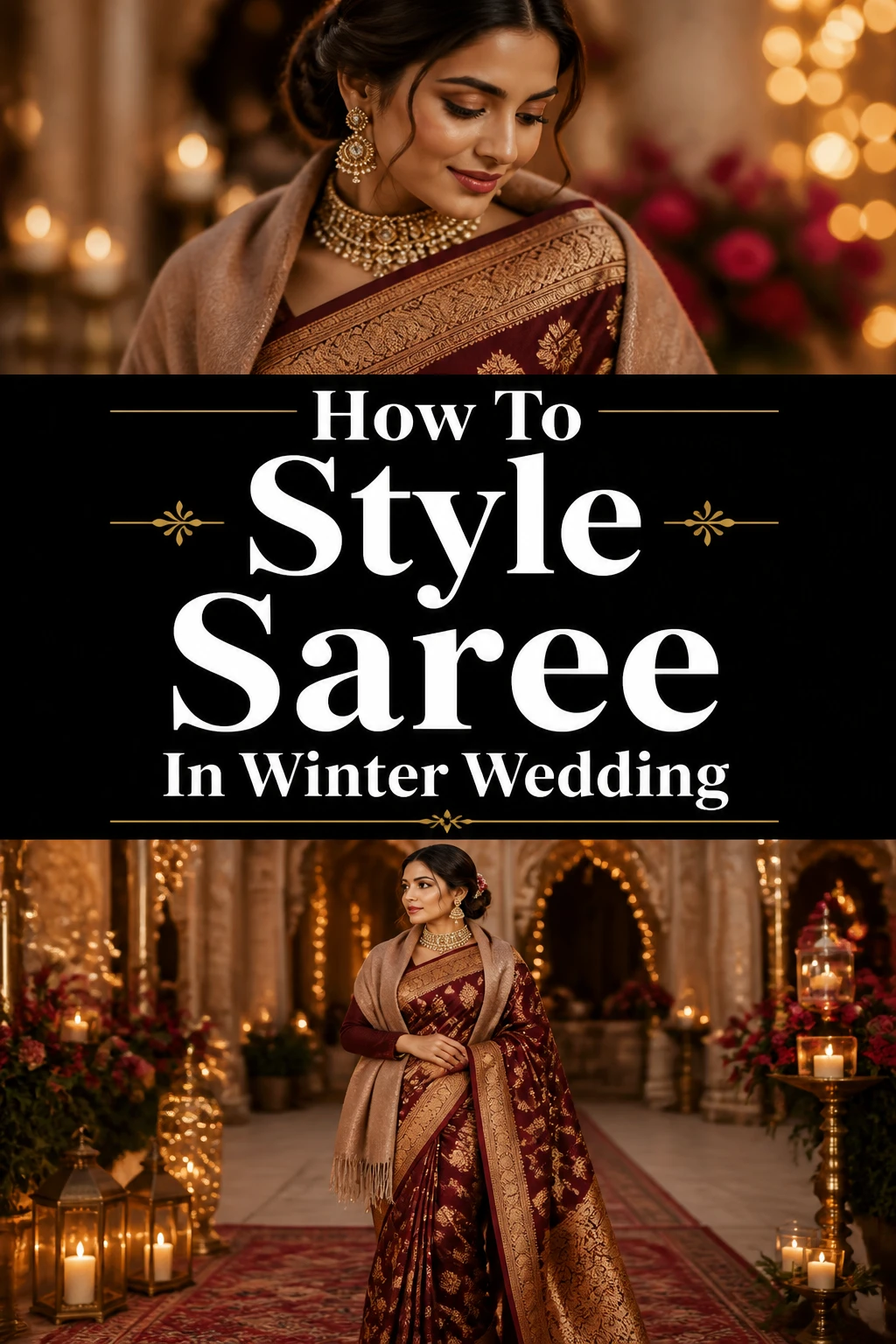
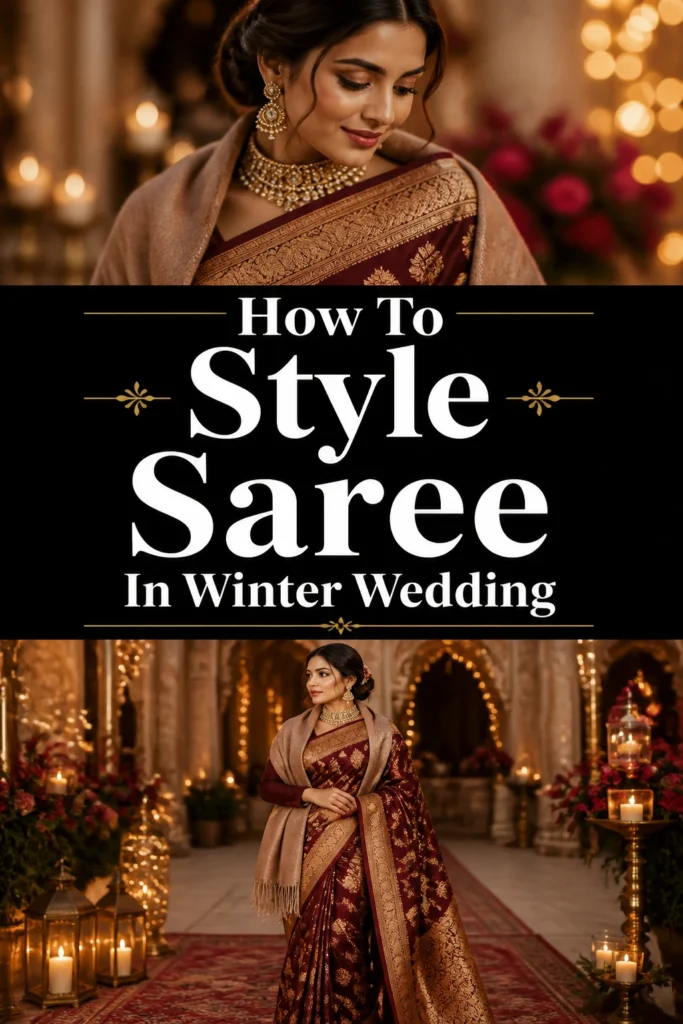
❄️ How To Style Saree In Winter Wedding
Wedding Planning
No fluff, no drama. Just easy weekly advice, planning shortcuts, and gentle reminders to help you actually enjoy your engagement.
Navigating a winter wedding in a saree can feel like a delicate balance. You want to look stunning and elegant, but also stay comfortably warm in the chill. I’ve personally experienced the struggle of choosing between style and shivering.
This guide comes from years of attending winter celebrations, learning how to master the art of warmth and grace. You’ll discover practical strategies to ensure your saree look is both breathtaking and cozy.
Quick Overview
This guide will walk you through creating a beautiful, warm, and comfortable saree ensemble for any winter wedding. You’ll learn to layer effectively, choose the right fabrics, and accessorize perfectly.
- Time needed: 60-90 minutes (for planning and styling)
- Difficulty: Intermediate
- What you’ll need: Warm saree, thermal blouse, stylish jacket/shawl, appropriate accessories, comfortable warm footwear.
Step-by-Step Instructions
Step 1: Choose Your Saree Fabric Wisely
The foundation of a warm winter saree look begins with the fabric. Opting for the right material can make all the difference in comfort and warmth without compromising on elegance.
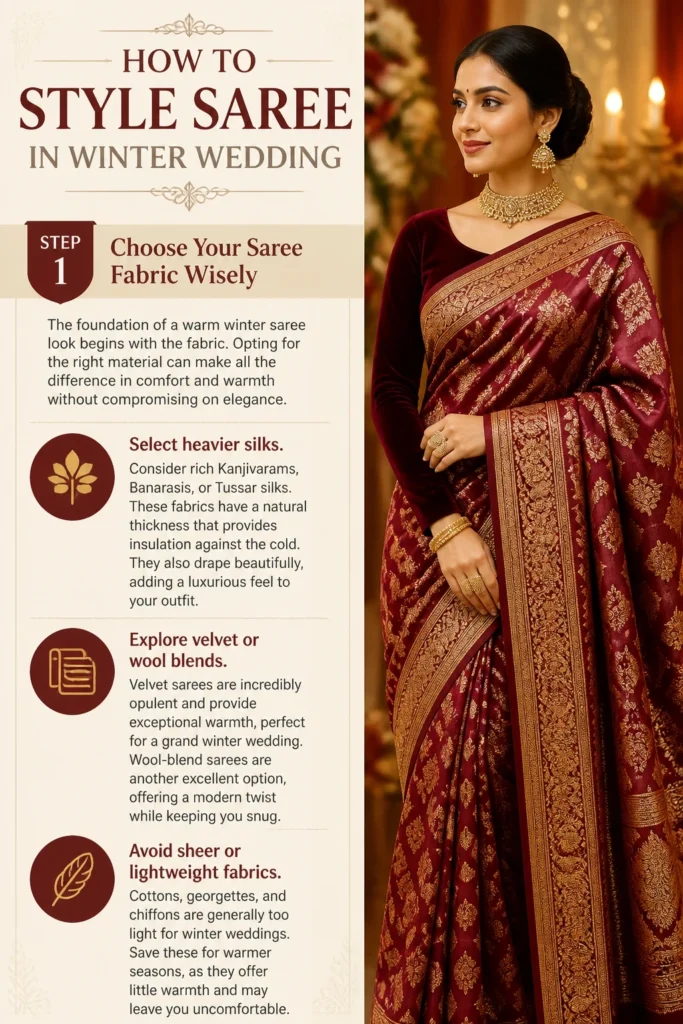
Select heavier silks. Consider rich Kanjivarams, Banarasis, or Tussar silks. These fabrics have a natural thickness that provides insulation against the cold. They also drape beautifully, adding a luxurious feel to your outfit.
Explore velvet or wool blends. Velvet sarees are incredibly opulent and provide exceptional warmth, perfect for a grand winter wedding. Wool-blend sarees are another excellent option, offering a modern twist while keeping you snug.
Avoid sheer or lightweight fabrics. Cottons, georgettes, and chiffons are generally too light for winter weddings. Save these for warmer seasons, as they offer little to no protection against the cold.
Pro Tip: When selecting your saree, feel the fabric. A good winter saree fabric should have some weight and density, making it feel substantial in your hands.
Step 2: Master the Art of Layering Underneath
Effective layering beneath your saree is the secret to staying warm without adding bulk. This step is crucial for comfort throughout the event.
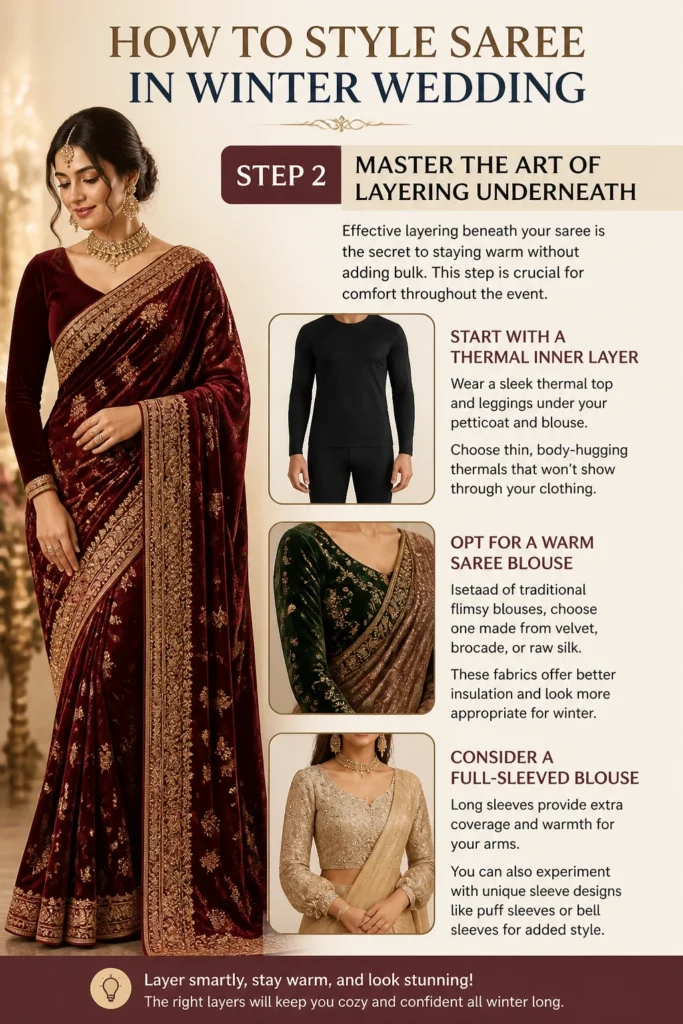
Start with a thermal inner layer. Wear a sleek thermal top and leggings under your petticoat and blouse. Choose thin, body-hugging thermals that won’t show through your clothing.
Opt for a warm saree blouse. Instead of traditional flimsy blouses, choose one made from velvet, brocade, or raw silk. These fabrics offer better insulation and look more appropriate for winter.
Consider a full-sleeved blouse. Long sleeves provide extra coverage and warmth for your arms. You can also experiment with unique sleeve designs like puff sleeves or bell sleeves for added style.
Step 3: Elevate Your Look with Outerwear
The right outerwear can transform your winter saree ensemble from practical to profoundly stylish. Think of it as an integral part of your outfit, not just an afterthought.
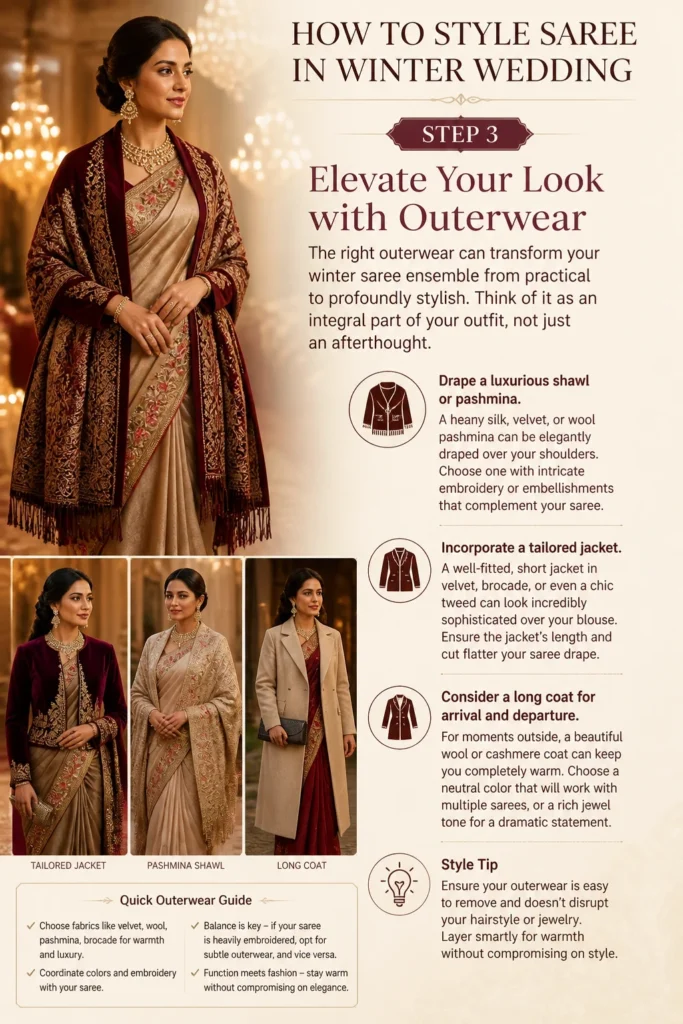
Drape a luxurious shawl or pashmina. A heavy silk, velvet, or wool pashmina can be elegantly draped over your shoulders. Choose one with intricate embroidery or embellishments that complement your saree.
Incorporate a tailored jacket. A well-fitted, short jacket in velvet, brocade, or even a chic tweed can look incredibly sophisticated over your blouse. Ensure the jacket’s length and cut flatter your saree drape.
Consider a long coat for arrival and departure. For moments outside, a beautiful wool or cashmere coat can keep you completely warm. Choose a neutral color that will work with multiple sarees, or a rich jewel tone to make a statement.
Pro Tip: When choosing outerwear, ensure it doesn’t overpower your saree. The goal is to enhance, not hide, the beauty of your drape.
Step 4: Accessorize with Warmth in Mind
Accessories aren’t just for adornment; they can also provide practical warmth. Thoughtful choices will complete your winter wedding look.
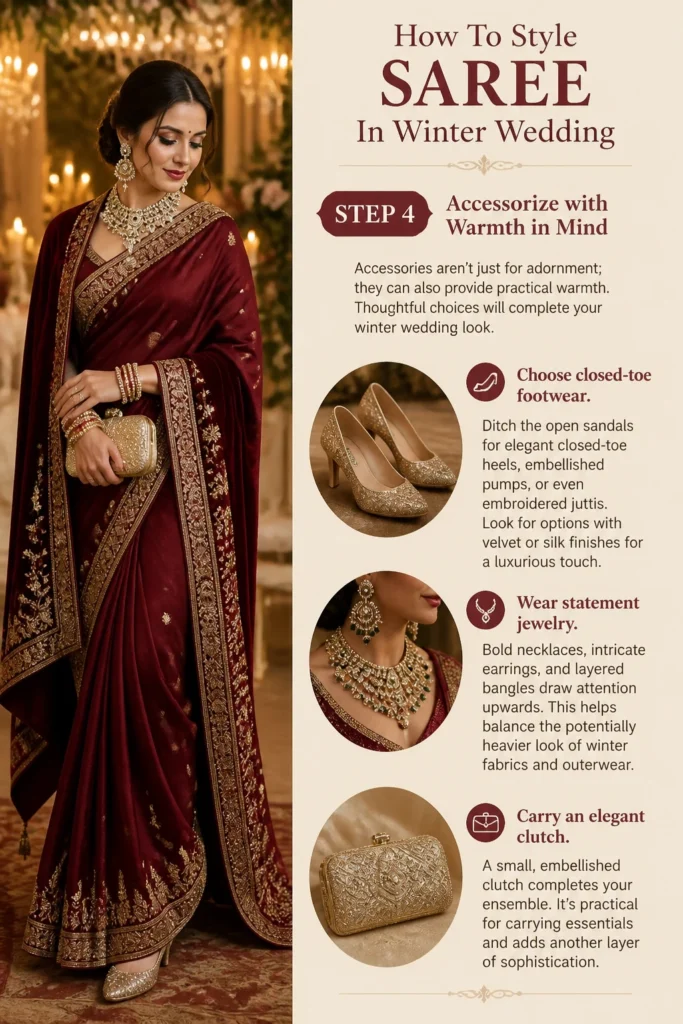
Choose closed-toe footwear. Ditch the open sandals for elegant closed-toe heels, embellished pumps, or even embroidered juttis. Look for options with velvet or silk finishes for a luxurious touch.
Wear statement jewelry. Bold necklaces, intricate earrings, and layered bangles draw attention upwards. This helps balance the potentially heavier look of winter fabrics and outerwear.
Carry an elegant clutch. A small, embellished clutch completes your ensemble. It’s practical for carrying essentials and adds another layer of sophistication.
Step 5: Experiment with Draping Styles
Certain saree draping styles can offer more coverage and warmth, making them ideal for winter weddings. Play with these techniques to find your perfect look.
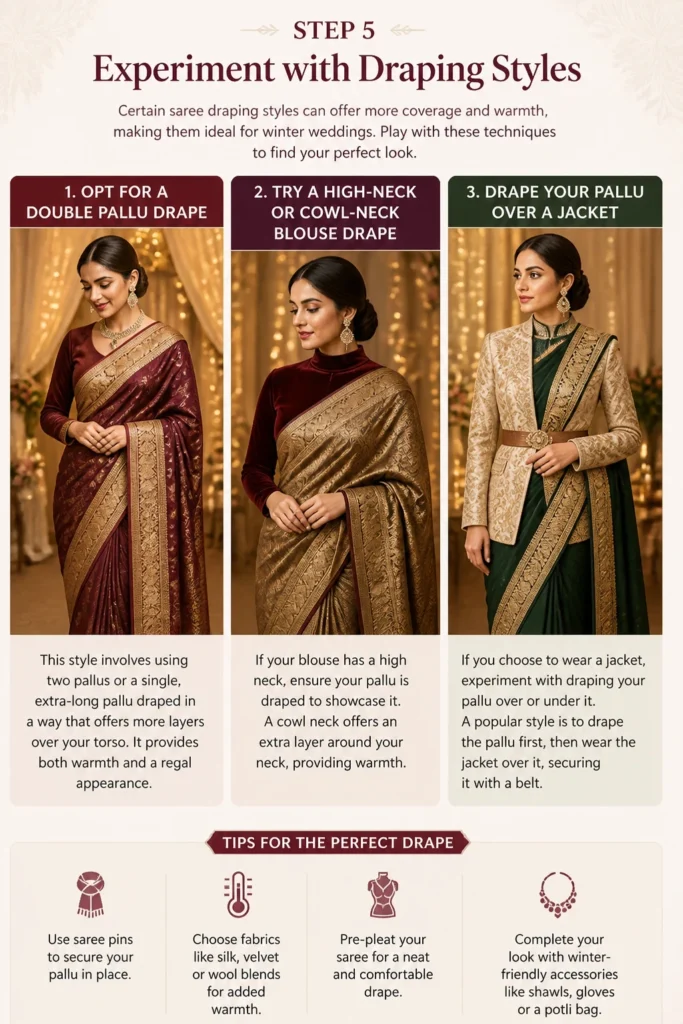
Opt for a double pallu drape. This style involves using two pallus or a single, extra-long pallu draped in a way that offers more layers over your torso. It provides both warmth and a regal appearance.
Try a high-neck or cowl-neck blouse drape. If your blouse has a high neck, ensure your pallu is draped to showcase it. A cowl neck offers an extra layer around your neck, providing warmth.
Drape your pallu over a jacket. If you choose to wear a jacket, experiment with draping your pallu over or under it. A popular style is to drape the pallu first, then wear the jacket over it, securing it with a belt.
Step 6: Select Appropriate Hair and Makeup
Your hair and makeup choices should complement the rich, warm aesthetic of a winter wedding saree. They can enhance your overall sophisticated look.
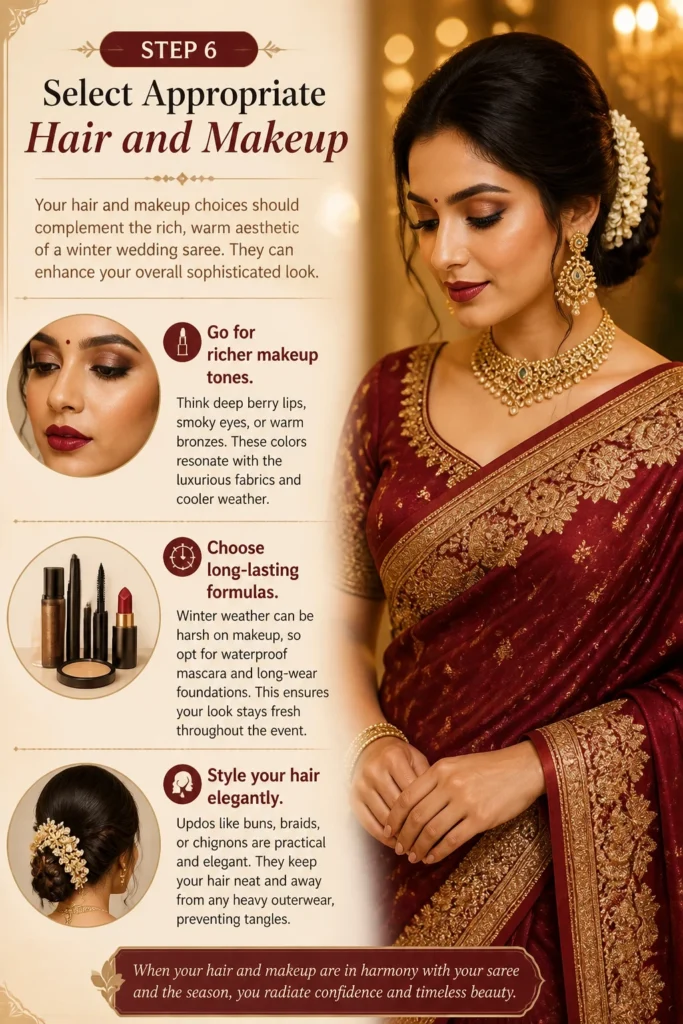
Go for richer makeup tones. Think deep berry lips, smoky eyes, or warm bronzes. These colors resonate with the luxurious fabrics and cooler weather.
Choose long-lasting formulas. Winter weather can be harsh on makeup, so opt for waterproof mascara and long-wear foundations. This ensures your look stays fresh throughout the event.
Style your hair elegantly. Updos like buns, braids, or chignons are practical and elegant. They keep your hair neat and away from any heavy outerwear, preventing tangles.
Step 7: Prioritize Comfort and Movement
Looking good is important, but feeling comfortable is paramount, especially at a long wedding event. Plan your outfit with ease of movement in mind.
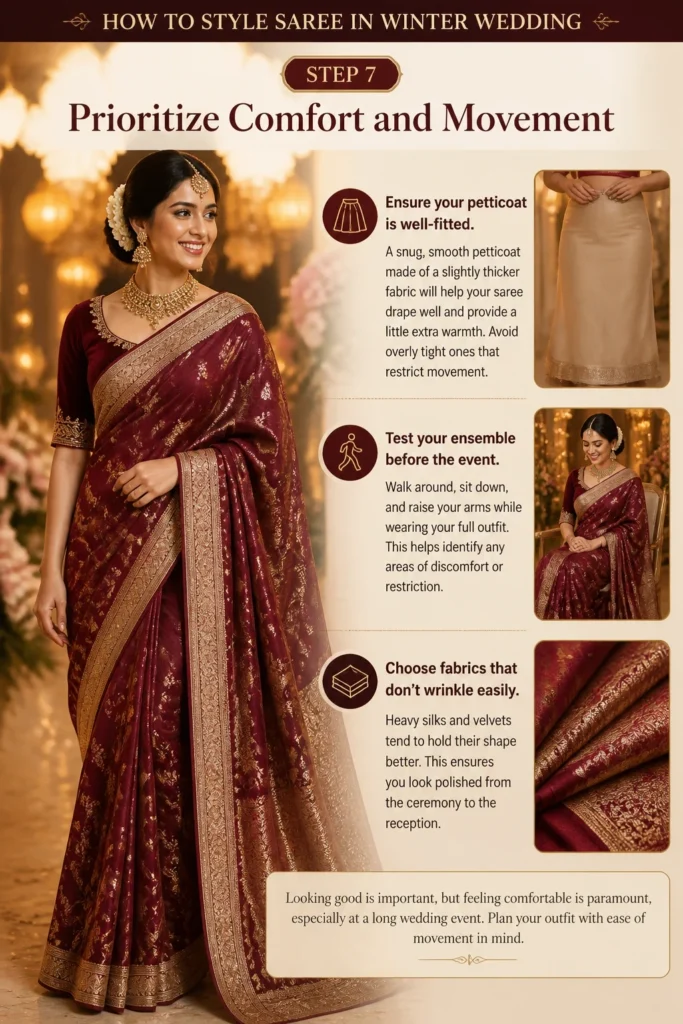
Ensure your petticoat is well-fitted. A snug, smooth petticoat made of a slightly thicker fabric will help your saree drape well and provide a little extra warmth. Avoid overly tight ones that restrict movement.
Test your ensemble before the event. Walk around, sit down, and raise your arms while wearing your full outfit. This helps identify any areas of discomfort or restriction.
Choose fabrics that don’t wrinkle easily. Heavy silks and velvets tend to hold their shape better. This ensures you look polished from the ceremony to the reception.
Step 8: Consider Embellishments and Details
Winter weddings often call for more elaborate and striking details. Use embellishments to add sparkle and interest to your saree.
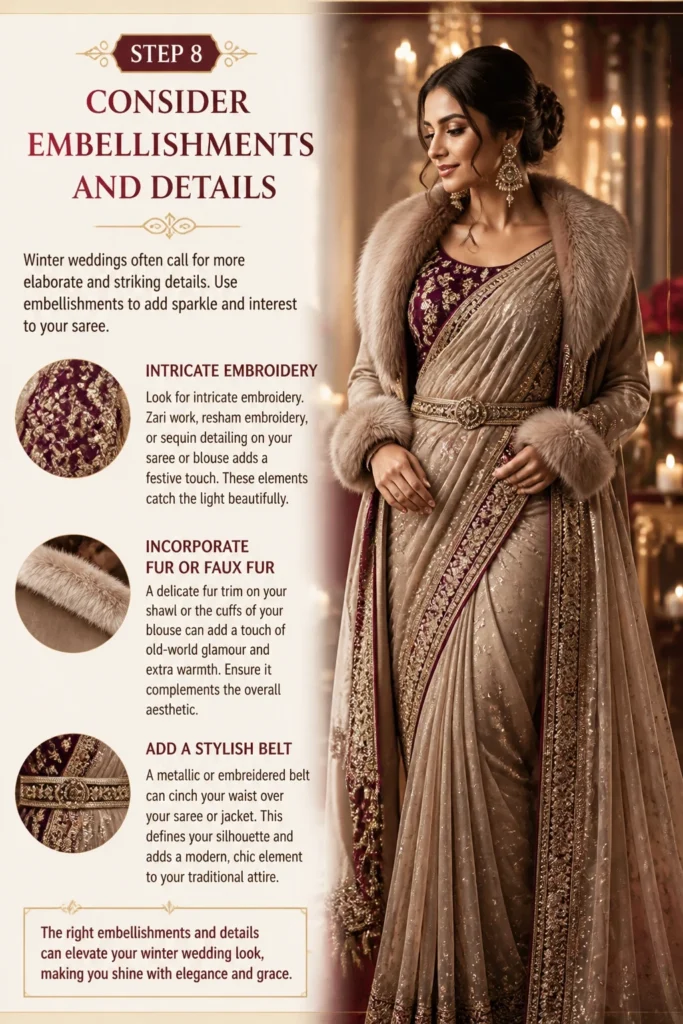
Look for intricate embroidery. Zari work, resham embroidery, or sequin detailing on your saree or blouse adds a festive touch. These elements catch the light beautifully.
Incorporate fur or faux fur. A delicate fur trim on your shawl or the cuffs of your blouse can add a touch of old-world glamour and extra warmth. Ensure it complements the overall aesthetic.
Add a stylish belt. A metallic or embroidered belt can cinch your waist over your saree or jacket. This defines your silhouette and adds a modern, chic element to your traditional attire.
Common Mistakes to Avoid
Ignoring Fabric Weight
Wearing a flimsy georgette or chiffon saree in winter is a common oversight. These fabrics offer no warmth, leaving you shivering and uncomfortable throughout the celebration. Always prioritize heavier silks, velvets, or wool blends to ensure adequate insulation.
Overlooking Underlayers
Many people focus solely on the saree itself and forget about what goes underneath. Skipping thermal wear or choosing a thin, summery blouse will expose you to the cold. Invest in quality thermal innerwear and a warm, full-sleeved blouse for comfort.
Choosing Open-Toe Footwear
Open-toe sandals are standard with sarees, but they are impractical for winter. Exposing your feet to cold temperatures can lead to discomfort and distract from your enjoyment. Opt for elegant closed-toe shoes, boots, or juttis that keep your feet warm.
Sacrificing Style for Warmth (or vice-versa)
It’s a mistake to either bundle up so much that your saree’s elegance is lost, or to shiver for the sake of fashion. The goal is to find a harmonious balance. Use stylish layering pieces like embroidered shawls or tailored jackets that enhance your look while providing warmth.
Troubleshooting
Feeling Too Cold Despite Layers
If you find yourself still feeling chilly, check your fabric choices. Ensure your saree, blouse, and any outerwear are genuinely warm materials like heavy silk, velvet, or wool. You might need an additional, thin thermal layer or a heavier shawl. Consider wearing warm tights under your petticoat for added leg warmth.
Outfit Feels Bulky or Restrictive
This usually happens when layers are too thick or not fitted properly. Opt for sleek, thin thermal layers that hug your body without adding bulk. Ensure your blouse and jacket are tailored to fit well, allowing for movement. Sometimes, a different saree drape that uses fewer folds can also help reduce bulk.
Saree Slipping or Difficult to Manage with Outerwear
Draping a saree over or under outerwear can be tricky. Use safety pins strategically to secure the pallu to your blouse or jacket, especially at the shoulder. If wearing a jacket, try belting it over the saree to keep everything in place and create a defined waistline. Experiment with different pinning points at home beforehand.
Key Takeaways
- Choose warm fabrics: Opt for heavy silks, velvets, or wool blends for your saree.
- Layer smartly: Wear thin thermal innerwear and a warm, full-sleeved blouse.
- Add stylish outerwear: Incorporate luxurious shawls, pashminas, or tailored jackets.
- Select appropriate footwear: Go for closed-toe shoes like pumps, boots, or juttis.
- Accessorize for warmth: Use embellished accessories and consider fur trims for glamour.
- Prioritize comfort: Ensure your entire ensemble allows for ease of movement.
Frequently Asked Questions
Can I wear boots with a saree?
Absolutely! Ankle boots or even knee-high boots can look incredibly chic with a saree, especially if they are embellished or in a rich fabric like velvet. Ensure the saree length is appropriate to showcase the boots without looking awkward.
What kind of jewelry works best with a winter saree?
Winter sarees often feature richer, heavier fabrics, which pair well with statement jewelry. Think elaborate chokers, long antique necklaces, or heavy jhumkas. Gold, kundan, or polki jewelry complement the warmth of winter fabrics beautifully.
How do I keep my hair from getting messy with a shawl or jacket?
Updos are your best friend for winter saree styling. A neat bun, a braided updo, or a sophisticated chignon will keep your hair secure and prevent it from getting caught or flattened by your shawl or jacket. This also highlights your neckline and earrings.
Is it okay to wear a belt with a saree in winter?
Yes, a belt can be a fantastic addition to a winter saree look. It helps define your waist, especially when you have layers of fabric or a jacket. Choose an embellished or metallic belt to add a modern and polished touch to your traditional attire.
Your Next Signature Winter Wedding Look Awaits
Embracing the charm of a winter wedding in a saree is an art form, blending tradition with practical elegance. You now have the tools and insights to craft an ensemble that exudes warmth, sophistication, and personal style. Don’t let the cold deter you from showcasing the beauty of a saree.
Begin by exploring your wardrobe for those rich silks or velvets. Consider what warm blouses or elegant shawls you already own. Start planning your layers and accessories today, turning the challenge of winter styling into an opportunity to shine. Step out confidently, knowing you’ve mastered the art of winter wedding saree fashion.
Wedding Planning
No fluff, no drama. Just easy weekly advice, planning shortcuts, and gentle reminders to help you actually enjoy your engagement.