
💰 How To Ask For Money Instead Of Gifts

Wedding Planning
No fluff, no drama. Just easy weekly advice, planning shortcuts, and gentle reminders to help you actually enjoy your engagement.
Asking for cash instead of a traditional gift can feel like walking a social tightrope.
I have spent years organizing events and helping couples navigate these tricky waters to ensure they get what they actually need.
This guide offers a respectful, clear path to requesting financial contributions while keeping your relationships intact.

Quick Overview
Requesting money requires a blend of transparency and gratitude to make your guests feel comfortable with their contribution.
- Time needed: 1-2 hours to set up your registry and wording
- Difficulty: Intermediate
- What you’ll need: A clear goal, a digital platform, and a guest list
Step-by-Step Instructions
Step 1: Identify Your Specific Purpose
Define exactly what the money will be used for before you mention it to anyone else.

People are far more likely to give generously when they know their money is going toward a house down payment or a specific honeymoon excursion.
Avoid asking for “general funds” because it can feel impersonal and transactional to your guests.
Think about your current life stage and what would truly make the biggest impact on your future happiness.
Pro Tip: Give your fund a name, such as “The European Adventure Fund” or “Our First Home Nest Egg,” to make it feel more tangible.
Step 2: Select a Dedicated Digital Platform
Research different online registry tools that specialize in cash funds rather than physical products.
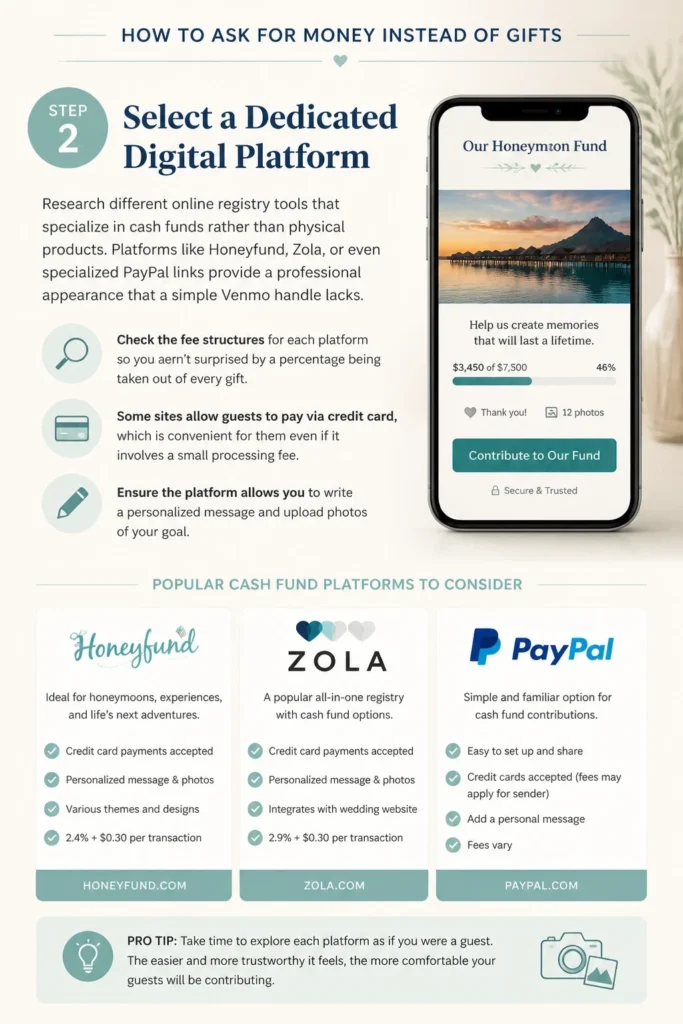
Platforms like Honeyfund, Zola, or even specialized PayPal links provide a professional appearance that a simple Venmo handle lacks.
Check the fee structures for each platform so you aren’t surprised by a percentage being taken out of every gift.
Some sites allow guests to pay via credit card, which is convenient for them even if it involves a small processing fee.
Ensure the platform allows you to write a personalized message and upload photos of your goal.
Step 3: Create a Small Traditional Registry
Select about ten to fifteen physical items that you genuinely need or want to upgrade in your home.
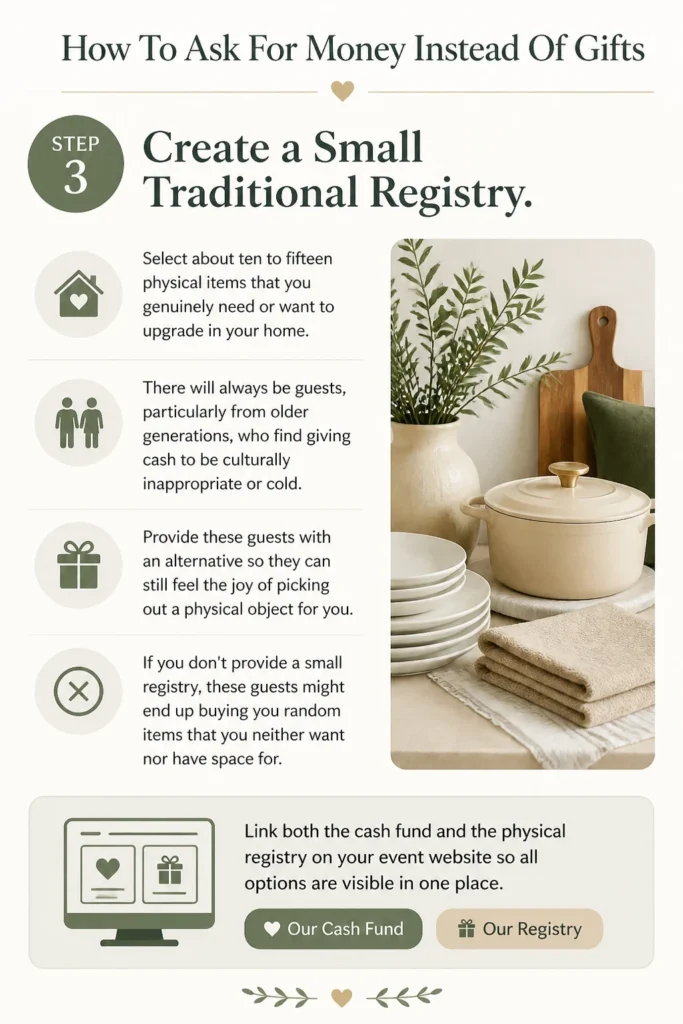
There will always be guests, particularly from older generations, who find giving cash to be culturally inappropriate or cold.
Provide these guests with an alternative so they can still feel the joy of picking out a physical object for you.
If you don’t provide a small registry, these guests might end up buying you random items that you neither want nor have space for.
Link both the cash fund and the physical registry on your event website so all options are visible in one place.
Step 4: Draft Your Narrative Wording
Write a short, heartfelt explanation of why you are prioritizing experiences or long-term goals over physical items.

Use language that emphasizes that their presence is the most important gift, but if they wish to give, a contribution to your fund is appreciated.
Focus on the “we” rather than the “I” to show that this is a collective goal for your new chapter.
Try a phrase like, “We have been blessed with a home full of everything we need, so we are looking forward to building memories on our first trip as a married couple.”
Pro Tip: Avoid using poems unless they truly fit your personality; straightforward, sincere prose often lands much better with guests.
Step 5: Place the Information Strategically
Avoid putting your registry or cash fund information directly on the formal invitation card.
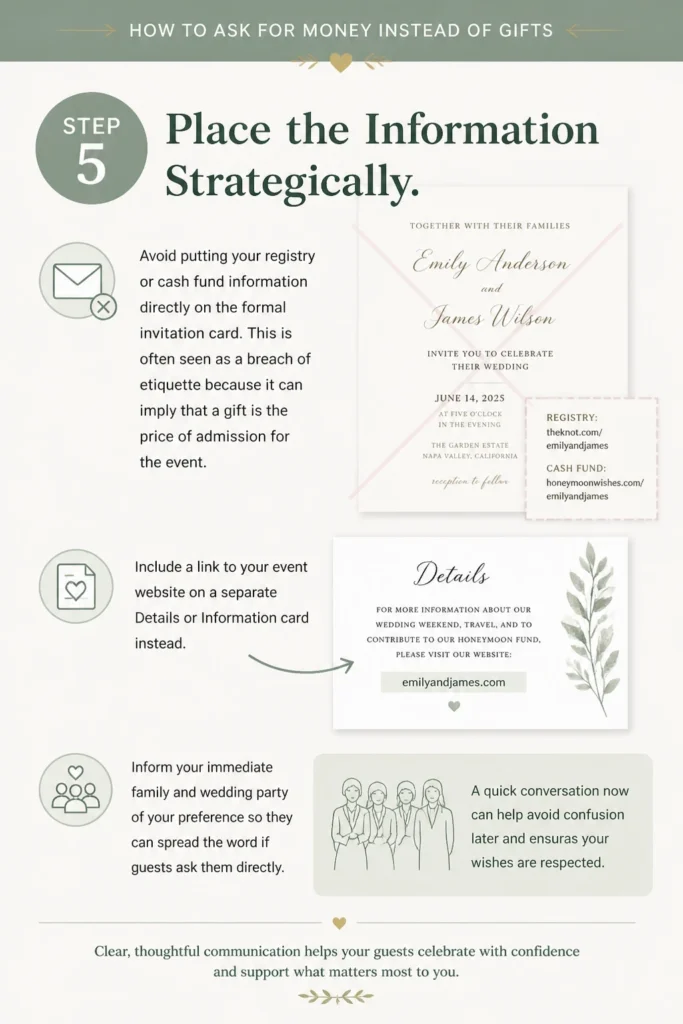
This is often seen as a breach of etiquette because it can imply that a gift is the “price of admission” for the event.
Include a link to your event website on a separate “Details” or “Information” card instead.
Your website is the perfect place to house the links to your cash fund and explain your story in more detail.
Inform your immediate family and wedding party of your preference so they can spread the word if guests ask them directly.
Step 6: Break Down Large Goals into Smaller Increments
Divide your total goal into smaller, “shoppable” chunks if your platform allows it.
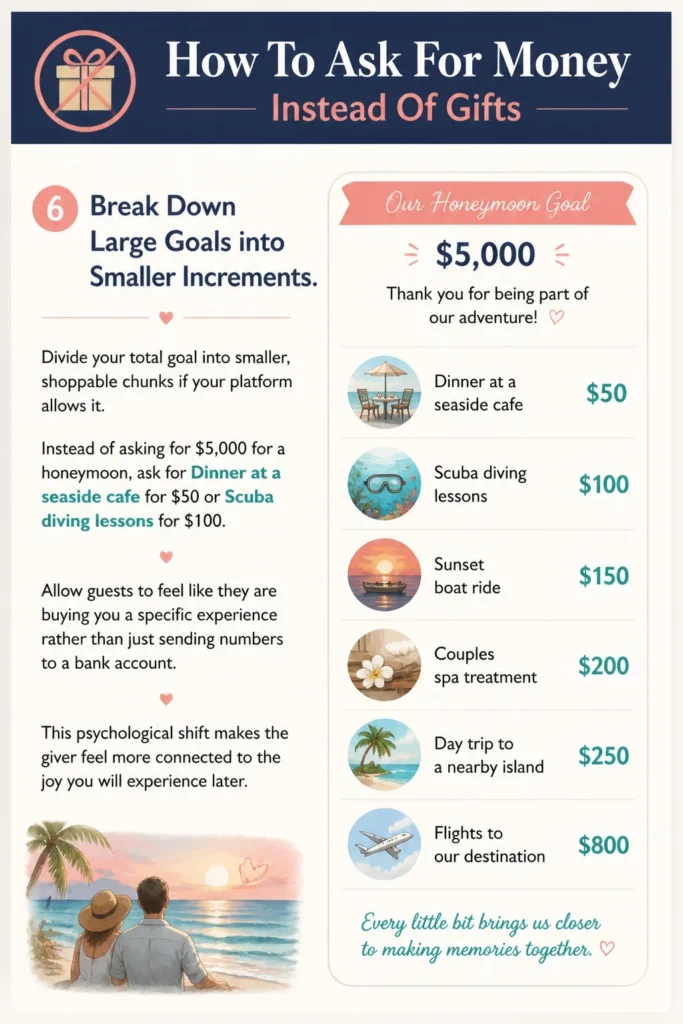
Instead of asking for $5,000 for a honeymoon, ask for “Dinner at a seaside cafe” for $50 or “Scuba diving lessons” for $100.
Allow guests to feel like they are buying you a specific experience rather than just sending numbers to a bank account.
This psychological shift makes the giver feel more connected to the joy you will experience later.
Step 7: Monitor and Secure Your Funds
Set up notifications so you know exactly when a gift has been made and by whom.
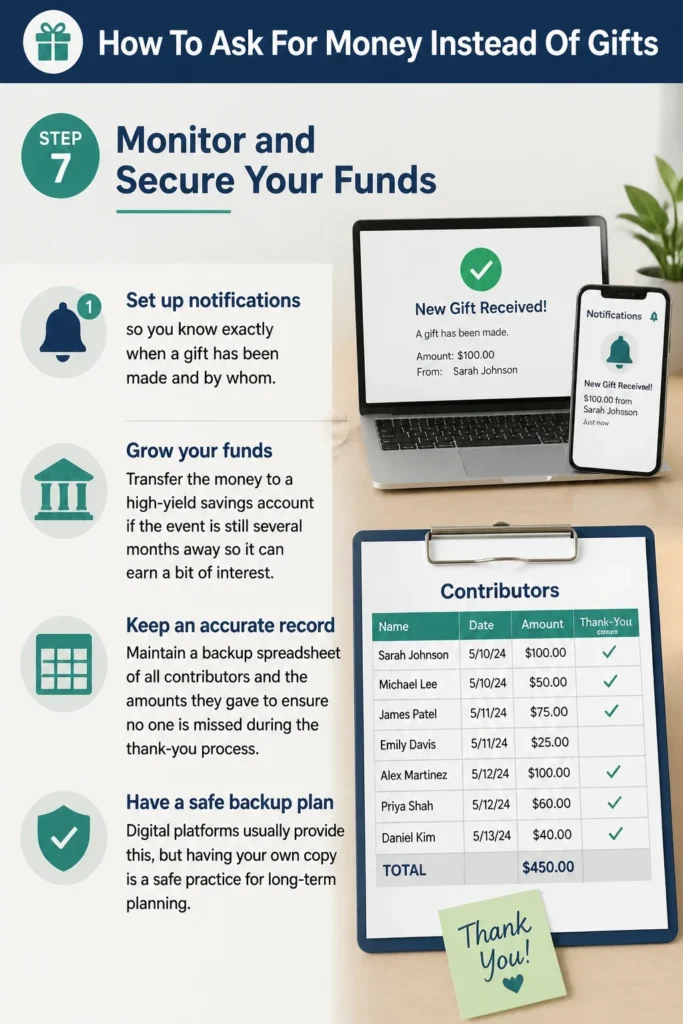
Transfer the money to a high-yield savings account if the event is still several months away so it can earn a bit of interest.
Maintain a backup spreadsheet of all contributors and the amounts they gave to ensure no one is missed during the thank-you process.
Digital platforms usually provide this, but having your own copy is a safe practice for long-term planning.
Step 8: Execute a High-Level Thank You Strategy
Send hand-written thank you notes within three months of receiving the gift.
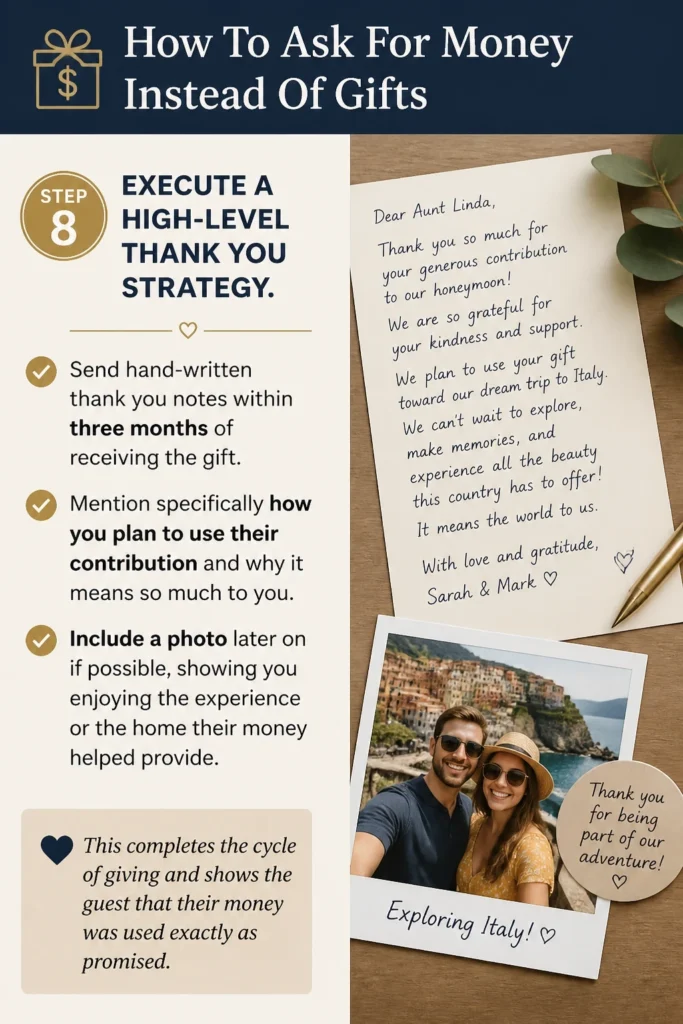
Mention specifically how you plan to use their contribution and why it means so much to you.
Include a photo later on if possible, showing you enjoying the experience or the home their money helped provide.
This completes the cycle of giving and shows the guest that their money was used exactly as promised.
Common Mistakes to Avoid
Being Too Demanding with Wording
Using phrases like “Cash Only” or “No Physical Gifts Please” can come across as entitled and cold. It ignores the fact that gift-giving is an emotional act for the sender. Always frame the request as a preference rather than a requirement to keep the atmosphere positive.
Asking for Money to Pay for the Event Itself
Requesting cash to cover the cost of the catering or the venue can make guests feel like they are subsidizing your party choices. It is better to ask for money toward future goals like a home or travel. This feels like an investment in your future rather than an invoice for your party.
Forgetting to Account for Platform Fees
Some people don’t realize that third-party sites take a cut of the transaction. If you aren’t careful, you might end up with 3% to 5% less than you expected. Read the fine print and decide if you want to absorb the fee or if the platform allows the guest to cover it.
Neglecting the “Traditionalist” Guests
Ignoring the fact that some people simply will not give cash is a recipe for receiving five slow cookers you don’t want. By not providing a small physical registry, you lose control over the items that enter your home. A small, curated list of physical items is your best defense against clutter.
Troubleshooting
The “Greedy” Feeling
It is common to feel a sense of guilt or awkwardness when asking for money. To overcome this, remember that most modern guests find cash gifts much easier to manage than shopping for physical items. You are actually saving them time and the stress of wondering if you already own a specific toaster.
Family Pushback
If a parent or close relative insists that asking for money is rude, listen to their concerns without getting defensive. Explain your financial goals clearly and show them the “shoppable experiences” you’ve created. Often, seeing that the money is for a “Cooking Class in Italy” rather than “Rent” helps them feel more comfortable.
Technical Issues for Guests
Some guests may struggle with digital payment platforms or feel uncomfortable putting their credit card info online. Always have a physical “card box” at your event for those who prefer to bring a check or cash in a traditional envelope. Mentioning that “cards are welcome at the event” on your website covers this base perfectly.
Key Takeaways
- Always provide a clear, exciting reason for why you are requesting cash.
- Use a professional digital platform to keep transactions organized and secure.
- Offer a small physical registry for guests who prefer traditional gift-giving.
- Never put registry information on the formal invitation; use a website instead.
- Write specific, personalized thank you notes that reference the gift’s impact.
- Break large goals into smaller, descriptive experiences to make giving more personal.
Frequently Asked Questions
Is it ever okay to put my Venmo handle on the invitation?
In most formal settings, putting a Venmo handle on an invitation is considered too casual and can be perceived as tacky. It is much better to link to a wedding or event website where the Venmo handle is listed alongside a polite explanation. This adds a layer of social cushioning that makes the request feel less like a transaction.
What if I don’t have a specific goal like a house or a honeymoon?
Even if you are just looking to build your general savings, try to find a “theme” for your request. You could call it a “New Beginnings Fund” or a “Rainy Day Nest Egg.” Giving it a name helps guests feel like they are contributing to your stability and future security rather than just paying your monthly bills.
How much money should I expect to lose in fees?
Most platforms charge between 2.5% and 3.5% per transaction for credit card processing. Some sites charge an additional service fee on top of that. Always check the “Pricing” page of any registry site before committing your guest list to it so you can calculate the potential impact on your total.
Can I ask for money for a birthday or graduation too?
Yes, the same principles apply to any major life event. The key is to emphasize the milestone and the future goal. For a graduation, you might mention a “Relocation Fund” for moving to a new city for work. For a birthday, a “Hobby Fund” for a specific interest like photography or woodworking works well.
Our Top Recommended Finds
- Premium Card Box: A secure and stylish way to collect physical envelopes and checks at your event.
- High-Quality Stationery Set: Essential for writing those personalized thank you notes that make guests feel appreciated.
- Personal Finance Planner: A great tool to help you track and allocate the funds you receive toward your stated goals.
Taking the Next Step Toward Your Goals
Now that you have a plan for your request, it is time to look at your long-term financial strategy.
Consider looking into high-yield savings accounts or basic investment vehicles where you can park your gift money while you wait to use it.
You might also want to explore how to create a beautiful event website that tells your story effectively.
Start by drafting your wording today and see how it feels when you read it out loud to a trusted friend.
The sooner you set up your system, the more time you have to refine your message and ensure your guests feel honored to support your journey.
Wedding Planning
No fluff, no drama. Just easy weekly advice, planning shortcuts, and gentle reminders to help you actually enjoy your engagement.