💍 How To Do A Wedding On A Small Budget
Wedding Planning
No fluff, no drama. Just easy weekly advice, planning shortcuts, and gentle reminders to help you actually enjoy your engagement.
Planning a wedding can feel like a full-time job that requires a lottery win to fund.
When my partner and I got engaged, we realized very quickly that the “average” wedding cost more than our car.
I spent months testing every cost-cutting strategy possible to host a beautiful day without starting our marriage in debt, and this guide shares exactly how we did it.
Quick Overview
This guide will help you navigate the complex world of wedding planning while keeping your bank account intact.
- Time needed: 6 to 12 months for optimal savings
- Difficulty: Intermediate
- What you’ll need: A spreadsheet, a firm guest list, a clear vision, and a little bit of creativity
Step-by-Step Instructions
Step 1: Identify Your Top Three Priorities
Sit down with your partner and decide what truly matters to both of you for the big day.
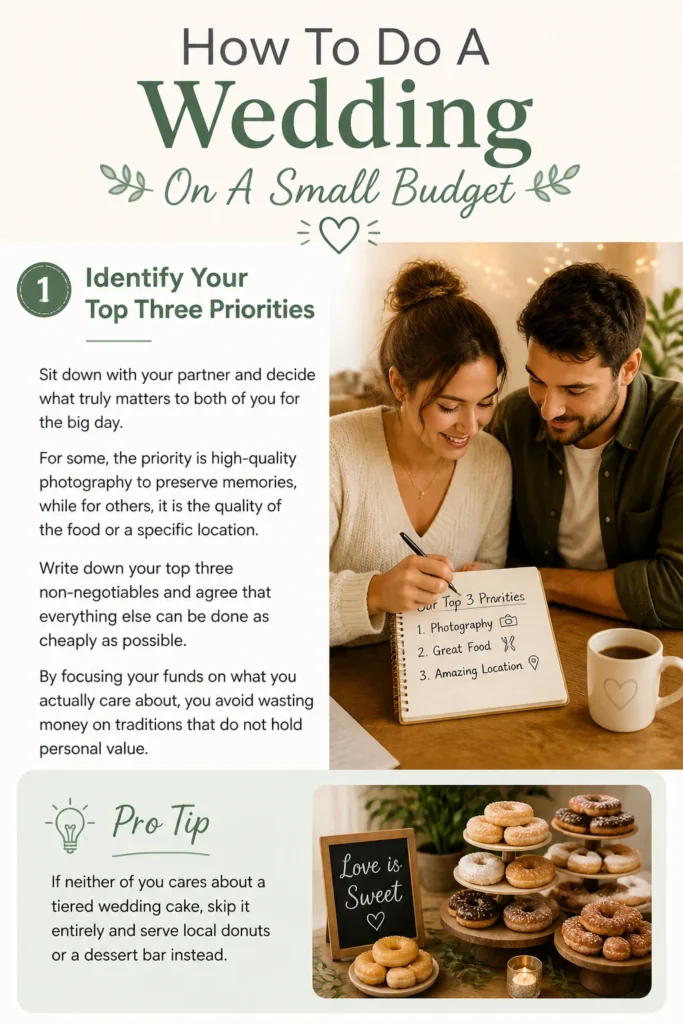
For some, the priority is high-quality photography to preserve memories, while for others, it is the quality of the food or a specific location.
Write down your top three non-negotiables and agree that everything else can be done as cheaply as possible.
By focusing your funds on what you actually care about, you avoid wasting money on traditions that do not hold personal value.
Pro Tip: If neither of you cares about a tiered wedding cake, skip it entirely and serve local donuts or a dessert bar instead.
Step 2: Shrink Your Guest List With Strategy
Calculate the cost per person by dividing your total catering and venue quote by your guest count.
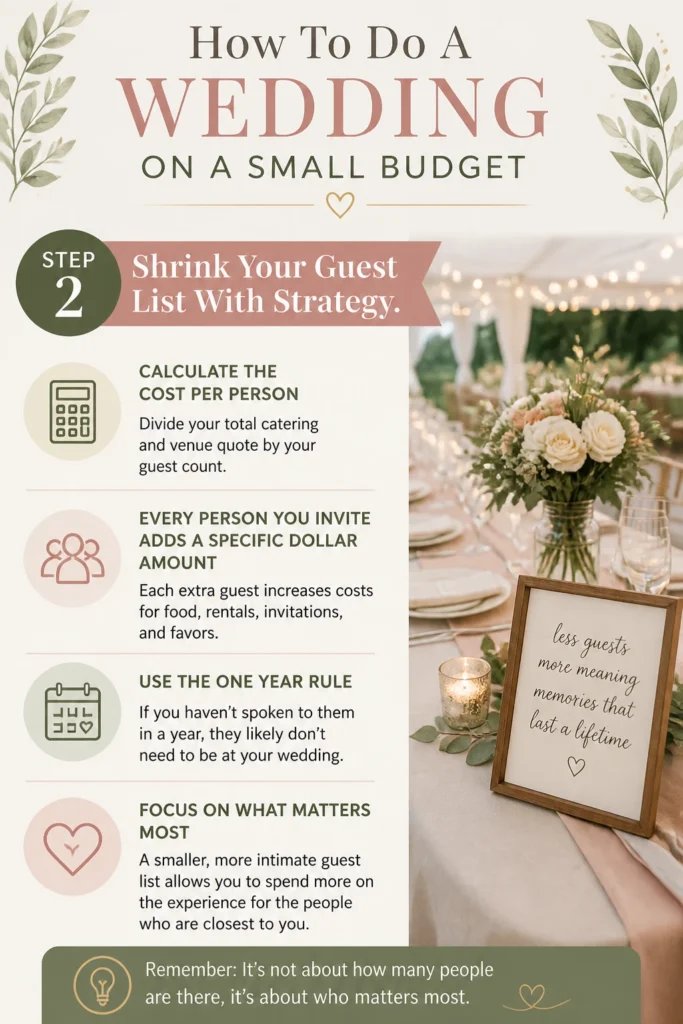
Every person you invite adds a specific dollar amount for food, rentals, invitations, and favors.
Use the “One Year Rule” to decide who makes the cut: if you haven’t spoken to them in a year, they likely don’t need to be at your wedding.
A smaller, more intimate guest list allows you to spend more on the experience for the people who are closest to you.
Step 3: Hunt For Non-Traditional Venues
Look beyond traditional wedding halls which often come with “wedding taxes” or high markups.
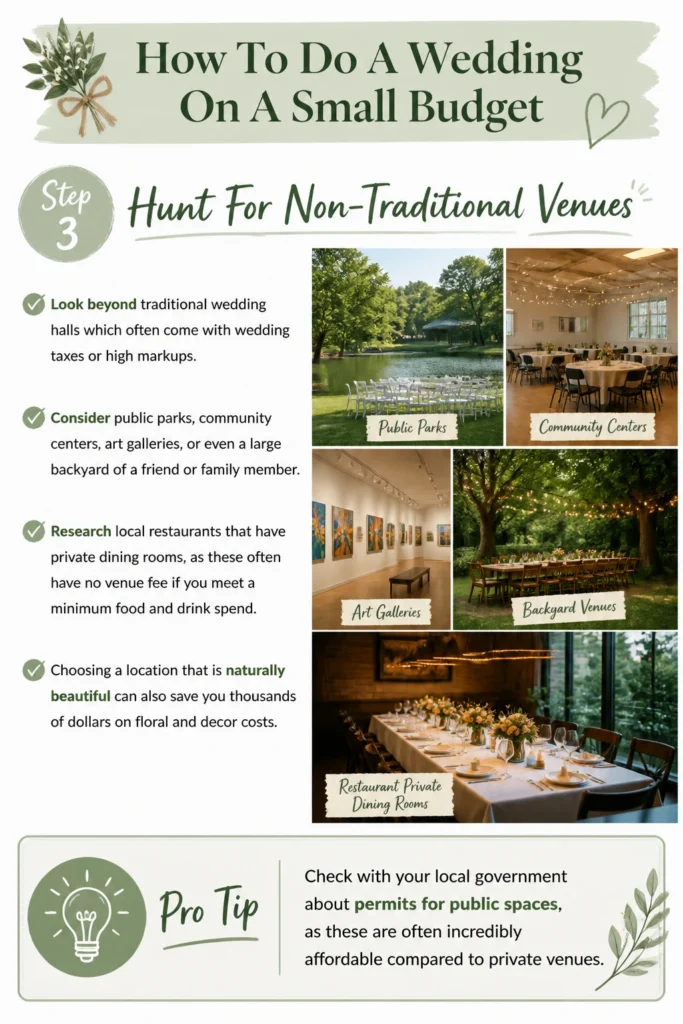
Consider public parks, community centers, art galleries, or even a large backyard of a friend or family member.
Research local restaurants that have private dining rooms, as these often have no venue fee if you meet a minimum food and drink spend.
Choosing a location that is naturally beautiful can also save you thousands of dollars on floral and decor costs.
Pro Tip: Check with your local government about permits for public spaces, as these are often incredibly affordable compared to private venues.
Step 4: Shift Your Timing To Off-Peak Hours
Avoid Saturday nights during the peak summer months, as this is when demand and prices are at their highest.
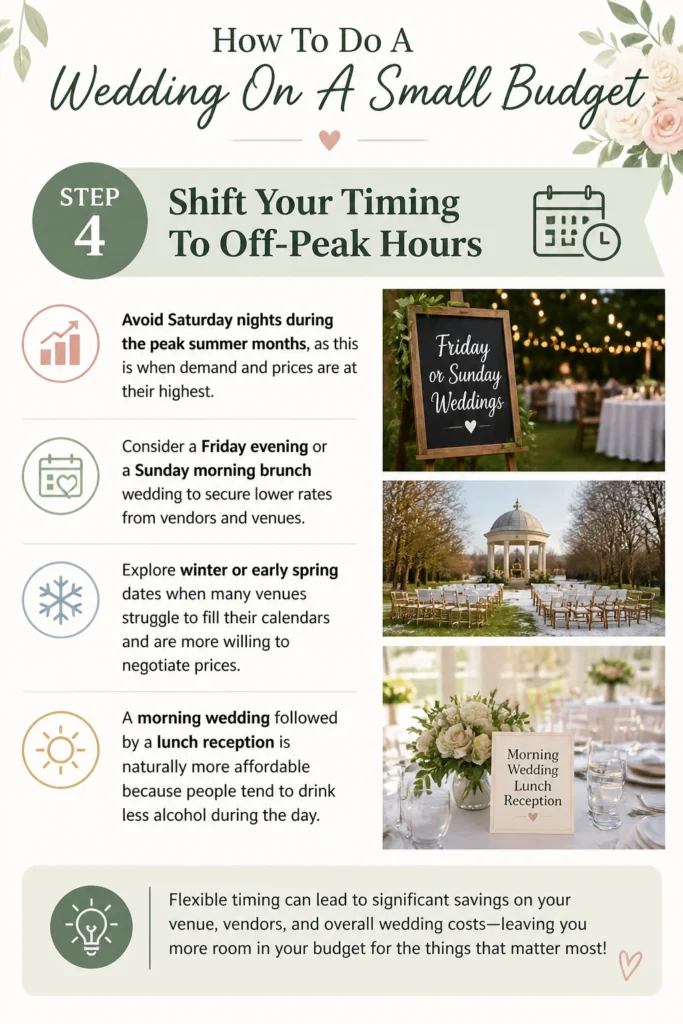
Consider a Friday evening or a Sunday morning brunch wedding to secure lower rates from vendors and venues.
Explore winter or early spring dates when many venues struggle to fill their calendars and are more willing to negotiate prices.
A morning wedding followed by a lunch reception is naturally more affordable because people tend to drink less alcohol during the day.
Step 5: Embrace The Digital Invitation Era
Skip the expensive paper suites, inner envelopes, and high-cost postage fees.
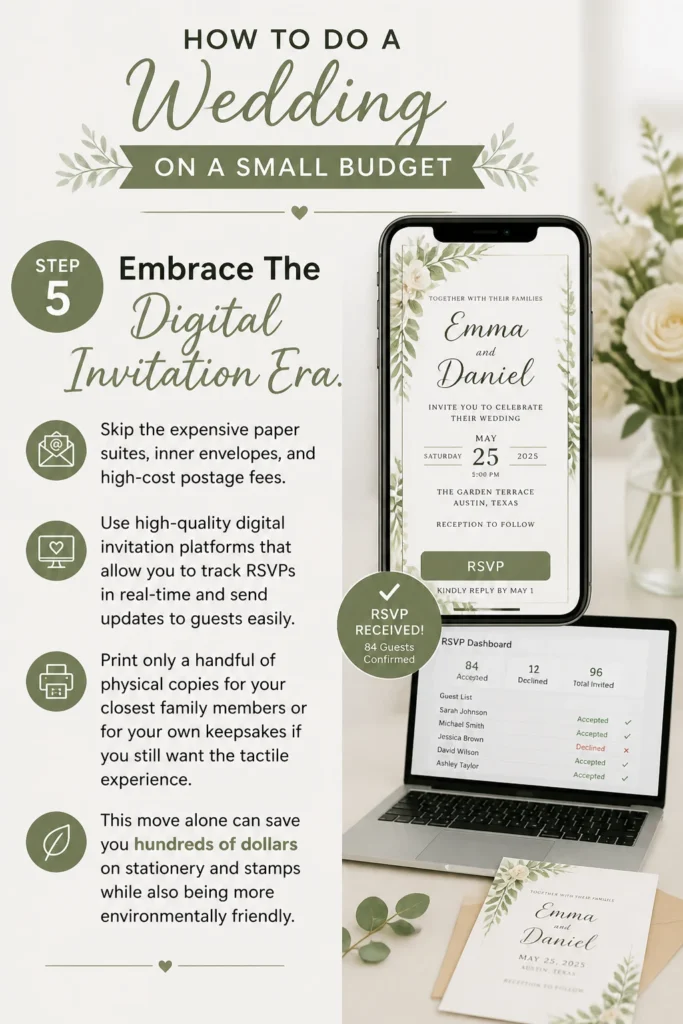
Use high-quality digital invitation platforms that allow you to track RSVPs in real-time and send updates to guests easily.
Print only a handful of physical copies for your closest family members or for your own keepsakes if you still want the tactile experience.
This move alone can save you hundreds of dollars on stationery and stamps while also being more environmentally friendly.
Step 6: Rethink Your Catering Style
Move away from the traditional three-course plated meal, which requires a large serving staff and expensive kitchen equipment.
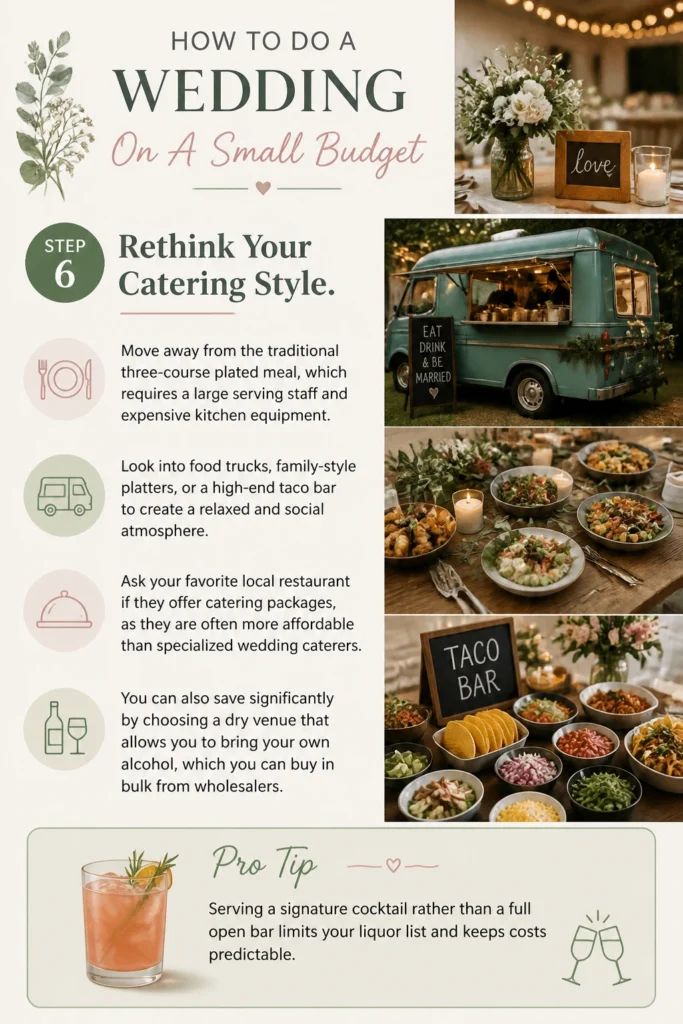
Look into food trucks, family-style platters, or a high-end taco bar to create a relaxed and social atmosphere.
Ask your favorite local restaurant if they offer catering packages, as they are often more affordable than specialized wedding caterers.
You can also save significantly by choosing a “dry” venue that allows you to bring your own alcohol, which you can buy in bulk from wholesalers.
Pro Tip: Serving a signature cocktail rather than a full open bar limits your liquor list and keeps costs predictable.
Step 7: Source Attire From Alternative Places
Shop at sample sales, consignment shops, or online marketplaces where brides sell their once-worn gowns for a fraction of the retail price.
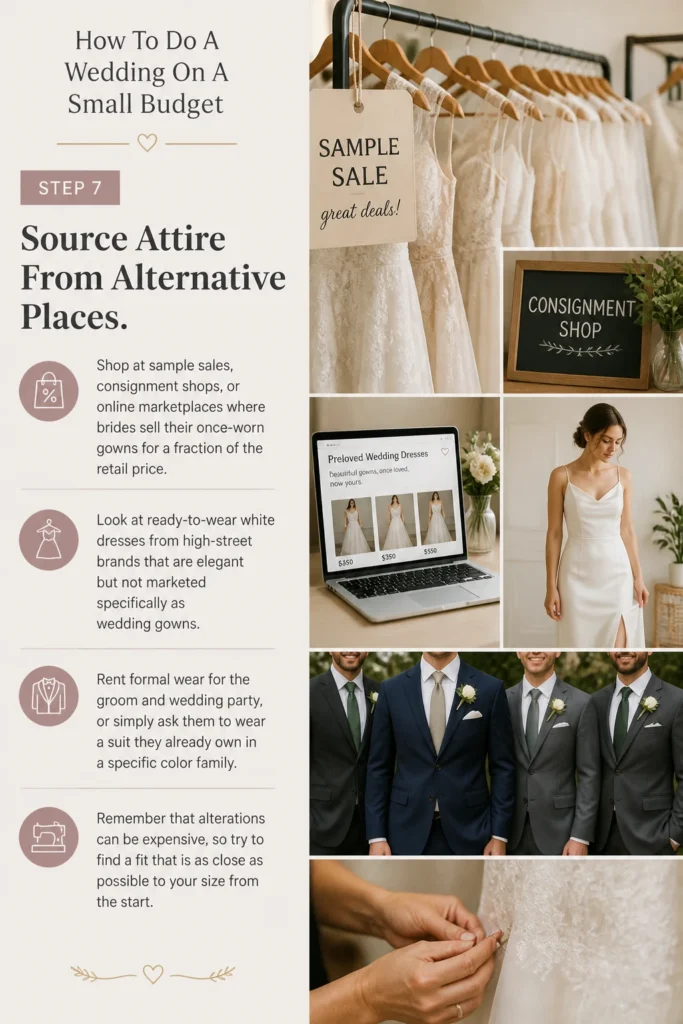
Look at “ready-to-wear” white dresses from high-street brands that are elegant but not marketed specifically as wedding gowns.
Rent formal wear for the groom and wedding party, or simply ask them to wear a suit they already own in a specific color family.
Remember that alterations can be expensive, so try to find a fit that is as close as possible to your size from the start.
Step 8: Simplify Your Floral Vision
Focus on greenery like eucalyptus or ferns, which are much cheaper than premium blooms like peonies or ranunculus.
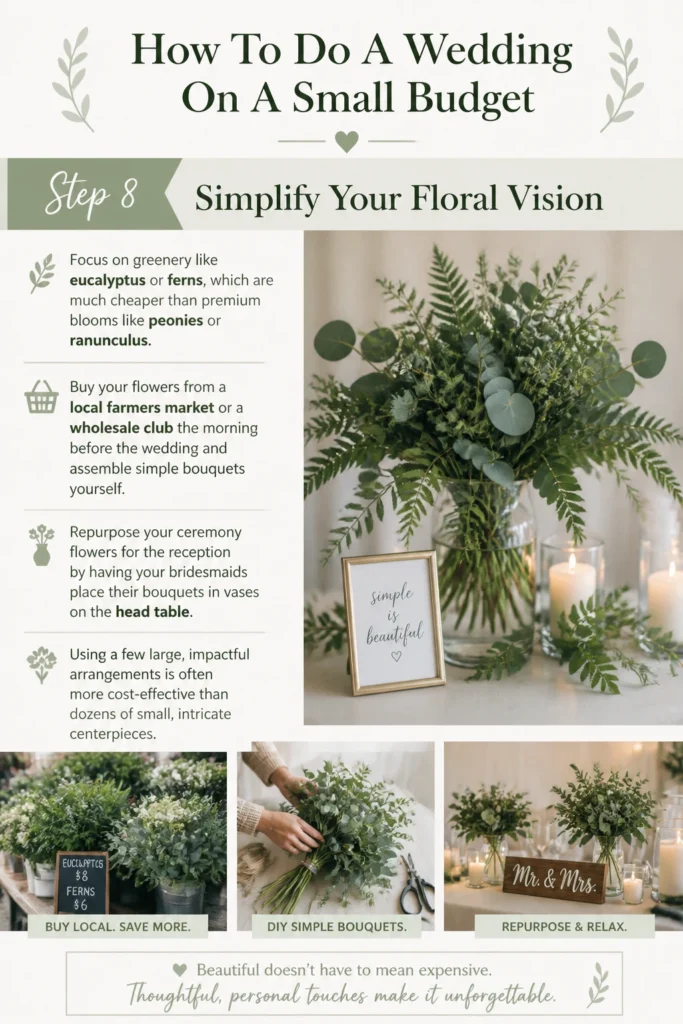
Buy your flowers from a local farmers market or a wholesale club the morning before the wedding and assemble simple bouquets yourself.
Repurpose your ceremony flowers for the reception by having your bridesmaids place their bouquets in vases on the head table.
Using a few large, impactful arrangements is often more cost-effective than dozens of small, intricate centerpieces.
Common Mistakes to Avoid
The DIY Overload Trap
Many couples think they will save money by doing everything themselves, from the cake to the music.
In reality, the cost of buying tools, supplies, and the value of your own time can often exceed the cost of hiring a professional.
Choose only one or two DIY projects that you actually enjoy and leave the high-stress tasks to the experts.
Ignoring The Hidden Costs
It is easy to forget about things like service fees, tips, sales tax, and delivery charges when looking at initial quotes.
These “extras” can add 20% to 30% to your total bill, which can lead to a massive budget shortfall at the end of the process.
Always ask for an “out-the-door” price that includes all taxes and gratuities before signing any contracts.
Buying Things You Will Never Use Again
Couples often spend a fortune on specific decor items, like 100 gold birdcages or custom signage, that have no life after the wedding.
This creates waste and drains your budget for items that only serve a purpose for five or six hours.
Try to rent these items or buy things that can double as home decor once the celebration is over.
Troubleshooting
Family Pressure To Expand The Guest List
This is one of the most common issues couples face when trying to stick to a small budget.
If parents are insisting on inviting extra people, explain clearly that your budget is fixed and each guest costs a specific amount.
You can offer them the option to pay for those extra guests themselves, or hold firm on your “No Plus One” policy for anyone not in a long-term relationship.
Vendors Charging A “Wedding Premium”
If you notice prices jumping as soon as you mention the word “wedding,” try phrasing your inquiries differently.
When looking for a photographer or a baker, ask for quotes for a “family celebration” or a “formal dinner party” first to see the baseline price.
However, be honest about the nature of the event before signing, as weddings often require more planning and insurance than a standard party.
Unexpected Weather For Outdoor Venues
Outdoor weddings are often cheaper, but they come with the risk of rain or extreme heat which can ruin the day.
Always have a “Plan B” that is already budgeted for, such as a tent rental or an indoor backup room at the venue.
If you don’t account for a backup plan in your initial budget, a last-minute tent rental can cost thousands of dollars and destroy your savings.
Key Takeaways
- Prioritize your spending on the three elements that matter most to you and your partner.
- Reduce your guest list to decrease the costs of food, rentals, and invitations.
- Opt for non-traditional venues and off-peak times to avoid the highest industry markups.
- Utilize digital tools and DIY projects sparingly to keep stationery and decor costs low.
- Purchase attire and alcohol through wholesalers, sales, or second-hand markets.
Frequently Asked Questions
What is a realistic budget for a small wedding?
A small wedding can be done for anywhere from $500 at a courthouse to $10,000 for a full celebration with 50 guests.
The “realistic” number depends entirely on your location and what you consider a necessity for the day.
How can I save money on a wedding photographer?
Look for talented “associate photographers” who work for larger studios or hire a professional for only 4 hours instead of the full day.
This allows you to capture the ceremony and the main portraits without paying for the late-night dancing coverage.
Is it okay to not have a wedding party?
Absolutely, and skipping bridesmaids and groomsmen can save you a significant amount of money on gifts, bouquets, and transportation.
It also reduces the stress of coordinating schedules and outfits for a large group of people.
Can I ask guests to pay for their own drinks?
While a “cash bar” is common in some regions, it can be polarizing for guests who expect hospitality at a wedding.
A better middle ground is offering a limited selection of free beer and wine while letting guests pay for their own hard liquor if they want it.
Our Top Recommended Finds
- Wedding Planning Spreadsheet Templates: These help you track every cent and avoid the “budget creep” that happens when you lose track of small purchases.
- High-Quality Sola Wood Flowers: These look like real flowers but are made of wood, meaning they are cheaper, won’t wilt, and can be kept forever.
- Digital Invitation Design Software: Using a professional template service allows you to create stunning digital invites that look expensive but cost very little.
Start Your Debt-Free Forever Today
Now that you have the framework for a budget-friendly wedding, it is time to start making those tough decisions.
Begin by opening a dedicated wedding savings account and setting a firm “ceiling” for your total spending.
Remember that the most important part of the day is the commitment you are making, not the height of the floral centerpieces.
Focus on the joy of the occasion, and you will find that a small budget often leads to a much more meaningful and intimate celebration.
Wedding Planning
No fluff, no drama. Just easy weekly advice, planning shortcuts, and gentle reminders to help you actually enjoy your engagement.