💍 How To Plan A Wedding In 3 Months

Wedding Planning
No fluff, no drama. Just easy weekly advice, planning shortcuts, and gentle reminders to help you actually enjoy your engagement.
Planning a wedding in 90 days might feel like a whirlwind, but it is entirely possible with the right strategy.
I once helped a couple pull off a stunning 150-guest event in just eight weeks after their original plans fell through.
This guide provides the exact roadmap we used to ensure every detail was perfect without the typical year-long stress.
Quick Overview
You are about to condense a year of planning into twelve highly productive weeks.
This process requires quick decision-making and a focus on what truly matters to you and your partner.
- Time needed: 12 weeks (3 months)
- Difficulty: Intermediate
- What you’ll need: A clear budget, a shared digital calendar, and a “can-do” attitude.
Step-by-Step Instructions
Step 1: Establish Your Hard Budget and Vision
Talk openly with your partner about the maximum amount you are willing to spend.
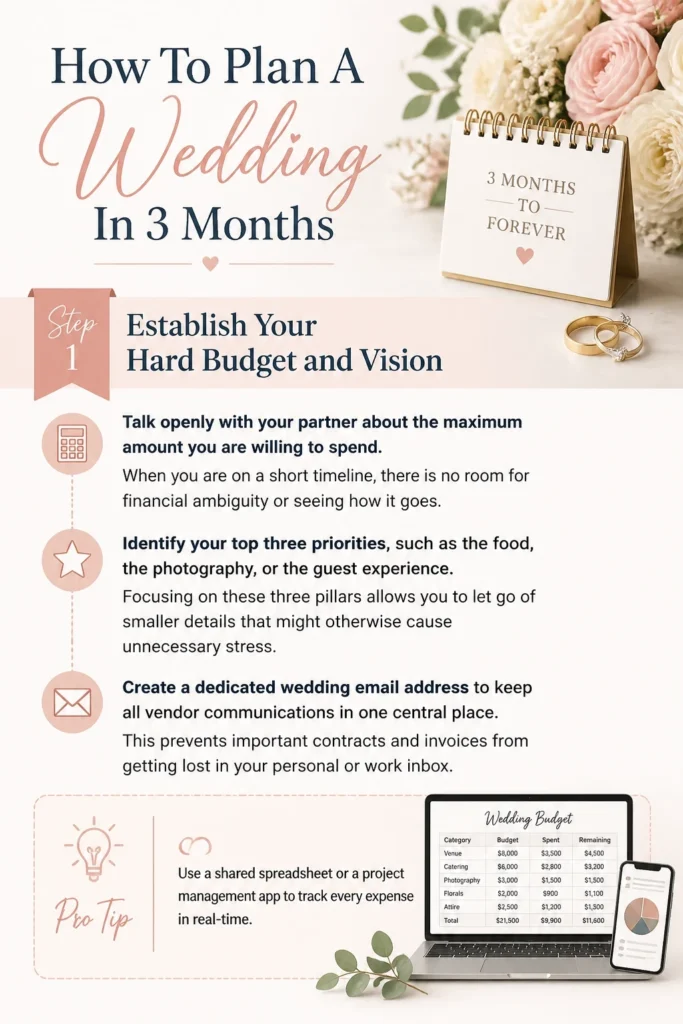
When you are on a short timeline, there is no room for financial ambiguity or “seeing how it goes.”
Identify your top three priorities, such as the food, the photography, or the guest experience.
Focusing on these three pillars allows you to let go of smaller details that might otherwise cause unnecessary stress.
Create a dedicated wedding email address to keep all vendor communications in one central place.
This prevents important contracts and invoices from getting lost in your personal or work inbox.
Pro Tip: Use a shared spreadsheet or a project management app to track every expense in real-time.
Step 2: Secure Your Venue and Date
Look for non-traditional venues that might have more availability on short notice.
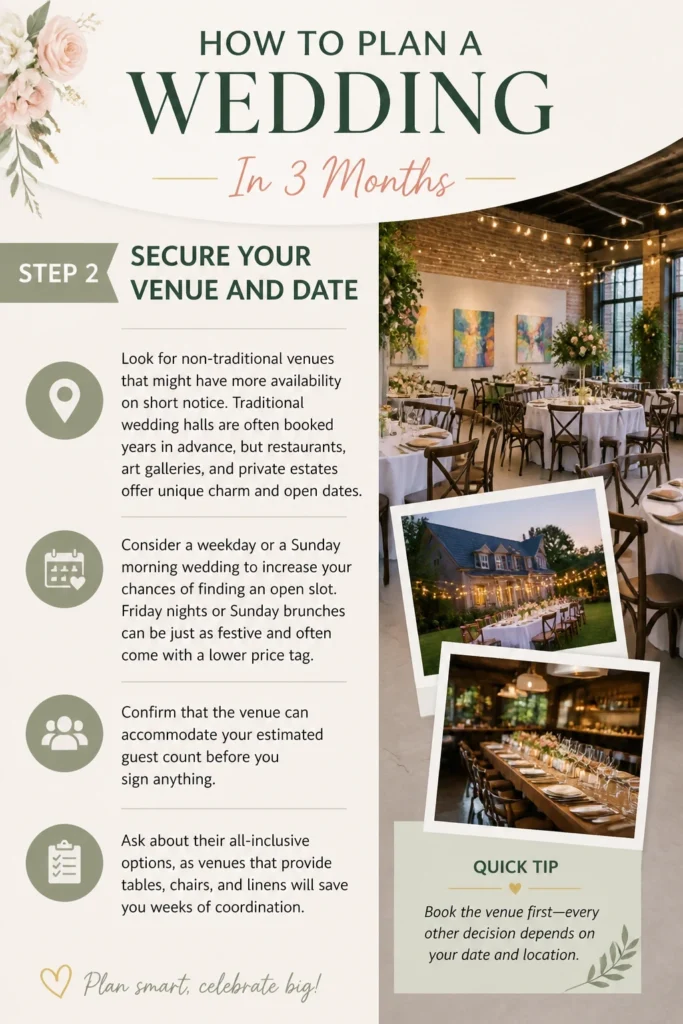
Traditional wedding halls are often booked years in advance, but restaurants, art galleries, and private estates offer unique charm and open dates.
Consider a weekday or a Sunday morning wedding to increase your chances of finding an open slot.
Friday nights or Sunday brunches can be just as festive and often come with a lower price tag.
Confirm that the venue can accommodate your estimated guest count before you sign anything.
Ask about their “all-inclusive” options, as venues that provide tables, chairs, and linens will save you weeks of coordination.
Step 3: Hire Your Essential Vendors
Reach out to photographers, officiants, and caterers immediately after your venue is locked in.
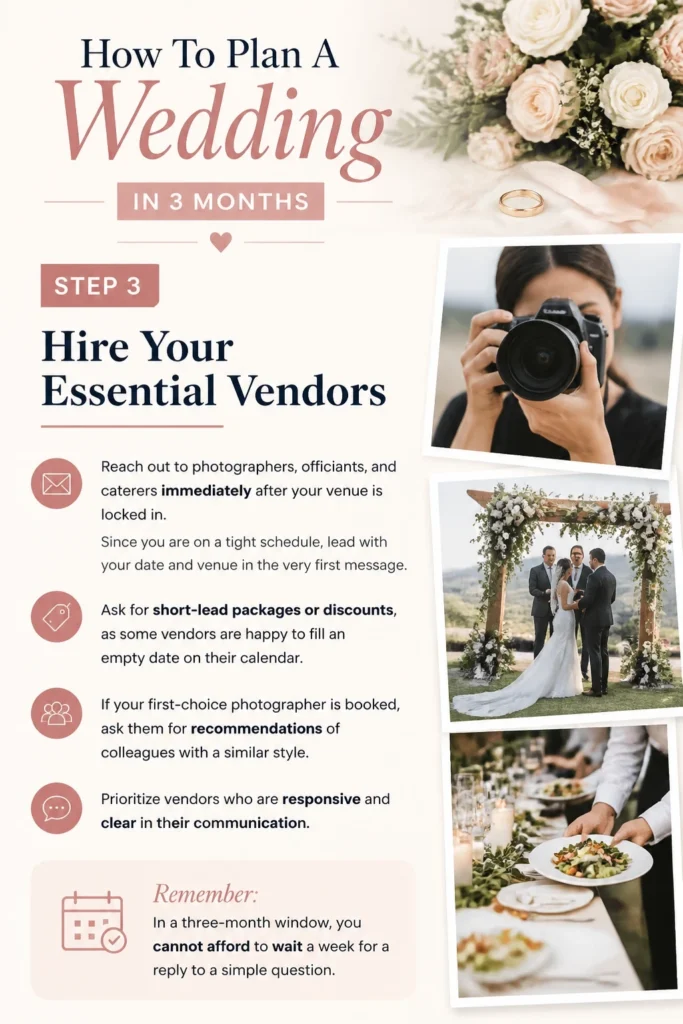
Since you are on a tight schedule, lead with your date and venue in the very first message.
Ask for “short-lead” packages or discounts, as some vendors are happy to fill an empty date on their calendar.
If your first-choice photographer is booked, ask them for recommendations of colleagues with a similar style.
Prioritize vendors who are responsive and clear in their communication.
In a three-month window, you cannot afford to wait a week for a reply to a simple question.
Step 4: Source Ready-to-Wear Attire
Avoid traditional bridal boutiques that require six to nine months for dress orders and fittings.
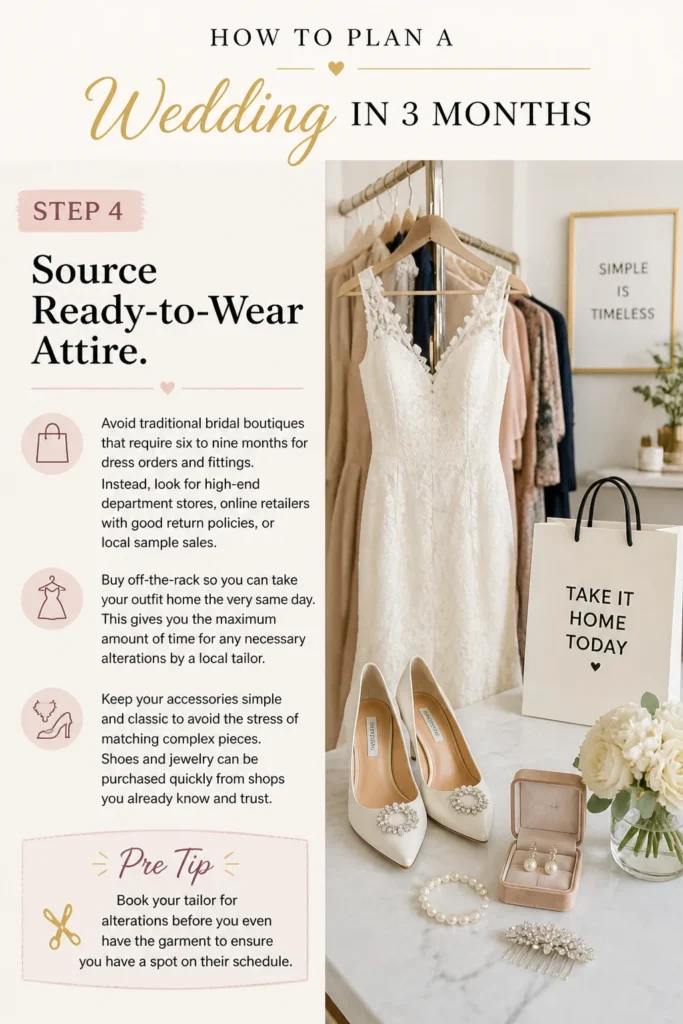
Instead, look for high-end department stores, online retailers with good return policies, or local sample sales.
Buy “off-the-rack” so you can take your outfit home the very same day.
This gives you the maximum amount of time for any necessary alterations by a local tailor.
Keep your accessories simple and classic to avoid the stress of matching complex pieces.
Shoes and jewelry can be purchased quickly from shops you already know and trust.
Pro Tip: Book your tailor for alterations before you even have the garment to ensure you have a spot on their schedule.
Step 5: Simplify Your Guest List and Invitations
Draft your guest list with a strict “A-list” only approach to keep the numbers manageable.
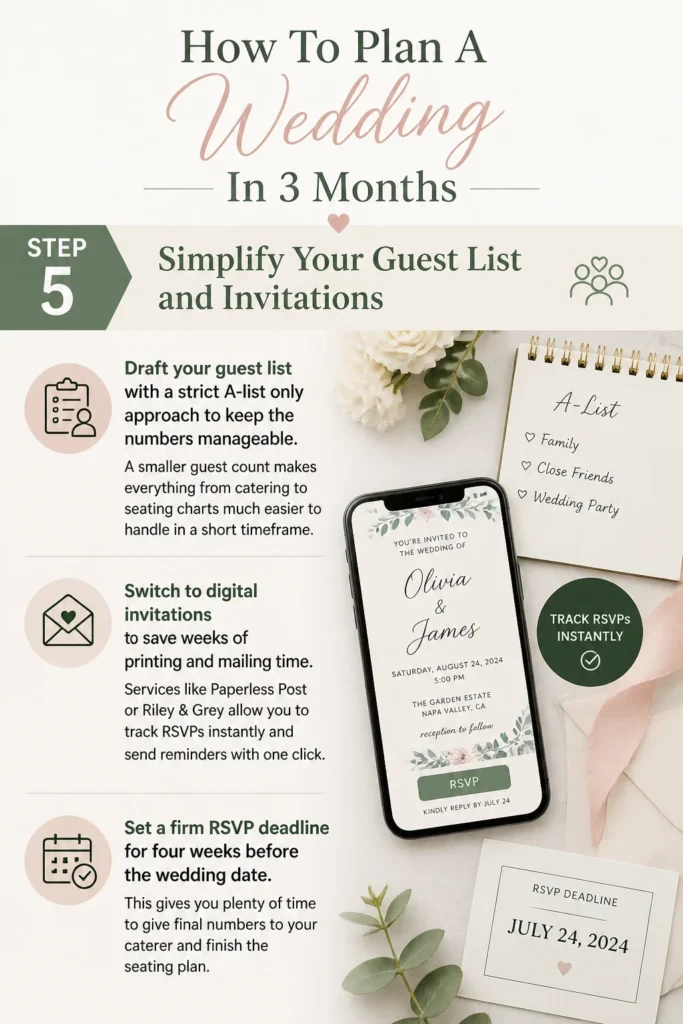
A smaller guest count makes everything from catering to seating charts much easier to handle in a short timeframe.
Switch to digital invitations to save weeks of printing and mailing time.
Services like Paperless Post or Riley & Grey allow you to track RSVPs instantly and send reminders with one click.
Set a firm RSVP deadline for four weeks before the wedding date.
This gives you plenty of time to give final numbers to your caterer and finish the seating plan.
Step 6: Plan a Streamlined Menu
Choose a catering style that is easy to execute, such as family-style platters or a sophisticated buffet.
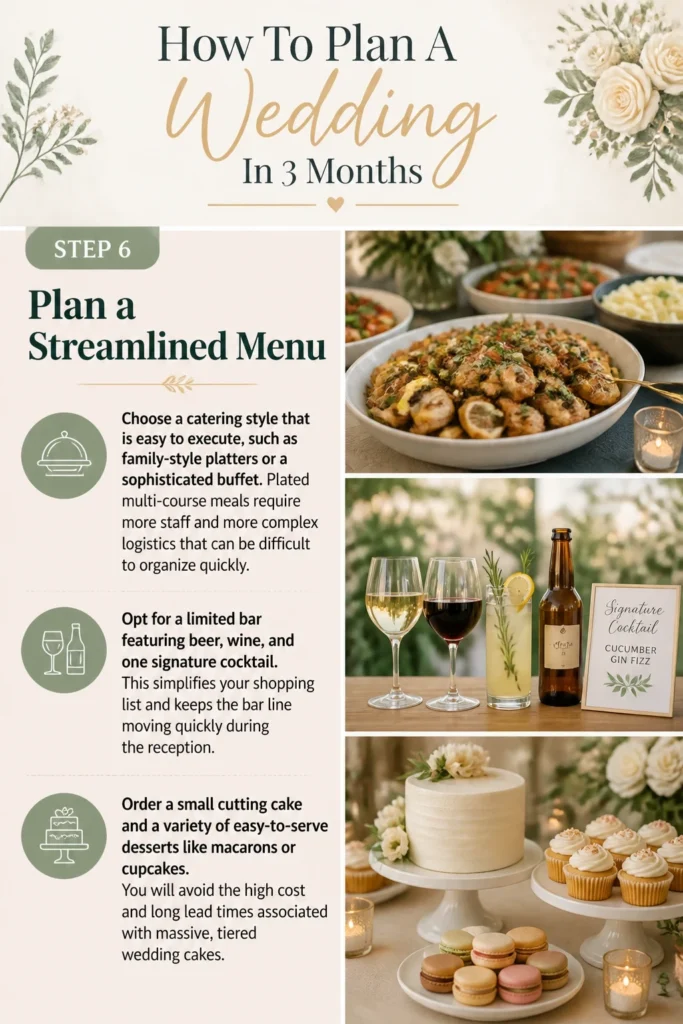
Plated multi-course meals require more staff and more complex logistics that can be difficult to organize quickly.
Opt for a limited bar featuring beer, wine, and one signature cocktail.
This simplifies your shopping list and keeps the bar line moving quickly during the reception.
Order a small cutting cake and a variety of easy-to-serve desserts like macarons or cupcakes.
You will avoid the high cost and long lead times associated with massive, tiered wedding cakes.
Step 7: Organize Your Legal Requirements
Research the specific marriage license requirements for your location right away.
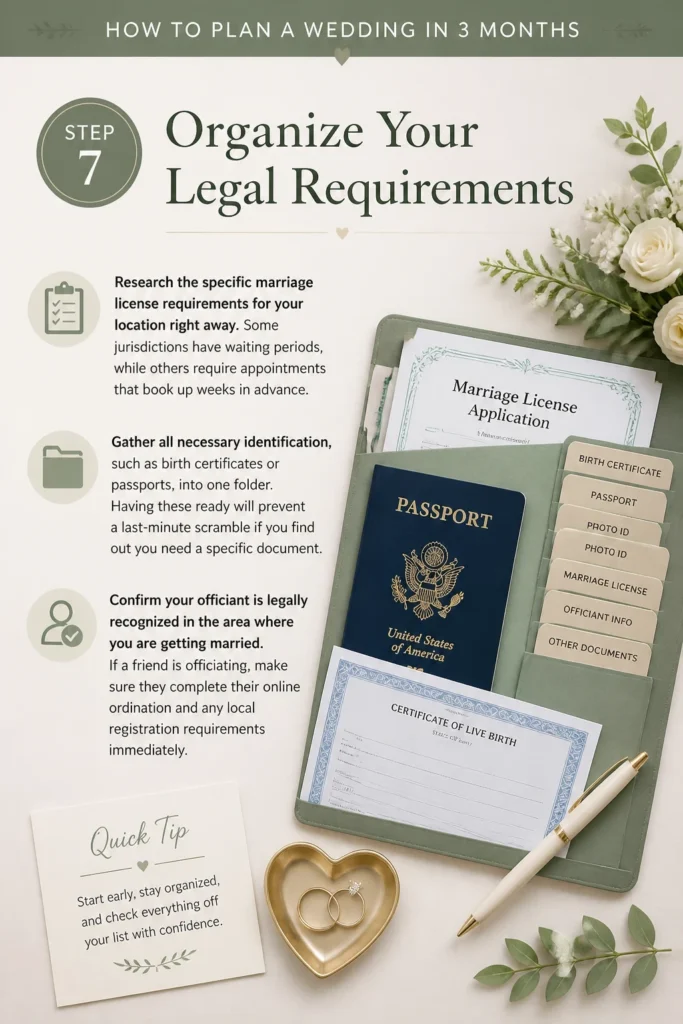
Some jurisdictions have waiting periods, while others require appointments that book up weeks in advance.
Gather all necessary identification, such as birth certificates or passports, into one folder.
Having these ready will prevent a last-minute scramble if you find out you need a specific document.
Confirm your officiant is legally recognized in the area where you are getting married.
If a friend is officiating, make sure they complete their online ordination and any local registration requirements immediately.
Step 8: Finalize the Day-Of Timeline
Create a minute-by-minute schedule for the wedding day, starting from when you wake up.
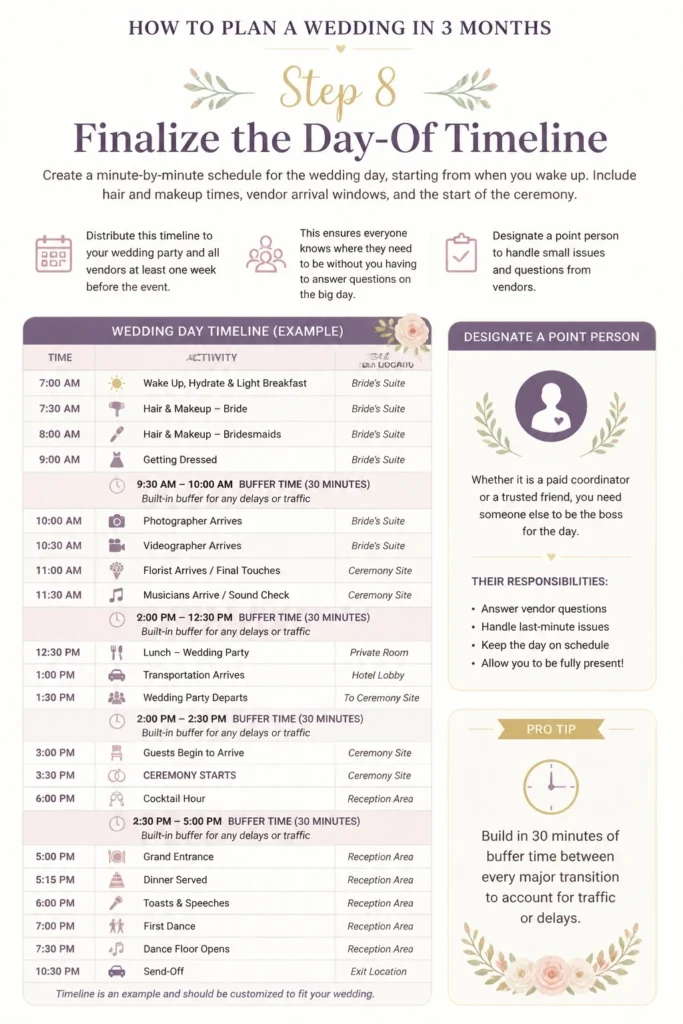
Include hair and makeup times, vendor arrival windows, and the start of the ceremony.
Distribute this timeline to your wedding party and all vendors at least one week before the event.
This ensures everyone knows where they need to be without you having to answer questions on the big day.
Designate a “point person” to handle small issues and questions from vendors.
Whether it is a paid coordinator or a trusted friend, you need someone else to be the boss for the day.
Pro Tip: Build in 30 minutes of “buffer time” between every major transition to account for traffic or delays.
Common Mistakes to Avoid
Trying to DIY Everything
When you have a year to plan, you can spend weekends making hand-poured candles or intricate centerpieces.
With only three months, DIY projects can quickly become a source of immense pressure and exhaustion.
Focus your energy on managing the big moving parts and pay professionals for the rest whenever possible.
Waiting for the “Perfect” Option
Analysis paralysis is the biggest enemy of a short-term wedding plan.
If you find a vendor or a dress that you like and it fits your budget, book it immediately.
Searching for something slightly better will cost you valuable time that you simply do not have.
Ignoring the Logistics of Travel
If you are inviting guests from out of town, they need as much notice as possible to book flights and hotels.
Waiting too long to send your digital invites might mean your favorite people cannot make it due to high travel costs.
Send a “Save the Date” email the moment your venue is confirmed to give them a head start.
Troubleshooting
Your Dream Venue is Booked
If your heart was set on a specific spot that is unavailable, look for adjacent options.
A nearby park, a stylish Airbnb with an event policy, or even a favorite local brewery can serve as a beautiful backdrop.
Often, these alternative spaces are more flexible with their rules and catering requirements.
A Key Vendor Cancels Last Minute
This is a nightmare scenario, but it is manageable if you stay calm and act fast.
Immediately check local wedding social media groups or reach out to your other vendors for referrals.
The wedding industry is a tight-knit community, and someone will usually step up to help a couple in a pinch.
Communication Breakdown with Your Partner
Stress can lead to arguments when you are making dozens of decisions every week.
Schedule a weekly “Wedding-Free Night” where you do not talk about the planning at all.
Remind yourselves that the goal is a happy marriage, not just a perfect one-day party.
Key Takeaways
- Move fast on the “Big Three”: Venue, Food, and Photography.
- Choose digital for invitations and RSVPs to save time and money.
- Buy off-the-rack clothing to avoid long manufacturing lead times.
- Keep it simple by limiting DIY projects and complex menu options.
- Stay organized with a central email and a shared digital calendar.
- Prioritize the legal aspects like marriage licenses early in the process.
Frequently Asked Questions
Can I still have a formal wedding in three months?
Yes, you can absolutely have a formal wedding, provided you are decisive with your choices.
You will need to choose a venue that already has a sophisticated atmosphere to minimize the need for extra decor.
Make sure to specify “Black Tie” or “Formal” on your digital invitations so guests have time to arrange their attire.
Is it more expensive to plan a wedding quickly?
It can be, as you might miss out on early-bird discounts or have to pay “rush” fees for certain services.
However, you can also save money by choosing off-peak dates or venues that are eager to fill their calendar.
The key is to stay disciplined with your budget and avoid impulse purchases driven by stress.
How do I handle the guest list without offending people?
Be honest and transparent with your friends and family about your short timeline.
Most people will understand that a three-month plan requires a more intimate gathering.
You can always host a larger, more casual celebration later in the year if you feel you missed someone.
Do I need a wedding planner for a 3-month timeline?
While not strictly necessary, a “Month-of Coordinator” can be a lifesaver for a short-term wedding.
They can take over the vendor communication in the final weeks, allowing you to enjoy the lead-up to your big day.
If a planner isn’t in the budget, lean on your most organized friends to help with specific tasks.
Our Top Recommended Finds
- A Comprehensive Wedding Planner Book: A physical binder helps you keep paper contracts and fabric swatches in one place.
- A High-Quality Handheld Steamer: Essential for smoothing out your off-the-rack attire on the morning of the wedding.
- A Portable Wedding Emergency Kit: Fill this with safety pins, stain removers, and aspirin to handle any small hiccups on the day.
Taking Your First Steps Today
The secret to a successful 90-day wedding plan is momentum.
Do not let the scale of the task overwhelm you; instead, focus on completing just one major item today.
Sit down with your partner this evening, set your budget, and start looking at venue availability online.
Once those first few pieces fall into place, the rest of the planning will feel much more manageable.
You are about to create a beautiful celebration of your love, and the shorter timeline simply means the excitement starts sooner.
Wedding Planning
No fluff, no drama. Just easy weekly advice, planning shortcuts, and gentle reminders to help you actually enjoy your engagement.