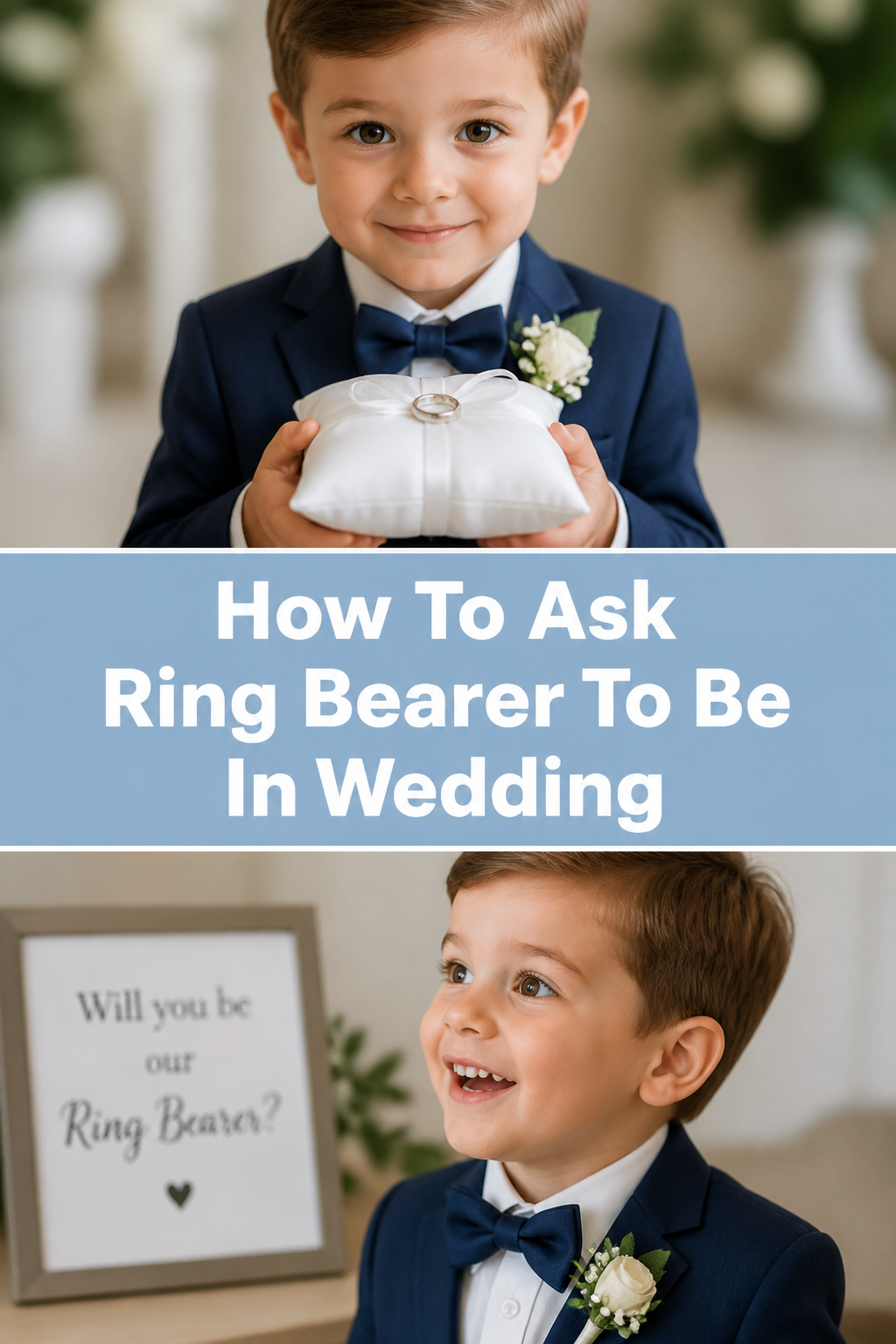
💍 How To Ask Ring Bearer To Be In Wedding

Wedding Planning
No fluff, no drama. Just easy weekly advice, planning shortcuts, and gentle reminders to help you actually enjoy your engagement.
I remember the look on my five-year-old nephew’s face when I handed him a “Ring Security” briefcase and asked him to join our wedding party.
He didn’t just say yes; he spent the next three months practicing his “tough guy” walk for the aisle.
Based on my experience as both a bride and a professional wedding coordinator, I have learned that asking a child to be your ring bearer requires a mix of fun, patience, and a little bit of bribery.
Quick Overview
Asking a ring bearer is one of the most lighthearted parts of wedding planning, but it still requires careful thought to ensure the child (and their parents) feel comfortable.
- Time needed: 1 to 2 weeks for planning and gift assembly
- Difficulty: Beginner
- What you’ll need: A small gift or “proposal” item, a clear explanation of the role, and parental permission.
Step-by-Step Instructions
Step 1: Consult the Parents First
Talk to the child’s parents before you mention anything to the child themselves.
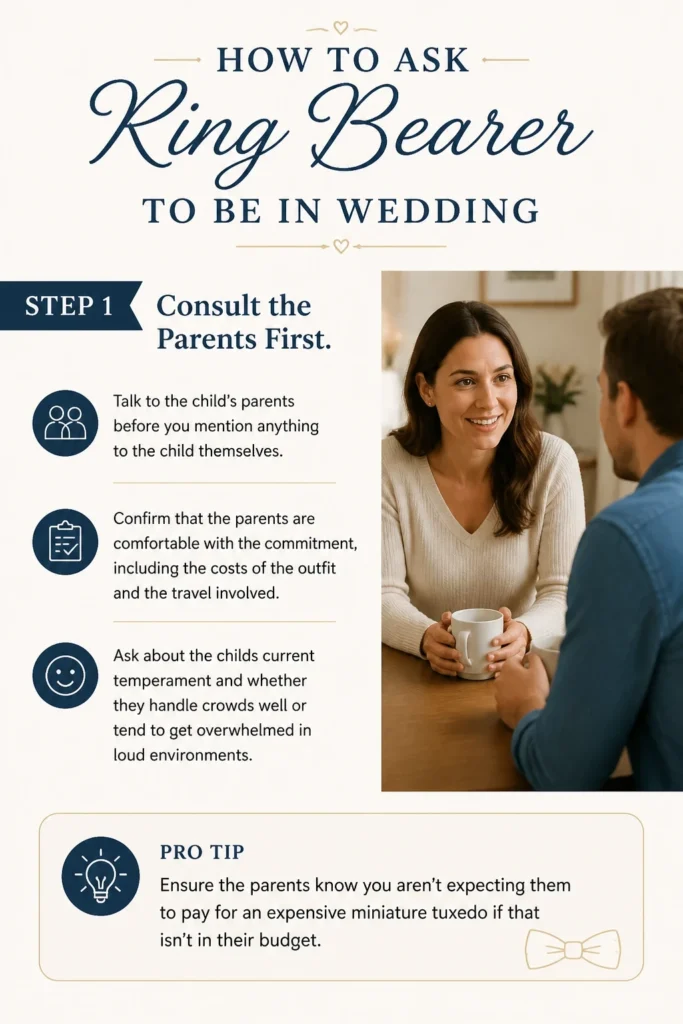
Confirm that the parents are comfortable with the commitment, including the costs of the outfit and the travel involved.
Ask about the child’s current temperament and whether they handle crowds well or tend to get overwhelmed in loud environments.
Pro Tip: Ensure the parents know you aren’t expecting them to pay for an expensive miniature tuxedo if that isn’t in their budget.
Step 2: Choose the Perfect Timing
Pick a time when the child is well-rested and fed, rather than right before naptime or after a long day at school.
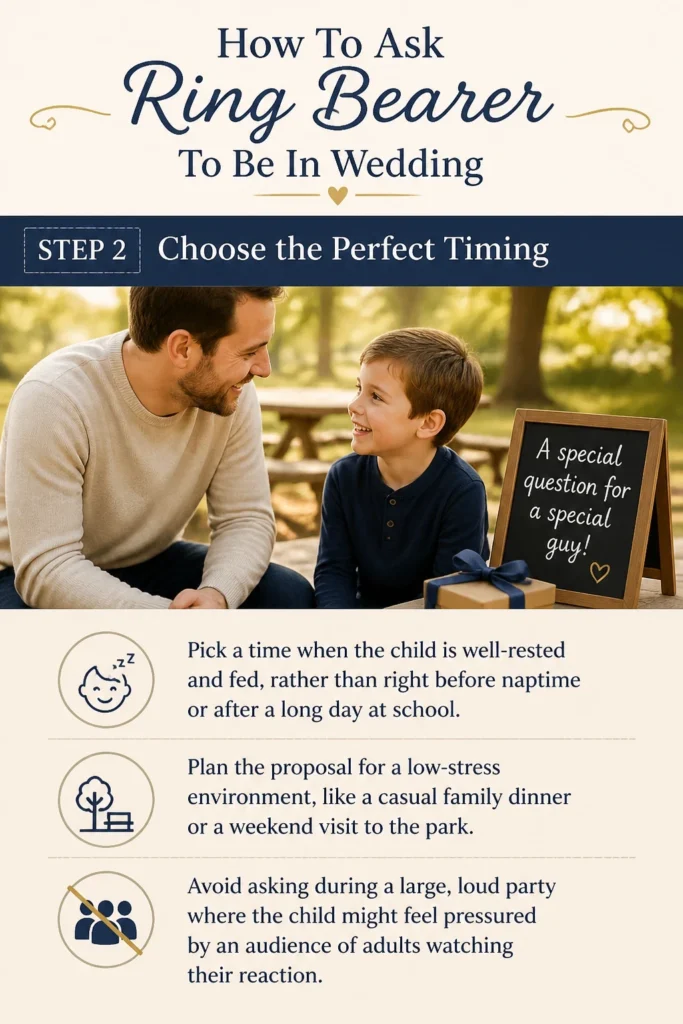
Plan the “proposal” for a low-stress environment, like a casual family dinner or a weekend visit to the park.
Avoid asking during a large, loud party where the child might feel pressured by an audience of adults watching their reaction.
Step 3: Select a Tangible Proposal Gift
Select a gift that makes the role feel like an important mission or an exciting new adventure.
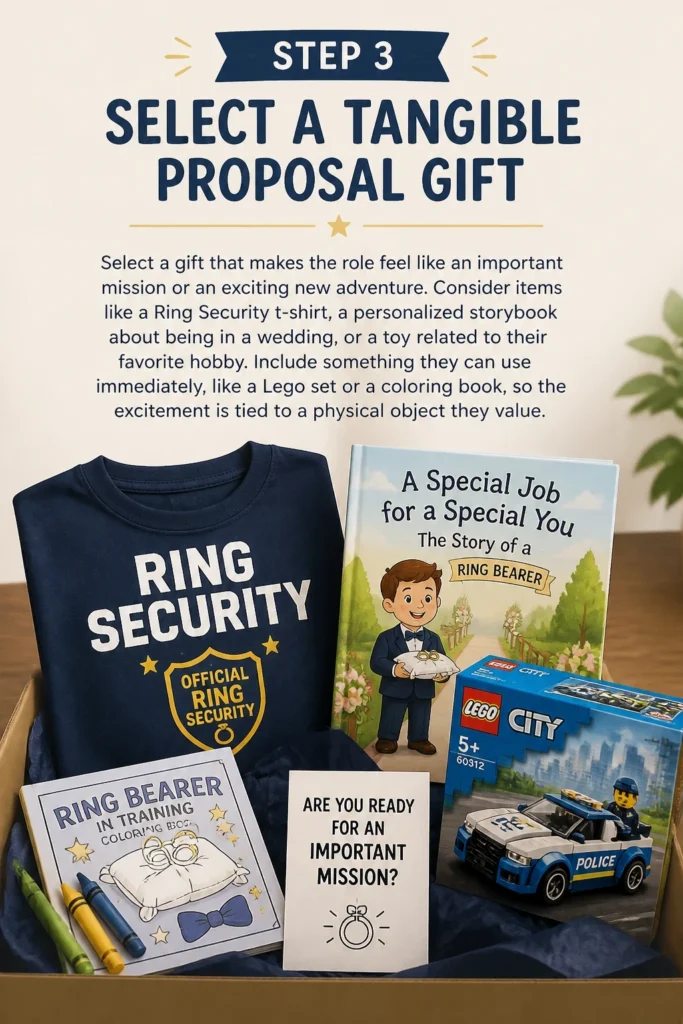
Consider items like a “Ring Security” t-shirt, a personalized storybook about being in a wedding, or a toy related to their favorite hobby.
Include something they can use immediately, like a Lego set or a coloring book, so the excitement is tied to a physical object they value.
Step 4: Keep the Explanation Simple
Explain the role in terms a child can understand, focusing on the “important job” they will have during the ceremony.
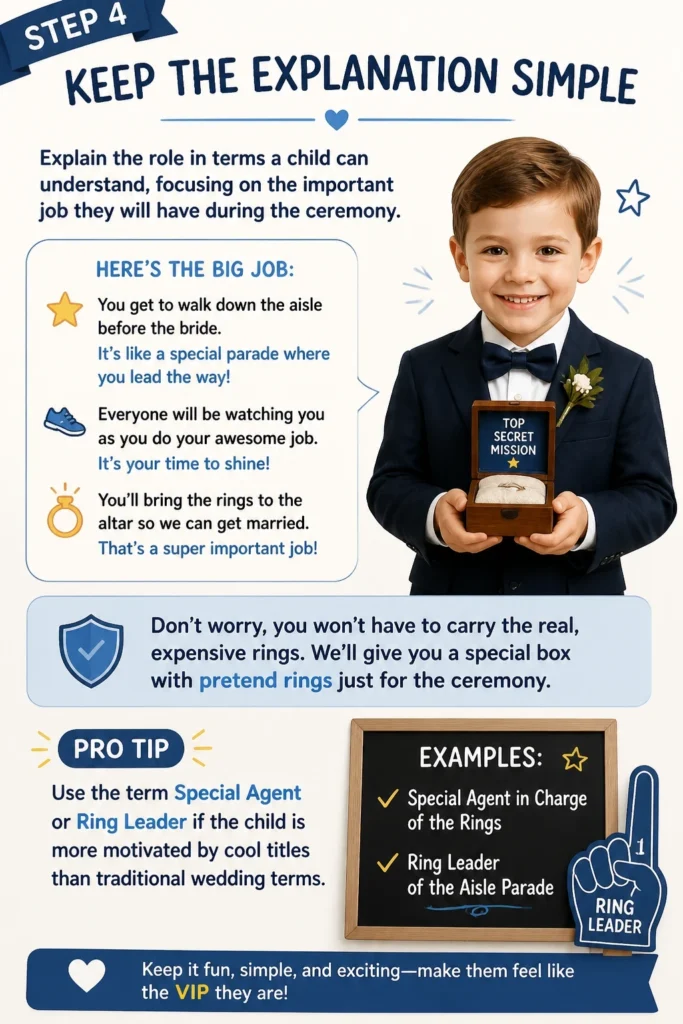
Describe the walk down the aisle as a special parade where they get to lead the way for the bride.
Reassure them that they won’t have to carry the real, expensive rings if that makes them or their parents nervous.
Pro Tip: Use the term “Special Agent” or “Ring Leader” if the child is more motivated by “cool” titles than traditional wedding terms.
Step 5: Ask the Question Directly
Get down on their eye level so you aren’t looming over them when you ask the big question.
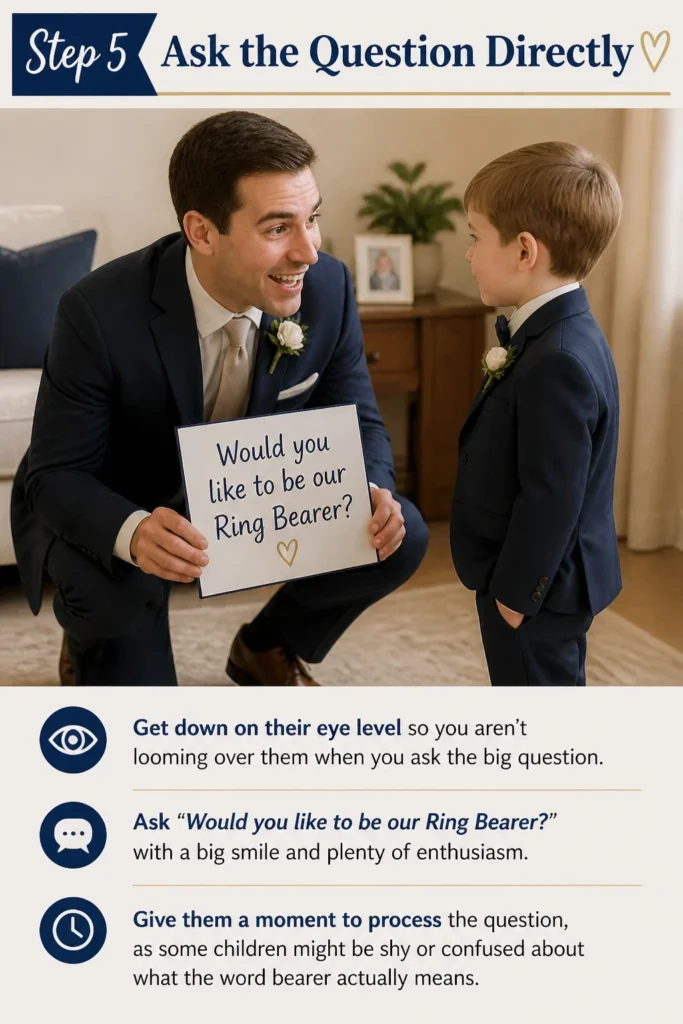
Ask “Would you like to be our Ring Bearer?” with a big smile and plenty of enthusiasm.
Give them a moment to process the question, as some children might be shy or confused about what the word “bearer” actually means.
Step 6: Show Them the Outfit
Show them a picture of what they might wear, especially if it involves fun accessories like sunglasses, a bowtie, or cool suspenders.
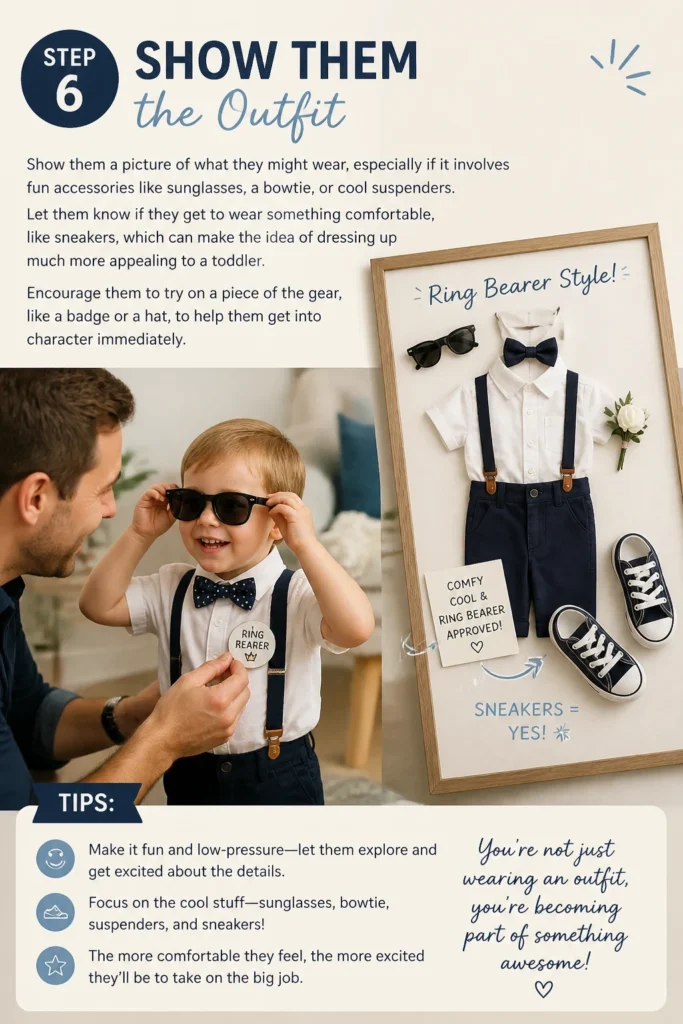
Let them know if they get to wear something comfortable, like sneakers, which can make the idea of “dressing up” much more appealing to a toddler.
Encourage them to try on a piece of the gear, like a badge or a hat, to help them get into character immediately.
Step 7: Discuss the “Bribe” or Reward
Mention that there will be a special treat or a fun dance party at the reception once their job is finished.
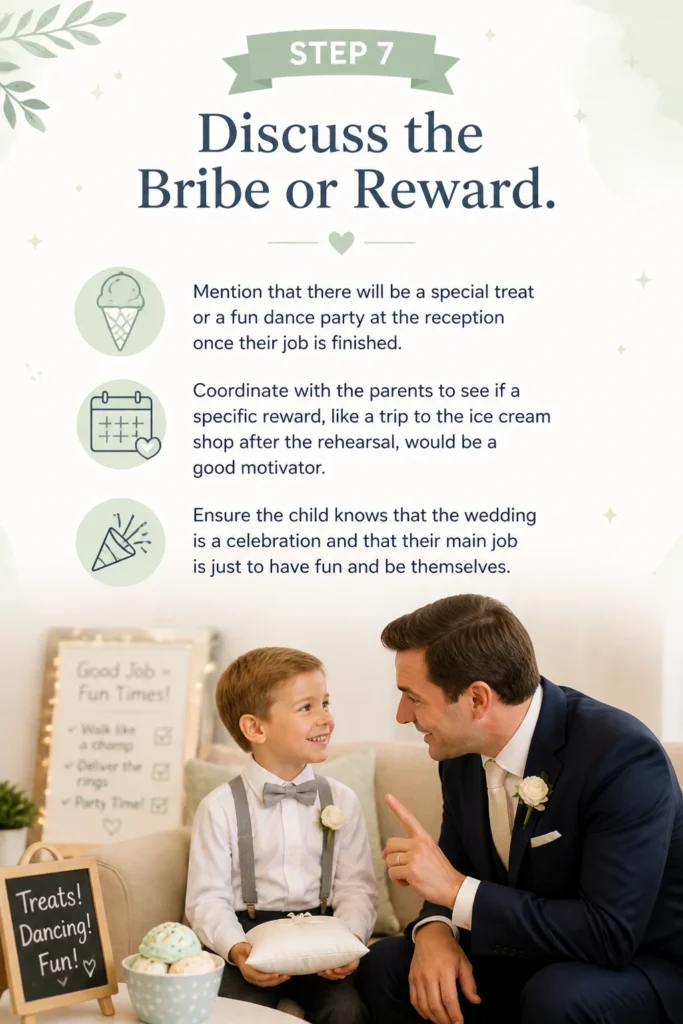
Coordinate with the parents to see if a specific reward, like a trip to the ice cream shop after the rehearsal, would be a good motivator.
Ensure the child knows that the wedding is a celebration and that their main job is just to have fun and be themselves.
Step 8: Follow Up with a Practice Session
Set a date for a low-pressure practice walk in a hallway or backyard a few weeks after they say yes.
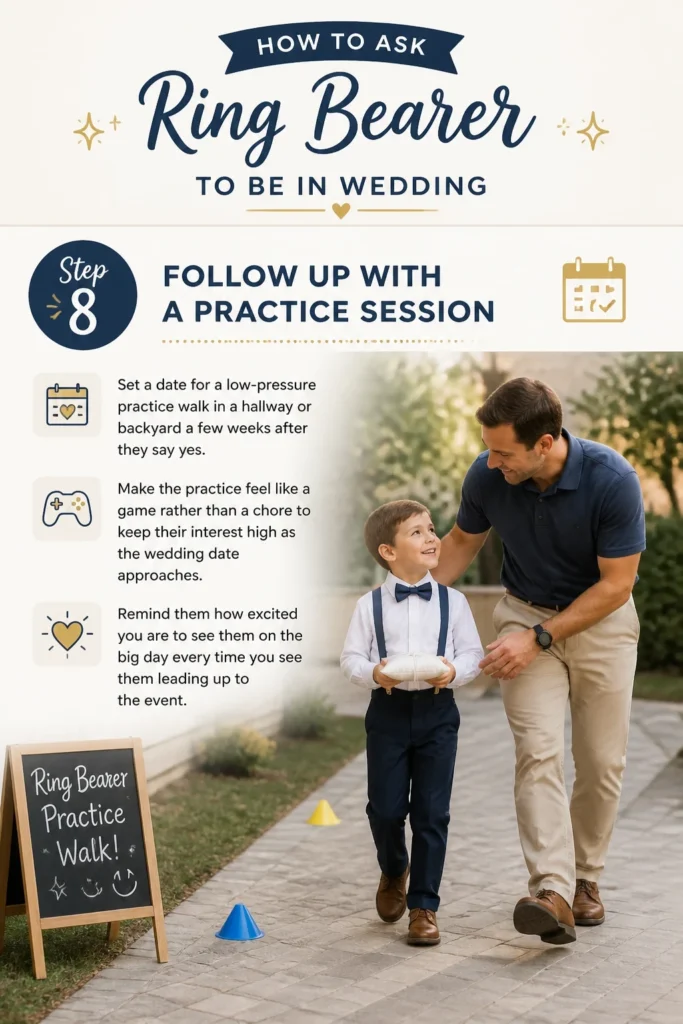
Make the practice feel like a game rather than a chore to keep their interest high as the wedding date approaches.
Remind them how excited you are to see them on the big day every time you see them leading up to the event.
Common Mistakes to Avoid
Asking Without Parental Consent
If you ask the child before talking to the parents, you risk putting the parents in a difficult position if they cannot attend or afford the wedding. This can lead to a heartbreaking “no” for the child later on. Always clear the logistics with the adults first to ensure a smooth experience for everyone involved.
Making the Role Sound Too Serious
Using words like “solemn duty” or “huge responsibility” can scare a young child. If they think they might “ruin” the wedding by dropping something, they may become too anxious to walk down the aisle. Keep the language light, fun, and focused on the celebration rather than the pressure of the task.
Ignoring the Child’s Personality
Some kids love being the center of attention, while others are incredibly shy. If you force a shy child into a high-profile role without a “buddy” (like a flower girl or another ring bearer), they might freeze at the back of the aisle. Tailor your “ask” and the role itself to fit who the child actually is.
Waiting Until the Last Minute
Children need time to get used to new ideas and people. If you ask a week before the wedding, the child hasn’t had time to process what is happening or get comfortable with the couple. Give them at least a few months to get excited about their “mission.”
Troubleshooting
The Child Says No
If the child is hesitant or flat-out says no, do not take it personally. They might be going through a shy phase or simply feel overwhelmed by the idea of people looking at them. Smile, tell them that is perfectly okay, and let the parents know there are no hard feelings; you can always find another way to include them, like sitting in the front row.
The Parents Are Worried About Behavior
Parents often stress about their child having a meltdown at the altar. Reassure them that you don’t expect perfection and that a crying toddler is just a part of the wedding’s charm. Suggest a “safety plan” where the child sits with a grandparent as soon as they reach the front of the aisle.
The Child Is Too Young to Understand
If the ring bearer is a toddler, they won’t understand the concept of a wedding. In this case, the “ask” is really for the parents. Focus on the cute photos and the memory, and suggest that one of the parents walks down the aisle with the child or pulls them in a decorated wagon.
Key Takeaways
- Always get the green light from the parents before talking to the child.
- Use props like badges, toys, or books to make the “proposal” exciting and visual.
- Keep your language simple and focus on the fun aspects of the wedding day.
- Be flexible with your expectations, knowing that kids are unpredictable.
- Provide a reward or a “mission” mindset to keep them engaged throughout the process.
- Ensure the child feels like a valued part of the team rather than just a prop.
Frequently Asked Questions
What is the best age for a ring bearer?
Most ring bearers are between the ages of three and eight. Children younger than three may need a parent to walk with them or a wagon to ride in, while children older than eight might feel they have outgrown the “cute” factor of the role and might prefer being a junior usher.
Do I have to give the ring bearer a gift?
While not strictly required, a small gift is a traditional way to ask and a great way to thank them for their participation. It helps the child feel special and gives them a positive association with the wedding. It doesn’t have to be expensive; even a small toy or a personalized treat works well.
What if the ring bearer loses the rings?
Most couples give the ring bearer “fake” rings or an empty box to carry down the aisle. The best man or maid of honor usually keeps the real rings safely in a pocket or on a finger. This eliminates the risk of a lost heirloom and takes the pressure off the child.
Should the ring bearer stand at the altar?
This depends on the child’s age and attention span. For younger children, it is usually best for them to sit with their parents in the front row after they finish their walk. Older children may be able to stand with the groomsmen for the duration of the ceremony.
Our Top Recommended Finds
- Ring Security Briefcase: This is a classic prop that makes any young boy feel like he has a top-secret mission. It also provides a sturdy place to hold the (fake) rings.
- Personalized “Will You Be My Ring Bearer?” Storybook: These books allow you to put the child’s name into the story, helping them visualize exactly what will happen on the wedding day.
- Customized Sunglasses: A pair of “cool guy” shades can help a shy child feel like they have a “mask” to wear, making the walk down the aisle feel much less intimidating.
Preparing For Your Big Day
Once you have successfully recruited your ring bearer, you can move on to the other fun parts of wedding party planning.
You might want to look into coordinating the ring bearer’s outfit with the groomsmen or finding the perfect flower girl to walk alongside him.
Remember that the goal is to create a joyful memory for the child and a stress-free experience for their parents.
Take a deep breath and enjoy these small, sweet moments of your engagement—they go by faster than you think.
Start browsing for that perfect proposal gift today so you can officially check this task off your wedding to-do list.
Wedding Planning
No fluff, no drama. Just easy weekly advice, planning shortcuts, and gentle reminders to help you actually enjoy your engagement.