💍 How To Decorate A Stage For A Wedding
Wedding Planning
No fluff, no drama. Just easy weekly advice, planning shortcuts, and gentle reminders to help you actually enjoy your engagement.
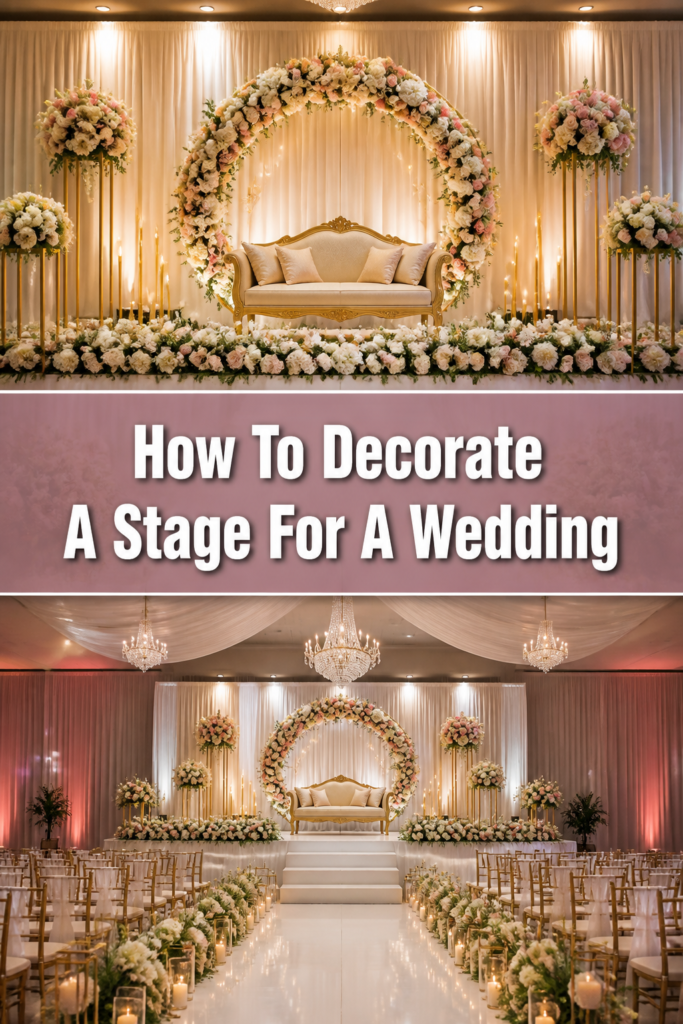
The wedding stage is the heart of the entire celebration.
It is the place where the couple will spend hours being photographed and congratulated by loved ones.
During my years as a wedding coordinator, I have seen how a well-designed stage can transform a plain community hall into a royal palace.
Quick Overview
Designing a wedding stage requires a balance of artistic vision and structural planning.
You will learn how to choose a theme, install backdrops, and layer lighting to create a professional look.
- Time needed: 6 to 10 hours (depending on complexity)
- Difficulty: Intermediate
- What you’ll need: Backdrop frames, fabric drapes, floral foam, zip ties, LED uplights, comfortable seating, and a measuring tape.
Step-by-Step Instructions
Step 1: Define Your Theme and Color Palette
Establish a clear visual direction before buying any materials.
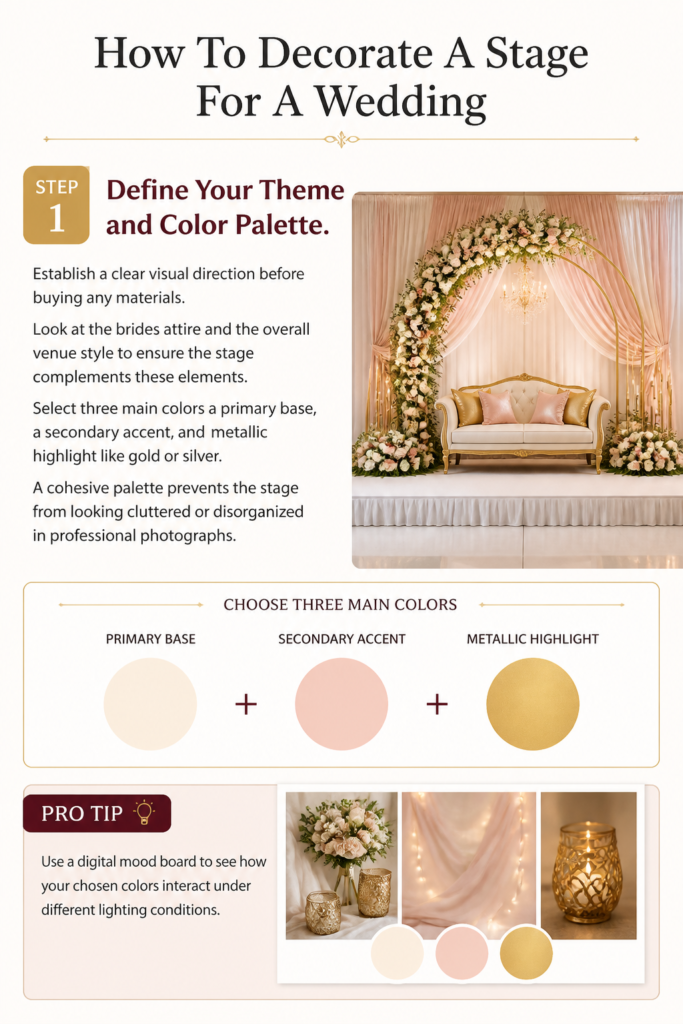
Look at the bride’s attire and the overall venue style to ensure the stage complements these elements.
Select three main colors: a primary base, a secondary accent, and a metallic highlight like gold or silver.
A cohesive palette prevents the stage from looking cluttered or disorganized in professional photographs.
Pro Tip: Use a digital mood board to see how your chosen colors interact under different lighting conditions.
Step 2: Measure the Physical Dimensions
Measure the width, depth, and height of the stage platform provided by the venue.
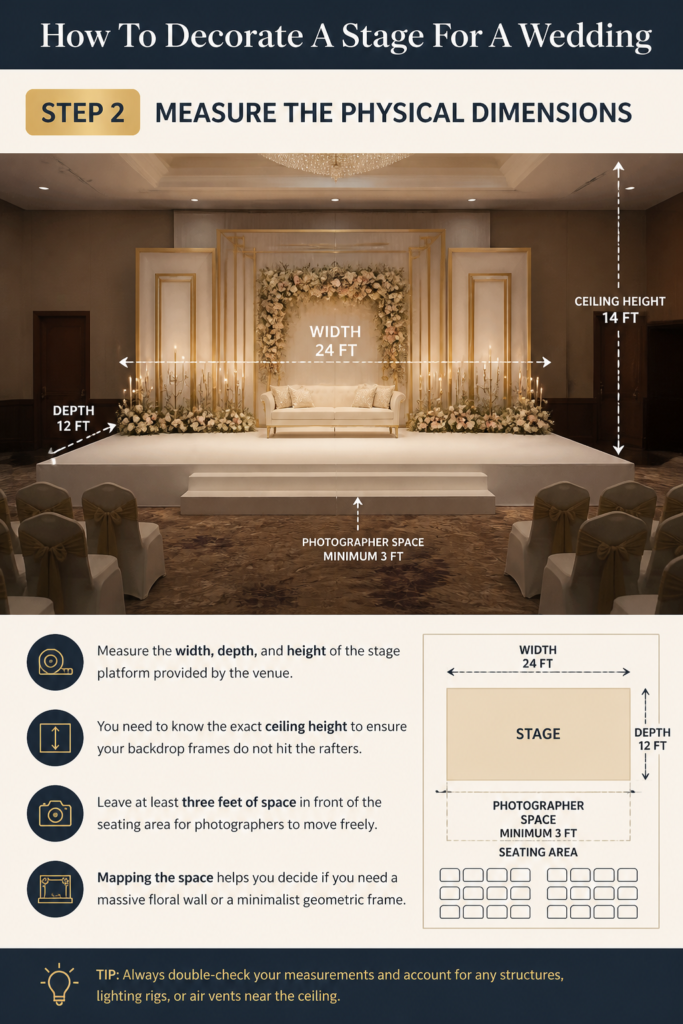
You need to know the exact ceiling height to ensure your backdrop frames do not hit the rafters.
Leave at least three feet of space in front of the seating area for photographers to move freely.
Mapping the space helps you decide if you need a massive floral wall or a minimalist geometric frame.
Step 3: Set Up the Backdrop Frame
Assemble a heavy-duty pipe and drape system as the skeleton of your design.
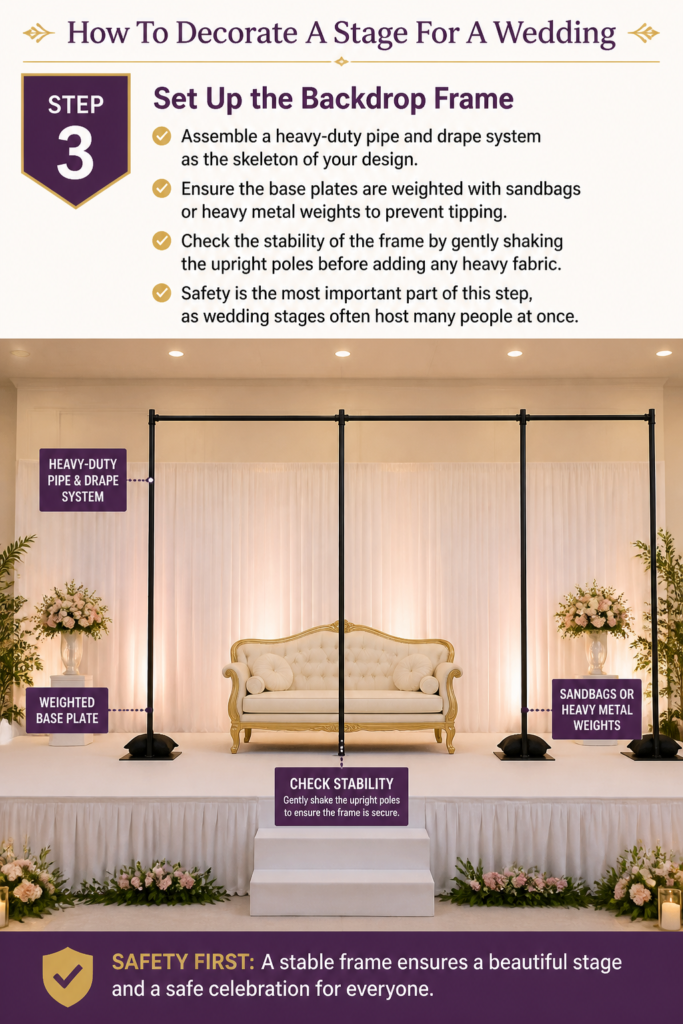
Ensure the base plates are weighted with sandbags or heavy metal weights to prevent tipping.
Check the stability of the frame by gently shaking the upright poles before adding any heavy fabric.
Safety is the most important part of this step, as wedding stages often host many people at once.
Step 4: Layer the Fabrics and Drapes
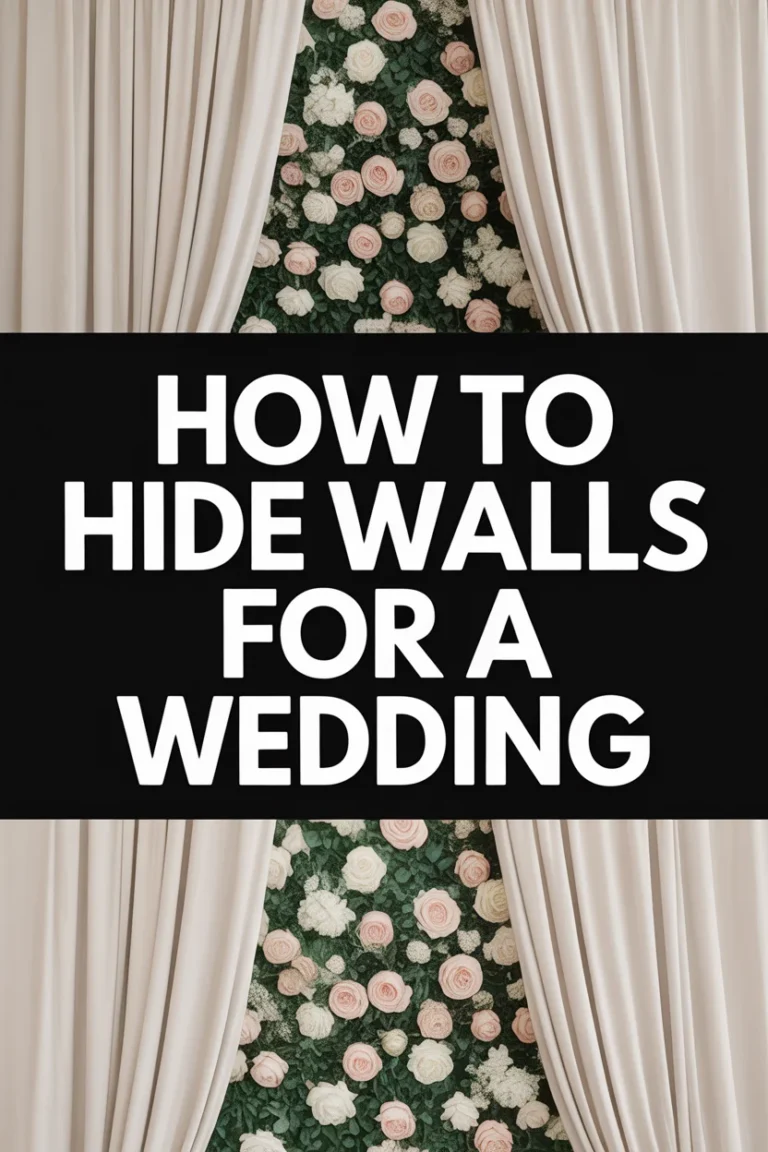
Hang your base fabric, such as a thick blackout material, to hide the wall behind the stage.
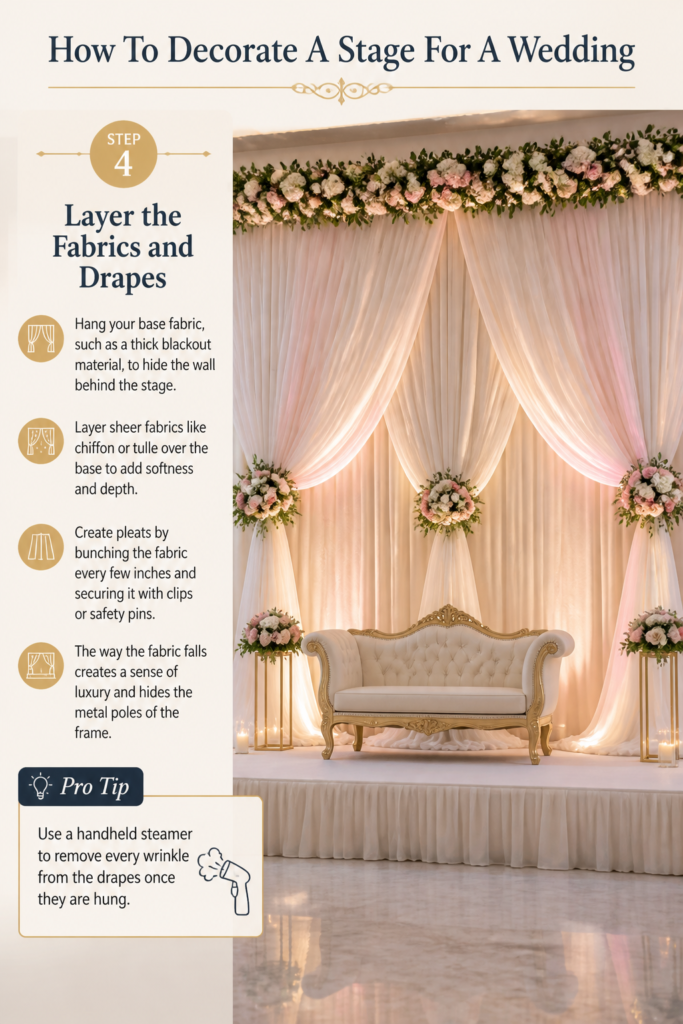
Layer sheer fabrics like chiffon or tulle over the base to add softness and depth.
Create pleats by bunching the fabric every few inches and securing it with clips or safety pins.
The way the fabric falls creates a sense of luxury and hides the metal poles of the frame.
Pro Tip: Use a handheld steamer to remove every wrinkle from the drapes once they are hung.
Step 5: Install the Primary Lighting
Place LED uplights at the base of the backdrop, spacing them about two feet apart.
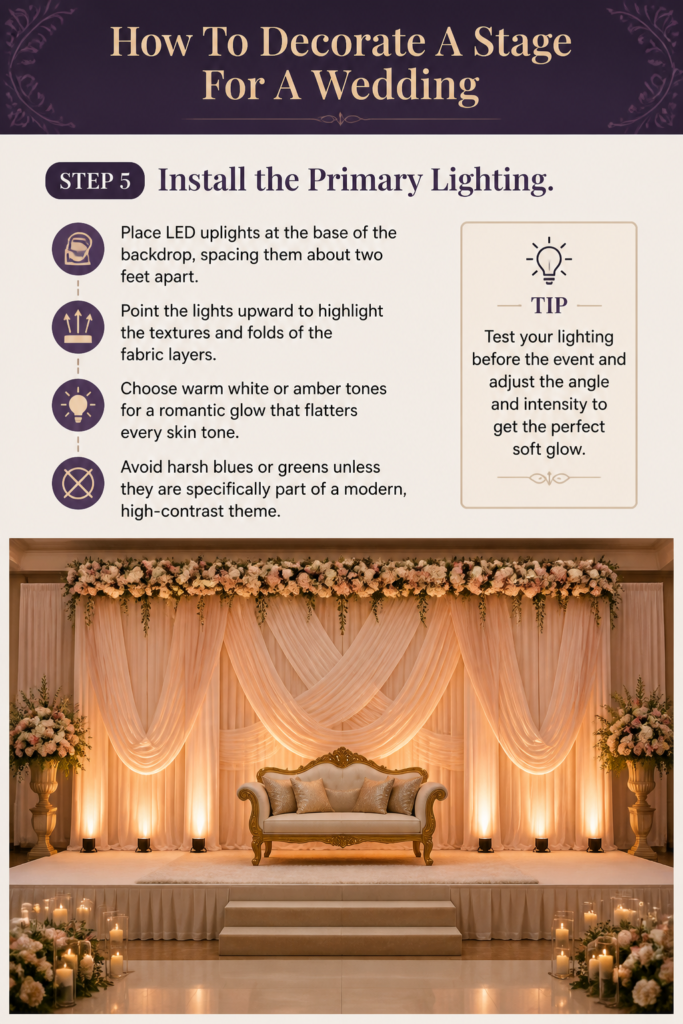
Point the lights upward to highlight the textures and folds of the fabric layers.
Choose warm white or amber tones for a romantic glow that flatters every skin tone.
Avoid harsh blues or greens unless they are specifically part of a modern, high-contrast theme.
Step 6: Arrange the Furniture Focal Point
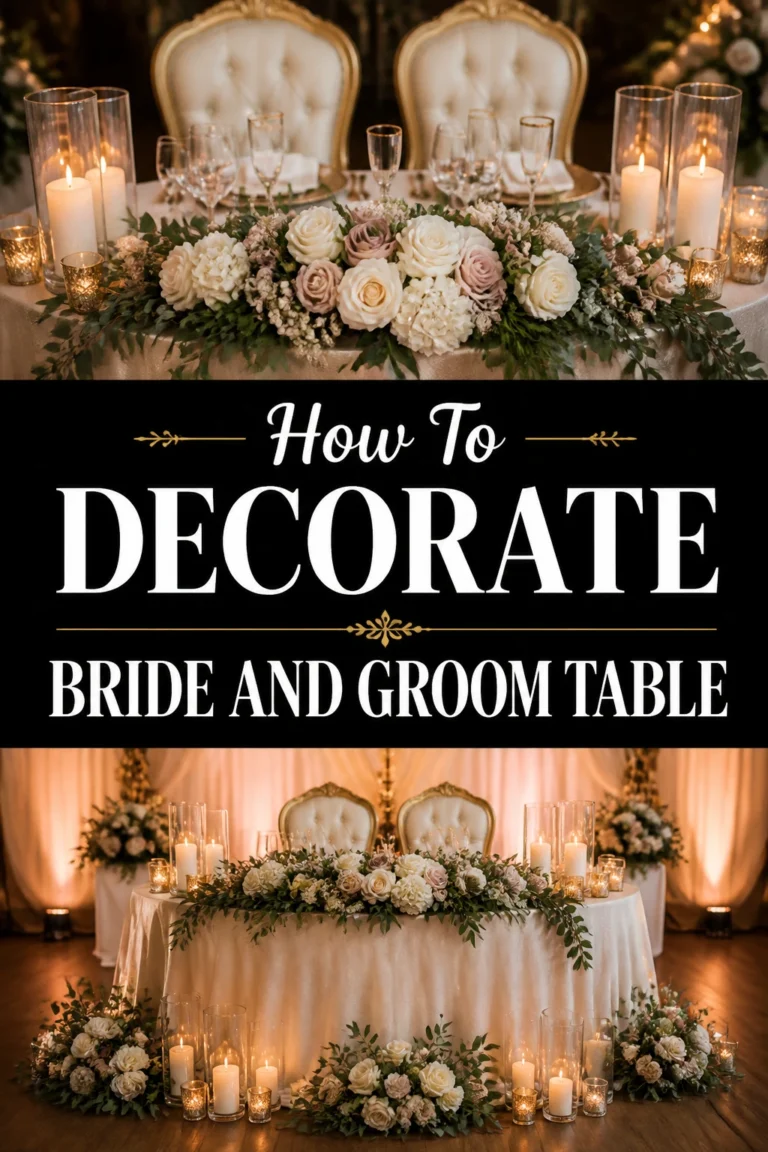
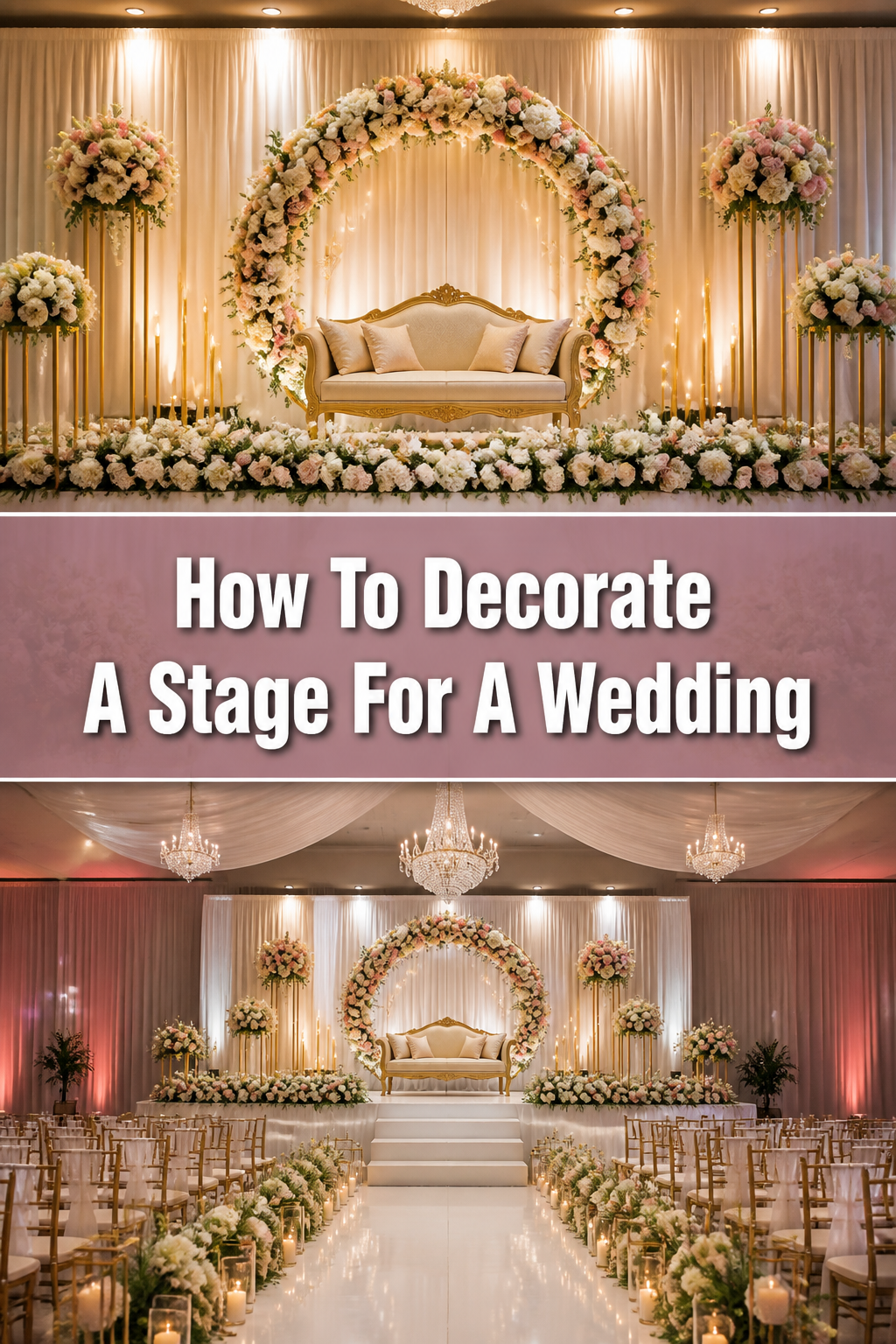
Position a loveseat, sofa, or two elegant chairs exactly in the center of the stage.
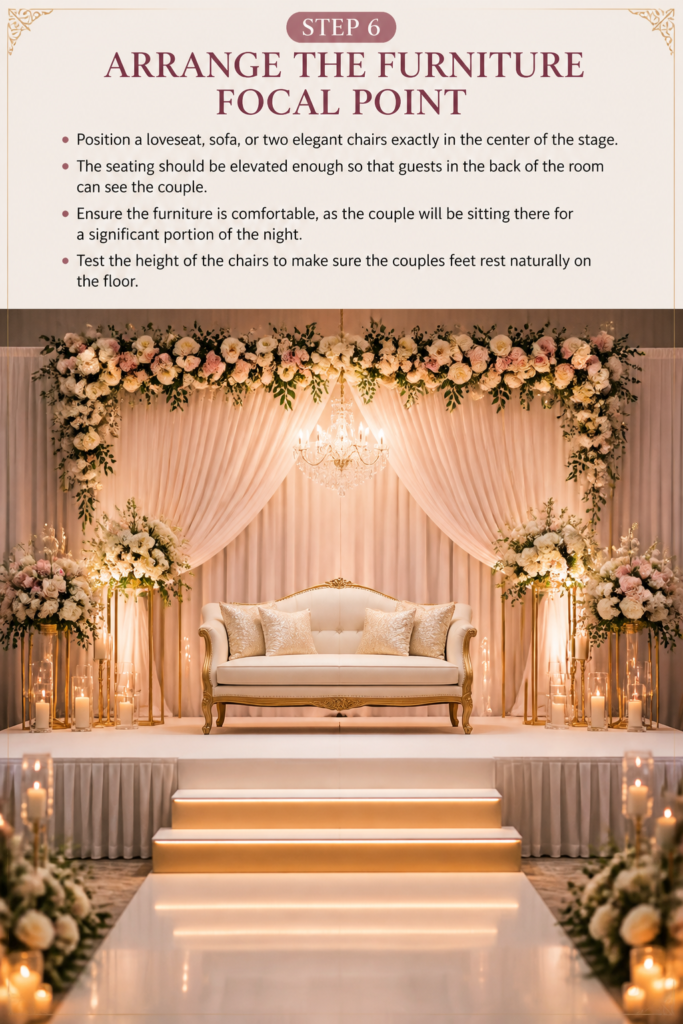
The seating should be elevated enough so that guests in the back of the room can see the couple.
Ensure the furniture is comfortable, as the couple will be sitting there for a significant portion of the night.
Test the height of the chairs to make sure the couple’s feet rest naturally on the floor.
Step 7: Add Floral Arrangements
Attach floral runners along the top of the backdrop or place large pedestals on either side of the seating.
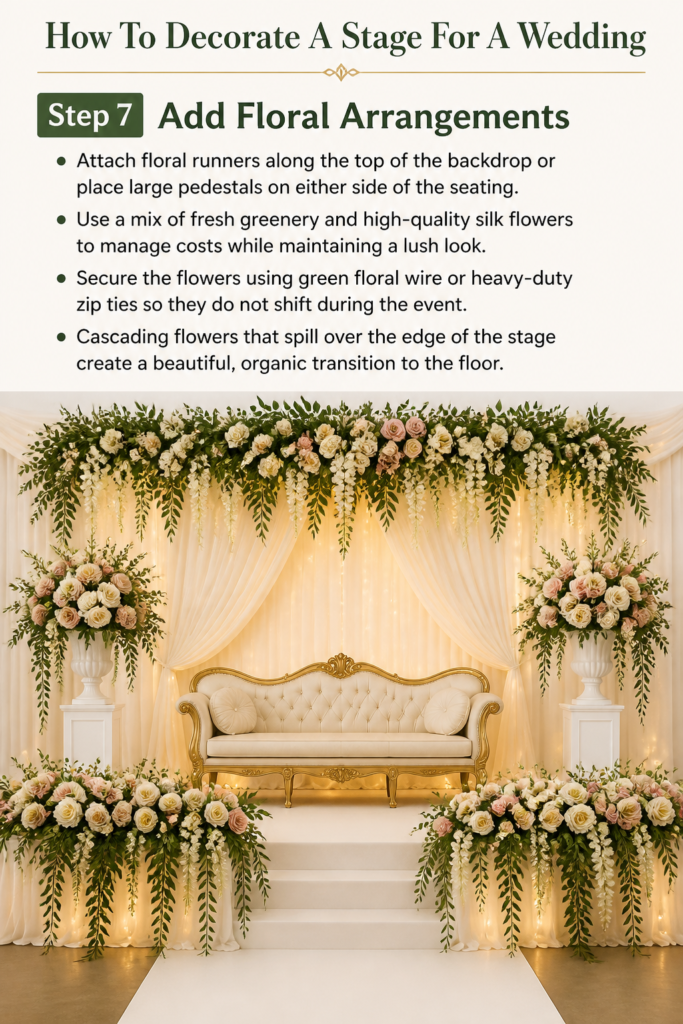
Use a mix of fresh greenery and high-quality silk flowers to manage costs while maintaining a lush look.
Secure the flowers using green floral wire or heavy-duty zip ties so they do not shift during the event.
Cascading flowers that spill over the edge of the stage create a beautiful, organic transition to the floor.
Step 8: Finish with Floor Decor
Cover the stage floor with a clean white carpet or a high-gloss vinyl wrap.
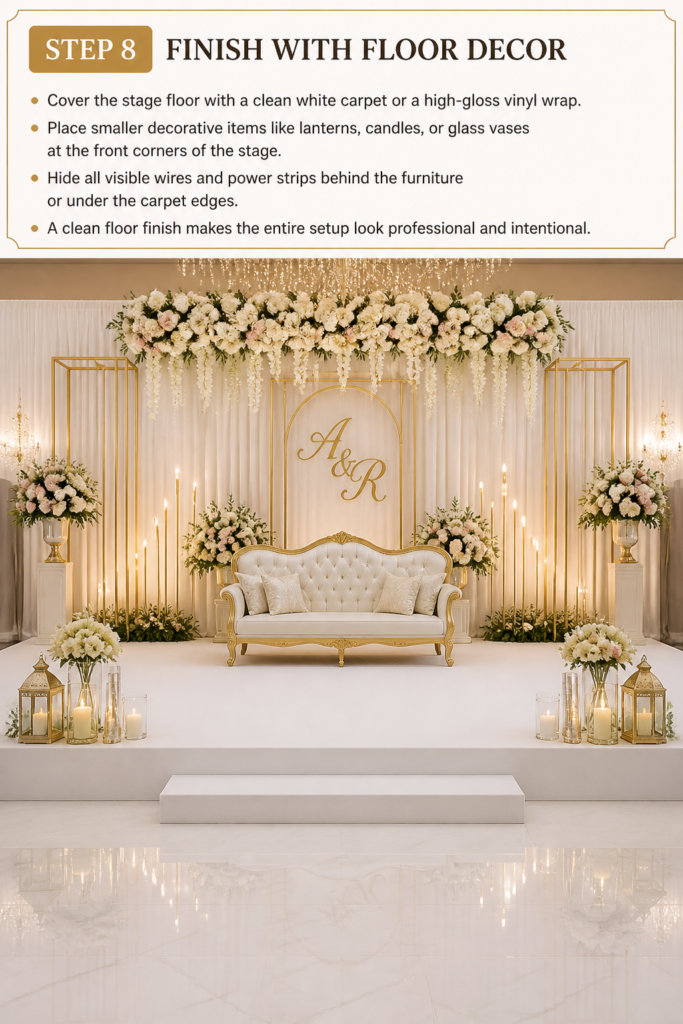
Place smaller decorative items like lanterns, candles, or glass vases at the front corners of the stage.
Hide all visible wires and power strips behind the furniture or under the carpet edges.
A clean floor finish makes the entire setup look professional and intentional.
Common Mistakes to Avoid
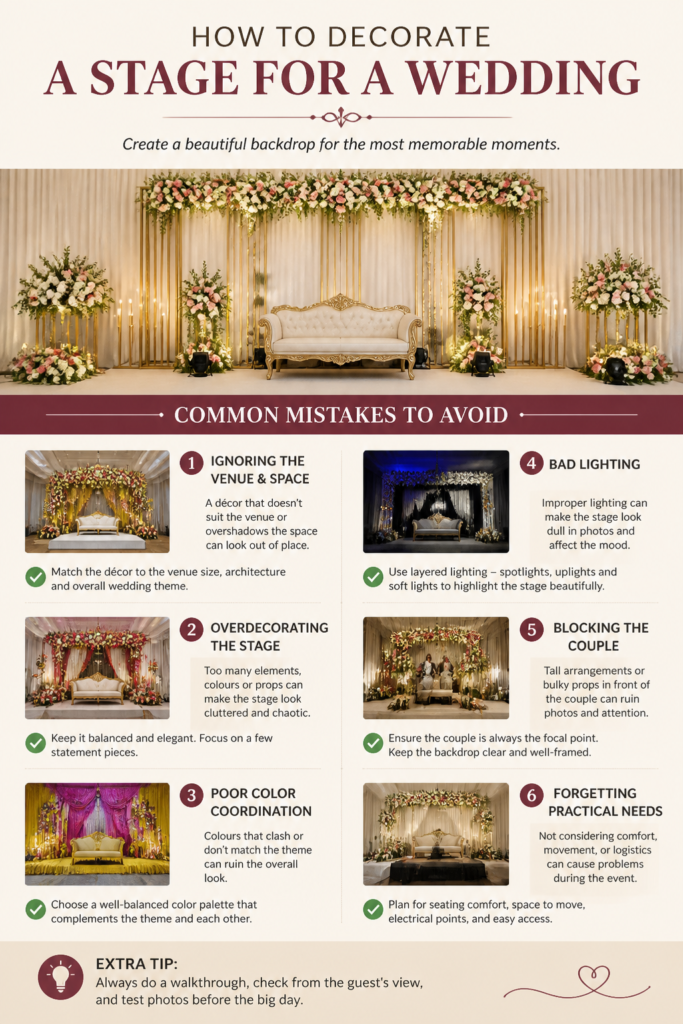
Ignoring the Sightlines
Many decorators focus only on how the stage looks from the front row.
If you place large pillars or tall floral arrangements too far forward, guests sitting at the sides will have their view blocked.
Always walk to the far corners of the reception hall to ensure the couple remains visible from every angle.
Using Too Much Gloss
High-gloss materials can reflect camera flashes and create “hot spots” in wedding photos.
If you use a shiny backdrop, photographers will struggle with glare and shadows throughout the ceremony.
Opt for matte fabrics or soft textures that absorb and diffuse light beautifully.
Neglecting the Back of the Stage
If the stage is visible from the sides, the “behind the scenes” area must be hidden.
Leaving messy wires, toolboxes, or unfinished frame edges visible ruins the illusion of the design.
Use side panels or extra fabric returns to wrap the decor around the edges of the platform.
Troubleshooting
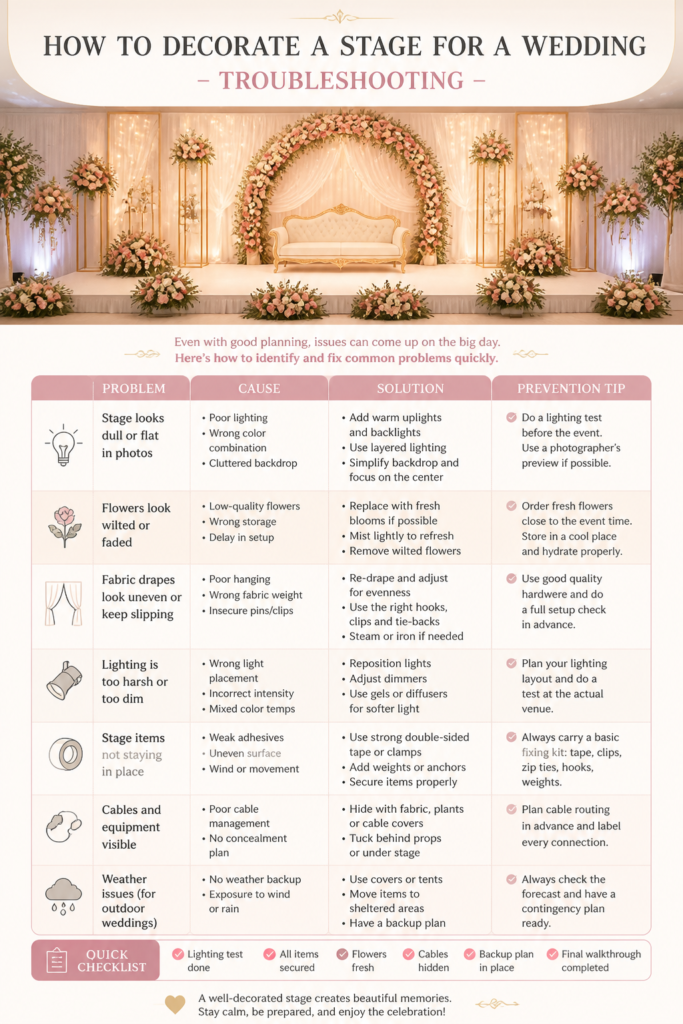
The Fabric is Sagging
If the drapes look limp or heavy in the middle, your crossbar may be overloaded.
Add a center support pole to the frame to distribute the weight of the fabric more evenly.
You can also use tension clips to pull the fabric tighter toward the upright poles.
The Lighting Looks Flat
If the stage looks two-dimensional, you likely have too much front-facing light.
Move your uplights closer to the fabric to create deeper shadows in the folds.
Adding a few “spot” lights from the ceiling can also help separate the couple from the backdrop.
The Stage Feels Empty
Sometimes a large stage makes even a beautiful sofa look small and isolated.
Fill the empty space by adding “layers” of height, such as varying sizes of floral stands or decorative screens.
Rugs can also help ground the furniture and make the seating area feel more intimate.
Key Takeaways
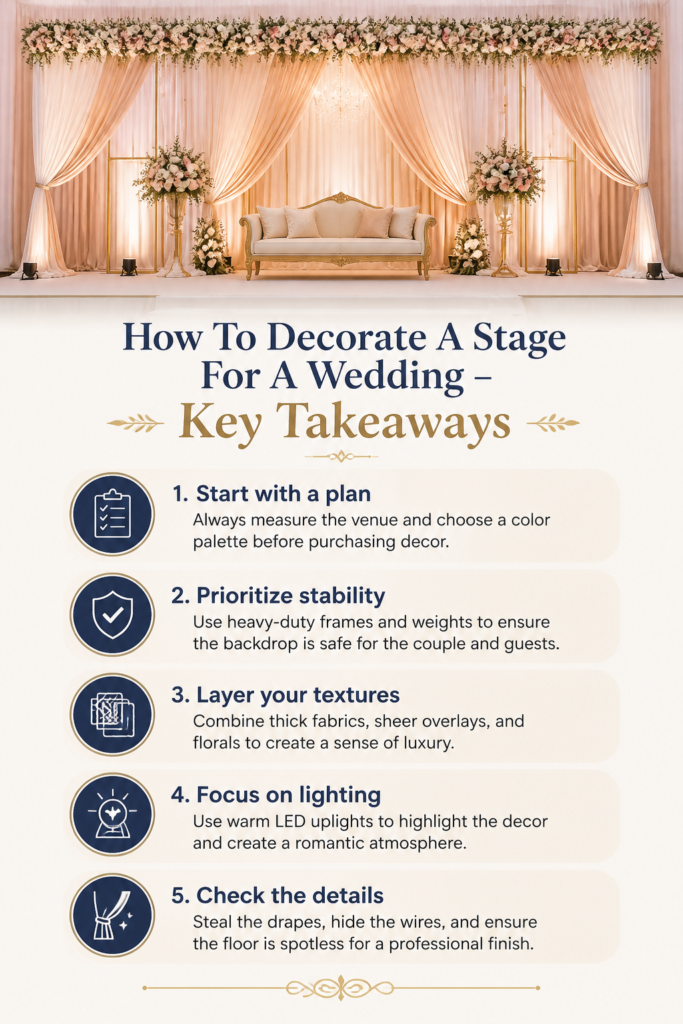
- Start with a plan: Always measure the venue and choose a color palette before purchasing decor.
- Prioritize stability: Use heavy-duty frames and weights to ensure the backdrop is safe for the couple and guests.
- Layer your textures: Combine thick fabrics, sheer overlays, and florals to create a sense of luxury.
- Focus on lighting: Use warm LED uplights to highlight the decor and create a romantic atmosphere.
- Check the details: Steal the drapes, hide the wires, and ensure the floor is spotless for a professional finish.
Frequently Asked Questions
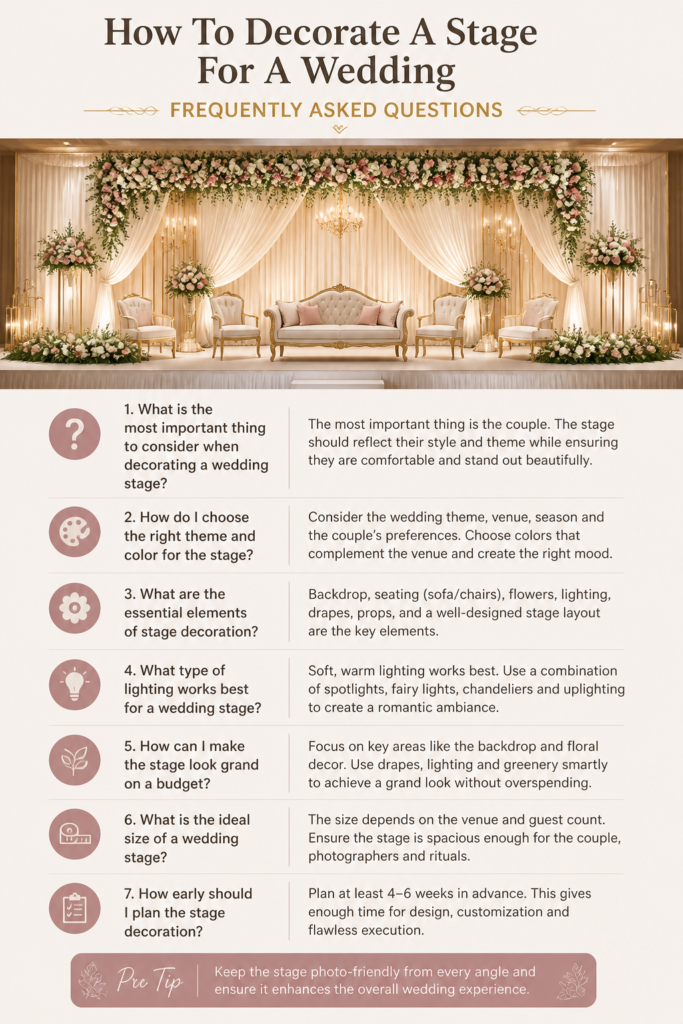
How much does it cost to decorate a wedding stage?
Costs vary wildly depending on whether you use fresh flowers or silk alternatives.
A DIY setup might cost between $300 and $800, while a professional designer can charge anywhere from $2,000 to over $10,000 for elaborate custom builds.
Can I use real candles on the stage?
Most venues have strict fire codes that prohibit open flames on wooden stages or near fabric drapes.
High-quality LED flameless candles are a much safer alternative and look identical to real wax in photographs.
How long does it take to set up a full stage?
A simple backdrop and seating arrangement can be done in about three hours by two people.
Complex designs with floral walls and custom flooring usually require a full day or a team of four to five people.
What is the best fabric for a wedding backdrop?
Chiffon and voile are popular because they drape beautifully and allow light to pass through them.
Velvet or heavy satin is better for a regal, dramatic look, though these fabrics require more structural support due to their weight.
Our Top Recommended Finds
- Heavy-Duty Pipe and Drape Kit: Look for a set with adjustable heights up to 10 feet to fit various venue sizes.
- Wireless LED Uplights: Battery-powered lights allow you to illuminate the stage without tripping over power cords.
- Industrial Fabric Steamer: A high-capacity steamer is essential for getting stubborn wrinkles out of large drapes quickly.
Bringing Your Vision To Life
Building a wedding stage is a labor of love that serves as the backdrop for a couple’s most cherished memories.
By focusing on the structural foundation and layering aesthetic details, you can create a professional-grade setup on any budget.
Start by sketching your layout on paper today to visualize how the furniture and florals will interact.
Once you have your measurements, you can begin sourcing the fabrics and lights that will make the stage shine.
Take the first step by visiting your venue this week to get the exact dimensions of the platform.
With careful planning and a bit of creativity, you will design a space that captures the magic of the occasion.
Wedding Planning
No fluff, no drama. Just easy weekly advice, planning shortcuts, and gentle reminders to help you actually enjoy your engagement.