👰♀️ How To Put No Kids On Wedding Invite

Wedding Planning
No fluff, no drama. Just easy weekly advice, planning shortcuts, and gentle reminders to help you actually enjoy your engagement.
Planning a wedding brings so many exciting decisions, but some can feel incredibly delicate. Deciding whether to include children on your guest list is a common point of discussion for many couples. I’ve personally navigated this conversation, learning how to communicate boundaries with grace and clarity.
This guide shares practical, empathetic steps to ensure your wedding vision is honored, free from awkward misunderstandings. You can create a celebration that perfectly reflects your wishes. Let’s make this process straightforward and stress-free for you.
Quick Overview
This guide will empower you to clearly and kindly communicate a child-free wedding policy to your guests. You’ll learn how to word your invitations, manage expectations, and handle any questions with confidence. The goal is a harmonious celebration aligned with your desires.
- Time needed: Several weeks, spread out during your invitation planning phase.
- Difficulty: Intermediate, due to the need for careful social navigation.
- What you’ll need: Your finalized guest list, wedding invitation design, and a clear understanding of your wedding vision.
Step-by-Step Instructions
Step 1: Make Your “No Kids” Decision Firmly and Early
The very first step is to establish a clear and unwavering stance on children at your wedding. This decision should be made as a couple, ensuring you both agree completely. Wavering later can cause confusion and unintended exceptions.
Discuss what “no kids” truly means for your specific event. Does it apply to infants, toddlers, or children up to a certain age? Clarifying this now helps prevent ambiguity down the line. A firm decision is the foundation for clear communication.
Pro Tip: Consider the “why” behind your decision. Is it budget, venue restrictions, desired atmosphere, or something else? Understanding your reasons can help you articulate your stance with more confidence and less guilt if questions arise.
Step 2: Define “Child-Free” Clearly
Once you’ve decided on a child-free wedding, you need to define its parameters. “No kids” can mean different things to different people. Is it strictly no one under 18, or is there an age cutoff like 12 or 16?
Consider if you’ll make any exceptions, such as for nursing infants or children of the wedding party. While consistency is key, a tiny exception for a ring bearer might be acceptable if planned. However, be extremely cautious with exceptions, as they can quickly snowball.
Write down your exact policy to ensure consistency across all communications. This clarity will be invaluable when drafting your invitations and responding to inquiries. A well-defined policy protects your boundaries.
Step 3: Craft Polite and Explicit Wording for Your Invitations
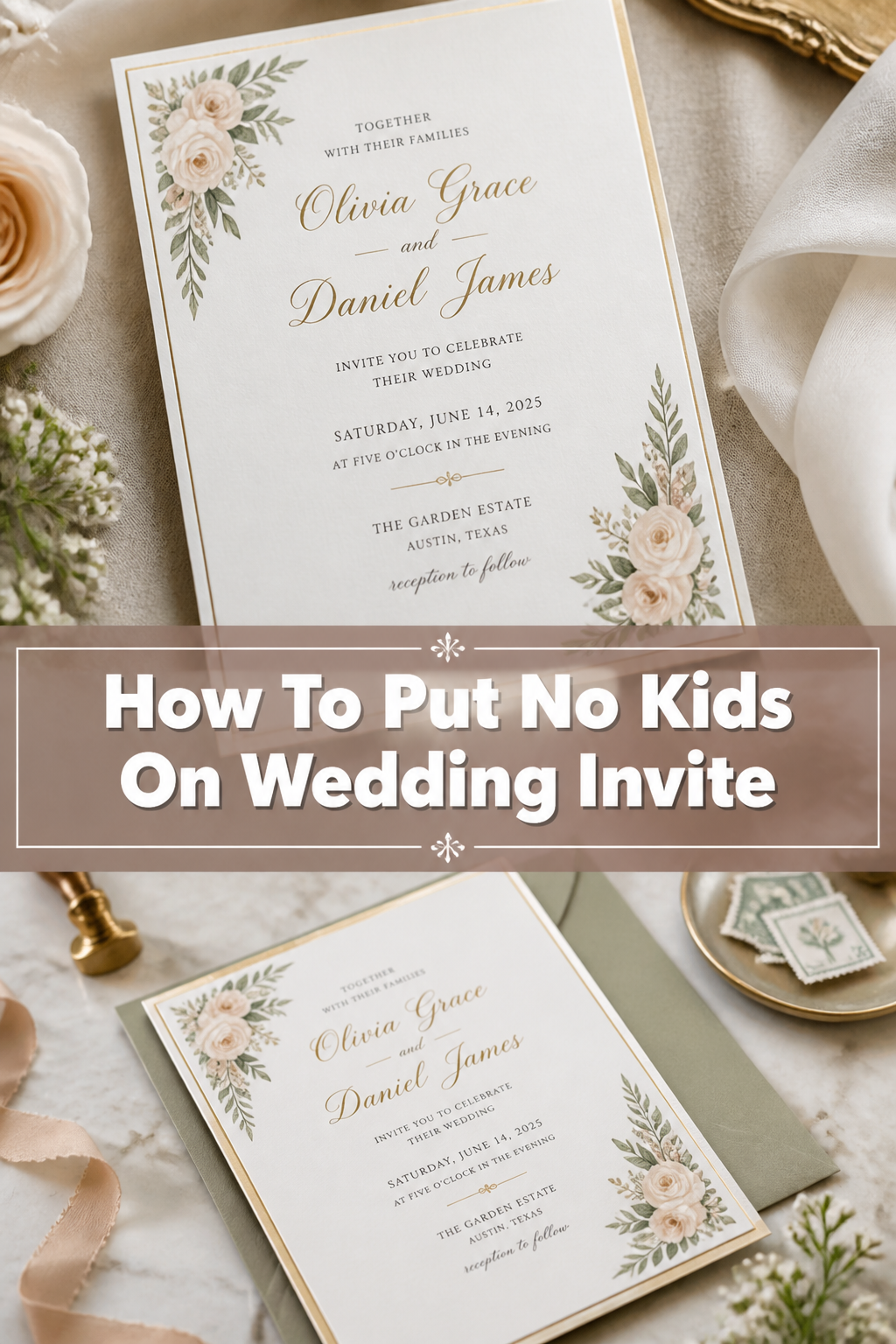
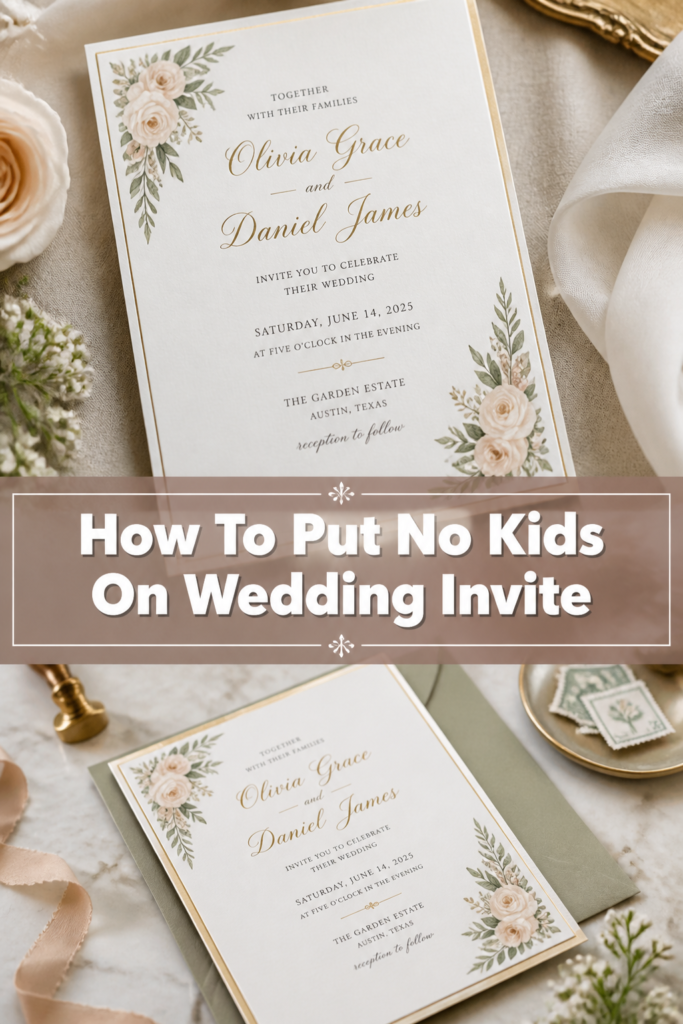
This is where your decision becomes visible. Your main invitation card is the primary place to convey your child-free request. The wording needs to be polite, direct, and unambiguous. Avoid subtle hints that can easily be missed.
Common phrases include “Adults Only Reception,” “An Evening for Adults,” or “We respectfully request no children under 18 attend.” Place this wording clearly, often in the lower corner of the invitation or on the reception card. Ensure it’s legible but not overly prominent.
Remember, the tone should be respectful, acknowledging that guests may have children. The goal is to inform, not to offend. A simple, direct statement is often the most effective.
Step 4: Address Envelopes Precisely
The way you address your outer and inner envelopes is a powerful, non-verbal cue. This is an often-overlooked but highly effective method for indicating who is invited. Use specific names for every invited guest.
Instead of “Mr. and Mrs. John Smith and Family,” address it as “Mr. and Mrs. John Smith.” If only one parent is invited, address it solely to them. For couples, list both names: “Mr. John Smith and Ms. Jane Doe.”
This method clearly communicates that only the named individuals are welcome. It sets expectations before the guest even opens the invitation. Precision in addressing helps avoid assumptions.
Step 5: Reinforce the Message on Your Wedding Website and RSVP Card
Your wedding website is an excellent place to provide more detail and context. Create a dedicated FAQ section or a page explaining your child policy. You can offer a slightly more elaborate explanation here, still maintaining a polite tone.
For example, you might write, “While we adore your little ones, our wedding will be an adults-only event. We hope this advance notice allows you to make arrangements and enjoy a relaxing evening with us.” This provides helpful context.
Your RSVP card should also reiterate the number of invited guests. Include a line that says, “We have reserved [Number] seats in your honor.” Fill in the exact number of adults invited from that household. This visually confirms who is expected.
Step 6: Prepare for Questions and Practice Your Responses
Despite your best efforts, some guests might still inquire about bringing their children. It’s wise to anticipate these questions and have a consistent response ready. This prevents you from being caught off guard.
Practice a polite, firm, and brief response. For example, “We love your children dearly, but we’ve chosen to have an adults-only celebration. We hope you can still join us.” Avoid lengthy explanations or justifications.
Consistency is key here. If you start making exceptions based on individual requests, your policy will quickly unravel. Stick to your original decision with kindness and conviction.
Step 7: Communicate Directly with Key Guests and Family
For close family members or friends with young children, a direct conversation might be beneficial. This personal touch can soften the message and show respect for their situation. Reach out before they receive the official invitation.
Explain your decision gently and offer reassurance. You might say, “We wanted to let you know personally that we’re planning an adults-only wedding. We really hope you can still celebrate with us.” This proactive approach demonstrates consideration.
This direct communication also allows them more time to arrange childcare. It shows you value their presence while upholding your boundaries. Thoughtful conversations can prevent misunderstandings.
Step 8: Be Consistent and Kind in Your Application
Once your child-free policy is established, it’s crucial to apply it consistently across all guests. Making exceptions for some and not others can lead to hurt feelings and resentment. Treat everyone fairly.
While firmness is important, always deliver the message with kindness and understanding. Remember that asking guests to arrange childcare can be a significant imposition. Empathy goes a long way.
Your consistency reinforces the validity of your decision. It shows that your policy is a well-thought-out choice, not an arbitrary whim. A kind but firm approach ensures a smoother process.
Common Mistakes to Avoid
Being Vague or Indirect
Many couples try to hint at a child-free wedding rather than stating it directly. Phrases like “Celebrate with us as we say ‘I do’ (and let the kids stay home!)” are often misinterpreted or missed entirely. This ambiguity leads to confusion and puts guests in an awkward position, forcing them to ask for clarification. Be explicit and direct with your wording to avoid any guesswork. Clear communication prevents misunderstandings.
Making Exceptions After the Fact
Deciding to make an exception for one guest’s child after sending out invitations can quickly unravel your entire child-free policy. Other guests will inevitably find out, leading to feelings of unfairness or prompting them to request exceptions as well. This creates more stress and difficult conversations for you. Stick to your initial decision and apply it uniformly to maintain consistency.
Announcing the Policy Too Late
Waiting until the last minute to inform guests about your child-free wedding policy is inconsiderate. Parents need time to arrange childcare, especially for an evening event or if they are traveling. Informing them early, ideally with the save-the-date or initial invitation, shows respect for their planning needs. Early notice helps ensure more guests can attend.
Not Communicating Directly with Close Family
Relying solely on the invitation wording for close family members, especially those with young children, can feel impersonal. They might expect an exception or feel hurt if they aren’t given a heads-up. A quick, personal call or conversation can soften the message and provide an opportunity for them to ask questions privately. This personal touch strengthens relationships.
Troubleshooting
Guest Assumes Kids Are Invited
Despite clear wording, a guest might still assume their children are welcome, perhaps by writing their kids’ names on the RSVP. This is a common occurrence, often due to habit or oversight.
Address this gently with a quick phone call. You can say, “We just wanted to confirm your RSVP for [Guest Names]. Our wedding will be an adults-only celebration, and we wanted to make sure you saw that on the invite. We’ve reserved [Number] seats for you.” This clarifies without shaming.
Guest Asks for an Exception
A guest might directly ask if they can bring their child, perhaps citing travel difficulties or childcare issues. It’s crucial to be firm but empathetic in your response.
Reiterate your policy kindly: “We truly appreciate you asking. We’ve decided to keep our wedding an adults-only event to ensure a specific atmosphere, and we’re unable to make exceptions. We hope you can still make arrangements to join us.” Offer no further justification.
Negative Reaction from a Guest
Occasionally, a guest might react negatively, expressing disappointment or even anger. This can be upsetting, but remember your wedding is about you and your partner.
Listen to their concerns, acknowledge their feelings, but do not back down from your decision. You can say, “We understand this might be disappointing, and we’re truly sorry if it causes inconvenience. Our decision was made with careful consideration. We’d love for you to be there if you can.” Focus on your desire for them to attend, not on justifying your policy.
Key Takeaways
- Make your child-free decision early and define it clearly to avoid confusion.
- Use direct, polite wording on your invitations and clearly address envelopes to specific adults.
- Reinforce your policy on your wedding website and RSVP cards for consistent messaging.
- Prepare consistent, kind responses for any questions or requests for exceptions.
- Communicate directly with close family and key guests to soften the message and allow ample planning time.
- Maintain consistency across all guests to avoid resentment and maintain fairness.
Frequently Asked Questions
What about infants or nursing babies?
This is a common question and often the most delicate. If your policy is strictly “no children,” this includes infants. You can politely state, “Our wedding is an adults-only event, including infants.” If you choose to make an exception for nursing infants, clarify this specifically to those guests. Be prepared for others to then ask for similar exceptions.
Do I need to provide childcare if I’m requesting no kids?
No, you are generally not obligated to provide childcare. Your request for an adults-only event shifts the responsibility for childcare to your guests. Some couples choose to provide a list of local babysitters as a courtesy, but this is entirely optional and not expected. It’s a kind gesture, not a requirement.
How do I handle out-of-town guests with children?
Out-of-town guests often face greater childcare challenges. While you can acknowledge this difficulty, your policy should remain consistent. You might offer to connect them with local babysitting services as a helpful gesture. However, do not feel pressured to change your policy just for travel convenience.
What if someone brings their child anyway?
This is a rare but challenging situation. If a guest arrives with an uninvited child, you or a trusted member of your wedding party (like your planner or a parent) should discreetly and kindly address it. You might say, “We’re so glad you’re here! We just want to remind you that our wedding is an adults-only event. We can help you find a quiet space for [child’s name] or arrange for them to be taken home if needed.” Have a pre-determined plan for this scenario, even if it’s just a quiet room.
Our Top Recommended Finds
- Custom Wedding Website Builder: A platform like The Knot or Zola allows you to clearly outline your child policy in an FAQ section, providing all necessary details in one accessible place for guests.
- Professional Invitation Designer: Investing in a designer ensures your “adults only” wording is elegantly incorporated into your invitations, making it clear without being jarring or rude.
- RSVP Tracking Software: Tools like RSVPify or even detailed spreadsheets help you track invited guests by name, making it easy to spot any uninvited children listed on returned RSVPs.
Crafting Your Perfect Guest Experience
Setting clear boundaries around children at your wedding is a fundamental part of creating the celebration you envision. You now have the tools to communicate this delicate request with confidence and grace. This process is about honoring your desires while still showing respect and kindness to your loved ones.
Take these steps and apply them to your wedding planning today. A clear plan ensures a more relaxed, joyful day for everyone involved, especially for you and your partner. You deserve a wedding that perfectly reflects your dreams.
Wedding Planning
No fluff, no drama. Just easy weekly advice, planning shortcuts, and gentle reminders to help you actually enjoy your engagement.