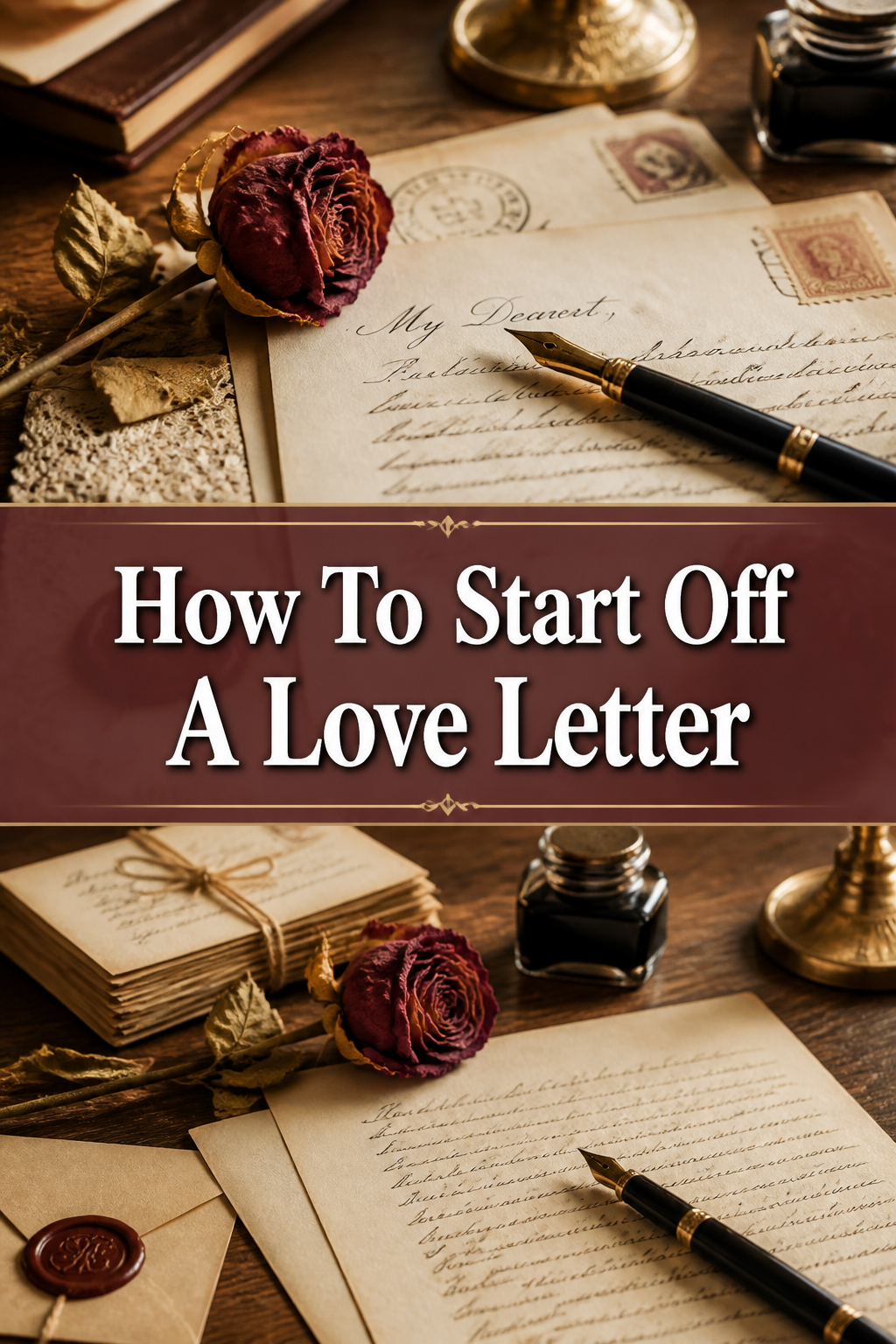
💌 How To Start Off A Love Letter
Wedding Planning
No fluff, no drama. Just easy weekly advice, planning shortcuts, and gentle reminders to help you actually enjoy your engagement.
I once spent three hours staring at a blank sheet of cream-colored stationery, paralyzed by the fear of getting the first sentence wrong.
That letter was for my partner of five years, and despite our history, the pressure to be profound felt like an impossible weight.
I eventually realized that the best openings aren’t the most poetic ones, but the ones that sound most like the person writing them.
Quick Overview
Starting a love letter is often the hardest part of the entire writing process because it sets the emotional tone for everything that follows.
This guide will show you how to break through the initial anxiety and craft an opening that feels both authentic and deeply moving.
- Time needed: 30 to 45 minutes
- Difficulty: Beginner
- What you’ll need: Quality paper, a reliable pen, a quiet space, and a specific memory of your loved one.
Step-by-Step Instructions
Step 1: Curate Your Writing Environment
Find a space where you feel completely comfortable and free from the gaze of others.
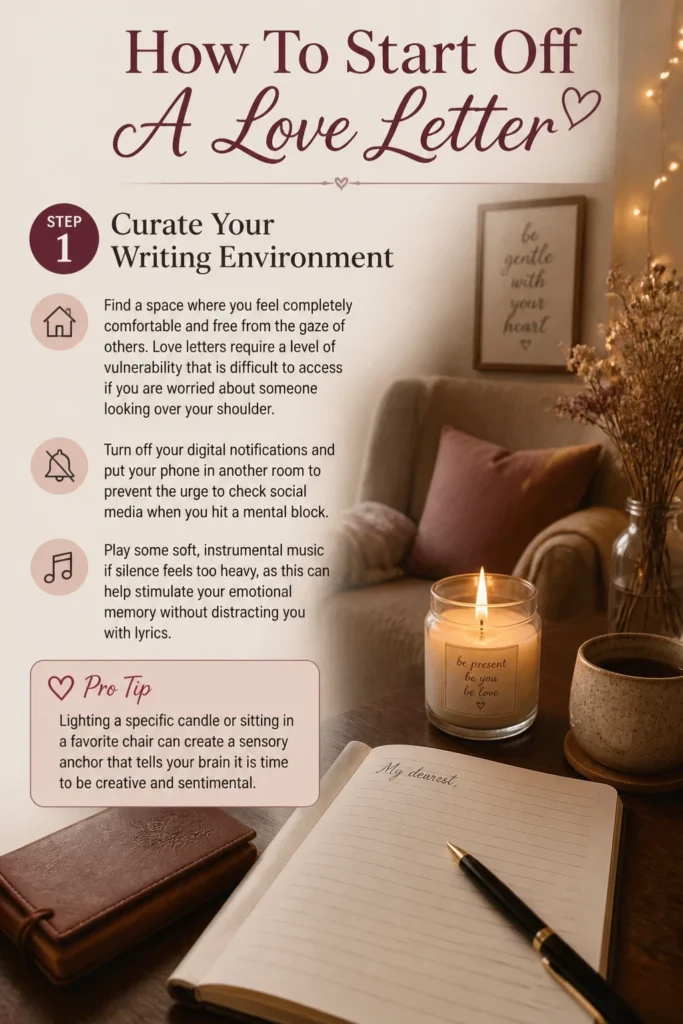
Love letters require a level of vulnerability that is difficult to access if you are worried about someone looking over your shoulder.
Turn off your digital notifications and put your phone in another room to prevent the urge to check social media when you hit a mental block.
Play some soft, instrumental music if silence feels too heavy, as this can help stimulate your emotional memory without distracting you with lyrics.
Pro Tip: Lighting a specific candle or sitting in a favorite chair can create a sensory anchor that tells your brain it is time to be creative and sentimental.
Step 2: Select Your Physical Materials
Choose paper that feels significant to the touch, such as a heavy cardstock or a textured linen paper.
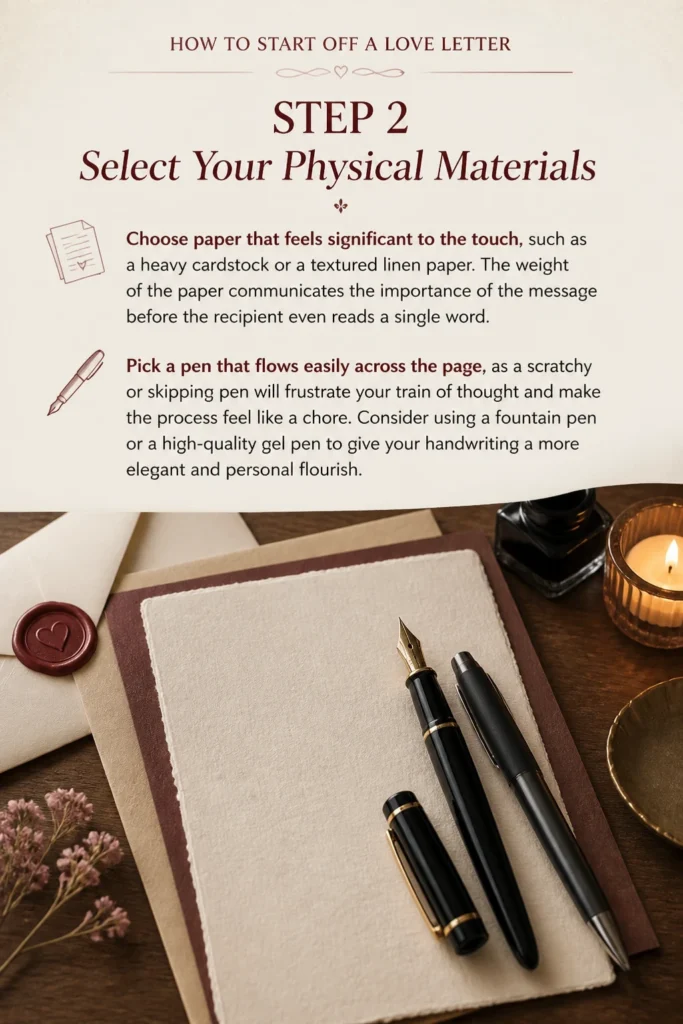
The weight of the paper communicates the importance of the message before the recipient even reads a single word.
Pick a pen that flows easily across the page, as a scratchy or skipping pen will frustrate your train of thought and make the process feel like a chore.
Consider using a fountain pen or a high-quality gel pen to give your handwriting a more elegant and personal flourish.
Step 3: Determine the Relationship Temperature
Analyze the current state of your relationship to ensure your opening matches the level of intimacy you currently share.
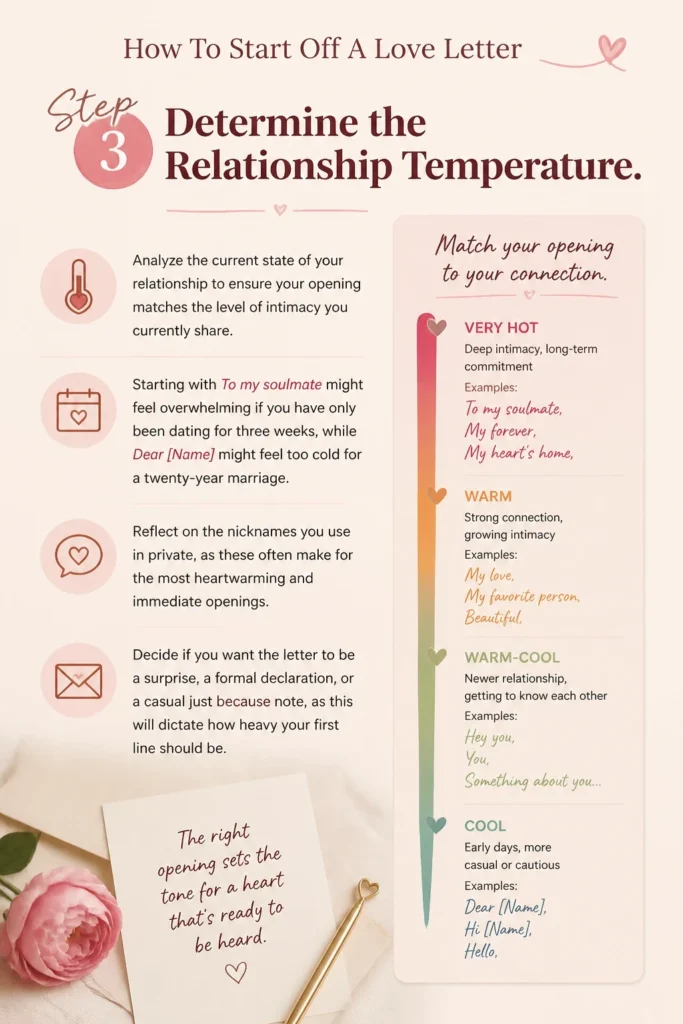
Starting with “To my soulmate” might feel overwhelming if you have only been dating for three weeks, while “Dear [Name]” might feel too cold for a twenty-year marriage.
Reflect on the nicknames you use in private, as these often make for the most heartwarming and immediate openings.
Decide if you want the letter to be a surprise, a formal declaration, or a casual “just because” note, as this will dictate how “heavy” your first line should be.
Step 4: Craft a Personalized Salutation
Go beyond the standard “Dear” if it feels too formal or stiff for your dynamic.
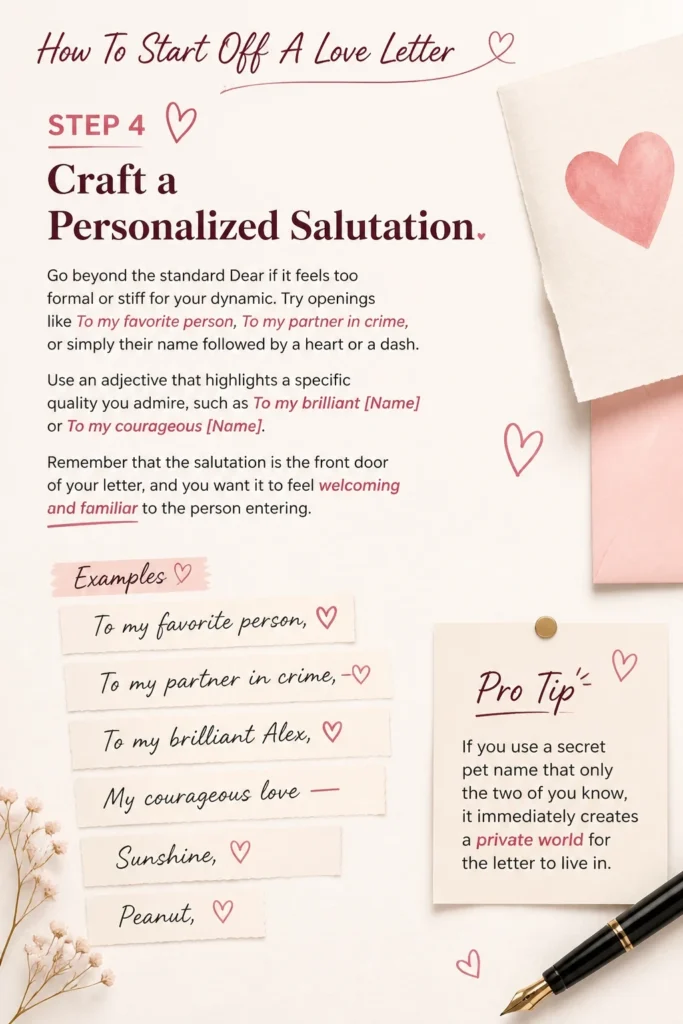
Try openings like “To my favorite person,” “To my partner in crime,” or simply their name followed by a heart or a dash.
Use an adjective that highlights a specific quality you admire, such as “To my brilliant [Name]” or “To my courageous [Name].”
Remember that the salutation is the “front door” of your letter, and you want it to feel welcoming and familiar to the person entering.
Pro Tip: If you use a secret pet name that only the two of you know, it immediately creates a private world for the letter to live in.
Step 5: Identify Your “Why” Immediately
State the reason you are writing within the first two sentences to ground the reader.
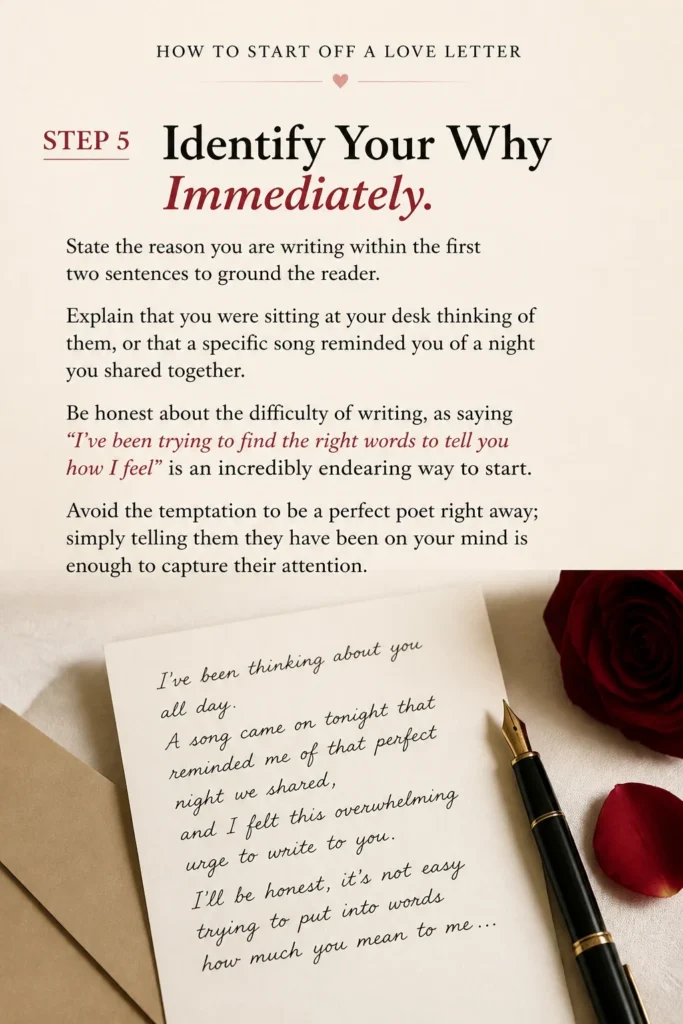
Explain that you were sitting at your desk thinking of them, or that a specific song reminded you of a night you shared together.
Be honest about the difficulty of writing, as saying “I’ve been trying to find the right words to tell you how I feel” is an incredibly endearing way to start.
Avoid the temptation to be a perfect poet right away; simply telling them they have been on your mind is enough to capture their attention.
Step 6: Use a Specific “Anchor” Memory
Recall a small, seemingly insignificant moment that happened recently where you felt a surge of affection for them.
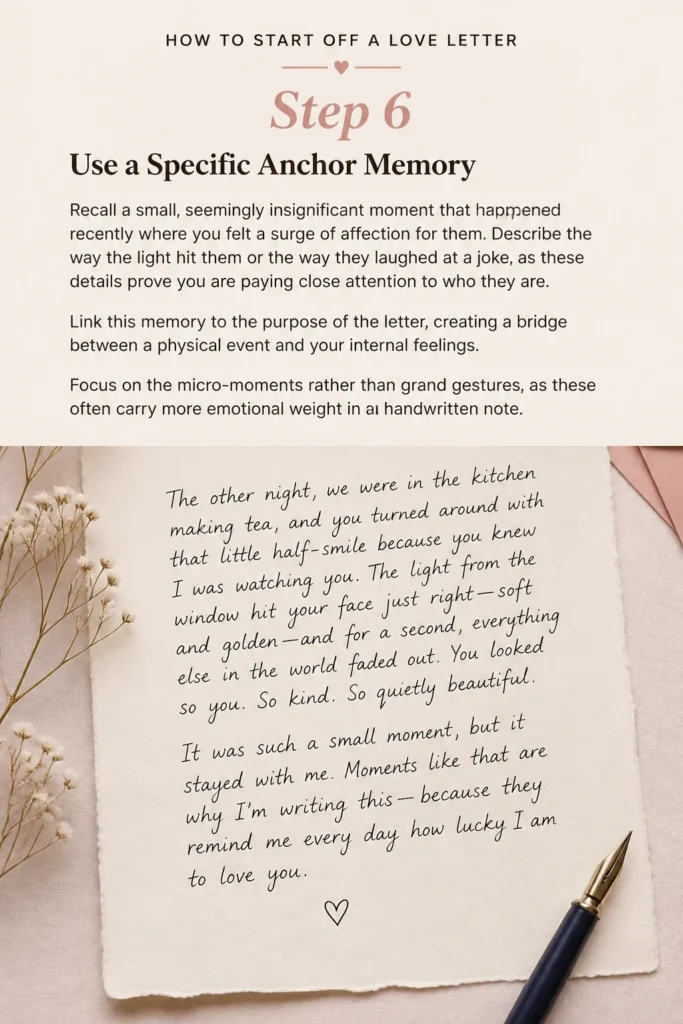
Describe the way the light hit them or the way they laughed at a joke, as these details prove you are paying close attention to who they are.
Link this memory to the purpose of the letter, creating a bridge between a physical event and your internal feelings.
Focus on the “micro-moments” rather than grand gestures, as these often carry more emotional weight in a handwritten note.
Step 7: Acknowledge the Passage of Time
Mention how long it has been since you last told them these things, or how your love has evolved since you first met.
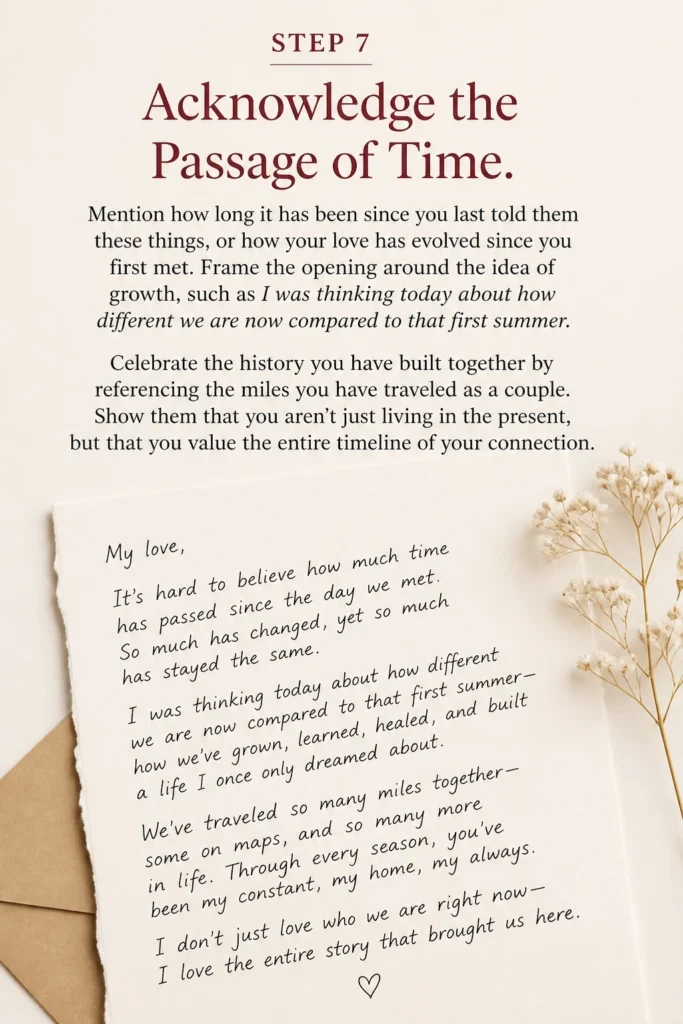
Frame the opening around the idea of growth, such as “I was thinking today about how different we are now compared to that first summer.”
Celebrate the history you have built together by referencing the “miles” you have traveled as a couple.
Show them that you aren’t just living in the present, but that you value the entire timeline of your connection.
Step 8: Set the Emotional Pace
Keep your opening sentences relatively short to build momentum and keep the reader engaged.
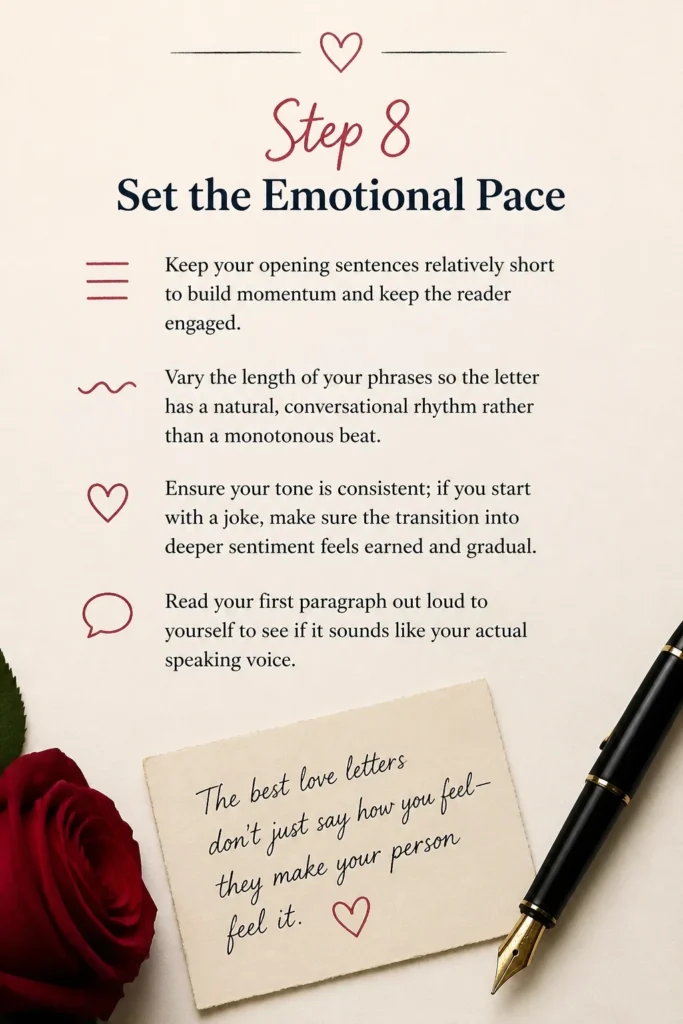
Vary the length of your phrases so the letter has a natural, conversational rhythm rather than a monotonous beat.
Ensure your tone is consistent; if you start with a joke, make sure the transition into deeper sentiment feels earned and gradual.
Read your first paragraph out loud to yourself to see if it sounds like your actual speaking voice.
Common Mistakes to Avoid
The Generic Template Trap
Using a famous quote or a line from a movie as your very first sentence can often backfire. While these words are beautiful, they aren’t yours, and the recipient wants to hear your unique perspective. If you must use a quote, save it for the middle or the end where it can support your own original thoughts.
The Overly Formal Introduction
Writing a love letter like a business memo is a quick way to kill the romantic spark. Avoid phrases like “I am writing to inform you” or “The purpose of this correspondence is.” These are safe ways to hide from vulnerability, but they create a wall between you and the person you love.
The Apology Opening
Many people start love letters by apologizing for how long it has been since they wrote or for their poor handwriting. This immediately puts the reader in a position of having to “forgive” you rather than just enjoying the sentiment. Skip the excuses and go straight to the affection; they won’t care about the handwriting if the words are sincere.
The Performance Pressure
Trying to sound like Shakespeare or a Victorian novelist usually results in writing that feels forced and unnatural. If you don’t use words like “thou” or “eternal” in real life, don’t use them in your letter. Authenticity is much more attractive than a performance of romanticism.
Troubleshooting
The Blank Page Paralysis
If you find yourself staring at the paper for more than ten minutes without writing a word, lower the stakes. Take a scrap piece of paper and write “I love you because…” and then list five random things. Pick the most specific thing from that list and use it as your opening observation to get the ink moving.
Fear of Sounding Cheesy
Cringe is often just vulnerability in disguise, and love letters are inherently a bit “cheesy” by nature. Lean into the sincerity and remind yourself that the person receiving this loves you and wants to know your heart. If a sentence feels too sugary, try to make it more grounded by adding a concrete detail about their personality or habits.
The “Wrong Word” Obsession
If you find yourself constantly crossing out words or starting over on new sheets of paper, you are focusing too much on the “how” and not enough on the “who.” Write a rough draft on your computer or a cheap notebook first. Once you have the flow right, copy it onto your nice stationery with the confidence of knowing exactly what you want to say.
Key Takeaways
- Prioritize authenticity over poetic perfection by using your own natural voice and vocabulary.
- Start with a specific memory to ground the letter in reality and show that you are paying attention.
- Keep the salutation personal by using nicknames or adjectives that reflect your unique bond.
- State your intention early so the reader understands the emotional context of the letter right away.
- Use high-quality materials to signal that the message is important and meant to be kept.
- Avoid generic clichés and instead focus on the “micro-moments” that define your relationship.
Frequently Asked Questions
Is it okay to type a love letter instead of writing it by hand?
While a typed letter is better than no letter at all, handwriting carries a physical connection that digital fonts cannot replicate. The imperfections in your script and the pressure of your pen on the page make the letter a one-of-a-kind artifact. If your handwriting is truly illegible, consider typing it but adding a handwritten note at the beginning and end.
How long should the opening of the letter be?
The opening should typically be one or two short paragraphs that set the scene and establish the mood. You want to move into the “meat” of your feelings relatively quickly to keep the reader’s interest. Think of the opening as the warm-up that prepares both you and the reader for the deeper emotions to come.
What if we just had an argument and I want to write a love letter?
In this case, your opening should acknowledge the tension without dwelling on it. You might start by saying, “Even when things are difficult between us, I never want to lose sight of how much I value you.” This shows that your love is a constant that exists independently of temporary disagreements.
Can I start a love letter with a joke?
Yes, if humor is a major part of your relationship, starting with a lighthearted observation can be a great way to break the ice. Just ensure you eventually transition into a more sincere tone so the letter doesn’t feel like a comedy routine. A joke can lower the recipient’s guard and make them more receptive to the sentimental parts that follow.
Our Top Recommended Finds
- Original Crown Mill Stationery: This classic Belgian paper has a wonderful texture that makes every word feel like a historical document.
- Lamy Safari Fountain Pen: An excellent entry-level fountain pen that provides a smooth writing experience without a high price tag.
- G. Lalo Vergé de France Envelopes: These tissue-lined envelopes add an extra layer of privacy and luxury to your correspondence.
Moving From The First Line To The Heart
Once you have successfully navigated the opening sentences, the rest of the letter will often flow much more naturally.
The hardest part is simply giving yourself permission to be seen and to express your feelings without a filter.
Now that you have the tools to begin, take a deep breath and let your first thought hit the paper.
If you find this process rewarding, you might want to explore the art of keeping a “love journal” where you jot down these small memories daily.
The most important thing you can do today is to stop planning and start writing, because a flawed, finished letter is worth a thousand perfect ones that never left your head.
Wedding Planning
No fluff, no drama. Just easy weekly advice, planning shortcuts, and gentle reminders to help you actually enjoy your engagement.