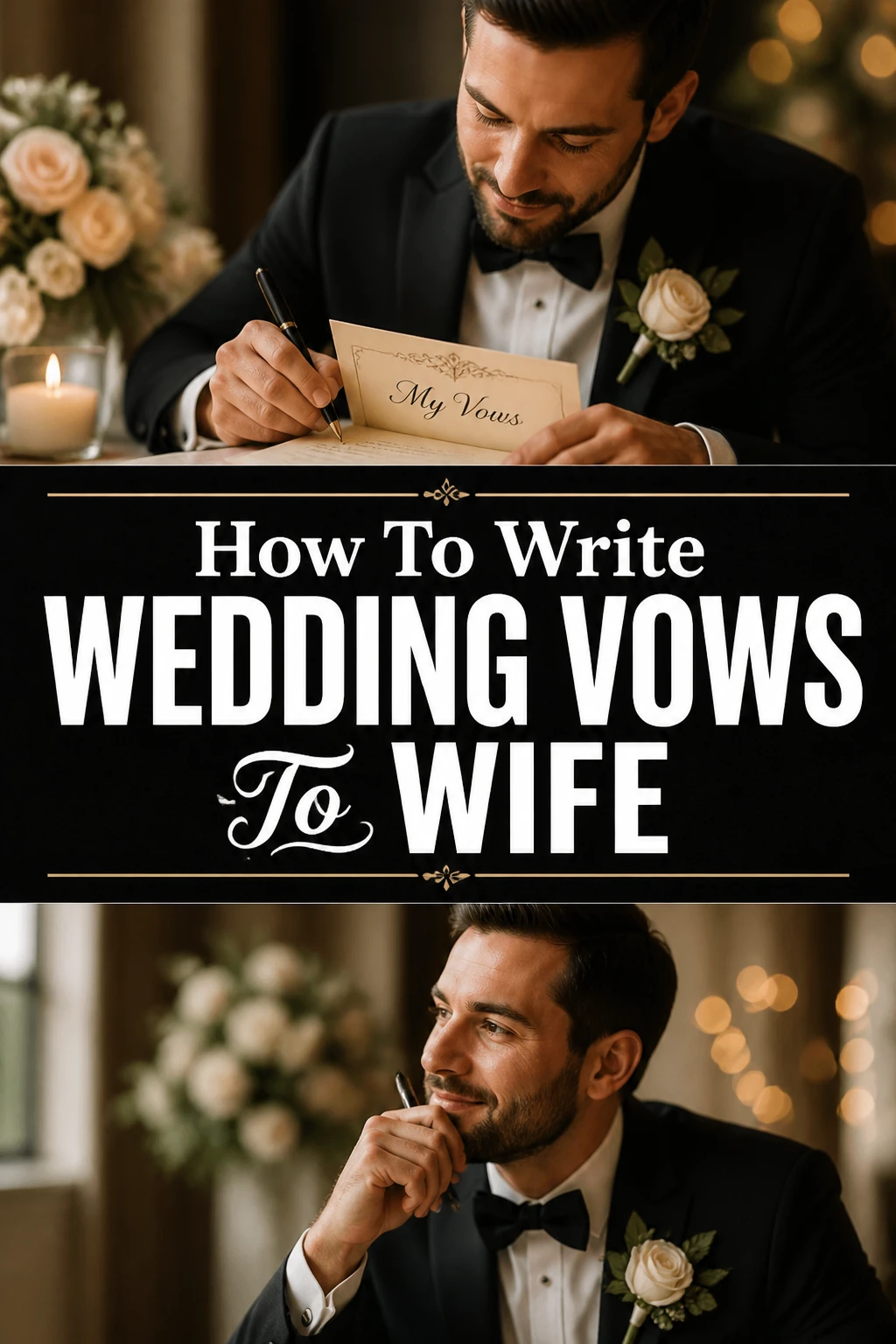
💖 How To Write Wedding Vows To Wife
Wedding Planning
No fluff, no drama. Just easy weekly advice, planning shortcuts, and gentle reminders to help you actually enjoy your engagement.
Writing wedding vows for your wife is a deeply personal and meaningful journey.
It’s a chance to articulate your love, promises, and dreams for your future together.
Having penned my own heartfelt vows, I understand the mix of excitement and nerves, and I’m here to guide you through crafting words she’ll cherish forever.
Quick Overview
This guide will help you craft authentic, moving wedding vows that perfectly express your love and commitment. You’ll learn how to transform your deepest feelings into words she will remember for a lifetime.
- Time needed: 4-8 hours (spread over several days)
- Difficulty: Intermediate
- What you’ll need: A quiet space, pen and paper, your favorite photos of her, and an open heart.
Step-by-Step Instructions
Step 1: Embrace the Quiet and Reflect
Find a quiet moment, away from distractions, to truly think about your relationship. This isn’t just about writing; it’s about reconnecting with your feelings.
Consider the journey you’ve shared. Think about how you met, your first impressions, and the moments that solidified your love. What makes your story unique?
Recall specific memories that bring a smile to your face. These personal anecdotes are the gold dust of great vows.
Pro Tip: Look through old photos, read past cards or messages, or revisit places that hold special meaning for both of you. These can spark powerful memories and emotions.
Step 2: Pinpoint Her Unique Qualities
List all the things you adore about your future wife. Be specific, not generic.
Think about her personality traits, her quirks, her strengths, and the little things she does that melt your heart. Does she have a contagious laugh? An unwavering kindness? A fierce determination?
Consider how she makes you a better person. What positive changes has she brought into your life? This highlights the transformative power of your love.
Step 3: Brainstorm Core Themes and Keywords
Identify the central themes of your relationship. Is it adventure, comfort, growth, unwavering support, or playful humor?
Jot down keywords that encapsulate your feelings and your future together. Words like “joy,” “trust,” “partner,” “forever,” “laughter,” “home,” or “adventure” can be great starting points.
Use these themes and keywords as anchors for your vows, ensuring a consistent and heartfelt message.
Step 4: Structure Your Vows Thoughtfully
Decide on a general structure. A common and effective flow includes an introduction, expressions of love and appreciation, specific promises, and a conclusion.
Start with how you feel about her and your journey so far. This sets the emotional tone.
Transition into your promises, making them clear and heartfelt. Conclude with your vision for your future together.
Step 5: Draft Your Promises
Write down the specific commitments you want to make to her. These are the core of your vows.
Think about both the grand and the everyday promises. Will you promise to support her dreams, make her laugh daily, or always be her safe harbor?
Ensure your promises are genuine and reflective of your character. They should be things you truly intend to uphold.
Pro Tip: Balance serious commitments with lighter, more personal promises. For example, “I promise to always be your biggest fan, and I promise to try to remember to take out the trash.” This adds warmth and authenticity.
Step 6: Weave in Personal Anecdotes
Incorporate one or two short, specific stories that illustrate your love. These make your vows uniquely yours.
Choose anecdotes that are relatable and reveal something sweet or significant about your relationship. Maybe it’s a moment you knew she was “the one,” or a time she showed incredible strength.
Keep these stories concise. They should enhance your vows, not overshadow them.
Step 7: Express Your Feelings and Future Vision
Articulate how she makes you feel. Does she inspire you, complete you, challenge you, or bring you immense joy?
Paint a picture of your shared future. What do you envision for your life together? This shows your long-term commitment and excitement.
Speak from the heart. Let your genuine emotions shine through these final sentiments.
Step 8: Practice Reading Aloud
Read your vows out loud, several times. This helps you catch awkward phrasing or sentences that don’t flow well.
Time yourself. Aim for a length that feels comfortable and impactful, typically 1-3 minutes. Too short can feel rushed, too long can lose impact.
Practice in front of a mirror or a trusted friend (if you don’t mind them hearing them early). Pay attention to your pacing and delivery.
Step 9: Refine and Edit with Care
Polish your language. Remove any clichés or generic statements. Replace them with fresh, specific expressions.
Check for repetition. Ensure each sentence adds new meaning or emotion.
Trust your instincts. Once you feel your vows truly represent your heart, put the pen down. Over-editing can sometimes strip away sincerity.
Common Mistakes to Avoid
Being Too Generic
Many people fall into the trap of using phrases that could apply to any couple. Your vows should be unmistakably about your wife and your unique love story. Instead of saying “I love you,” try “I love how your laughter brightens even the toughest days.”
Focus on specific memories, inside jokes, and her distinct personality traits. These details make your vows authentic and unforgettable, resonating deeply with her.
Making It a Roast or Comedy Show
While humor can be wonderful, your wedding vows are not the place for extended jokes or poking fun at your partner. The primary purpose is to express love and commitment.
A touch of lightheartedness or a brief, shared chuckle is fine, but ensure the overall tone remains sincere and romantic. Save the longer comedic bits for the reception toast.
Forgetting to Practice
Writing beautiful vows is only half the battle. Delivering them confidently and emotionally is crucial. Many people write their vows and then don’t practice reading them aloud until the big day.
This can lead to stumbling, rushing, or losing your place. Practice ensures a smooth delivery, allowing you to focus on your wife’s eyes, not your script.
Writing an Epic Novel
While your love story is vast, your vows should be concise and impactful. Aim for a duration of 1 to 3 minutes, which usually translates to about 200-400 words.
Longer vows can lose the audience’s attention and feel overwhelming for both you and your partner. Edit ruthlessly to ensure every word counts and conveys maximum emotion.
Troubleshooting
Writer’s Block
If you’re staring at a blank page, feeling stuck, don’t force it. Take a break. Go for a walk, listen to music that reminds you of her, or watch a romantic movie.
Sometimes, the best way to overcome writer’s block is to stop trying to write perfectly and just start free-associating. Jot down any thought, memory, or feeling that comes to mind, no matter how small. You can organize it later.
Feeling Overwhelmed
The pressure to write “perfect” vows can be immense. Remember, perfection isn’t the goal; authenticity is. Break the process down into smaller, manageable steps, just as outlined in this guide.
Don’t try to write the entire thing in one sitting. Dedicate short, focused sessions to brainstorming, drafting, and refining. It’s a marathon, not a sprint.
Fear of Public Speaking
It’s completely normal to feel nervous about speaking in front of a crowd, especially on such an emotional day. Practice is your best friend here. The more familiar you are with your words, the less anxiety you’ll feel.
On the day, focus solely on your wife. Look into her eyes, speak to her, and let the rest of the world fade away. Remember, everyone there is rooting for you and celebrating your love.
Key Takeaways
- Your vows should be deeply personal and specific to your unique relationship.
- Balance expressions of love and appreciation with clear, heartfelt promises.
- Incorporate specific memories or anecdotes to make your vows authentic.
- Practice reading your vows aloud to ensure a smooth and confident delivery.
- Keep your vows concise and impactful, aiming for 1-3 minutes in length.
- Don’t be afraid to show vulnerability and genuine emotion.
Frequently Asked Questions
Should my vows be funny or serious?
Your vows should primarily be sincere and heartfelt, reflecting the gravity and joy of the commitment. A touch of light humor, reflecting your shared personality, can be wonderful, but avoid making them a stand-up routine. The balance depends on your personality as a couple, but always lean towards sincerity.
How long should wedding vows be?
Ideally, wedding vows should be between 1 to 3 minutes long. This allows enough time to express your feelings and promises without becoming too lengthy or losing the audience’s attention. Aim for approximately 200-400 words.
Is it okay to use notes or read from my phone?
Absolutely! It’s perfectly fine, and often recommended, to have your vows written down on a nice card or in a small booklet. Reading from your phone is also acceptable, though a physical card can feel a bit more traditional and elegant. The goal is to deliver your vows confidently, not to memorize them perfectly.
Should I share my vows with my wife before the wedding?
Traditionally, vows are kept secret until the ceremony to add an element of surprise and emotion. However, some couples choose to share them beforehand to ensure they are complementary in tone or length. Discuss this preference with your partner, but the magic of hearing them for the first time at the altar is often cherished.
Crafting Your Eternal Promise
Writing your wedding vows is more than just putting words on paper; it’s about articulating the very essence of your love and commitment.
It’s a gift you give to your wife, a testament to your journey, and a blueprint for your future together.
Take these steps, embrace the process, and create a message that will echo in her heart for all your years. Start reflecting and drafting today, and let your love shine through every word.
Wedding Planning
No fluff, no drama. Just easy weekly advice, planning shortcuts, and gentle reminders to help you actually enjoy your engagement.