📌 How To Write Vows To Husband Template
Wedding Planning
No fluff, no drama. Just easy weekly advice, planning shortcuts, and gentle reminders to help you actually enjoy your engagement.
Standing at the altar is a moment you will remember for the rest of your life.
I remember the first time I tried to write my own vows, staring at a blinking cursor for three hours before giving up in frustration.
This guide is designed to take that pressure off your shoulders and help you translate your deepest feelings into words he will cherish forever.
Quick Overview
Writing your own vows is a deeply personal process that turns your history into a public declaration of commitment.
- Time needed: 2 to 4 hours over several days
- Difficulty: Intermediate
- What you’ll need: A quiet space, a notebook or digital doc, photos of your relationship, and a timer
Step-by-Step Instructions
Step 1: Gather Your Raw Materials
Start by looking through old photos, text messages, and cards you have exchanged over the years.
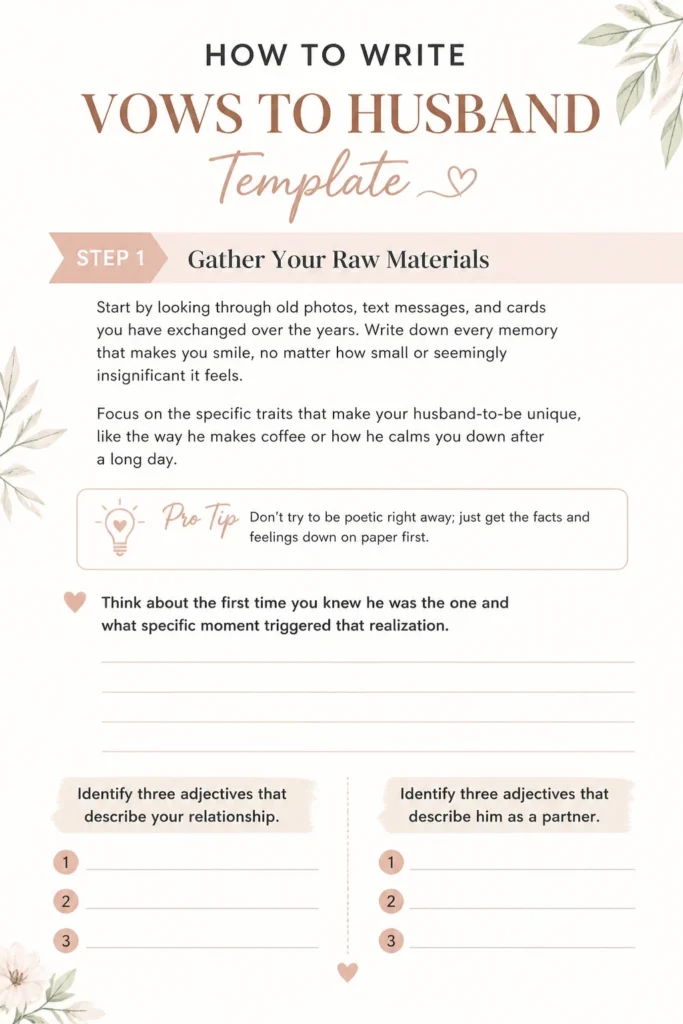
Write down every memory that makes you smile, no matter how small or seemingly insignificant it feels.
Focus on the specific traits that make your husband-to-be unique, like the way he makes coffee or how he calms you down after a long day.
Pro Tip: Don’t try to be poetic right away; just get the facts and feelings down on paper first.
Think about the first time you knew he was “the one” and what specific moment triggered that realization.
Identify three adjectives that describe your relationship and three adjectives that describe him as a partner.
Step 2: Choose a Central Theme
Review your notes from the first step and look for recurring patterns or ideas that keep appearing.
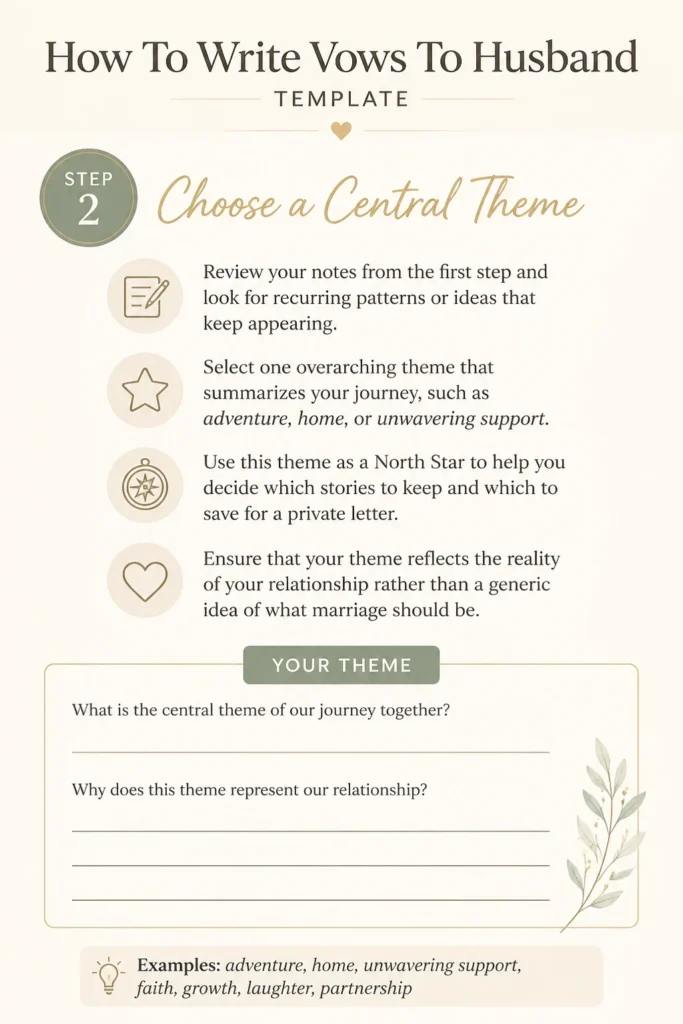
Select one overarching theme that summarizes your journey, such as “adventure,” “home,” or “unwavering support.”
Use this theme as a North Star to help you decide which stories to keep and which to save for a private letter.
Ensure that your theme reflects the reality of your relationship rather than a generic idea of what marriage should be.
Step 3: Structure Your Opening Statement
Address your husband by the name or nickname you use most often to create an immediate sense of intimacy.
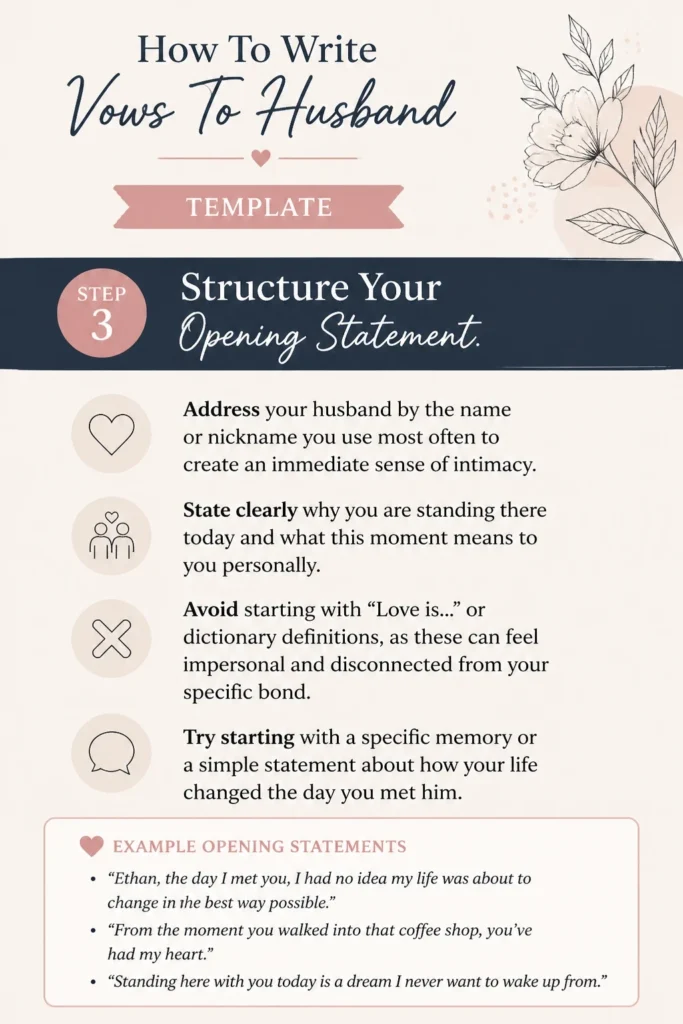
State clearly why you are standing there today and what this moment means to you personally.
Avoid starting with “Love is…” or dictionary definitions, as these can feel impersonal and disconnected from your specific bond.
Try starting with a specific memory or a simple statement about how your life changed the day you met him.
Step 4: Incorporate Specific Stories
Choose one or two brief anecdotes that illustrate the theme you selected in the second step.
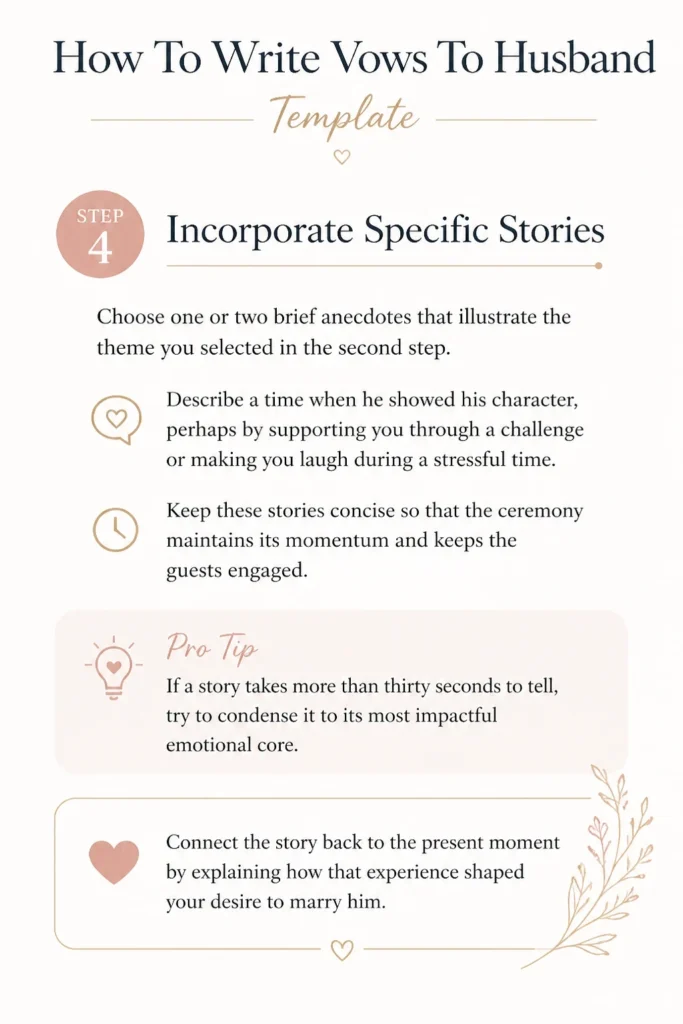
Describe a time when he showed his character, perhaps by supporting you through a challenge or making you laugh during a stressful time.
Keep these stories concise so that the ceremony maintains its momentum and keeps the guests engaged.
Pro Tip: If a story takes more than thirty seconds to tell, try to condense it to its most impactful emotional core.
Connect the story back to the present moment by explaining how that experience shaped your desire to marry him.
Step 5: Craft Your Promises
Transition from talking about the past to making concrete commitments for the future of your marriage.
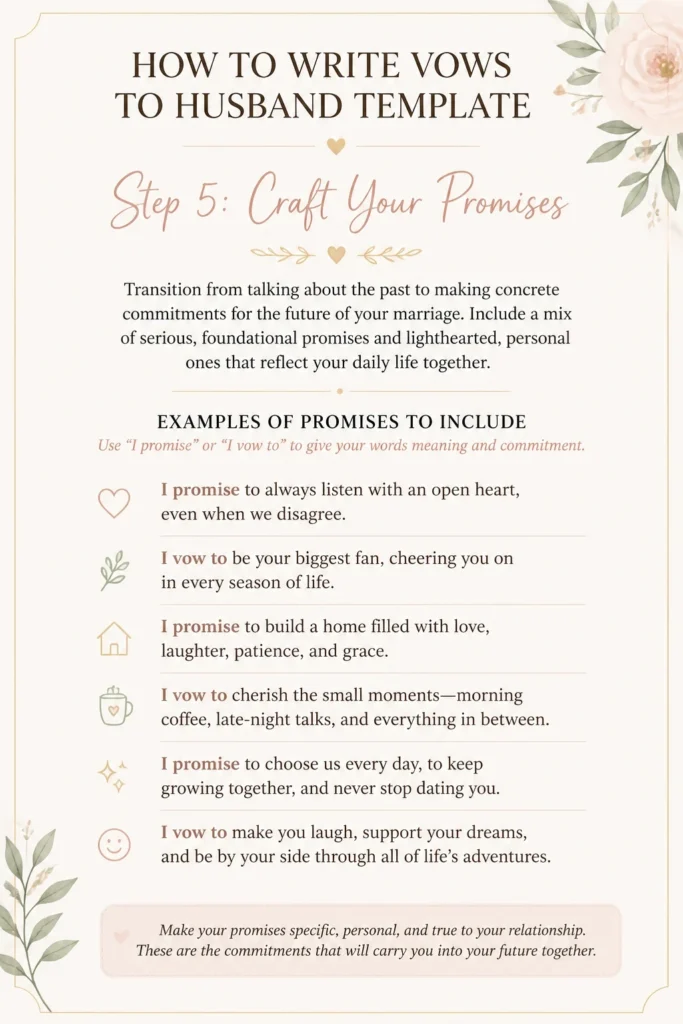
Include a mix of serious, foundational promises and lighthearted, personal ones that reflect your daily life together.
Make promises that are actionable, such as “I promise to always listen with an open heart” or “I promise to be your biggest fan.”
Aim for four to six specific promises that cover both the big picture and the small, everyday moments.
Ensure you actually use the words “I promise” or “I vow” to give the statement its legal and emotional weight.
Step 6: Address the Future
Look ahead to the life you are building together and what you hope to achieve as a team.
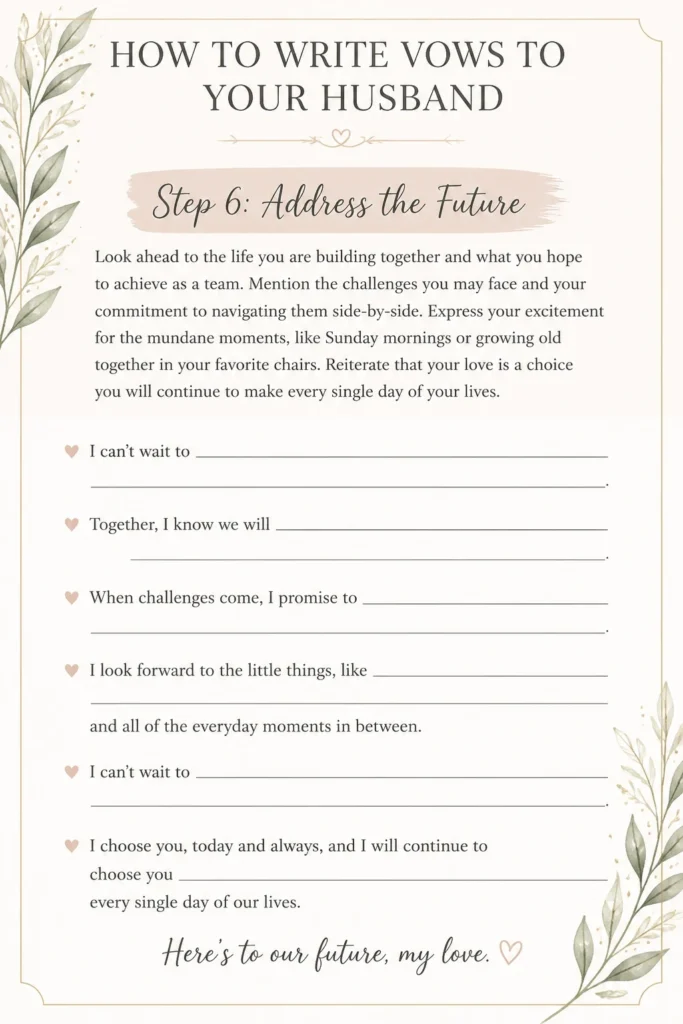
Mention the challenges you may face and your commitment to navigating them side-by-side.
Express your excitement for the mundane moments, like Sunday mornings or growing old together in your favorite chairs.
Reiterate that your love is a choice you will continue to make every single day of your lives.
Step 7: Write a Strong Closing
Summarize your final thoughts into one or two powerful sentences that leave a lasting impression.
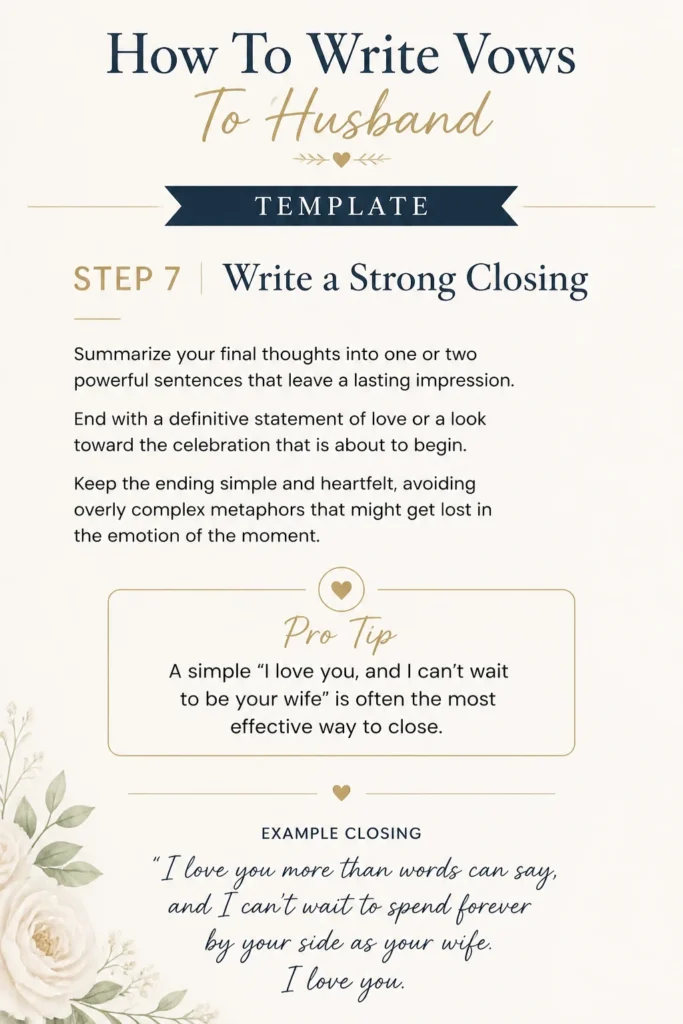
End with a definitive statement of love or a look toward the celebration that is about to begin.
Keep the ending simple and heartfelt, avoiding overly complex metaphors that might get lost in the emotion of the moment.
Pro Tip: A simple “I love you, and I can’t wait to be your wife” is often the most effective way to close.
Step 8: Edit for Timing and Flow
Read your draft out loud several times to identify any awkward phrasing or tongue-twisters.
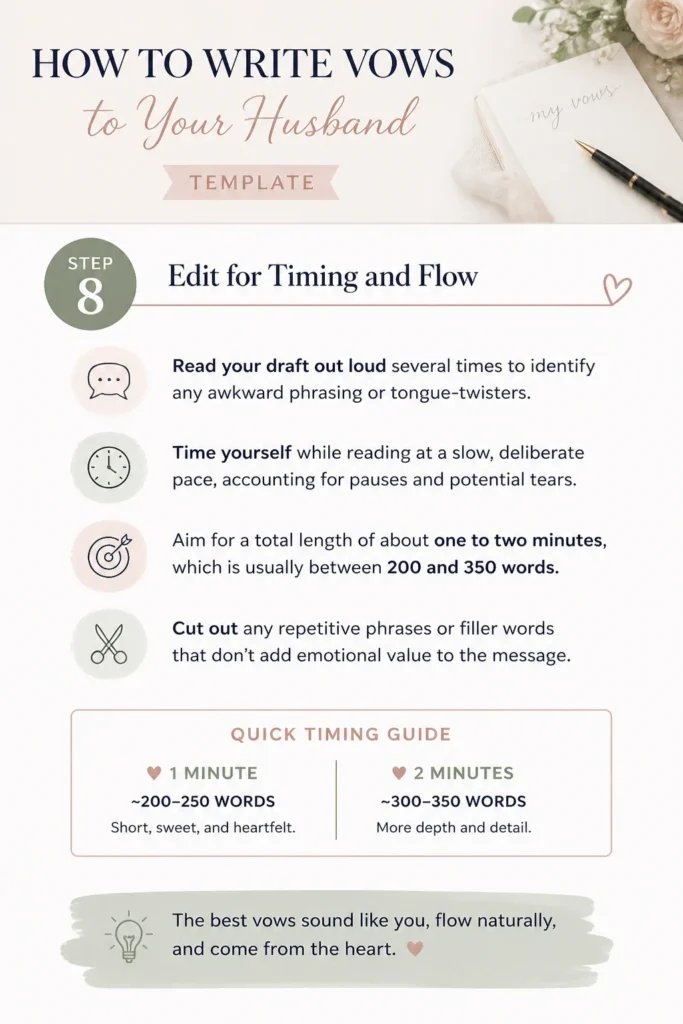
Time yourself while reading at a slow, deliberate pace, accounting for pauses and potential tears.
Aim for a total length of about one to two minutes, which is usually between 200 and 350 words.
Cut out any repetitive phrases or “filler” words that don’t add emotional value to the message.
Step 9: Prepare the Final Version
Print or write your vows on a clean piece of cardstock or in a dedicated vow book.
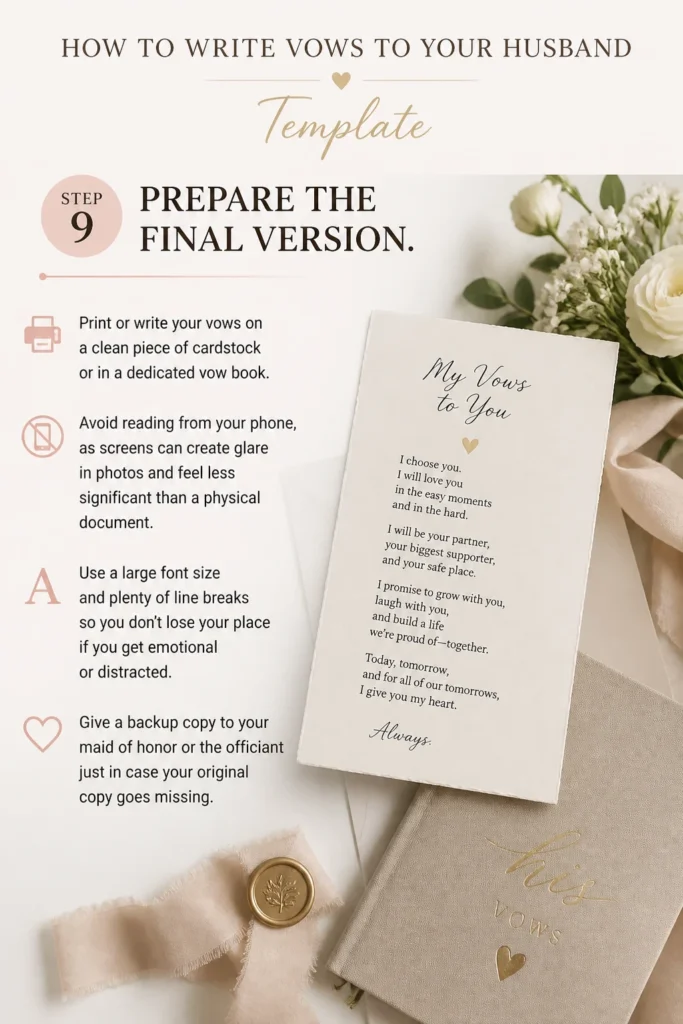
Avoid reading from your phone, as screens can create glare in photos and feel less significant than a physical document.
Use a large font size and plenty of line breaks so you don’t lose your place if you get emotional or distracted.
Give a backup copy to your maid of honor or the officiant just in case your original copy goes missing.
Common Mistakes to Avoid
The Inside Joke Overload
While a small nod to a shared joke can be sweet, filling your vows with references that only the two of you understand can alienate your guests. Remember that while these promises are for him, they are being witnessed by your community. Keep the focus on the universal themes of love and commitment that everyone can relate to.
Writing Too Much Content
It is tempting to try and say everything you have ever felt, but brevity often carries more power. Long vows can cause the ceremony to drag and may lead to you losing your place or becoming overwhelmed. Stick to your most important points and save the rest for a private letter to be read before the ceremony.
Forgetting the Promises
Many people spend so much time on the “tribute” portion of their vows that they forget to actually make vows. Vows are, by definition, promises and commitments for the future. Ensure that at least half of your text is dedicated to what you will do as a partner, rather than just what you like about him.
Waiting Until the Last Minute
Procrastination is the enemy of heartfelt writing, especially when emotions are running high. Writing your vows the night before or the morning of the wedding often leads to generic phrasing and unnecessary stress. Start the process at least three weeks out to allow your thoughts to marinate and evolve.
Troubleshooting
Writer’s Block and the Blank Page
If you find yourself stuck, stop trying to write “vows” and start writing a letter to your husband instead. Tell him what you are excited about for the wedding or what you appreciated about him this morning. You can later go back and highlight the best parts of that letter to form the basis of your formal vows.
Getting Overly Emotional During the Reading
It is perfectly okay to cry, but if you are worried about being unable to speak, practice “grounding” techniques. Take a deep breath, feel your feet on the floor, and look at your husband’s nose if looking into his eyes is too intense. Having a physical copy with large text will also help you find your place if you need to take a moment to compose yourself.
Mismatched Vow Styles
If you are worried your vows will be funny while his are serious, have a quick conversation about the “vibe” beforehand. You don’t need to share the content, but agree on a general word count and a balance of humor versus sentiment. You can also ask a mutual friend to read both sets of vows to ensure they complement each other without being identical.
Key Takeaways
- Focus on specificity by using real-life examples and anecdotes rather than clichés.
- Maintain a clear structure that moves from your history to your future promises.
- Keep the length manageable by aiming for 60 to 90 seconds of speaking time.
- Practice out loud to ensure the rhythm feels natural and the timing is correct.
- Prioritize the promises because they are the foundation of the marriage contract.
- Use a physical copy to read from during the ceremony for a better aesthetic and practical experience.
Frequently Asked Questions
How long should my vows actually be?
Most wedding professionals recommend keeping vows between one and two minutes long. In terms of word count, this usually translates to roughly 200 to 350 words. This length allows you to be deep and meaningful without losing the attention of your audience or making the ceremony feel lopsided.
Should I share my vows with my husband before the wedding?
This is entirely up to your personal preference, but most couples choose to keep them a surprise. If you are anxious about the content, you can have a trusted friend or your officiant read both sets to ensure they are similar in length and tone. This maintains the surprise for the big day while providing peace of mind.
Can I use a template or a pre-written poem?
You can certainly use templates or poems as a starting point or a source of inspiration. However, you should always add your own personal touches and specific promises to make them feel authentic. Using a template for the structure is helpful, but the “meat” of the vows should come from your own experiences.
What if I am not a good writer?
Your husband isn’t looking for a literary masterpiece; he is looking for your honesty and your heart. Speak simply and use the words you would normally use when talking to him. Authenticity always trumps fancy vocabulary or complex metaphors in a wedding setting.
Our Top Recommended Finds
- Pocket-Sized Vow Books: These provide a beautiful, cohesive look for photos and give you a sturdy place to write your final draft.
- Acid-Free Archival Pens: Using high-quality ink ensures that your written vows won’t fade over time when you look back at them on anniversaries.
- Handheld Digital Voice Recorder: This is an excellent tool for recording your practice sessions so you can hear where you might need to slow down or emphasize certain words.
Moving Forward With Your Words
Now that you have the structure and the steps, it is time to put pen to paper and start your first draft.
Remember that there is no “perfect” way to write vows, as long as they are a true reflection of your unique partnership.
Once you have finished your draft, consider writing a separate, private letter to your husband to be delivered on the morning of the wedding.
This allows you to share those deeply private “inside jokes” or intimate thoughts that might not fit into the public ceremony.
Take a deep breath, trust your heart, and start writing the first sentence of your new chapter today.
Wedding Planning
No fluff, no drama. Just easy weekly advice, planning shortcuts, and gentle reminders to help you actually enjoy your engagement.