💍 How To Plan A Wedding In 9 Months

Wedding Planning
No fluff, no drama. Just easy weekly advice, planning shortcuts, and gentle reminders to help you actually enjoy your engagement.
Planning a wedding can feel like a monumental task, especially when you imagine the typical year-long engagement. The idea of condensing all those decisions into just nine months might seem daunting at first glance.
However, I’ve seen countless couples successfully navigate this exciting journey, creating their dream day with careful planning and focused effort. This guide distills years of experience into a clear, actionable roadmap, showing you exactly how to achieve your perfect celebration efficiently and joyfully.
Quick Overview
This guide will equip you with a practical timeline and essential strategies to plan a beautiful wedding within nine months. You’ll learn how to prioritize tasks, manage vendors, and stay within budget, ensuring a smooth and enjoyable process from start to finish.
- Time needed: 9 months of focused planning
- Difficulty: Intermediate (requires organization and decisiveness)
- What you’ll need: A dedicated wedding planner or notebook, a budget tracking spreadsheet, a shared digital calendar, and a supportive partner
Step-by-Step Instructions
Step 1: Envision Your Day & Set Your Budget (Months 9-8)
The very first step is to sit down with your partner and truly envision your wedding day. Discuss your shared dream: what style do you prefer, what atmosphere do you want to create, and what are your absolute priorities? This initial conversation lays the groundwork for every decision that follows.
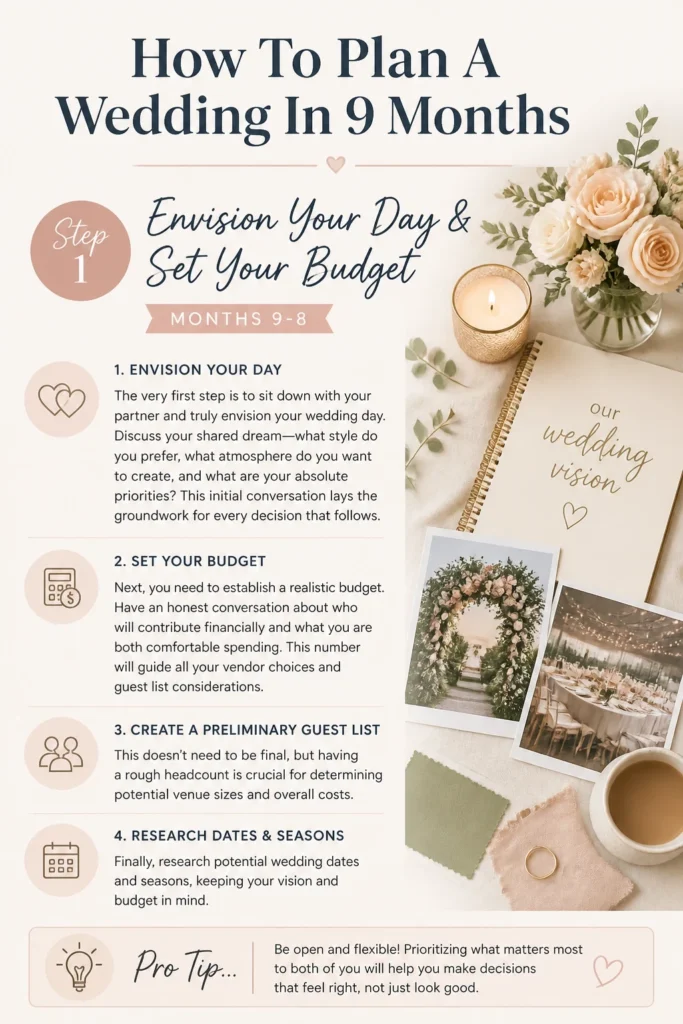
Next, you need to establish a realistic budget. Have an honest conversation about who will contribute financially and what you are both comfortable spending. This number will guide all your vendor choices and guest list considerations.
Create a preliminary guest list. This doesn’t need to be final, but having a rough headcount is crucial for determining potential venue sizes and overall costs. Finally, research potential wedding dates and seasons, keeping your vision and budget in mind.
Pro Tip: Be transparent about your financial limits from the start. This open communication prevents stress and disagreements later in the planning process.
Step 2: Book Your Core Vendors (Months 8-7)
With your vision and budget in place, it’s time to secure the foundational elements of your wedding. Your venue is often the biggest decision, as it frequently dictates your wedding date and overall aesthetic. Start touring and comparing options immediately.
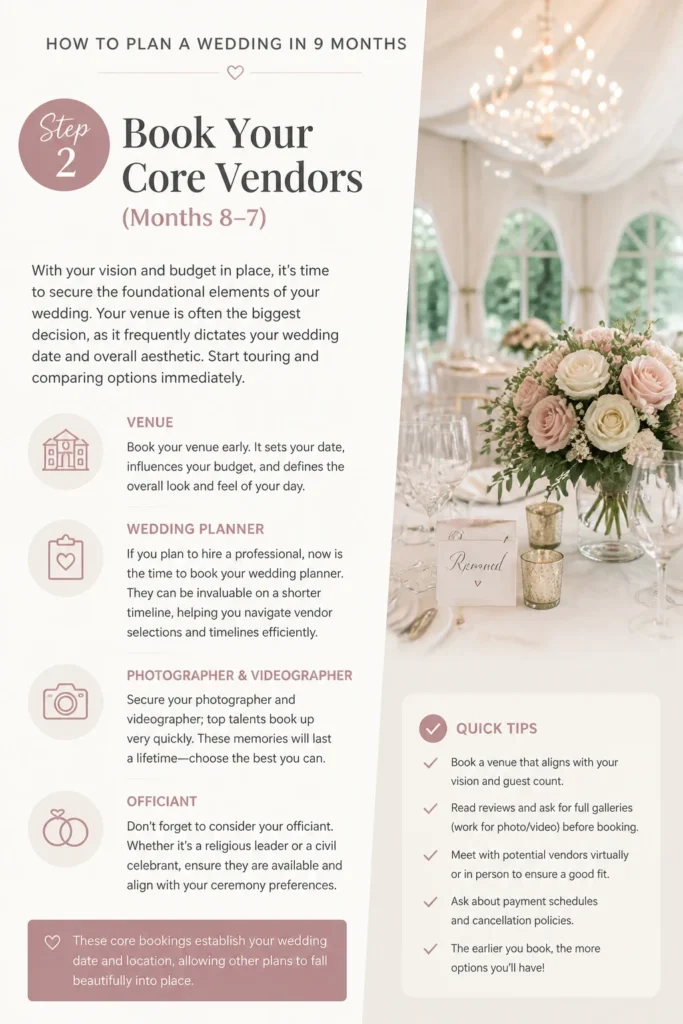
If you plan to hire a professional, now is the time to book your wedding planner. They can be invaluable on a shorter timeline, helping you navigate vendor selections and timelines efficiently. Simultaneously, secure your photographer and videographer; top talents book up very quickly.
Don’t forget to consider your officiant. Whether it’s a religious leader or a civil celebrant, ensure they are available and align with your ceremony preferences. These core bookings establish your wedding date and location, allowing other plans to fall into place.
Step 3: Refine Guest List & Send Save-the-Dates (Months 7-6)
With your venue secured, it’s time to finalize your guest list. This might involve making some tough decisions, but stick to the number that fits your budget and venue capacity. Once the list is firm, begin collecting mailing addresses for everyone.
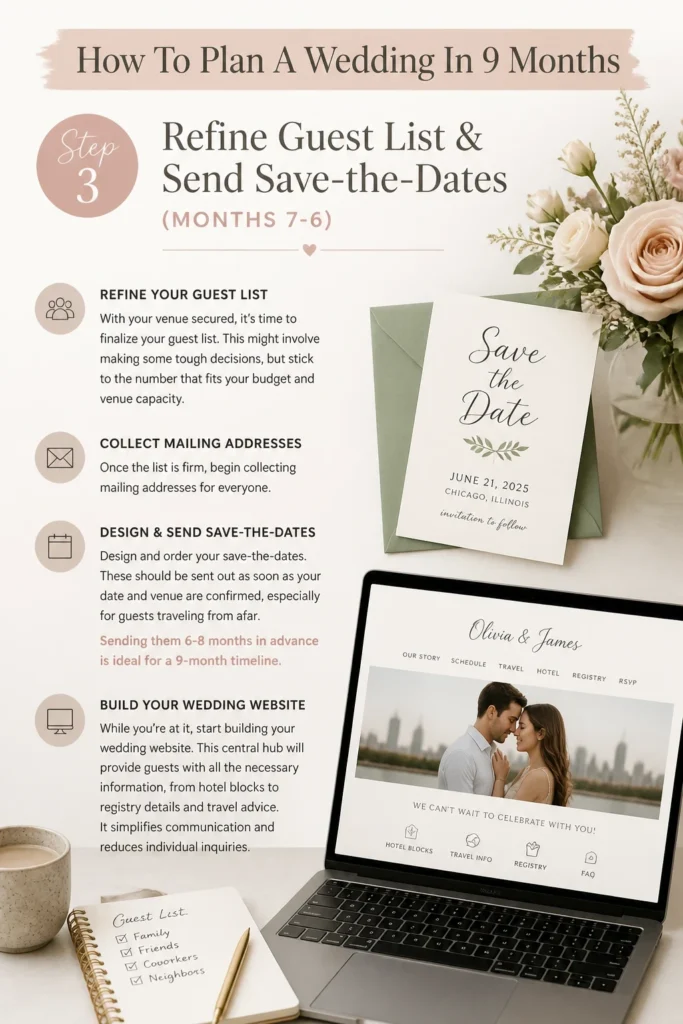
Design and order your save-the-dates. These should be sent out as soon as your date and venue are confirmed, especially for guests traveling from afar. Sending them 6-8 months in advance is ideal for a 9-month timeline.
While you’re at it, start building your wedding website. This central hub will provide guests with all the necessary information, from hotel blocks to registry details and travel advice. It simplifies communication and reduces individual inquiries.
Step 4: Choose Your Attire (Months 6-5)
Finding your wedding attire requires a significant lead time, so this step is crucial. Begin shopping for your wedding dress as soon as possible. Remember to factor in the time needed for ordering, shipping, and multiple alteration appointments. Many dresses take 4-6 months to arrive.
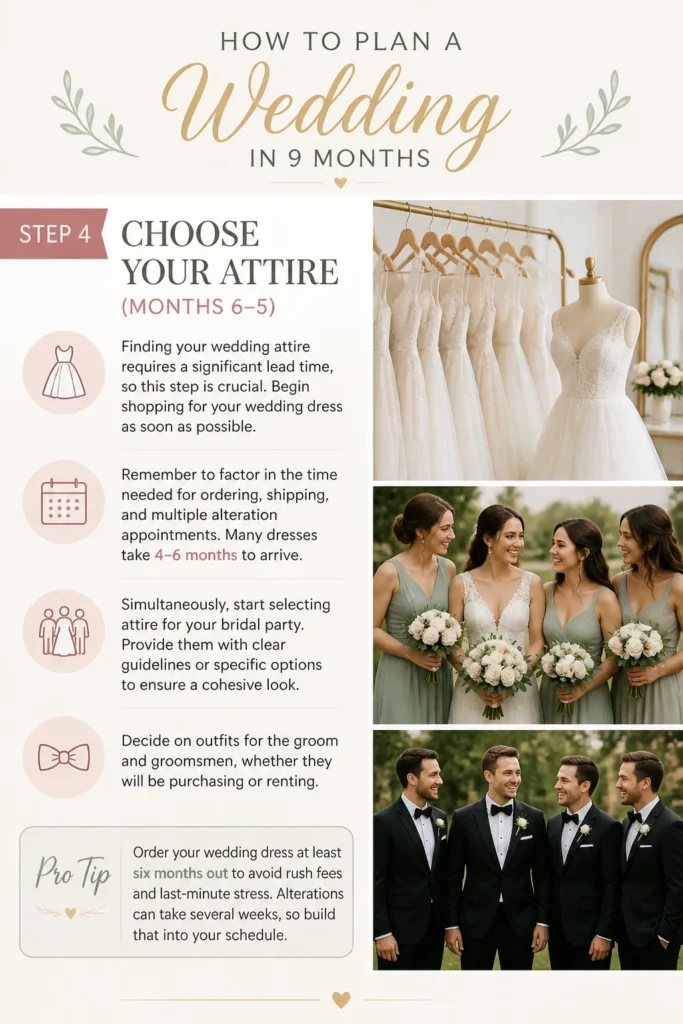
Simultaneously, start selecting attire for your bridal party. Provide them with clear guidelines or specific options to ensure a cohesive look. Decide on outfits for the groom and groomsmen, whether they will be purchasing or renting.
Pro Tip: Order your wedding dress at least six months out to avoid rush fees and last-minute stress. Alterations can take several weeks, so build that into your schedule.
Step 5: Select Remaining Vendors & Details (Months 5-4)
Now that the major elements are in place, focus on the remaining essential vendors. Book your caterer if your venue does not provide in-house services. Schedule tastings and finalize your menu selections.
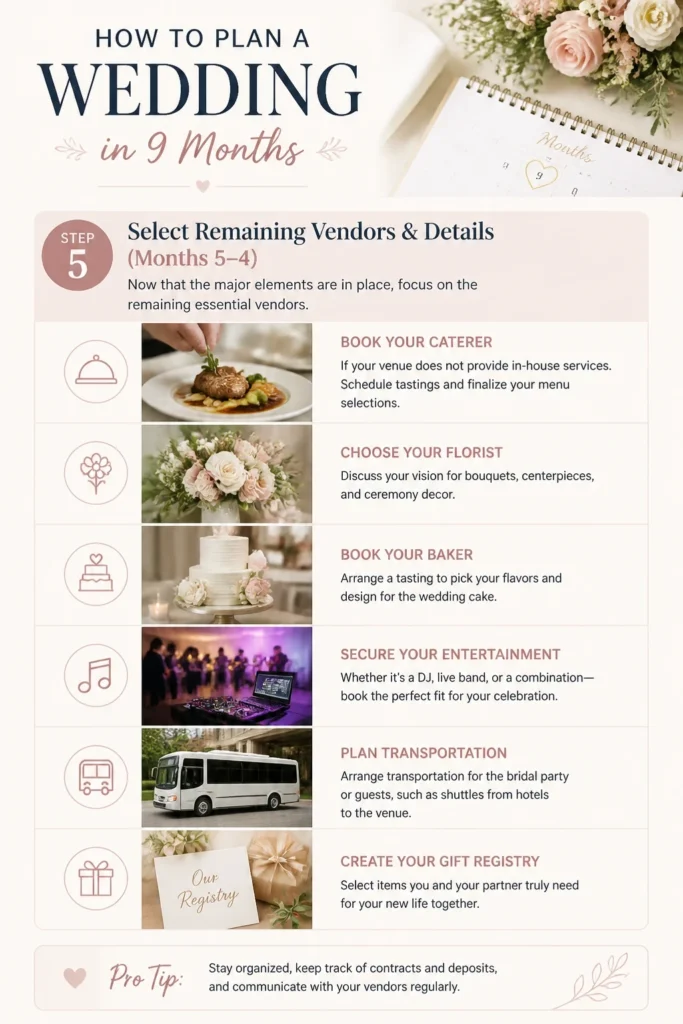
Choose your florist to discuss your vision for bouquets, centerpieces, and ceremony decor. Book your baker for the wedding cake, arranging a tasting to pick your flavors and design. Secure your entertainment, whether it’s a DJ, live band, or a combination.
Plan any necessary transportation for the bridal party or guests, such as shuttles from hotels to the venue. Finally, create your gift registry, selecting items you and your partner truly need for your new life together.
Step 6: Invitations & Logistics (Months 4-3)
With most of your vendors secured, turn your attention to the details that communicate your wedding to your guests. Design and order your wedding invitations. Ensure all the necessary information is included, such as date, time, venue, and RSVP details.
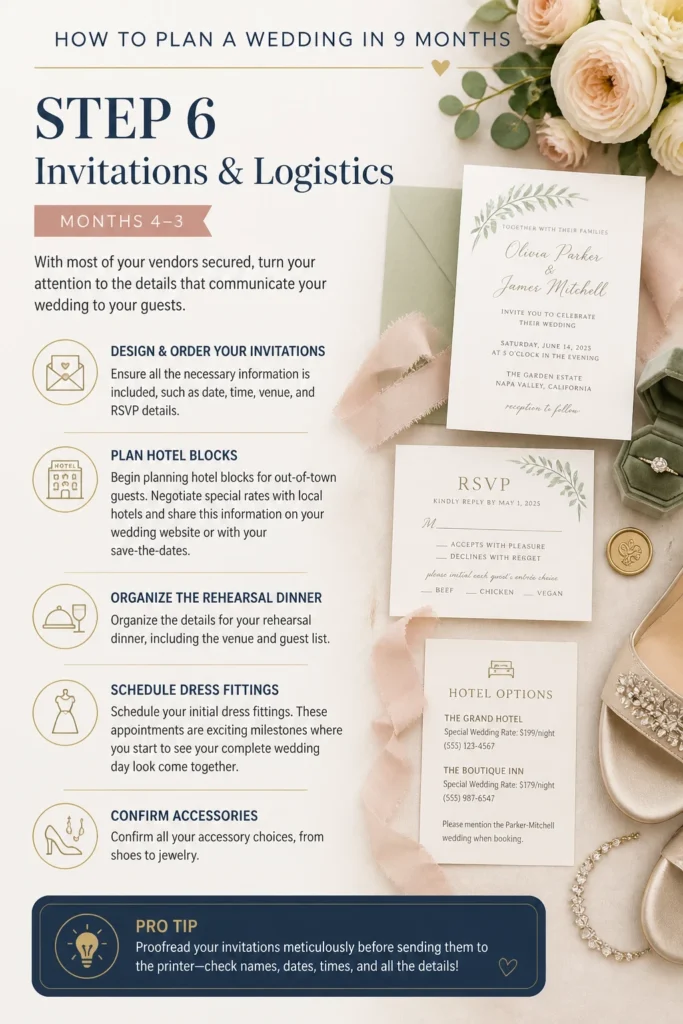
Begin planning hotel blocks for out-of-town guests. Negotiate special rates with local hotels and share this information on your wedding website or with your save-the-dates. Organize the details for your rehearsal dinner, including the venue and guest list.
Schedule your initial dress fittings. These appointments are exciting milestones where you start to see your complete wedding day look come together. Confirm all your accessory choices, from shoes to jewelry.
Pro Tip: Proofread your invitations meticulously before sending them to the printer. Have several trusted people review them for any typos or incorrect information.
Step 7: Finalize Details & Gather RSVPs (Months 3-1)
This phase is all about tying up loose ends and confirming arrangements. Mail your wedding invitations approximately 8-10 weeks before your wedding date. This gives guests ample time to respond and make travel plans.
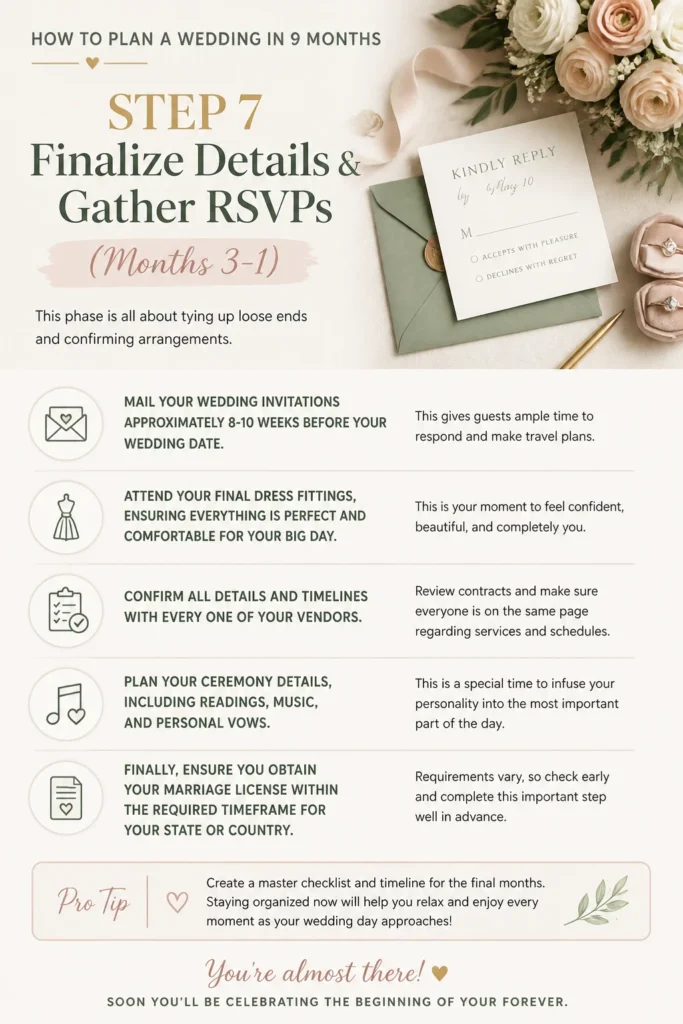
Attend your final dress fittings, ensuring everything is perfect and comfortable for your big day. Confirm all details and timelines with every one of your vendors. Review contracts and make sure everyone is on the same page regarding services and schedules.
Plan your ceremony details, including readings, music, and personal vows. This is a special time to infuse your personality into the most important part of the day. Finally, ensure you obtain your marriage license within the required timeframe for your state or country.
Step 8: The Final Countdown (Month 1 – Week of)
The last month is a whirlwind of final preparations. Chase any outstanding RSVPs to get your final headcount. Create your seating chart, a puzzle that often requires careful consideration.
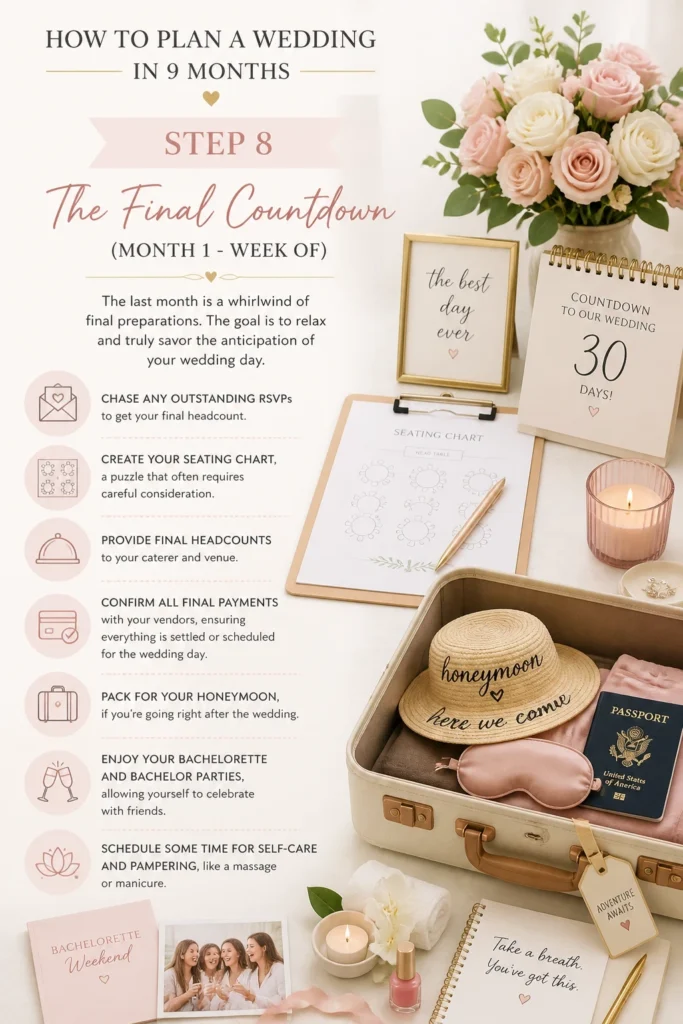
Provide final headcounts to your caterer and venue. Confirm all final payments with your vendors, ensuring everything is settled or scheduled for the wedding day. Pack for your honeymoon, if you’re going right after the wedding.
Enjoy your bachelorette and bachelor parties, allowing yourself to celebrate with friends. Schedule some time for self-care and pampering, like a massage or manicure. The goal is to relax and truly savor the anticipation of your wedding day.
Common Mistakes to Avoid
Ignoring the Budget Early On
It’s easy to get swept up in the excitement of wedding planning and overlook the financial realities. Failing to set and stick to a realistic budget from the very beginning can lead to immense stress, difficult compromises, and even debt. Prioritize what matters most to you and your partner, then allocate funds accordingly. Always build in a buffer for unexpected costs.
Procrastinating on Core Vendor Bookings
Many popular venues, photographers, and planners book up quickly, often more than a year in advance. Waiting too long to secure these essential services on a 9-month timeline severely limits your choices. You might be forced to compromise on quality, style, or your preferred date. Book your top-priority vendors as soon as your wedding date is firm.
Over-Complicating DIY Projects
While doing it yourself can save money, it also demands significant time and energy. Many couples underestimate the effort involved in DIY projects, leading to last-minute stress, exhaustion, and unfinished tasks. Be realistic about your skills, available time, and resources before committing to too many DIY elements. It’s often better to do fewer things well.
Forgetting to Delegate
Trying to manage every single wedding detail yourself is a recipe for burnout. You don’t have to carry the entire planning load alone. Empower your partner, close family members, or bridal party with specific tasks. Delegating allows you to lighten your load, reduces stress, and ensures you can enjoy the planning process and your wedding day.
Troubleshooting
Vendor Availability Issues
If your top-choice vendor is already booked, it can feel disappointing, but don’t despair. Start by asking that vendor for recommendations for other reputable professionals with a similar style or service. Be open to slightly less popular dates or times for your wedding, as this can open up more vendor options. Explore emerging talents in the industry who might offer competitive packages.
Budget Overruns
It’s common for unexpected costs to arise during wedding planning. If you find yourself exceeding your budget, take a deep breath and review your spending categories. Identify areas where you can trim expenses, such as opting for less expensive floral arrangements, a simpler cake design, or reducing your guest count slightly. Prioritize your “must-haves” over “nice-to-haves.”
Family Drama or Disagreements
Wedding planning can sometimes bring underlying family tensions to the surface. The key is open and honest communication with everyone involved. Set clear boundaries regarding decision-making and contributions. Remember that this day is ultimately about you and your partner. If necessary, involve a neutral third party, like your wedding planner, to mediate discussions and keep the focus positive.
Key Takeaways
- Prioritize your wedding vision and establish a clear budget from the very beginning.
- Book core vendors like your venue, photographer, and videographer as soon as possible to secure your date.
- Communicate openly with your partner, and don’t hesitate to delegate tasks to your support system.
- Be decisive in your choices but also flexible; not every detail will go perfectly to plan.
- Start shopping for your wedding attire early to allow ample time for ordering and fittings.
- Remember to step back and enjoy the entire planning process as you celebrate your journey together.
Frequently Asked Questions
Is 9 months enough time to plan a wedding?
Absolutely! While a year or more is common, nine months is a very manageable timeline with good organization, clear decision-making, and a proactive approach. Many couples successfully plan beautiful weddings within this timeframe, focusing on efficiency.
Should I hire a wedding planner for a 9-month timeline?
A wedding planner can be an incredibly valuable asset, especially on a shorter timeline. They can leverage their network, provide expert vendor recommendations, and keep you on track with your schedule, saving you significant time and stress. Even a day-of coordinator can make a huge difference.
What’s the biggest challenge with a 9-month plan?
The primary challenge is often vendor availability, particularly for highly sought-after dates and locations. You will need to be decisive and book quickly once you find a vendor you love. Being flexible with your exact wedding date by a week or two can also significantly increase your options.
How do I manage the guest list effectively?
Start with a realistic guest count based on your budget and venue capacity. Prioritize your closest family and friends first. Use a detailed spreadsheet to track RSVPs, dietary restrictions, and addresses. Don’t be afraid to set firm boundaries if the list starts to grow beyond your means.
Our Top Recommended Finds
- Comprehensive Wedding Planner & Organizer Book: An essential tool for keeping all your contracts, vendor information, notes, and inspiration organized in one convenient place.
- Customizable Budget Tracking Spreadsheet Software: Helps you monitor every expense, track payments, and visualize your spending, ensuring you stay within your financial limits.
- User-Friendly Online Wedding Website Builder: Simplifies guest communication, allows for easy RSVP collection, and provides a central hub for sharing all important wedding details with your attendees.
Your Beautiful Day Awaits: Start Planning Now!
You now have a clear roadmap for planning your wedding in nine months. This timeline provides the structure you need to make informed decisions and stay organized. Remember, planning your wedding should be an exciting and joyful experience.
Embrace the journey, make decisions confidently, and lean on your partner and support system. With these steps, you are well-equipped to create a memorable and beautiful celebration. Don’t wait another moment – take the first step towards your dream wedding today!
Wedding Planning
No fluff, no drama. Just easy weekly advice, planning shortcuts, and gentle reminders to help you actually enjoy your engagement.