💒 How To Decorate A Church For A Wedding
Wedding Planning
No fluff, no drama. Just easy weekly advice, planning shortcuts, and gentle reminders to help you actually enjoy your engagement.
I remember standing at the back of a 19th-century stone chapel, holding a massive roll of white tulle and feeling completely overwhelmed by the height of the ceilings.
That day taught me that decorating a church isn’t about covering up the space, but rather honoring its existing architecture while adding a personal touch of romance.
This guide is built from years of trial, error, and many early Saturday mornings spent hanging garlands to help you create a breathtaking ceremony setting.
Quick Overview
Decorating a church requires a balance between sacred tradition and your personal wedding style.
- Time needed: 4 to 6 hours (depending on the size of your team)
- Difficulty: Intermediate
- What you’ll need: Pew clips, floral wire, command hooks, fresh or silk greenery, candles (LED or real), fabric bolts, and a sturdy ladder.
Step-by-Step Instructions
Step 1: Consult the Church Coordinator
Review the official decorating policy provided by the church office before you buy a single ribbon.
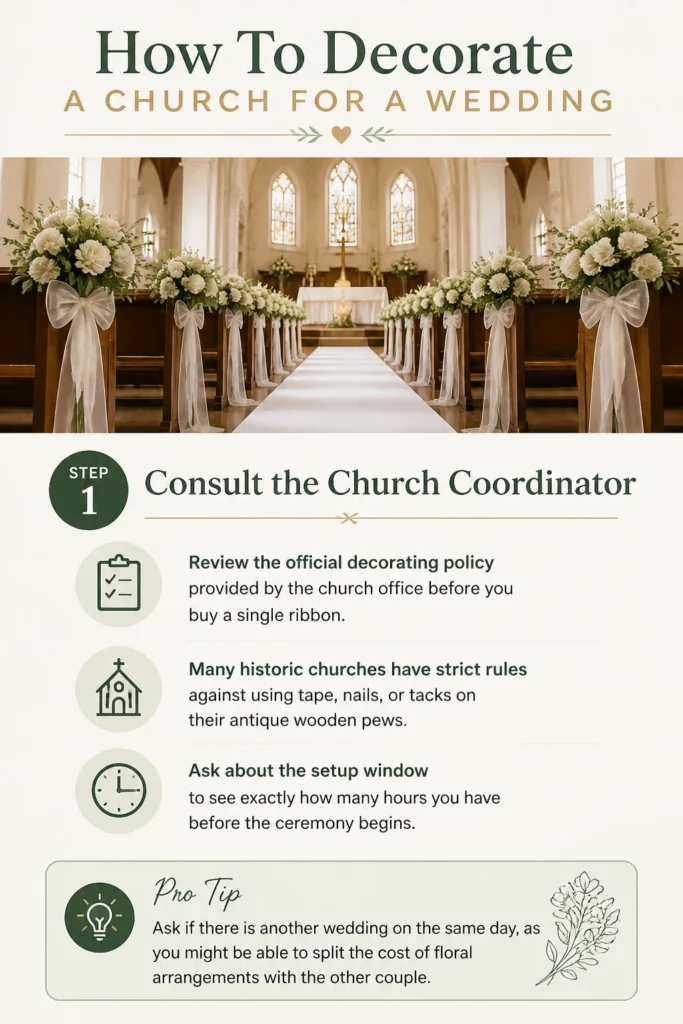
Many historic churches have strict rules against using tape, nails, or tacks on their antique wooden pews.
Ask about the “setup window” to see exactly how many hours you have before the ceremony begins.
Pro Tip: Ask if there is another wedding on the same day, as you might be able to split the cost of floral arrangements with the other couple.
Step 2: Measure the Scale of the Space
Walk the length of the aisle with a measuring tape to determine how much fabric or runner you actually need.
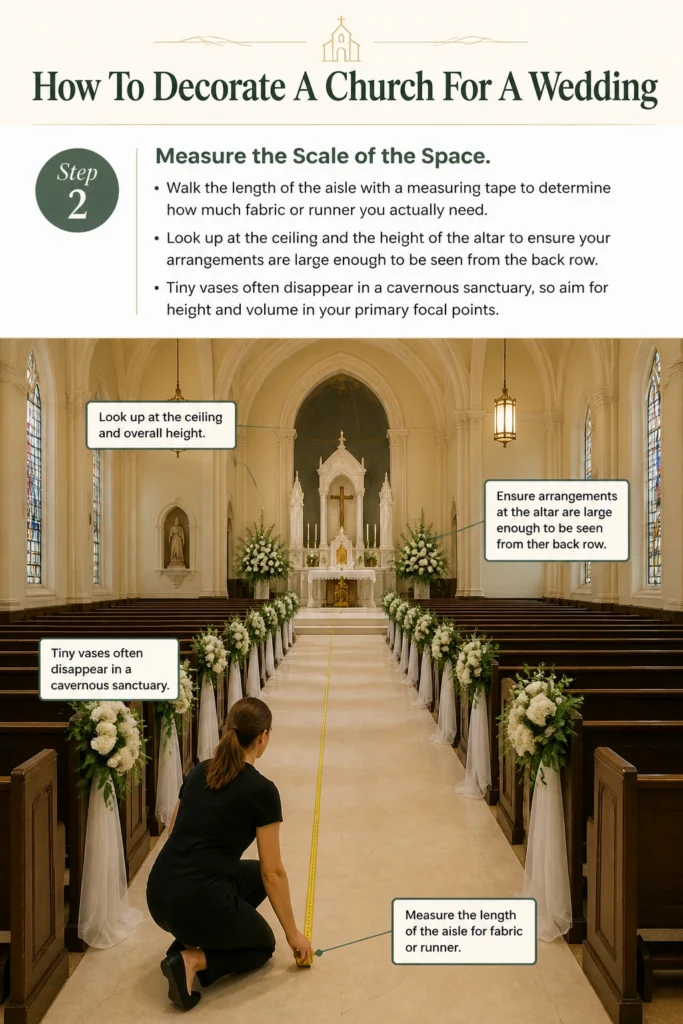
Look up at the ceiling and the height of the altar to ensure your arrangements are large enough to be seen from the back row.
Tiny vases often disappear in a cavernous sanctuary, so aim for height and volume in your primary focal points.
Step 3: Create a Grand Entrance
Focus on the exterior doors first, as this is the first thing your guests will see and photograph.
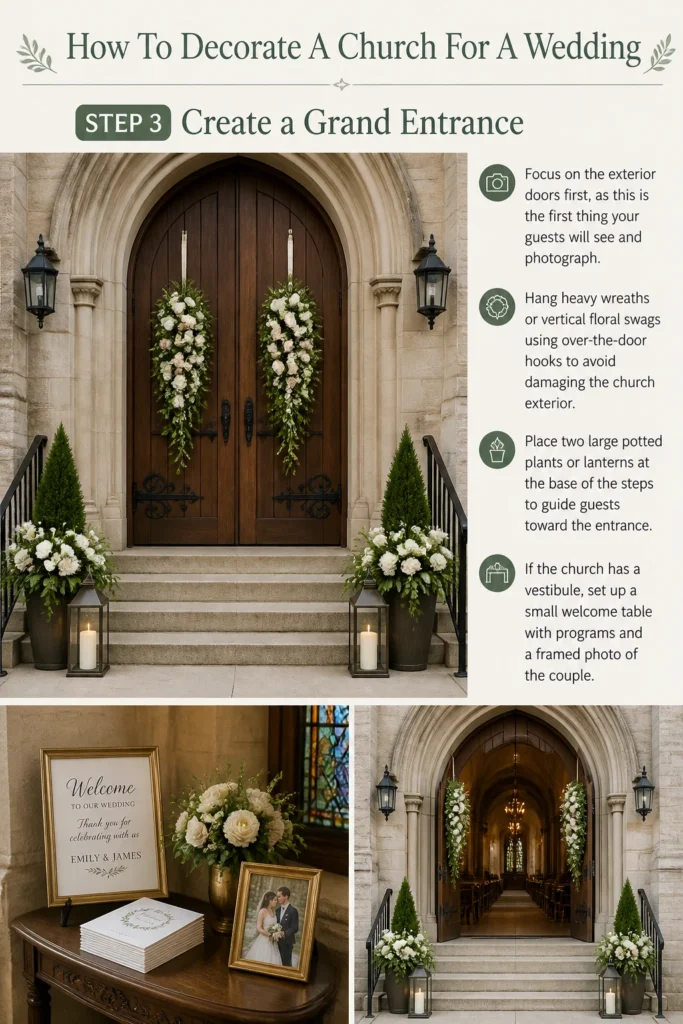
Hang heavy wreaths or vertical floral swags using over-the-door hooks to avoid damaging the church exterior.
Place two large potted plants or lanterns at the base of the steps to guide guests toward the entrance.
If the church has a vestibule, set up a small welcome table with programs and a framed photo of the couple.
Step 4: Design the Aisle and Pew Ends
Select a method for attaching decor that doesn’t involve adhesive, such as plastic pew clips or simple ribbon loops.
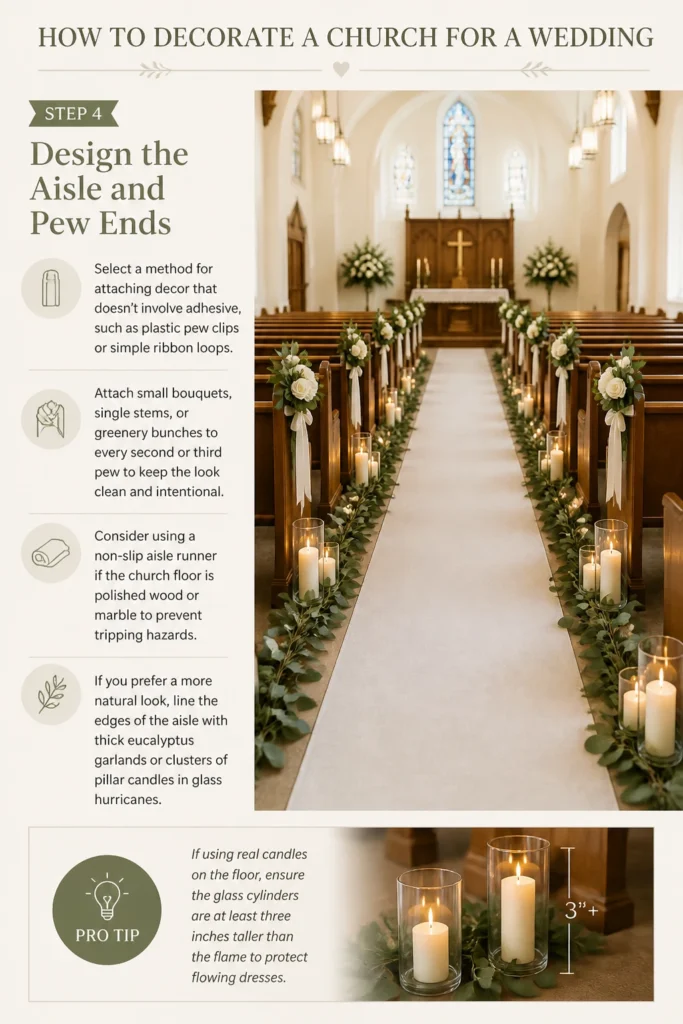
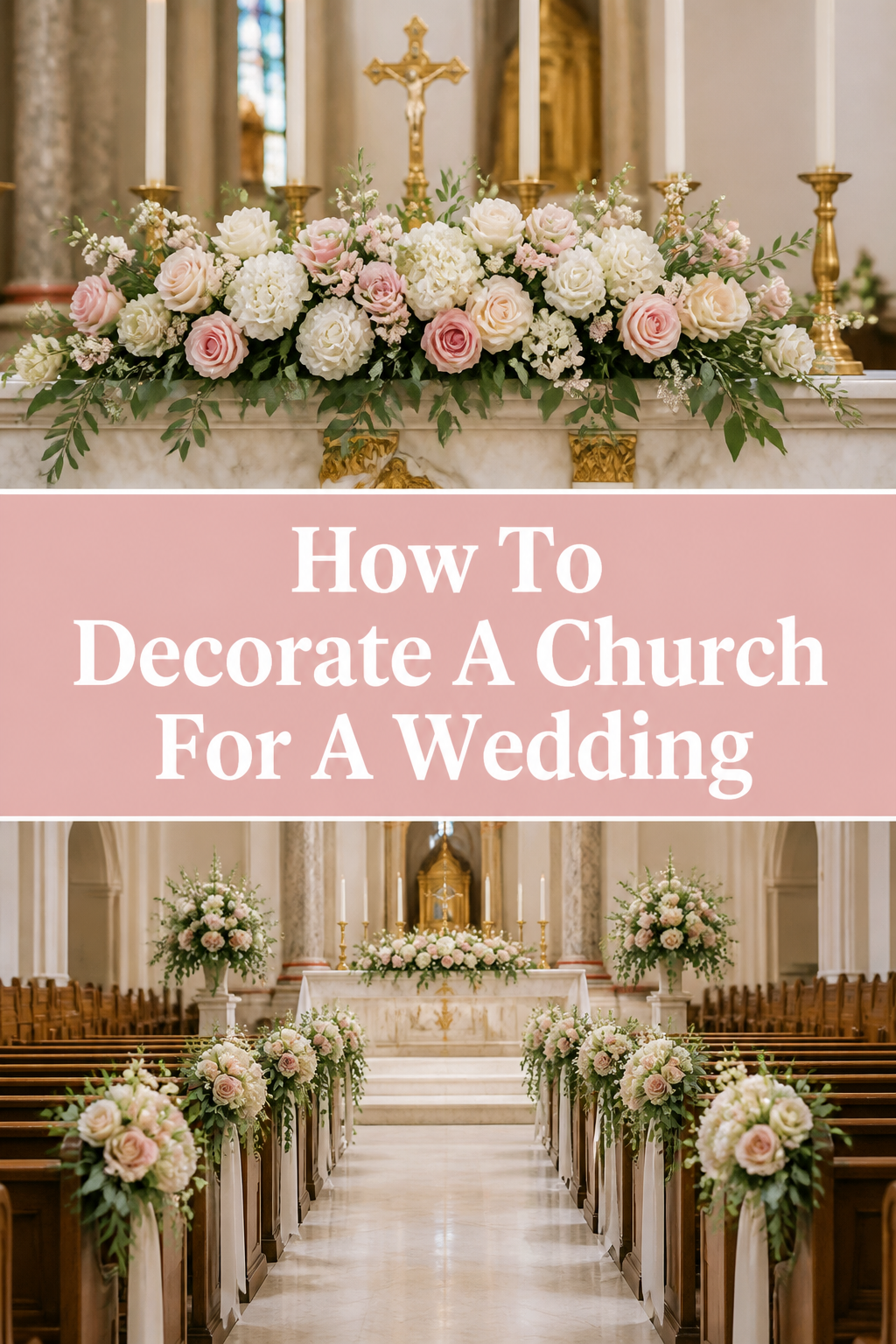
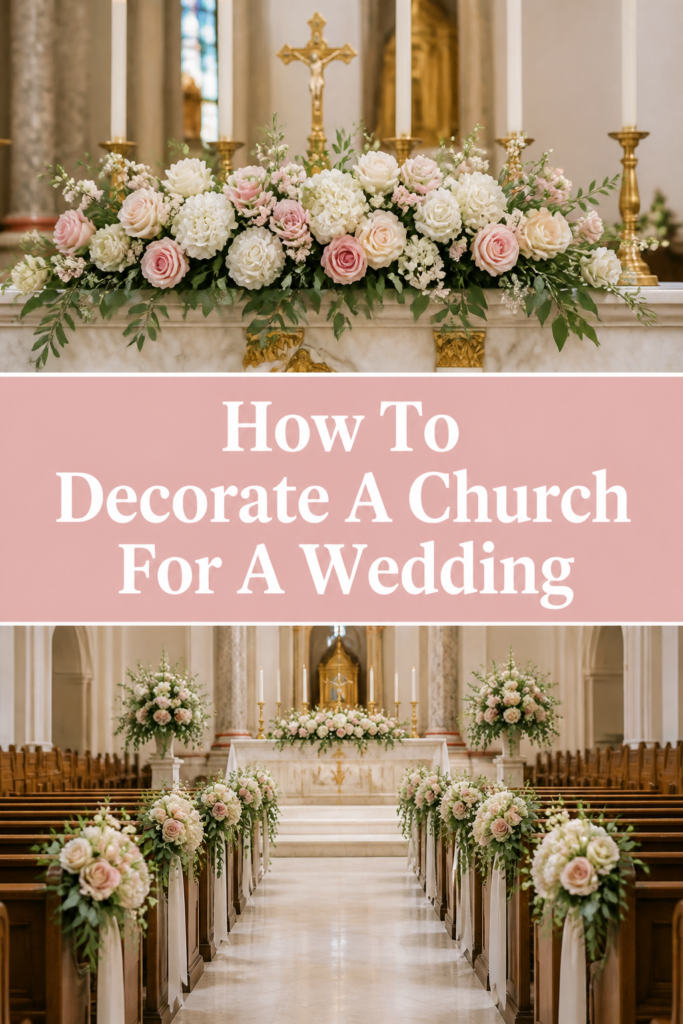
Attach small bouquets, single stems, or greenery bunches to every second or third pew to keep the look clean and intentional.
Consider using a non-slip aisle runner if the church floor is polished wood or marble to prevent tripping hazards.
If you prefer a more natural look, line the edges of the aisle with thick eucalyptus garlands or clusters of pillar candles in glass hurricanes.
Pro Tip: If using real candles on the floor, ensure the glass cylinders are at least three inches taller than the flame to protect flowing dresses.
Step 5: Frame the Altar and Sanctuary
Identify the exact spot where you will stand to say your vows and use that as your central point.
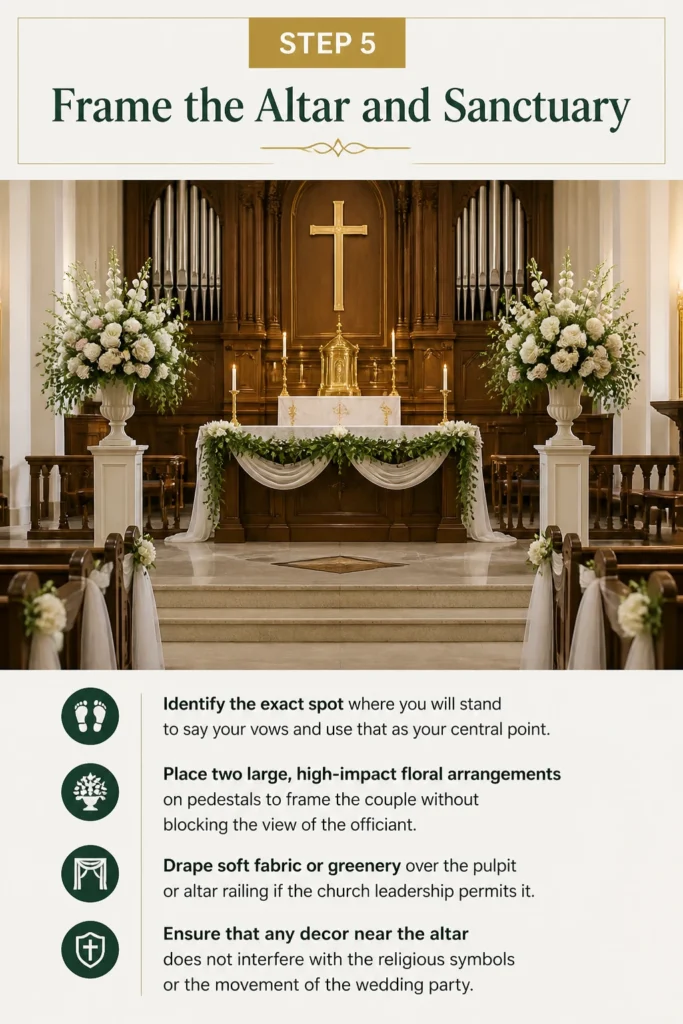
Place two large, high-impact floral arrangements on pedestals to frame the couple without blocking the view of the officiant.
Drape soft fabric or greenery over the pulpit or altar railing if the church leadership permits it.
Ensure that any decor near the altar does not interfere with the religious symbols or the movement of the wedding party.
Step 6: Layer the Lighting
Evaluate the natural light coming through the stained glass and how it changes throughout the day.
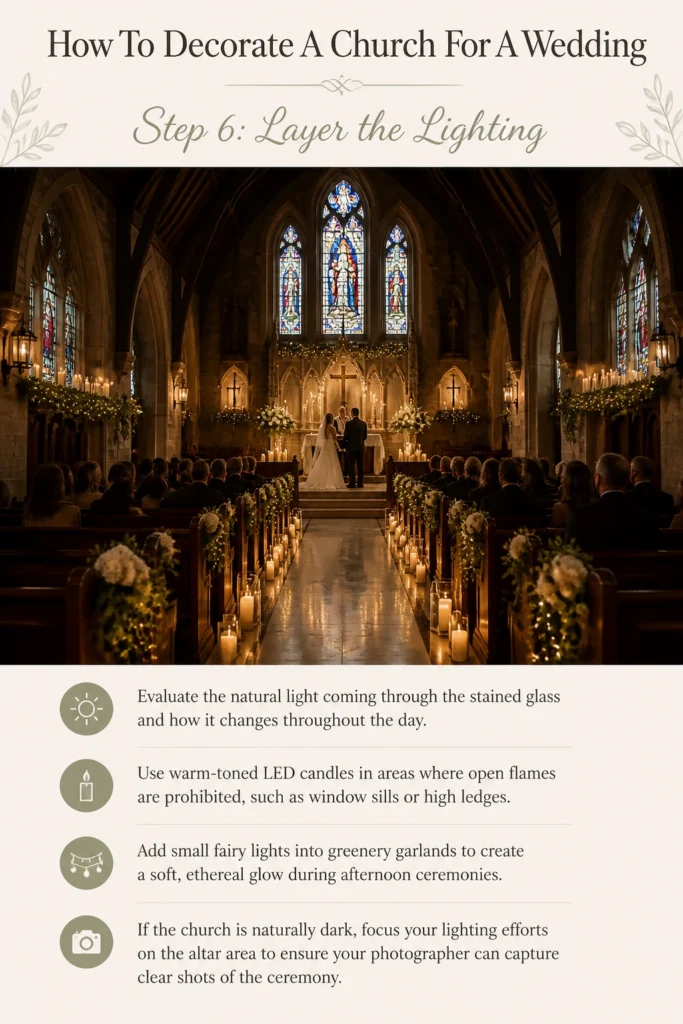
Use warm-toned LED candles in areas where open flames are prohibited, such as window sills or high ledges.
Add small fairy lights into greenery garlands to create a soft, ethereal glow during afternoon ceremonies.
If the church is naturally dark, focus your lighting efforts on the altar area to ensure your photographer can capture clear shots of the ceremony.
Step 7: Perform a Final Walk-Through
Walk down the aisle slowly to check for any loose ribbons or drooping flowers that might snag a dress.
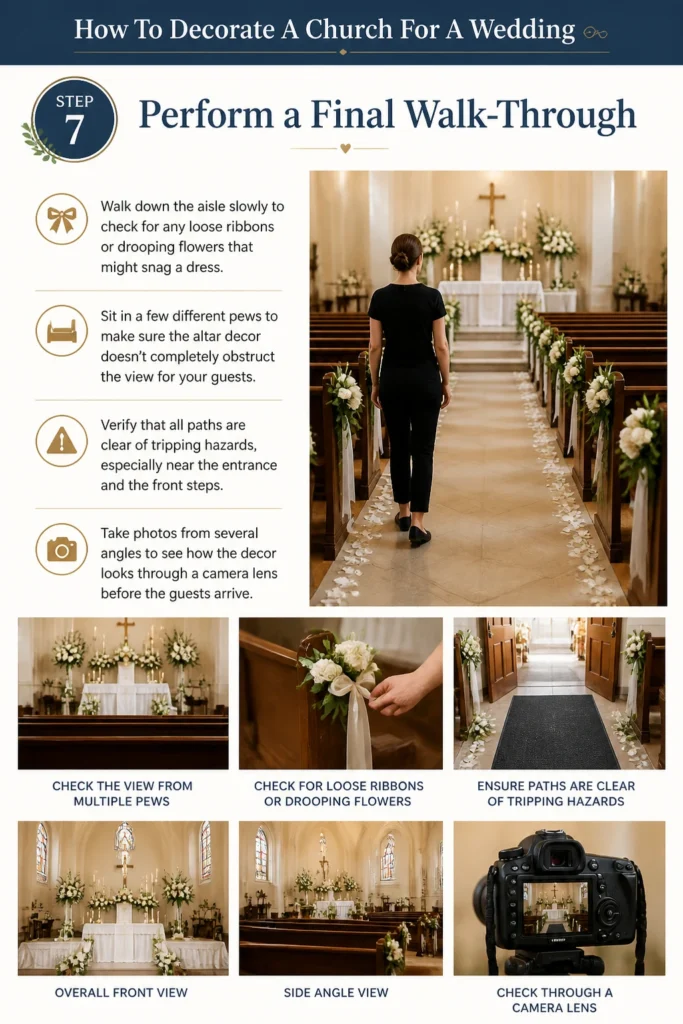
Sit in a few different pews to make sure the altar decor doesn’t completely obstruct the view for your guests.
Verify that all paths are clear of tripping hazards, especially near the entrance and the front steps.
Take photos from several angles to see how the decor looks through a camera lens before the guests arrive.
Common Mistakes to Avoid
Ignoring the Existing Color Palette
Many couples try to force a specific color scheme that clashes with the church’s red carpets or dark wood.
If your church has vibrant stained glass or deep-toned upholstery, choose neutral decor like white, cream, and sage green.
Working with the church’s natural colors rather than against them creates a much more cohesive and high-end look.
Over-Decorating the Pews
Using massive bows or wide fabric swags on every single pew can make the aisle feel narrow and claustrophobic.
This often results in guests accidentally knocking over decor as they try to slide into their seats.
Keep pew decor streamlined and skip every other row to maintain a sense of openness and flow.
Forgetting the Clean-Up Plan
Most churches require all decor to be removed immediately following the ceremony or before the evening service.
Couples often forget to assign a specific team to handle the breakdown, leading to stress or lost security deposits.
Designate two or three people who are not in the bridal party to stay behind for thirty minutes to clear the space.
Troubleshooting
The Church Prohibits Tape and Nails
This is the most common hurdle when decorating sacred spaces, but it is easily solved with the right hardware.
Use heavy-duty “S” hooks for the ends of pews or use zip ties hidden behind ribbons to secure greenery to railings.
Weighted bases for floral stands can also provide stability without needing to be anchored to the floor.
The Ceiling Is Too High for Hanging Decor
If you cannot hang items from the rafters, focus your attention on “grounded” height instead.
Use tall cherry blossom branches or pampas grass in oversized floor vases to draw the eye upward.
This creates the illusion of verticality and fills the empty air space without requiring a 20-foot ladder.
The Space Feels Too Large and Empty
Small churches are easy to fill, but massive cathedrals can feel cold if the guest list is relatively small.
Use “visual barriers” like large ferns or folding screens to close off the back few rows of the church.
This encourages guests to sit closer to the front, creating a more intimate atmosphere and making the decor look more concentrated.
Key Takeaways
- Always prioritize the church’s rules regarding adhesives and permanent fixtures to protect the historic structure.
- Focus on scale by using larger arrangements that won’t get lost in the high-ceilinged environment.
- Use non-damaging fasteners like pew clips, ribbon, and weighted stands for all your floral installations.
- Enhance the natural lighting with candles or LEDs to create a warm, inviting atmosphere for photography.
- Plan for a quick exit by organizing a cleanup crew to remove all items immediately after the ceremony.
- Frame the focal points specifically at the entrance and the altar where the most important moments happen.
Frequently Asked Questions
Can I use real flower petals in the aisle?
Many churches ban real petals because they can be crushed into the carpet and cause permanent staining.
Check with your coordinator first; if they are prohibited, high-quality silk petals or a fabric runner are excellent alternatives.
How much should I spend on church decorations?
Since the ceremony usually only lasts 30 to 60 minutes, many couples spend about 10% to 15% of their total floral budget here.
You can save money by choosing arrangements that can be easily moved from the church to the reception venue afterward.
When should the decorating actually happen?
Ideally, you should decorate the morning of the wedding or the evening before if there are no other events scheduled.
If you are using fresh flowers, wait until the morning of the ceremony to ensure they remain hydrated and vibrant in the church air.
Do I need to decorate the outside of the church?
While not strictly necessary, decorating the entrance creates a beautiful backdrop for your “just married” exit photos.
A simple pair of lanterns or a floral garland around the door frame is usually enough to make a significant impact.
Our Top Recommended Finds
- Adjustable Pew Clips: These plastic clips expand to fit different pew widths and provide a secure hook for flowers without using tape.
- Battery-Operated Pillar Candles: Look for “real-touch” wax versions with flickering flames to get the look of real candles without the fire risk.
- Floral Wire and Green Zip Ties: These are essential for invisibly securing garlands to railings, chairs, and altar stands.
Bringing Your Vision To Life
Once the last ribbon is tied and the candles are lit, the church transforms into a space that reflects your unique story.
Take a moment before the guests arrive to stand at the back of the room and soak in the quiet beauty you have created.
Your next step is to coordinate with your florist to ensure the transition of these pieces to your reception is seamless.
Start by sketching a basic floor plan of the church today so you can visualize exactly where each piece of your decor will live.
Wedding Planning
No fluff, no drama. Just easy weekly advice, planning shortcuts, and gentle reminders to help you actually enjoy your engagement.